Critical Thinking Addition & Subtraction Worksheets for Ages 3-5
5 filtered results
-
From - To
Introduce your young learners to the exciting world of mathematics with our "Critical Thinking Addition & Subtraction Worksheets for Ages 3-5". Specially designed to stimulate young minds, these worksheets combine fundamental math skills with engaging critical thinking activities. Children will enjoy vibrant illustrations and varied challenges that make learning fun and effective. Through creative problem-solving and logical reasoning exercises, kids will build a solid foundation in addition and subtraction, preparing them for future academic success. Perfect for classroom use or at-home practice, our worksheets provide the essential tools for nurturing a love of learning and math confidence from an early age.
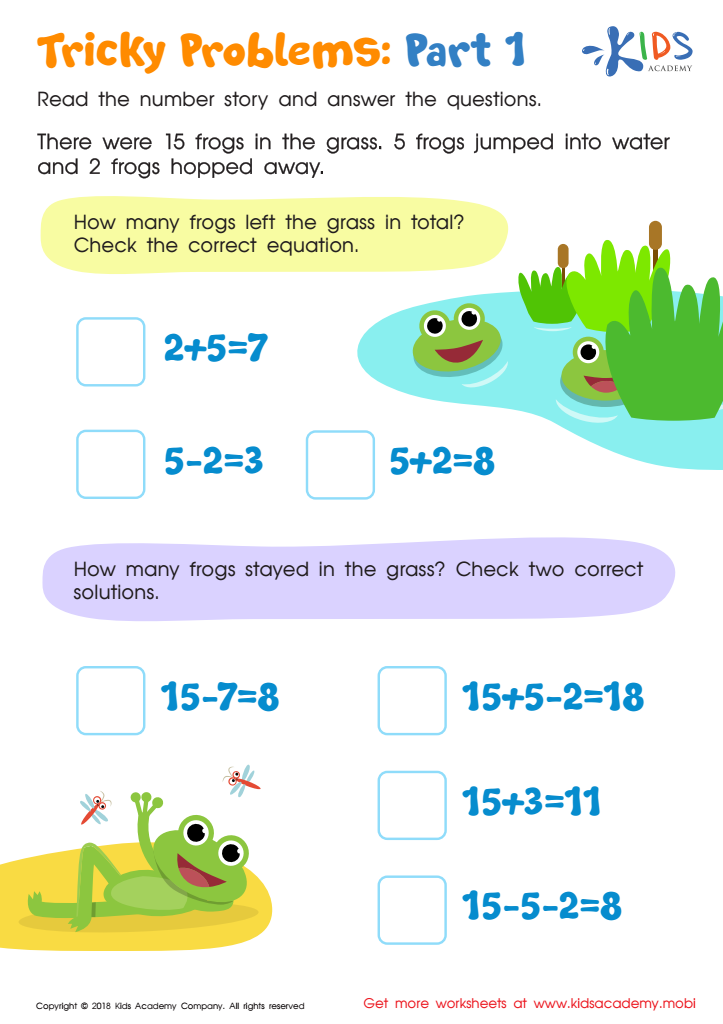
Tricky Problems Worksheet: Part 1
 Assign to My Students
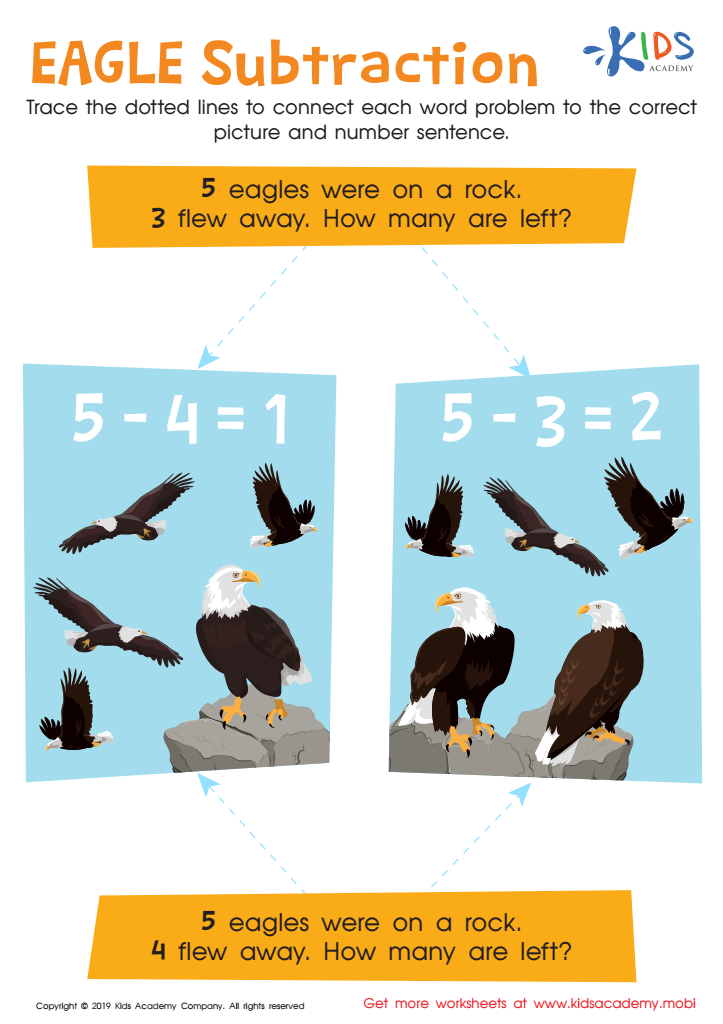
Eagle Subtraction Worksheet
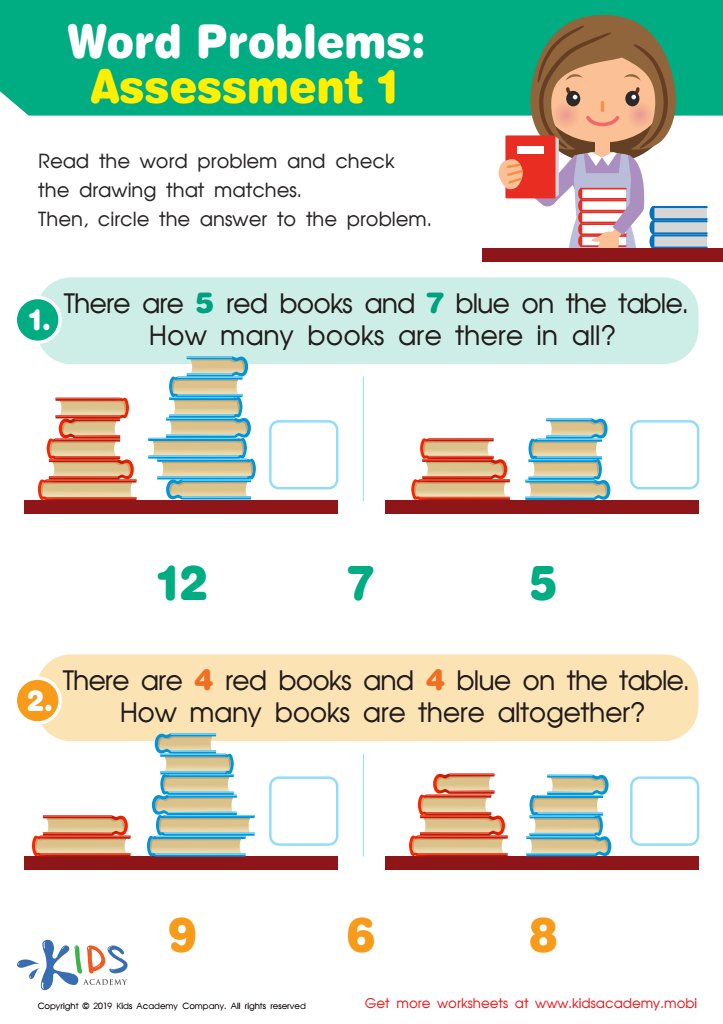
Word Problems: Assessment 1 Worksheet
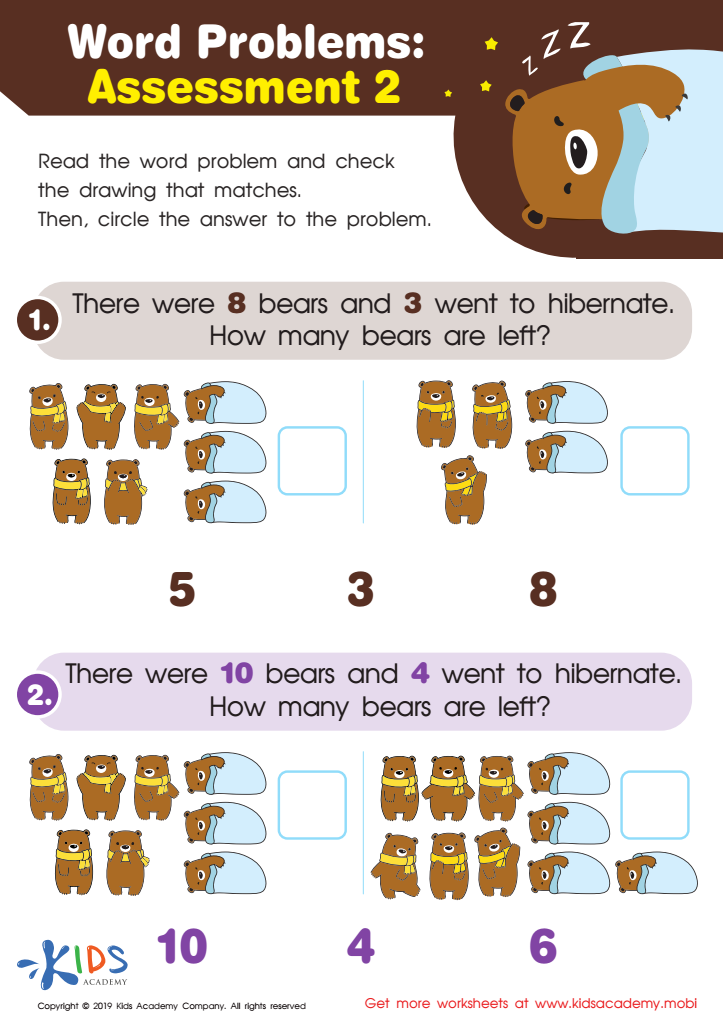
Word Problems: Assessment 2 Worksheet
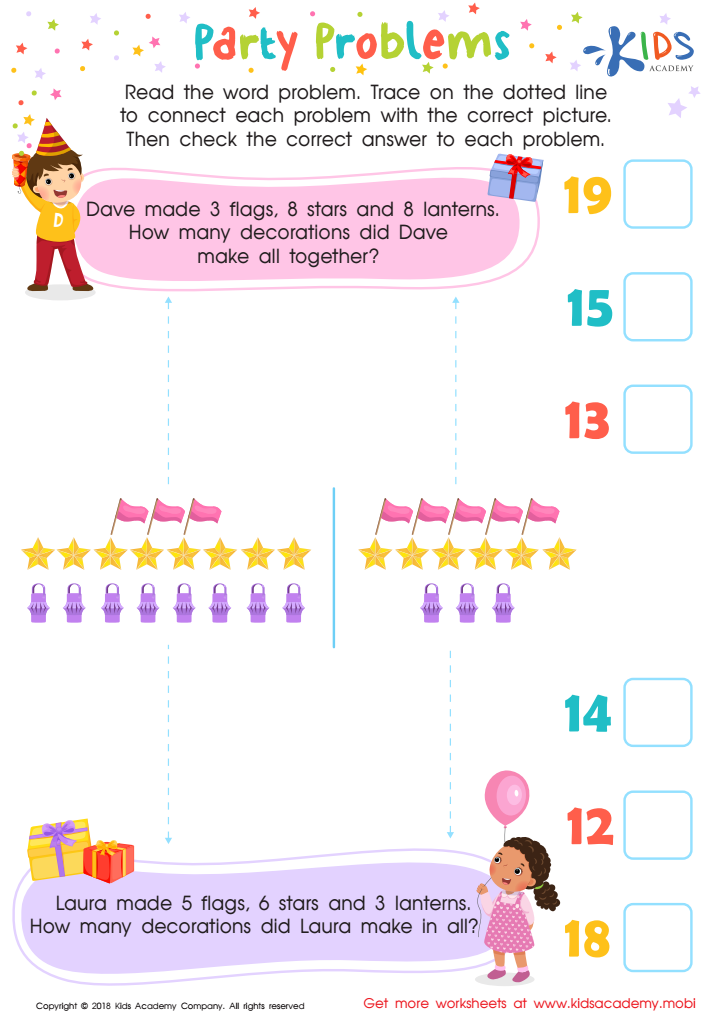
Party Problems Worksheet








Introducing critical thinking through addition and subtraction to children aged 3-5 is vital for developing foundational cognitive skills. During these formative years, children's brains are exceptionally receptive to learning and establishing crucial neural connections. Integrating basic math concepts with critical thinking tasks boosts their problem-solving abilities and enhances their capacity to approach challenges creatively and logically.
Math problems that encourage reasoning, pattern recognition, and logical sequencing can ignite a child's curiosity and engagement. For example, asking a child to figure out different ways to sum to a number using various combinations fosters flexibility in thinking and nurtures their ability to see multiple solutions to a single problem. This approach not only strengthens their grasp of math concepts but also encourages persistence and resilience as they tackle increasingly complex problems.
Furthermore, early exposure to these skills sets the foundation for future academic success by cultivating a positive attitude toward learning. It teaches children how to approach new, unfamiliar problems systematically and confidently. By valuing and nurturing critical thinking through fundamental math tasks, parents and teachers equip children with essential life skills, fostering independent thinking and preparing them for a lifelong journey of exploration and discovery.








