
Enhancing focus Addition & Subtraction Worksheets for Ages 3-5
4 filtered results
Difficulty Level
Grade
Age
-
From - To
Subject
Activity
Standards
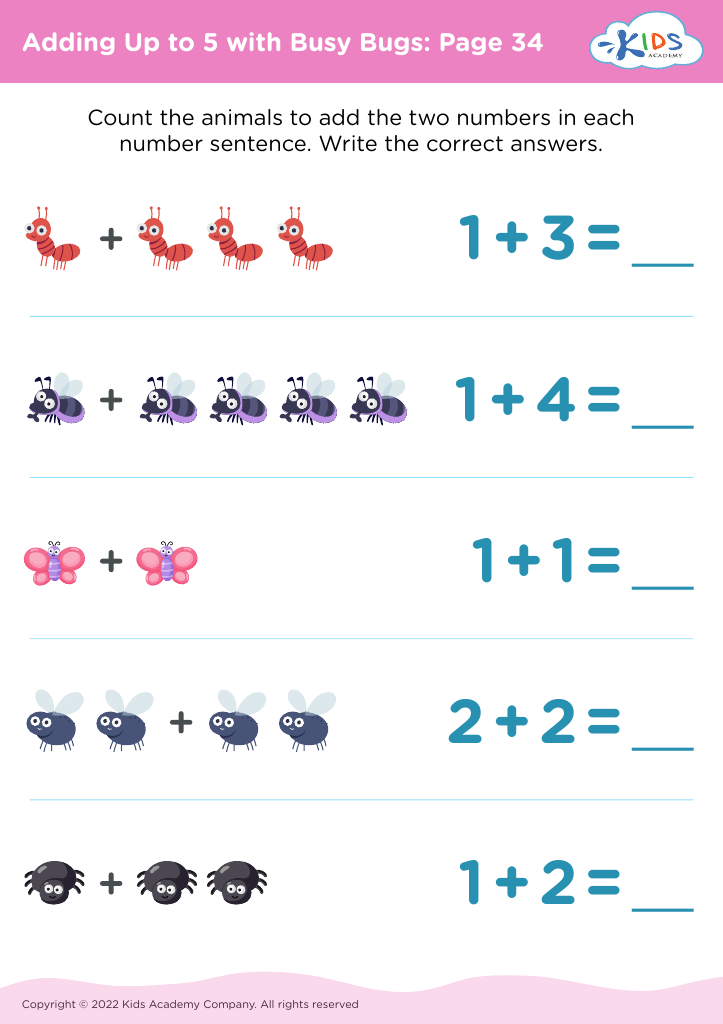
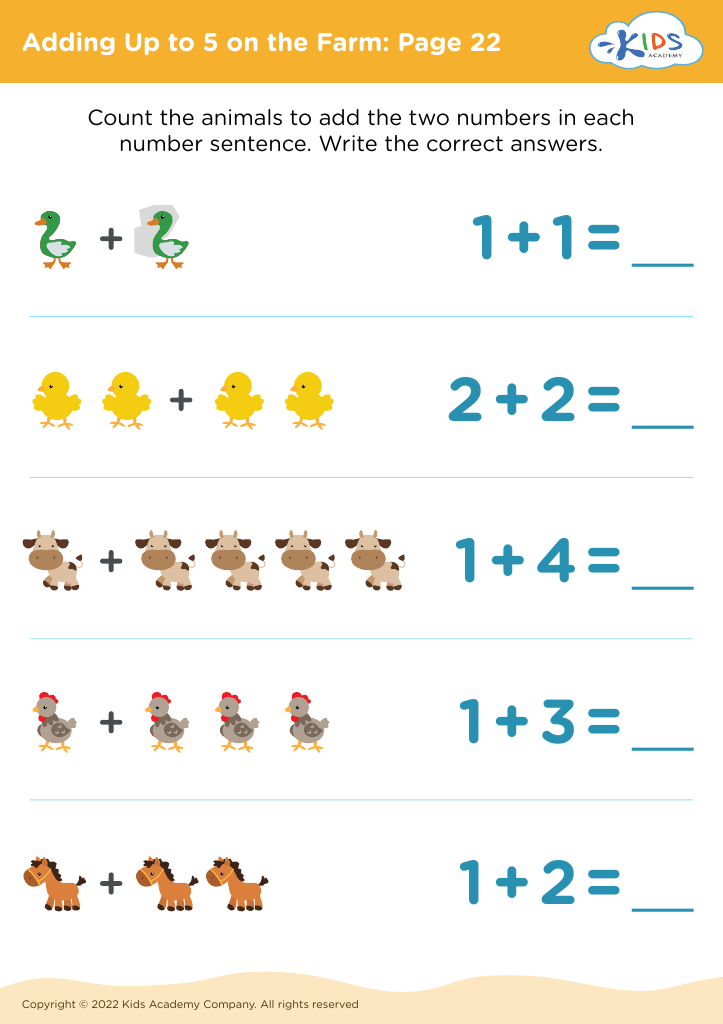
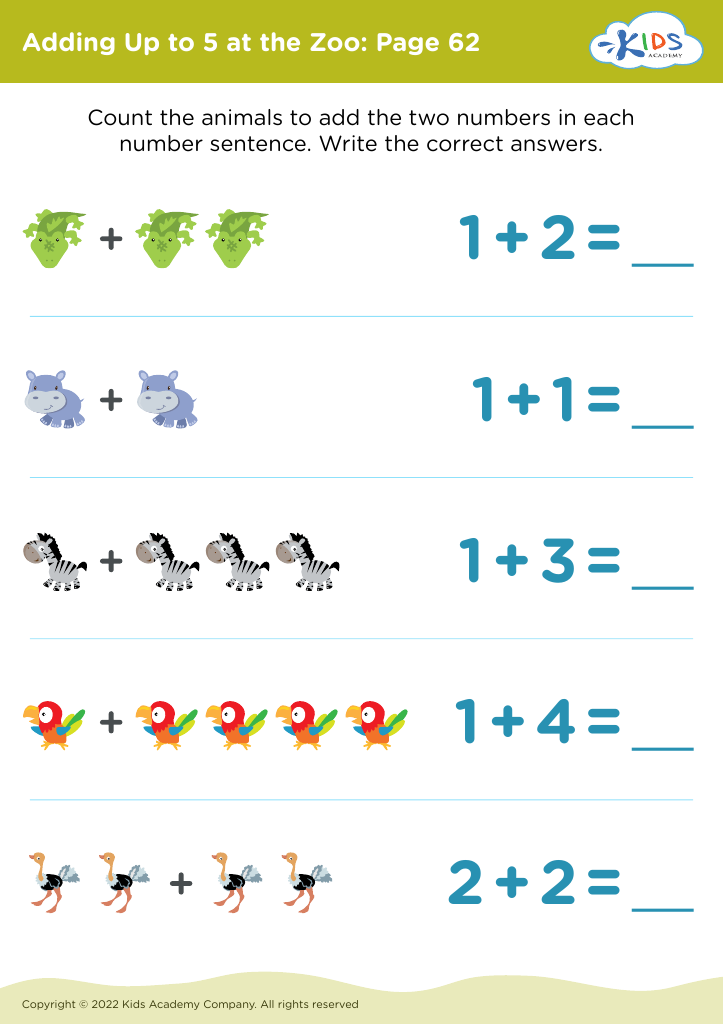
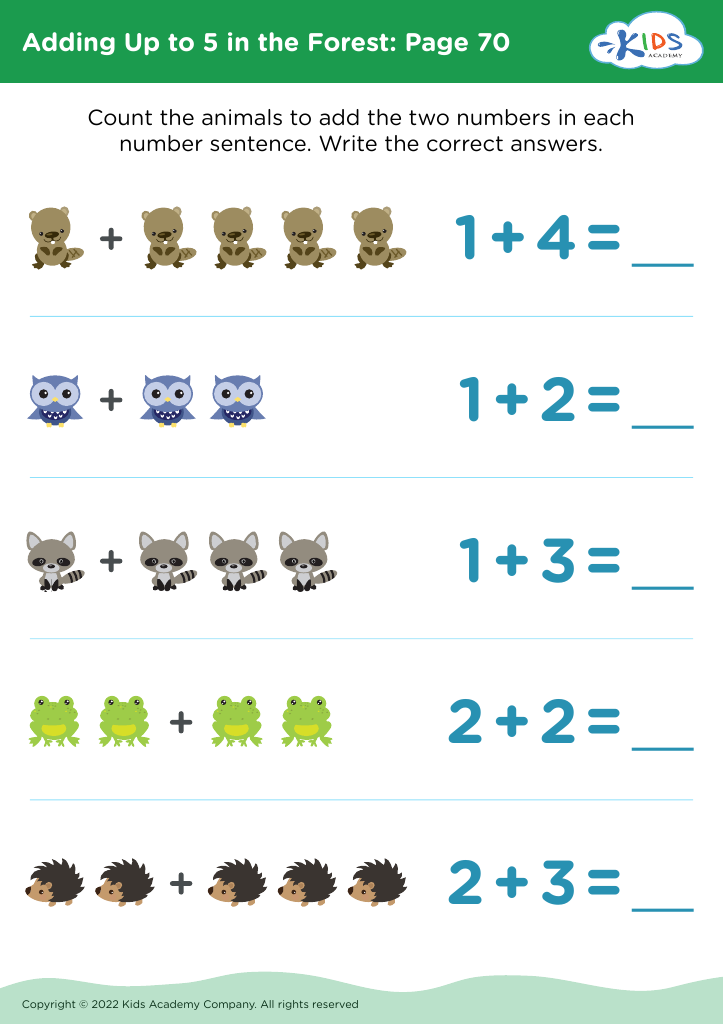
Enhancing focus Addition & Subtraction Worksheets for Ages 3-5 are meticulously designed to cultivate young learners' concentration while they master basic math skills. These captivating worksheets feature engaging activities that combine educational content with fun thematic designs. Children practice adding and subtracting through colorful exercises that keep them entertained, ensuring sustained attention. By integrating interactive tasks, the worksheets promote critical thinking and problem-solving abilities. Perfect for both classroom and at-home learning, they offer a seamless blend of education and amusement, helping children build a solid foundation in math while enhancing their focus and cognitive skills. Explore a delightful approach to early math learning today!
Favorites
With answer key
Interactive
Join Kids Academy for Free
Who is primarily going to use this learning content?








Enhancing focus on addition and subtraction for children aged 3-5 is crucial as it lays the foundational framework for their future mathematical understanding and problem-solving skills. Early exposure to these basic arithmetic concepts helps young minds grasp number sense, which is essential for more complex math operations encountered later. First, learning addition and subtraction enhances cognitive development by promoting critical thinking, pattern recognition, and logical reasoning. These skills are not only beneficial for mathematics but are transferable to other academic areas and everyday decision-making.
Second, at this formative age, children are naturally curious and absorb information quickly. By introducing addition and subtraction early, we cater to their developmental stage, making learning fun and engaging, which can foster a lifelong love for mathematics. Games, songs, and interactive activities can make these concepts accessible and enjoyable, ensuring that children remain motivated and confident.
Finally, early proficiency in addition and subtraction helps bridge potential gaps in learning that could manifest as academic struggles later. By prioritizing these skills, parents and teachers are investing in a stable educational foundation, enabling children to tackle more complex tasks with confidence and reducing the likelihood of future learning difficulties. Therefore, focusing on these arithmetic skills supports not just academic success but broader intellectual and personal development.








