Fine motor skills (writing) Addition & Subtraction Worksheets for Ages 3-5 - Page 2
33 filtered results
-
From - To
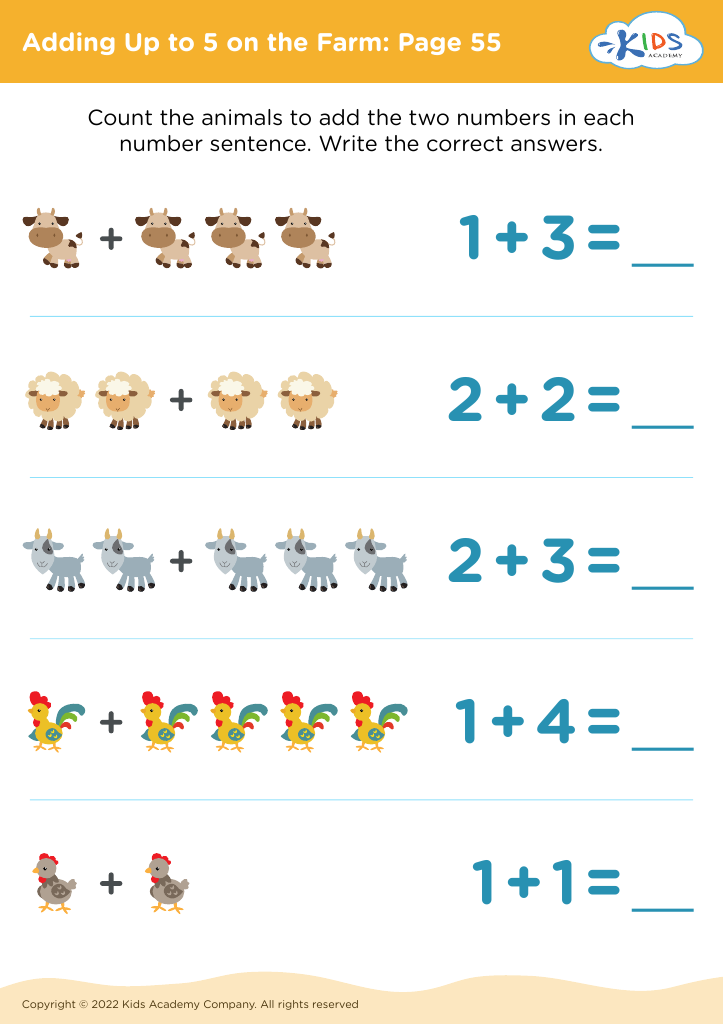
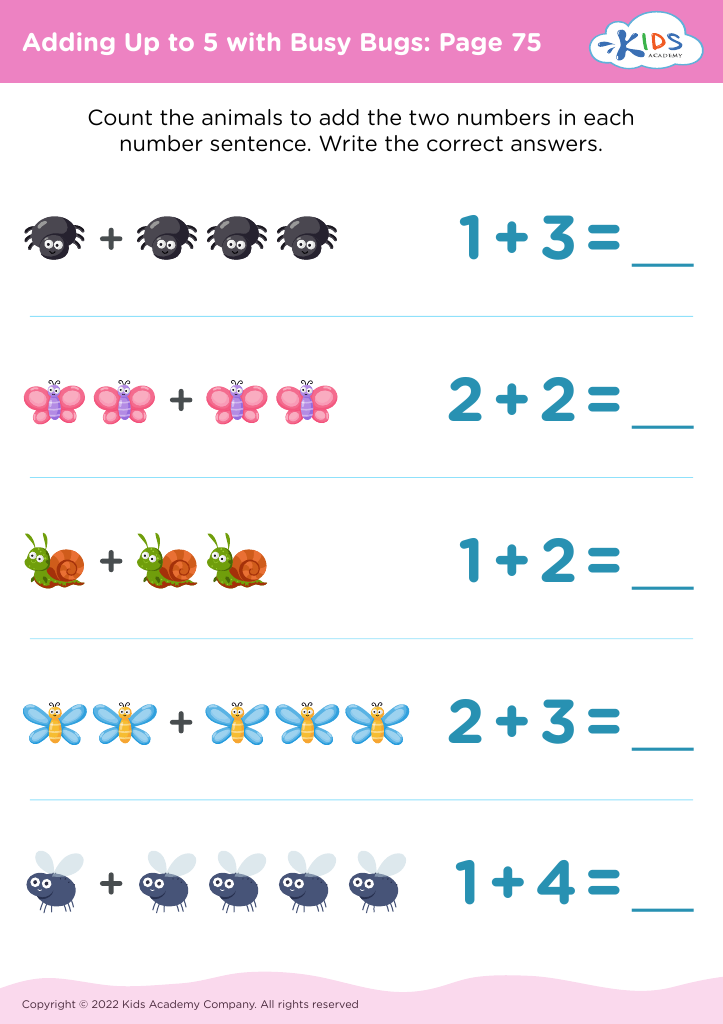
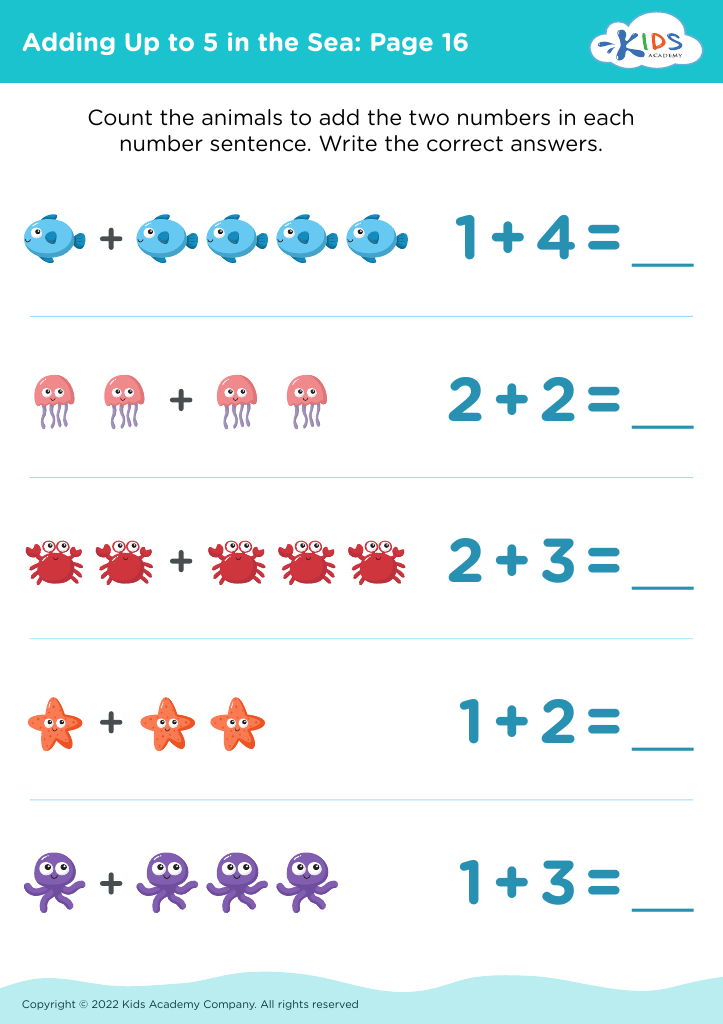
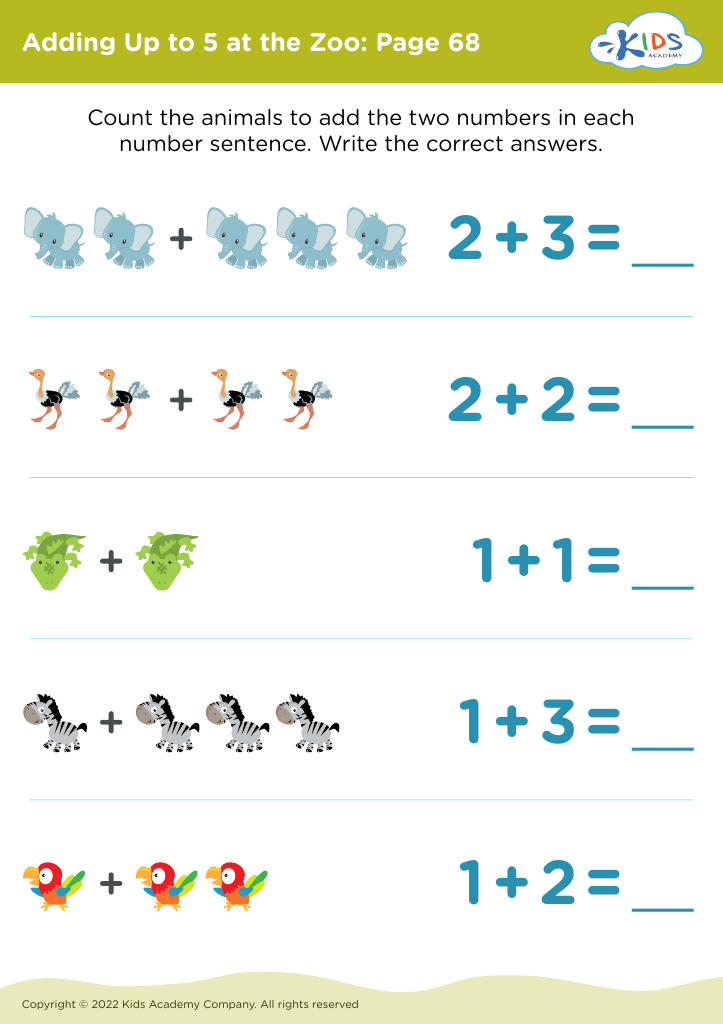
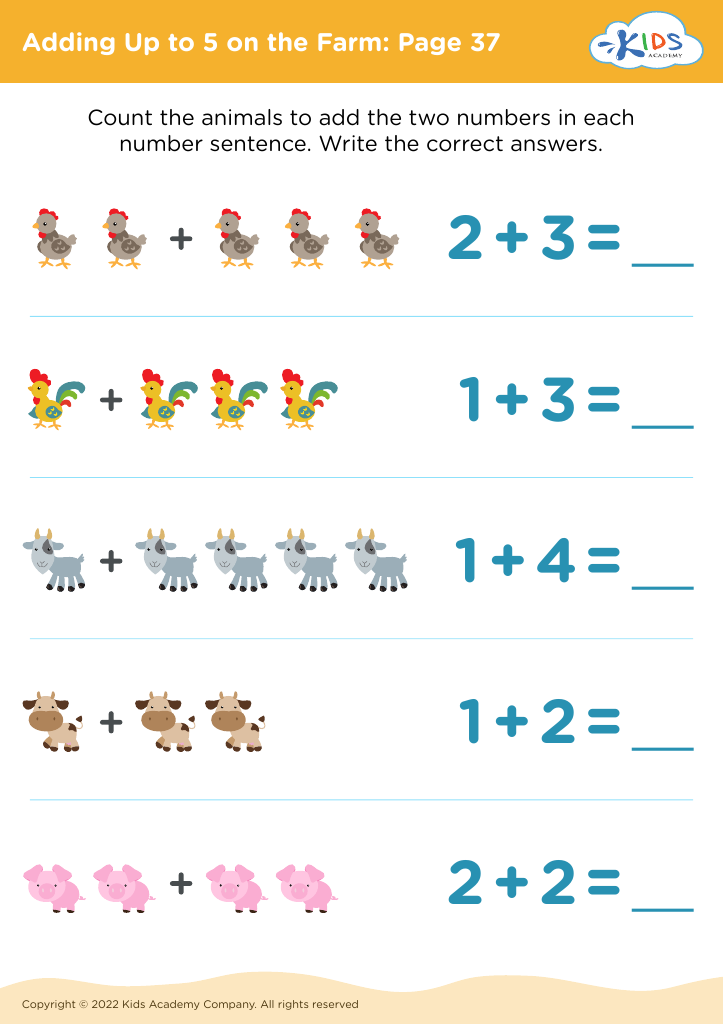
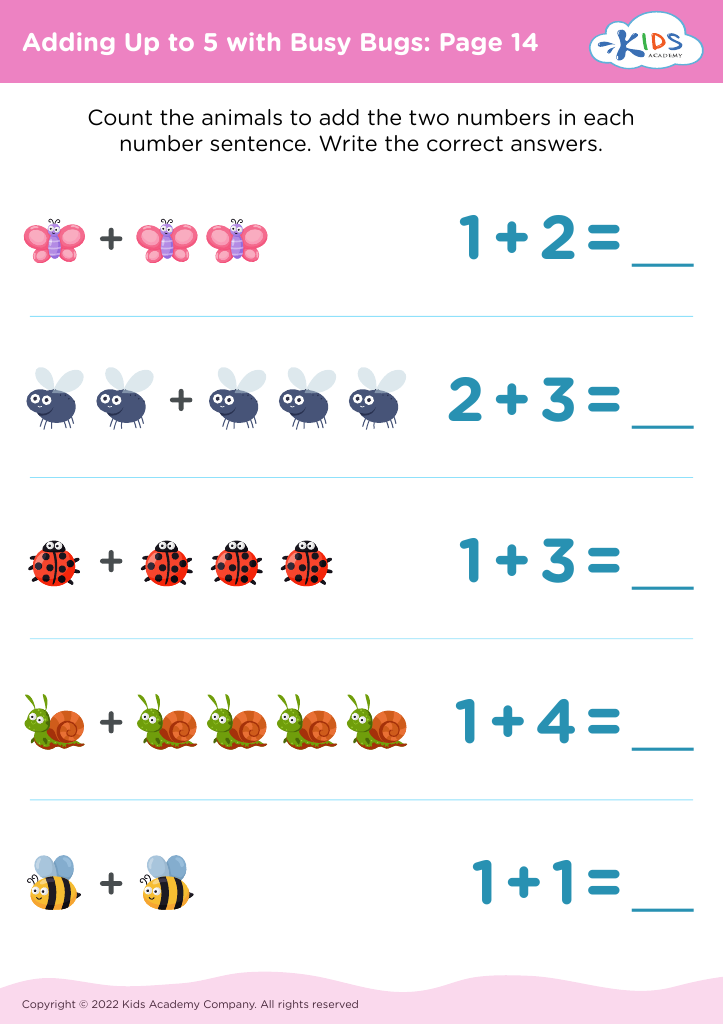
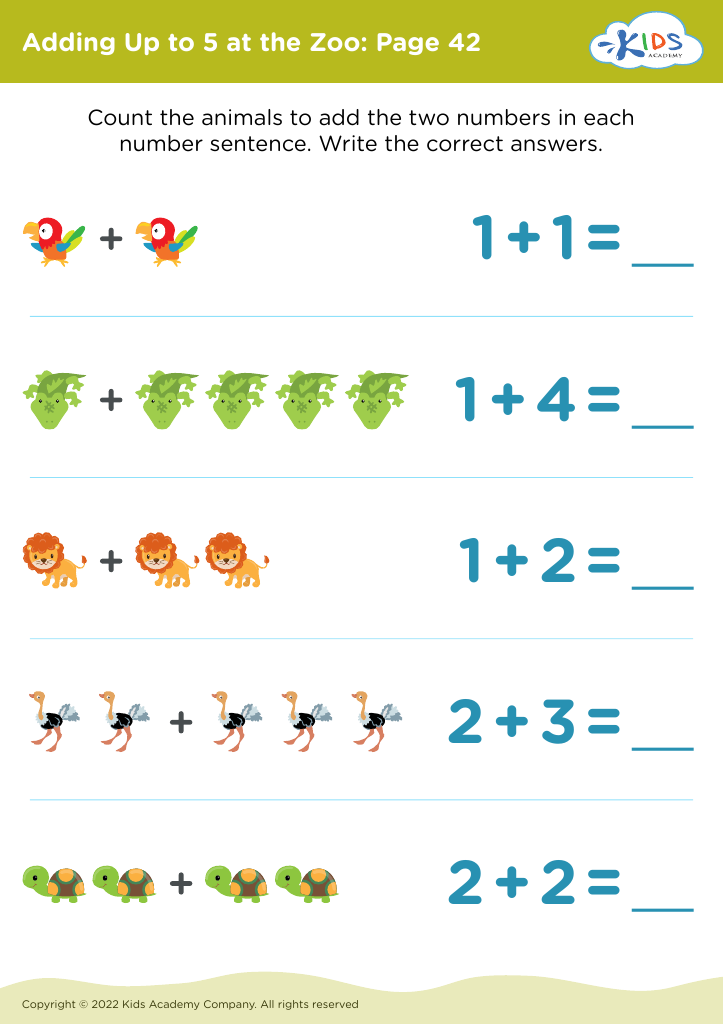
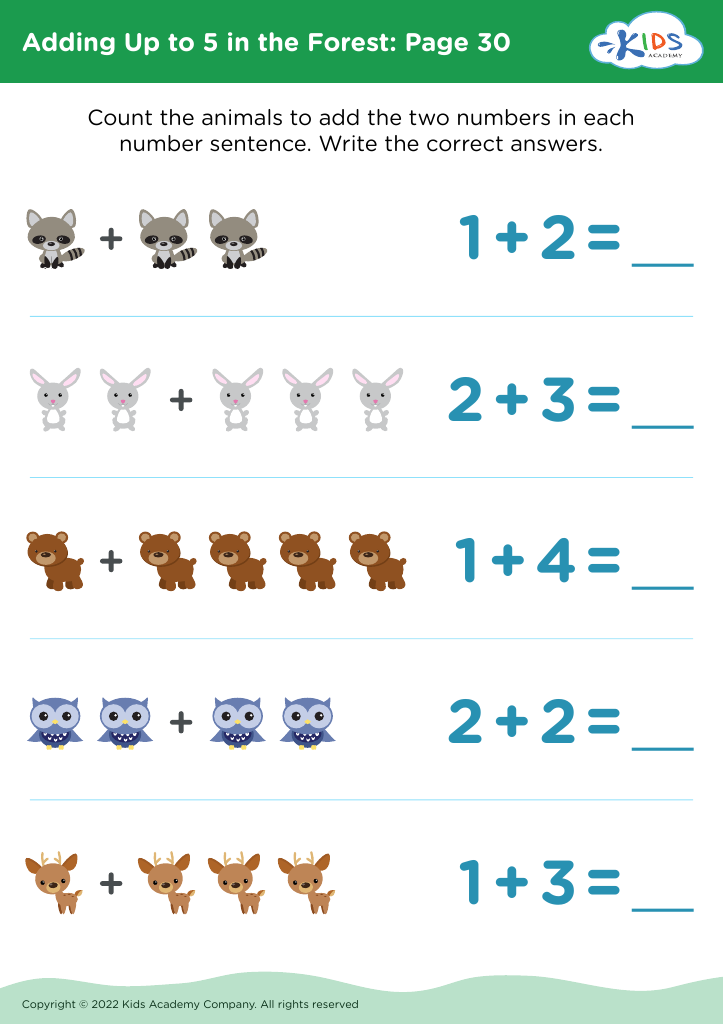
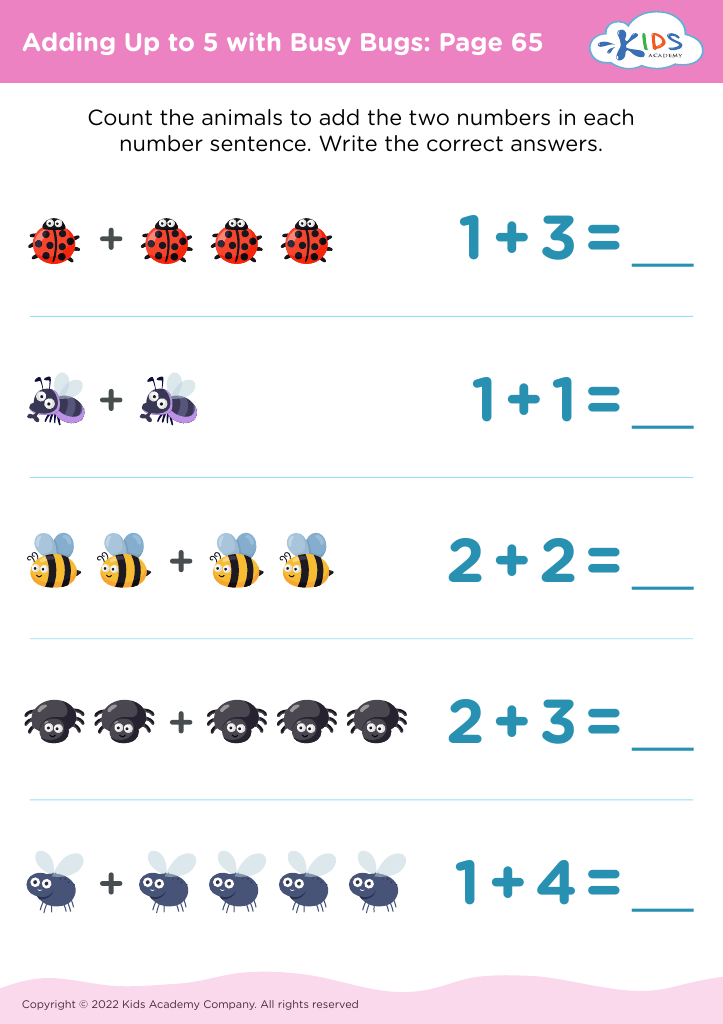








Parents and teachers should prioritize fine motor skills for children aged 3-5 as they are fundamental in building a strong foundation for future learning. Fine motor skills involve the coordination of small muscles in the hands, which are essential for tasks such as writing, drawing, and manipulating objects. Developing these skills at an early age helps children gain confidence and independence in their abilities, which fosters a positive attitude toward learning.
Additionally, fine motor skills are crucial for mastering basic math concepts like addition and subtraction. Holding crayons, counting manipulatives, or using playdough all require finger strength and dexterity. Engaging in these activities not only sharpens fine motor skills but also links physical actions to cognitive development, making math concepts more tangible and enjoyable.
Promoting fine motor skills through playful, hands-on experiences enhances creativity and problem-solving abilities, allowing children to express themselves better in both writing and math. This holistic approach to learning encourages a love for education and sets the stage for academic success in later years. By supporting fine motor skill development, adults help ensure that children are prepared for the various learning challenges ahead.








