
Mathematical thinking Addition & Subtraction Worksheets for Ages 3-5
3 filtered results
Difficulty Level
Grade
Age
-
From - To
Subject
Activity
Standards
Explore our engaging addition and subtraction worksheets, designed specifically for ages 3-5 to foster early mathematical thinking! These fun and educational worksheets introduce young learners to basic math concepts, helping them develop critical-thinking skills and confidence in problem-solving. With beautifully illustrated activities, children will enjoy practicing and mastering addition and subtraction, tapping into their natural curiosity and love for learning. Perfect for parents and educators alike, these worksheets align with early education standards, ensuring your child builds a solid math foundation, all while having fun! Start your child’s mathematical journey today with our expertly crafted worksheets.
Favorites
With answer key
Interactive
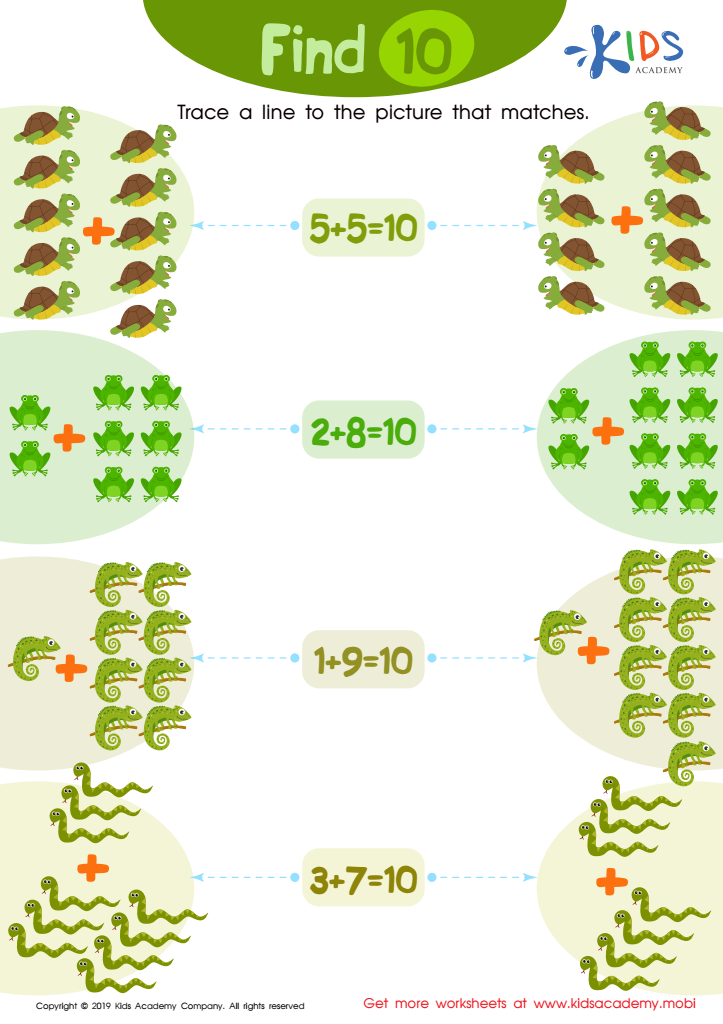
Find 10 Worksheet
Counting can be tricky, but your kids can master it with regular practice. Here's a fun activity to help: count the animals, then trace a line to the pictures that matches. With these tips, math will be an easy walk in the park.
 Assign to My Students
Find 10 Worksheet
Worksheet
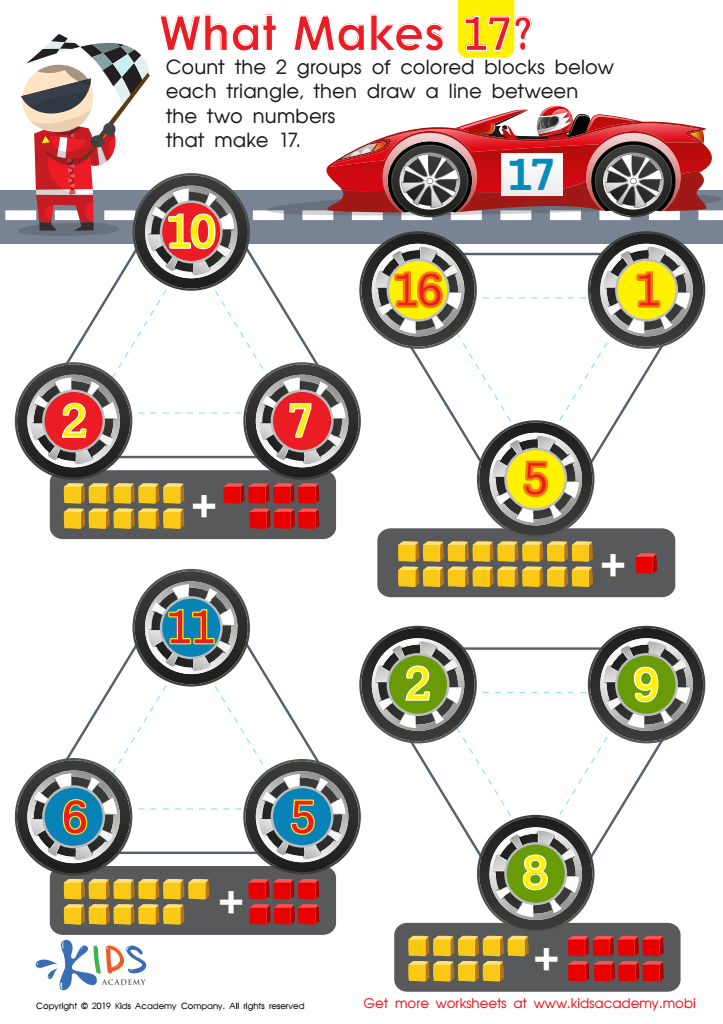
What Makes 17 Worksheet
Practice makes perfect! Let your kindergartners explore addition using this worksheet. Count the blocks in each triangle to reach the same total of 17, and draw a line between the two numbers. Once they get the hang of it, nothing will be too difficult!
What Makes 17 Worksheet
Worksheet
Join Kids Academy for Free
Who is primarily going to use this learning content?








Mathematical thinking in early childhood, particularly skills like addition and subtraction, is crucial as it forms the foundation for future learning and intellectual development. For ages 3-5, developing a strong grasp of these concepts is especially important as it enhances cognitive capabilities, problem-solving abilities, and logical reasoning. During these formative years, children's brains are incredibly receptive to new information, making it the perfect time to introduce basic mathematical ideas.
Fostering addition and subtraction skills helps children understand the concepts of quantity, relationships, and change, vital for higher-level math and everyday tasks. For example, grasping the idea of "more" and "less" enables kids to make sense of the world, engage in play-based learning, and develop critical life skills such as sharing and decision-making.
Moreover, early math skills are linked to academic success in later years. Children proficient in early mathematics are more likely to excel in other academic areas, including literacy, as they enhance their ability to concentrate, follow instructions, and develop persistence.
Therefore, parents and teachers should prioritize teaching addition and subtraction at a young age through fun, engaging methods. Activities like counting games, interactive stories, and using physical objects (blocks, toys) can make learning these concepts enjoyable and truly beneficial, setting the stage for a lifetime of mathematical competence and confidence.








