Filters

419 filtered results

Clear all filters
Favorites
With answer key
Interactive

419 filtered results

Difficulty Level

Grade


Check out this FREE Trial Lesson on Addition & Subtraction for age 3-5!

Exactly the Same, or Not

Favorites
With answer key
Interactive
  • 3-5
  • Number Recognition
  • Addition & Subtraction
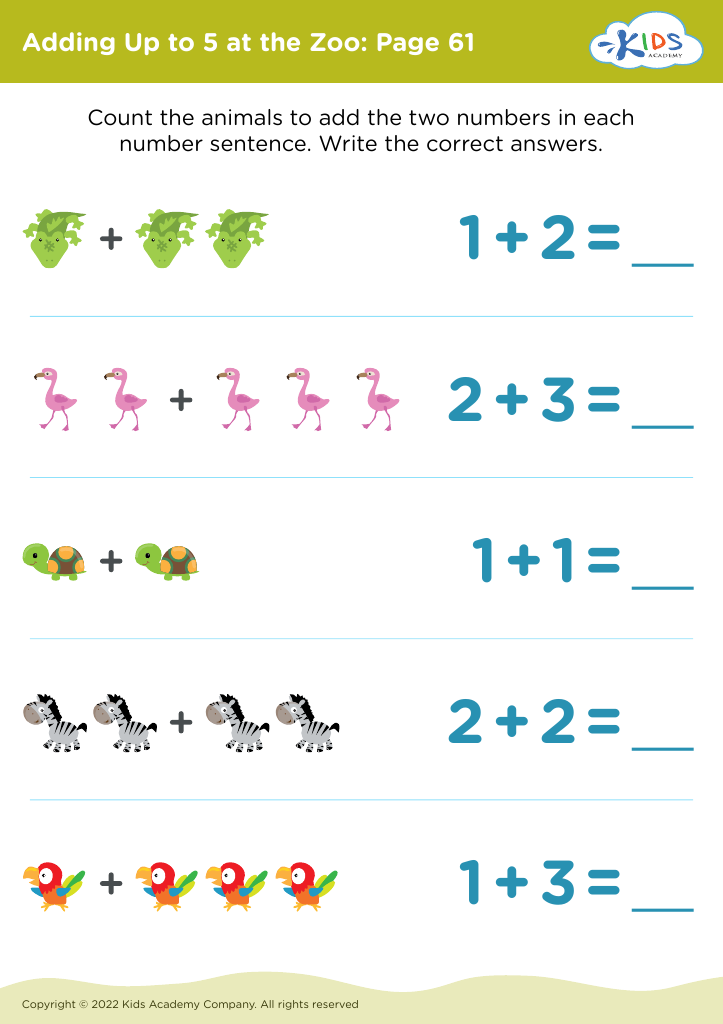
Adding Up to 5 at the Zoo: Page 61
Worksheet
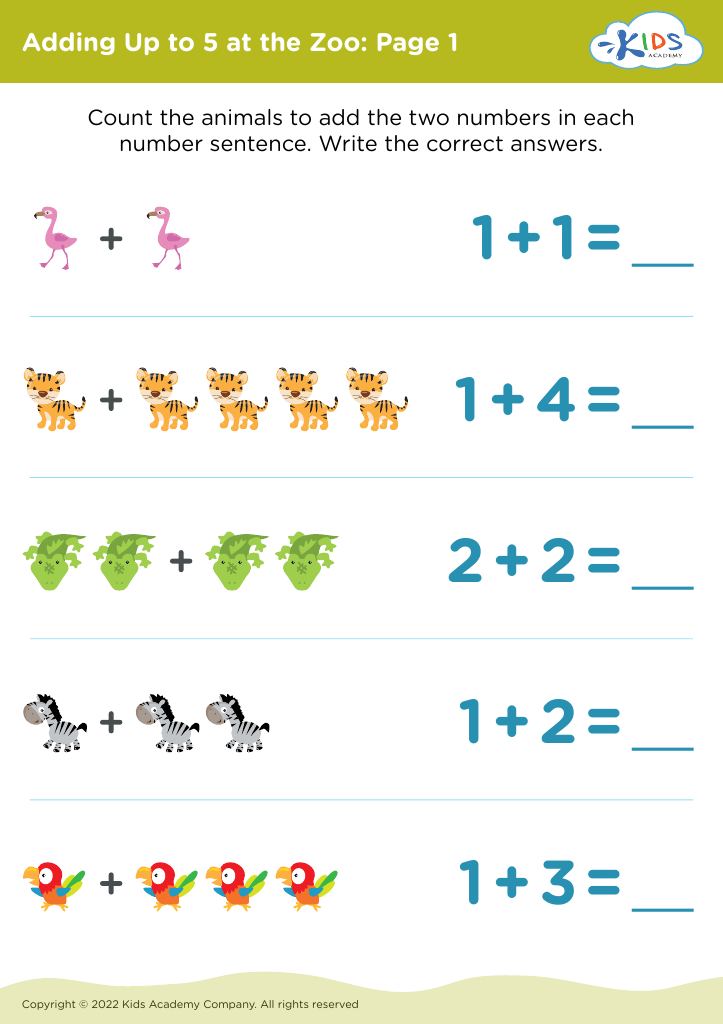
Adding Up to 5 at the Zoo: Page 1

Adding Up to 5 at the Zoo: Page 1

Adding Up to 5 at the Zoo: Page 1
Worksheet
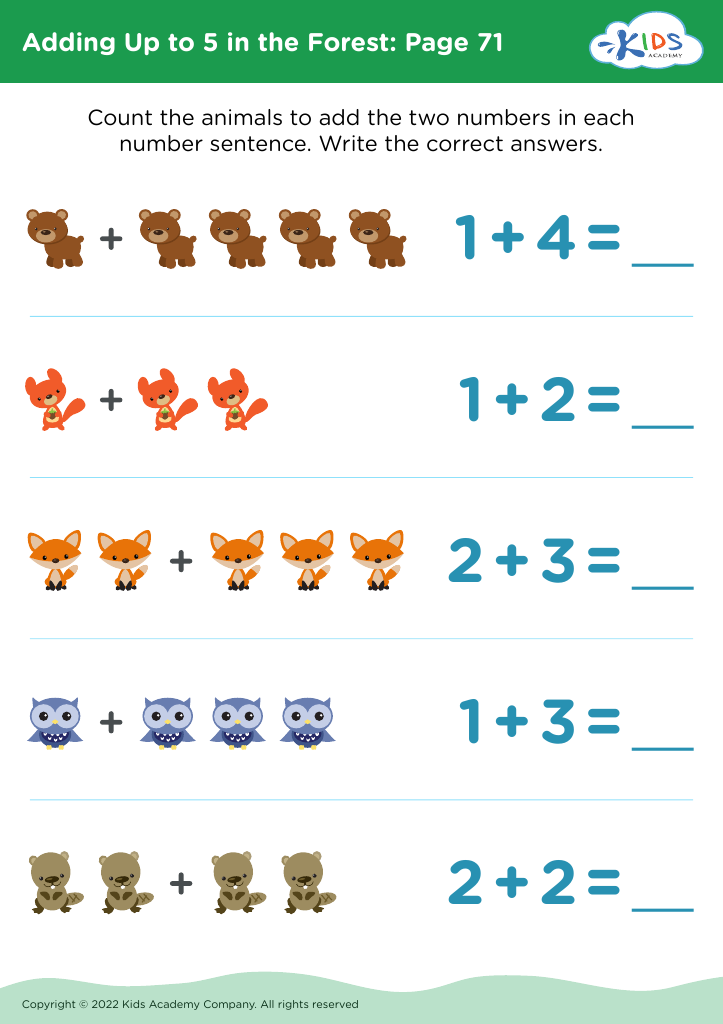
Adding Up to 5 in the Forest: Page 71
Worksheet
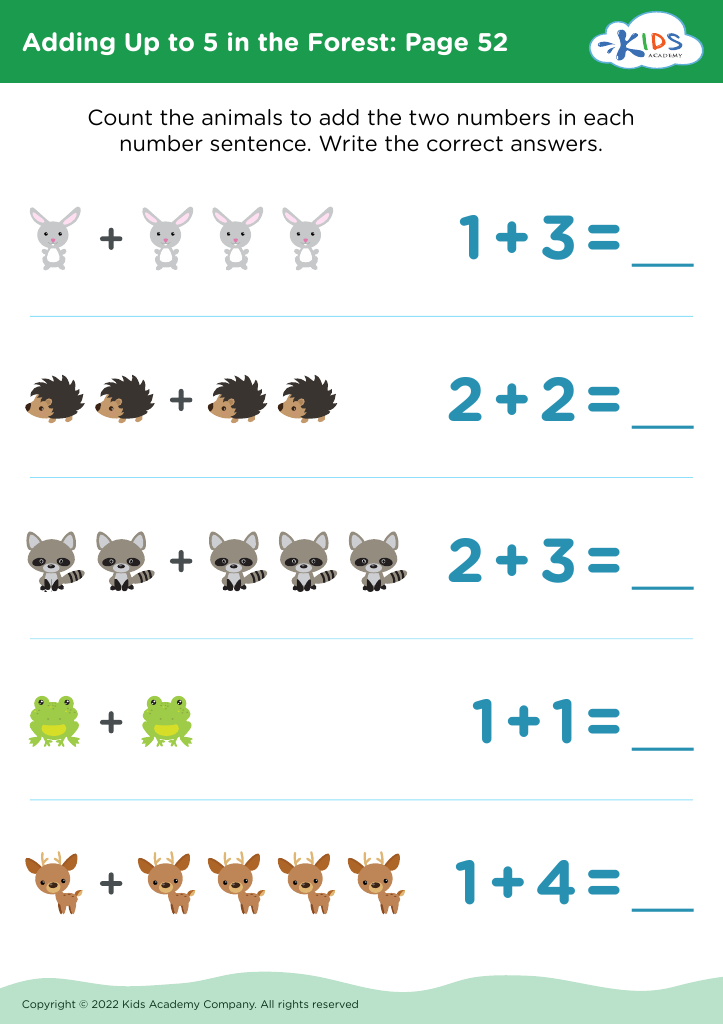
Adding Up to 5 in the Forest: Page 52
Worksheet
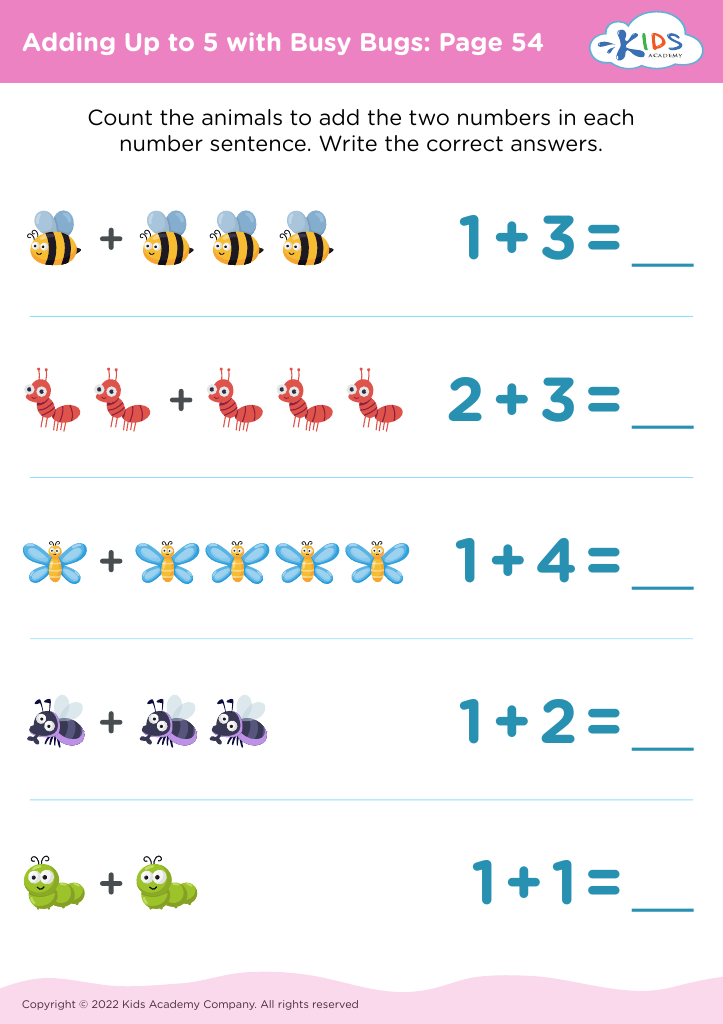
Adding Up to 5 with Busy Bugs: Page 54
Worksheet
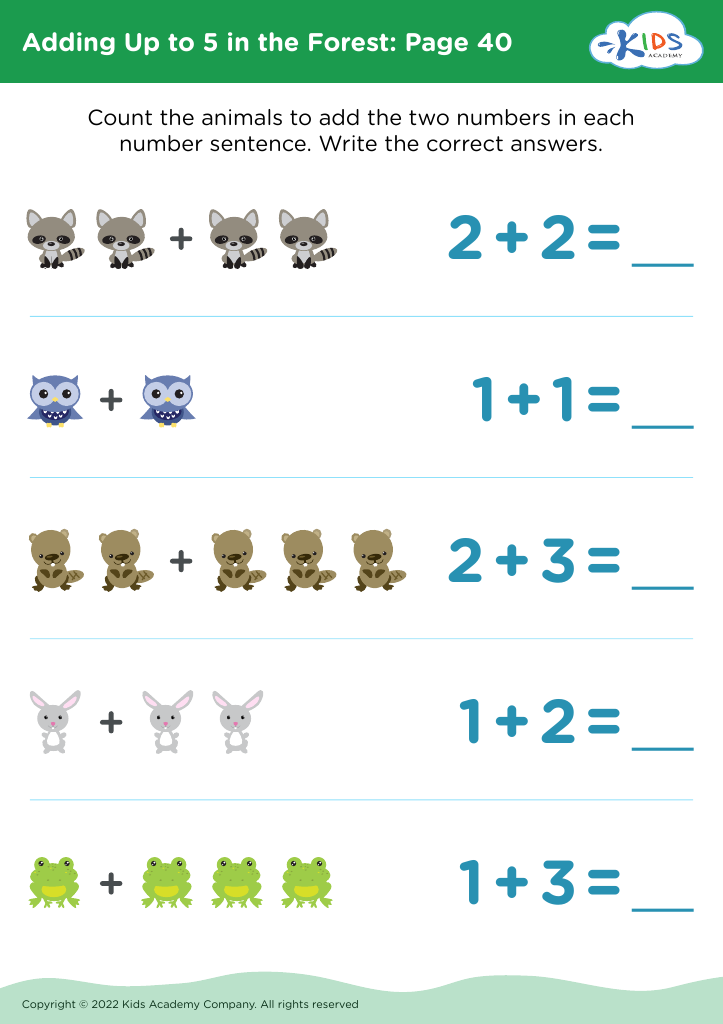
Adding Up to 5 in the Forest: Page 40
Worksheet
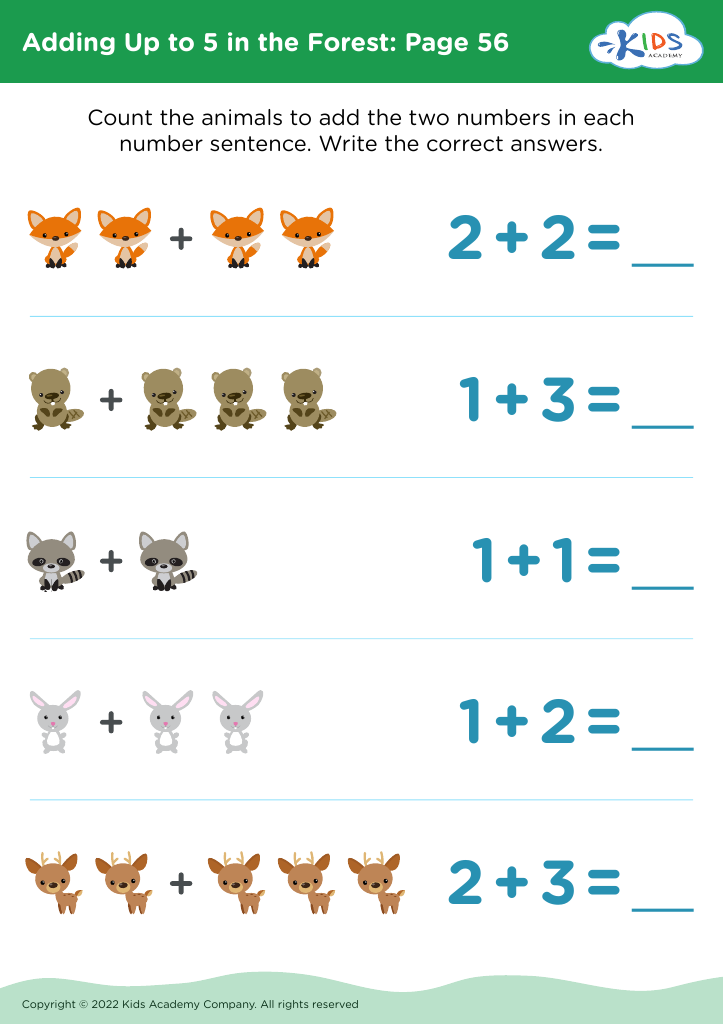
Adding Up to 5 in the Forest: Page 56
Worksheet
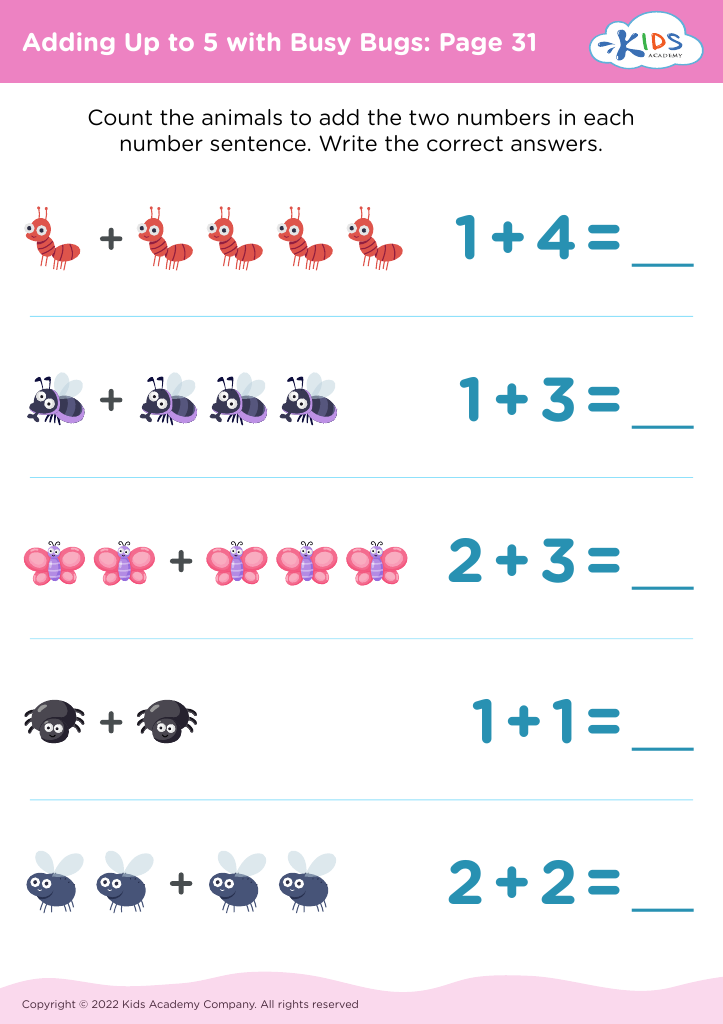
Adding Up to 5 with Busy Bugs: Page 31
Worksheet
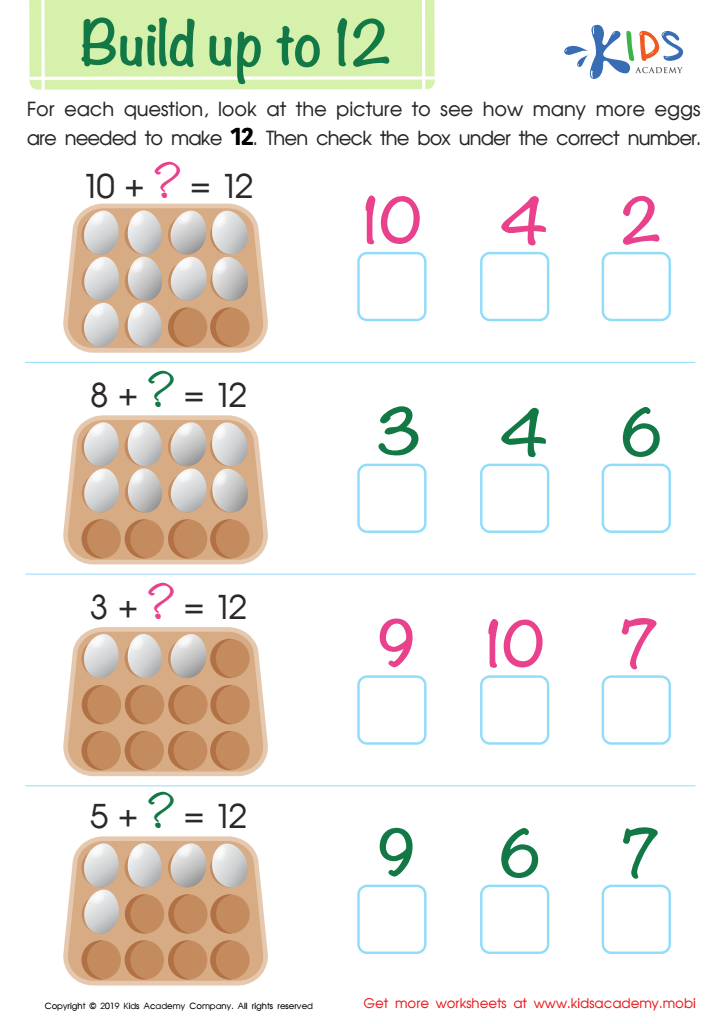
Build up to 12 Worksheet

Build up to 12 Worksheet

Love eggs? Kids can identify them in the picture in this worksheet. We need to add numbers to make 12. Look at the picture and see how many eggs are needed. Check the correct number box. Breakfast or baking, eggs are essential!
Build up to 12 Worksheet
Worksheet
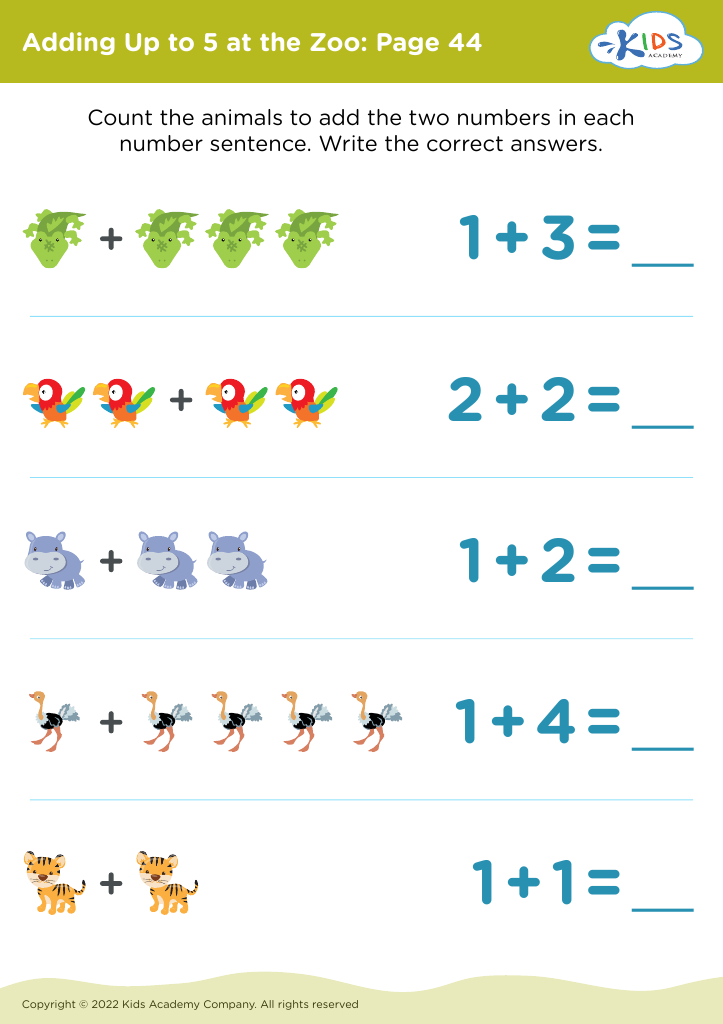
Adding Up to 5 at the Zoo: Page 44
Worksheet
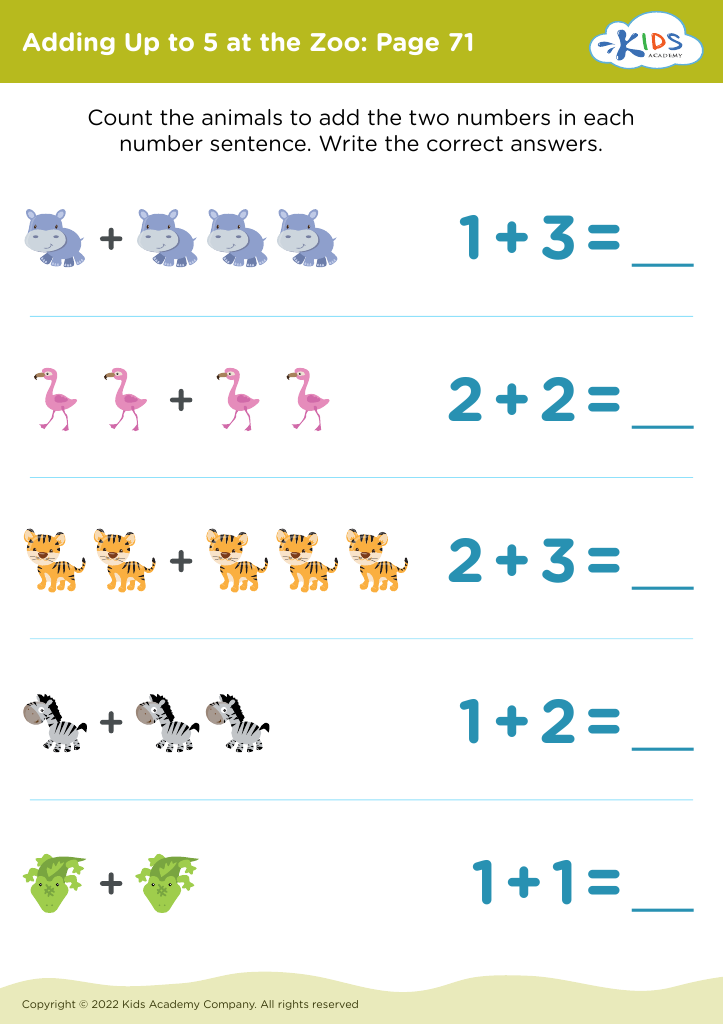
Adding Up to 5 at the Zoo: Page 71
Worksheet
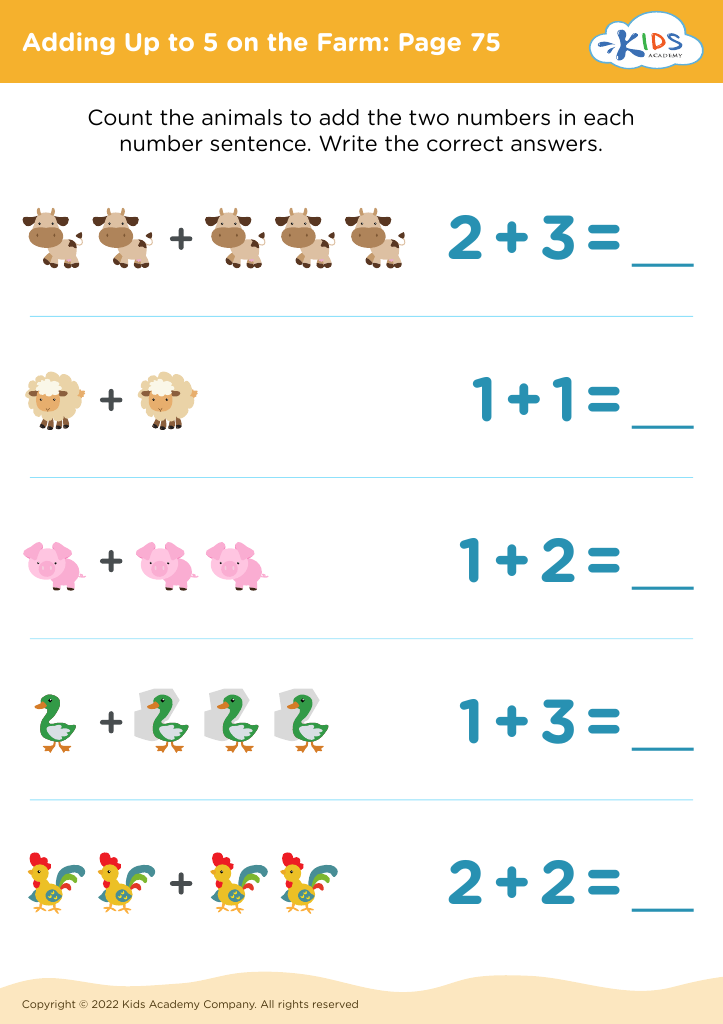
Adding Up to 5 on the Farm: Page 75
Worksheet
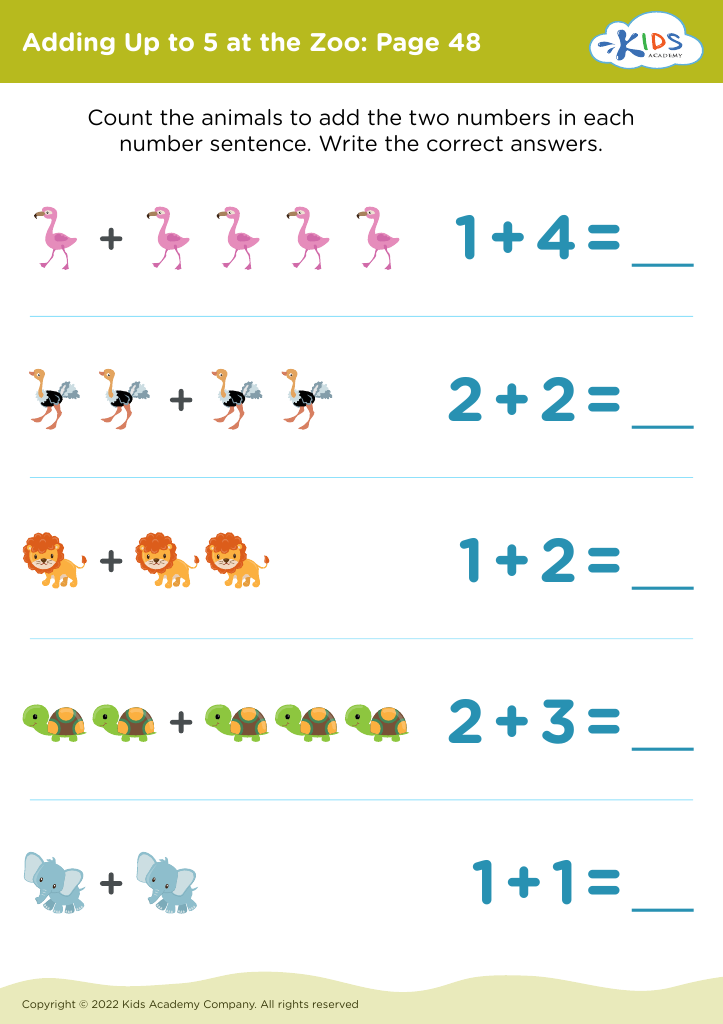
Adding Up to 5 at the Zoo: Page 48
Worksheet
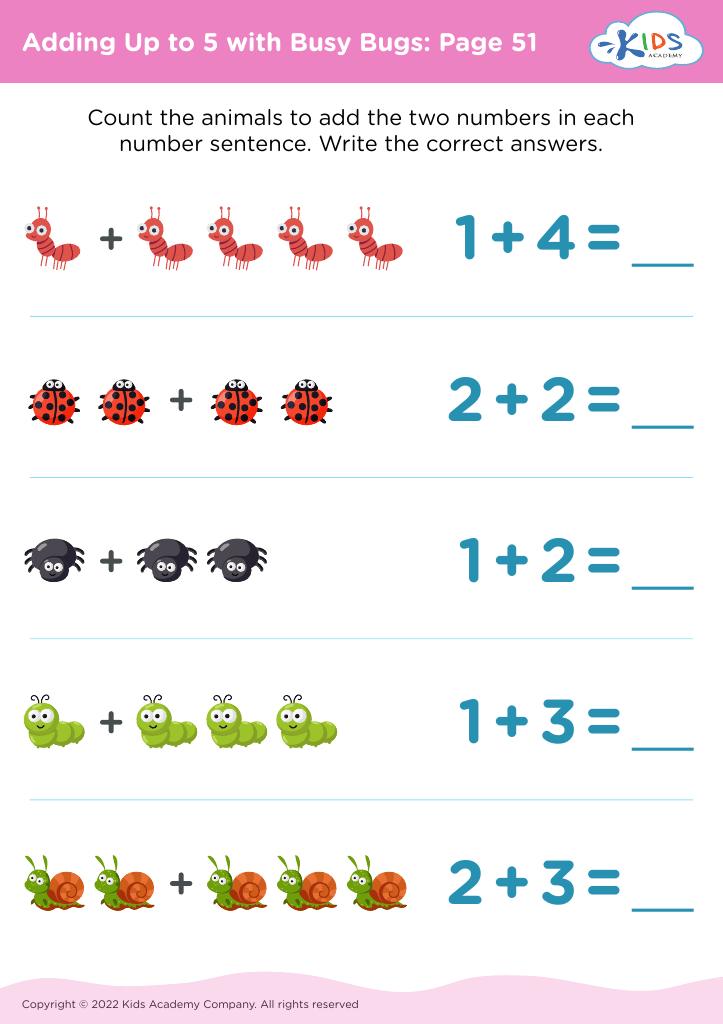
Adding Up to 5 with Busy Bugs: Page 51
Worksheet
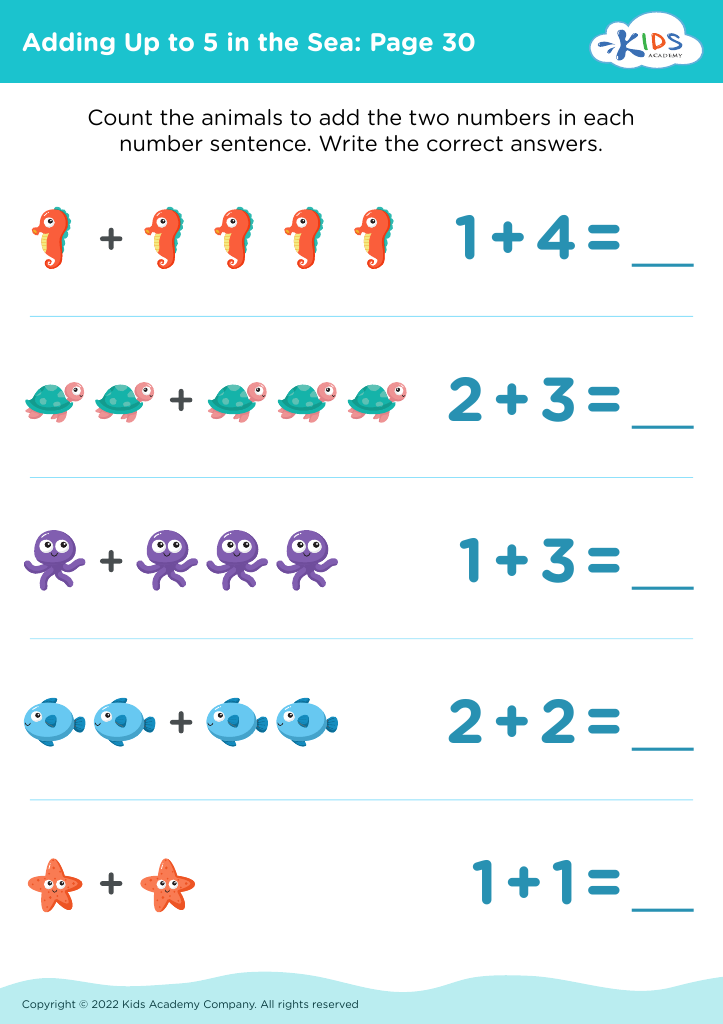
Adding Up to 5 in the Sea: Page 30
Worksheet
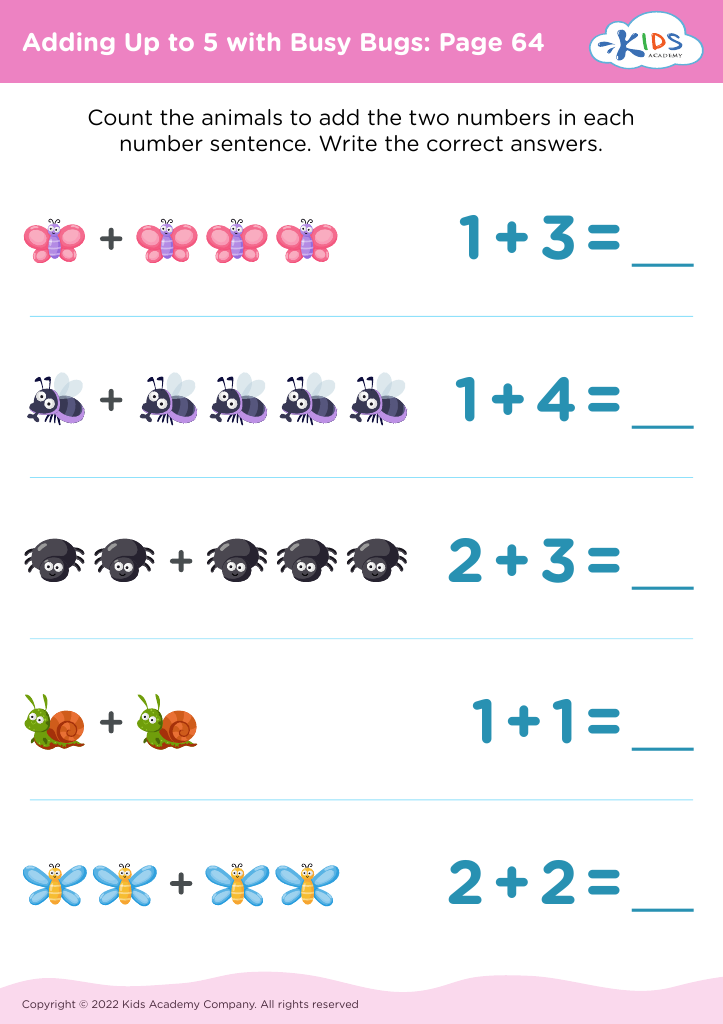
Adding Up to 5 with Busy Bugs: Page 64
Worksheet
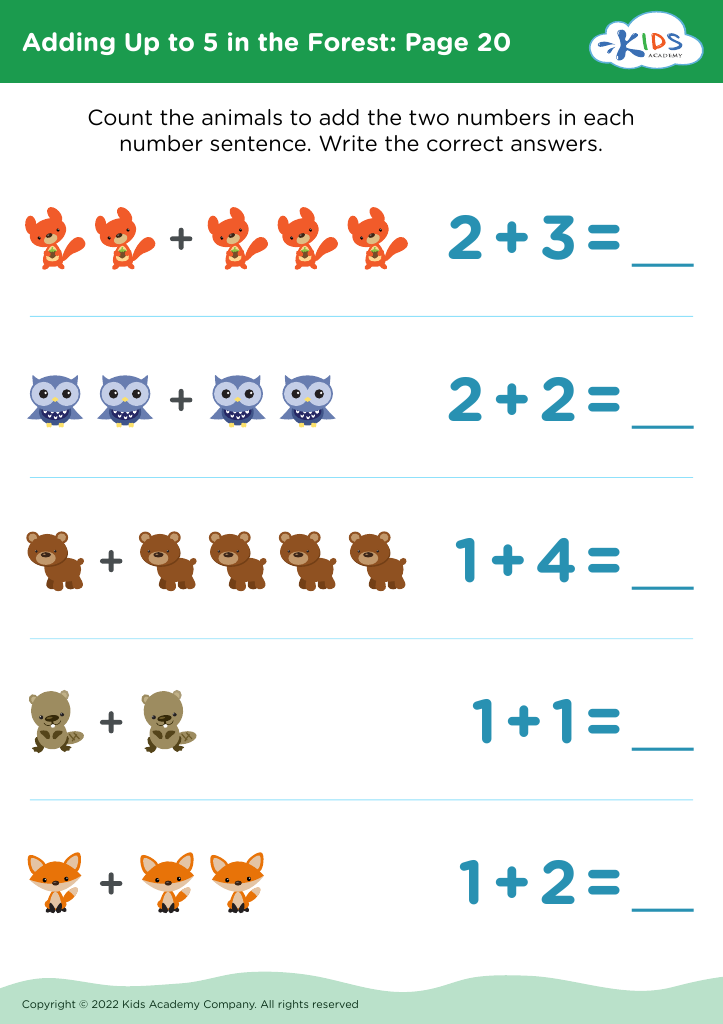
Adding Up to 5 in the Forest: Page 20
Worksheet
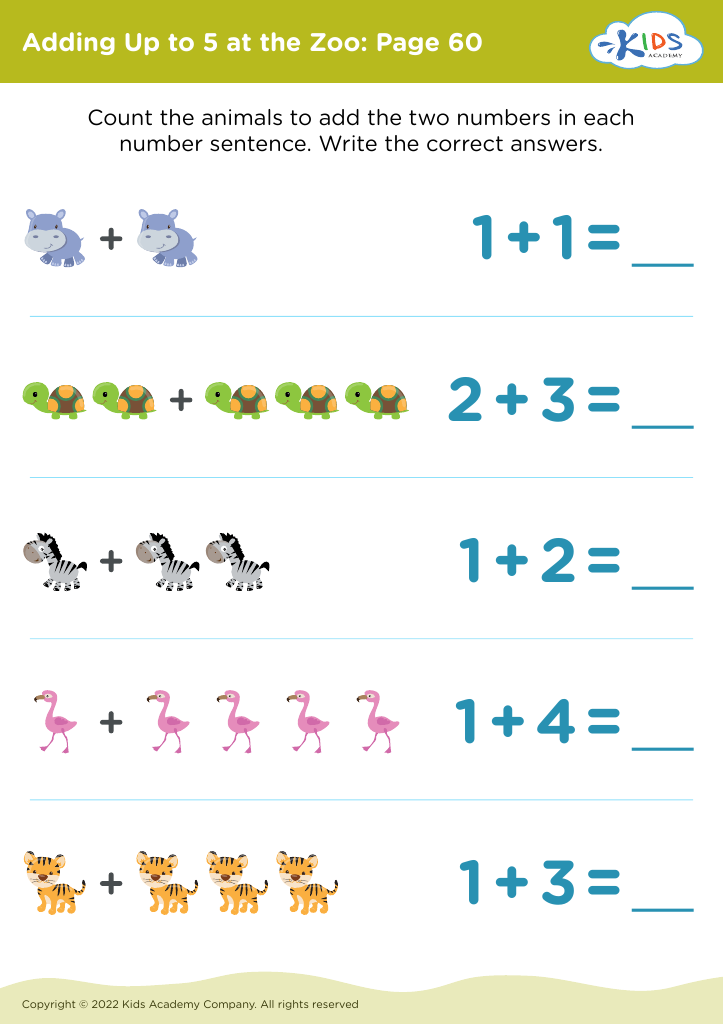
Adding Up to 5 at the Zoo: Page 60
Worksheet
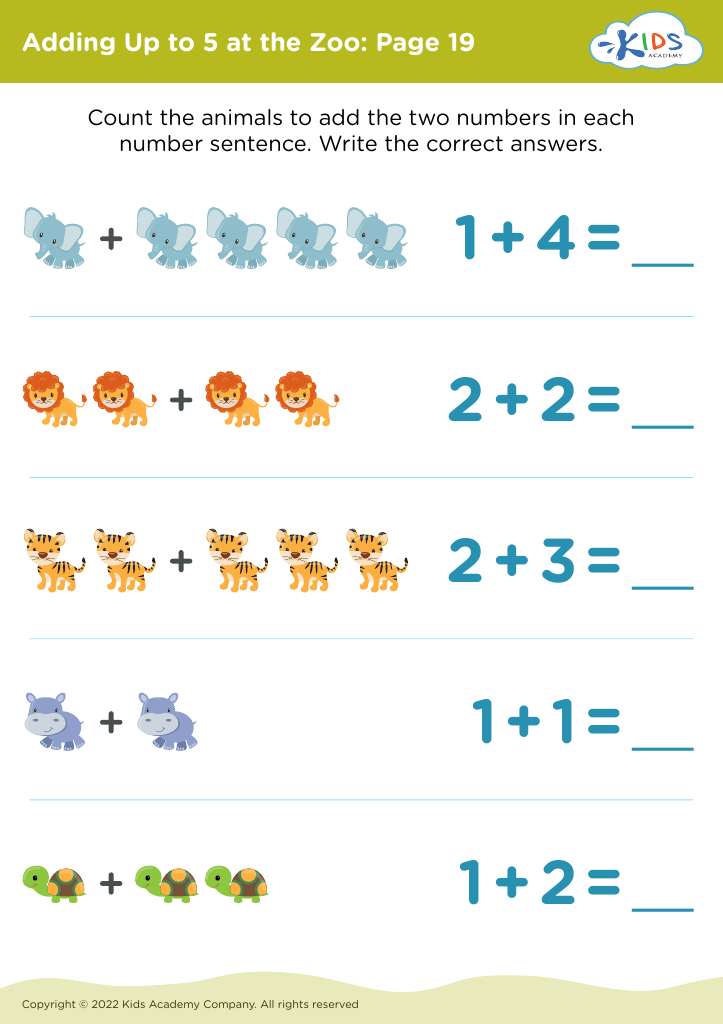
Adding Up to 5 at the Zoo: Page 19
Worksheet
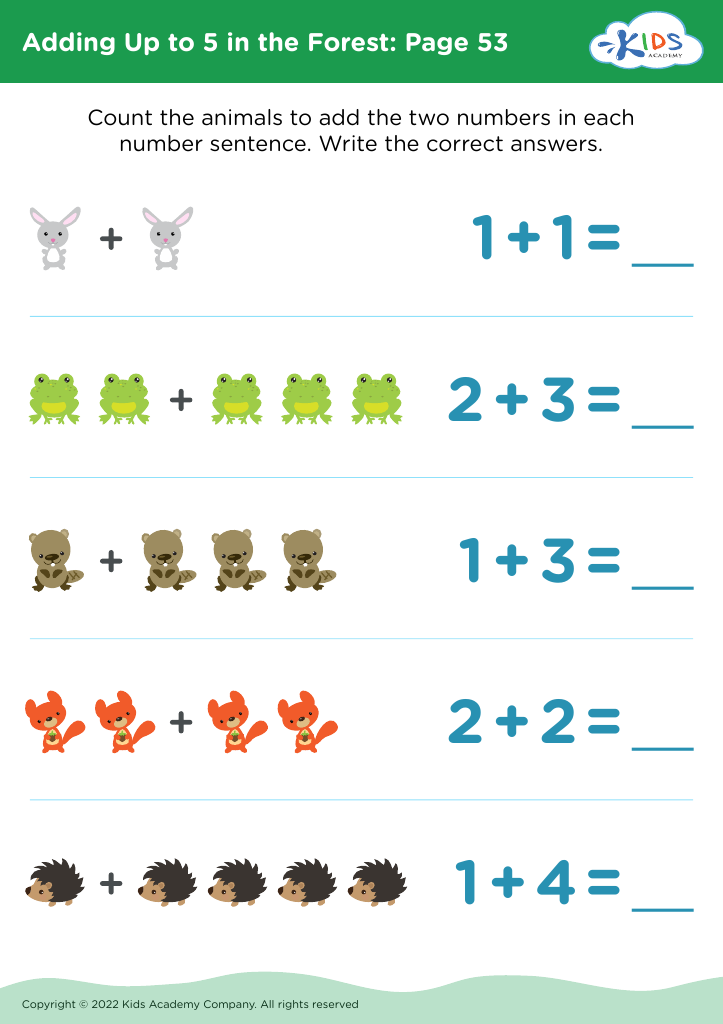
Adding Up to 5 in the Forest: Page 53
Worksheet
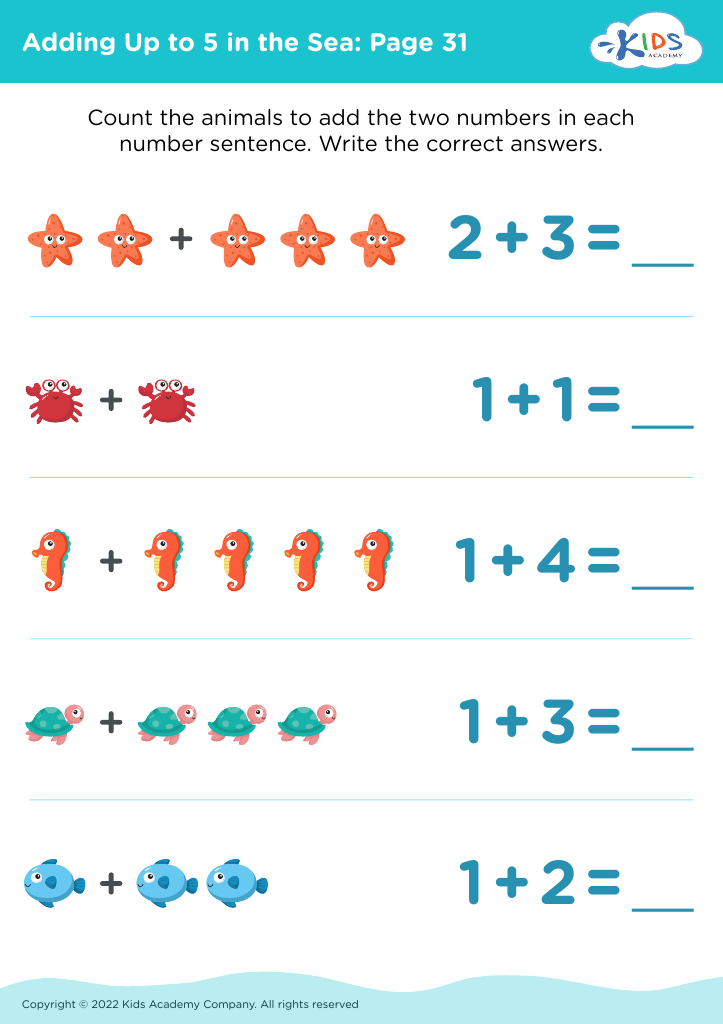
Adding Up to 5 in the Sea: Page 31
Worksheet
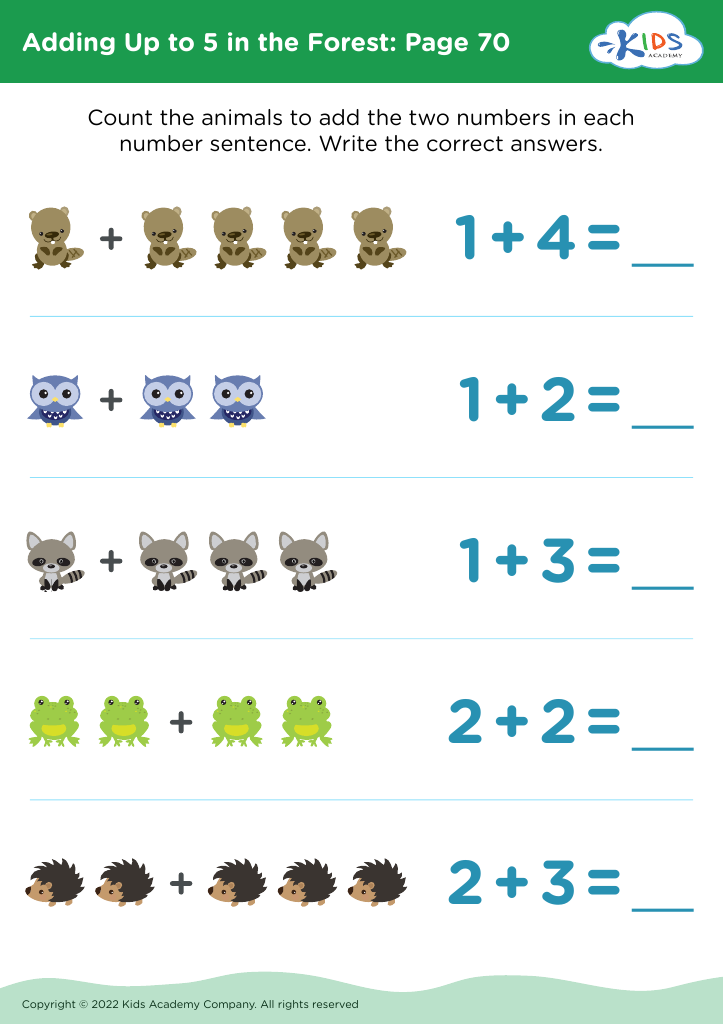
Adding Up to 5 in the Forest: Page 70
Worksheet
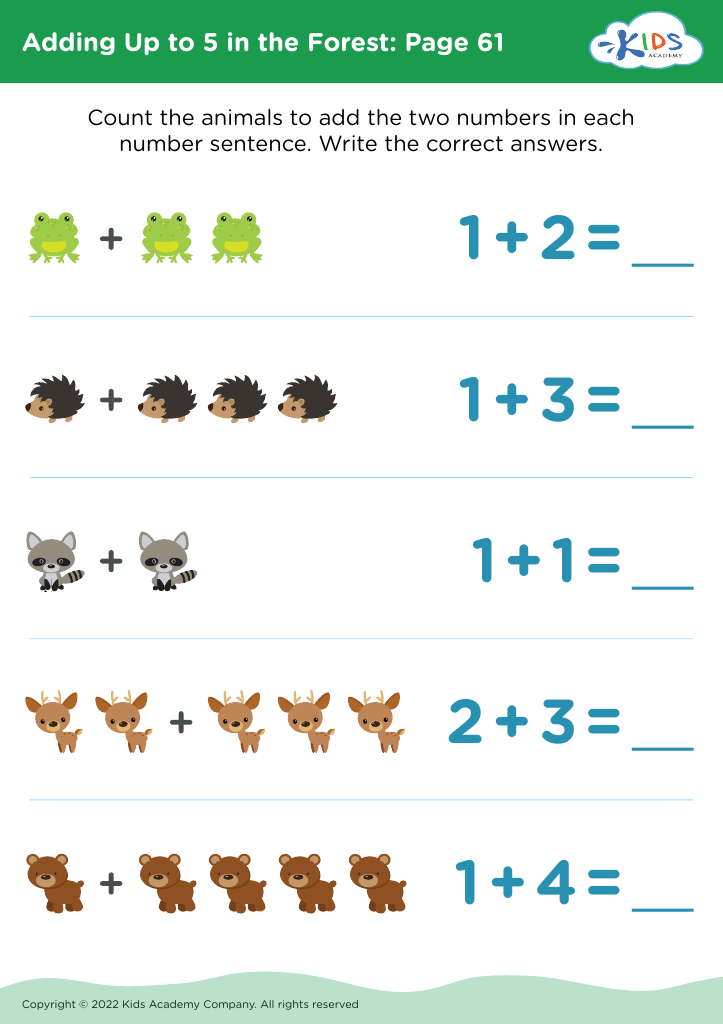
Adding Up to 5 in the Forest: Page 61
Worksheet
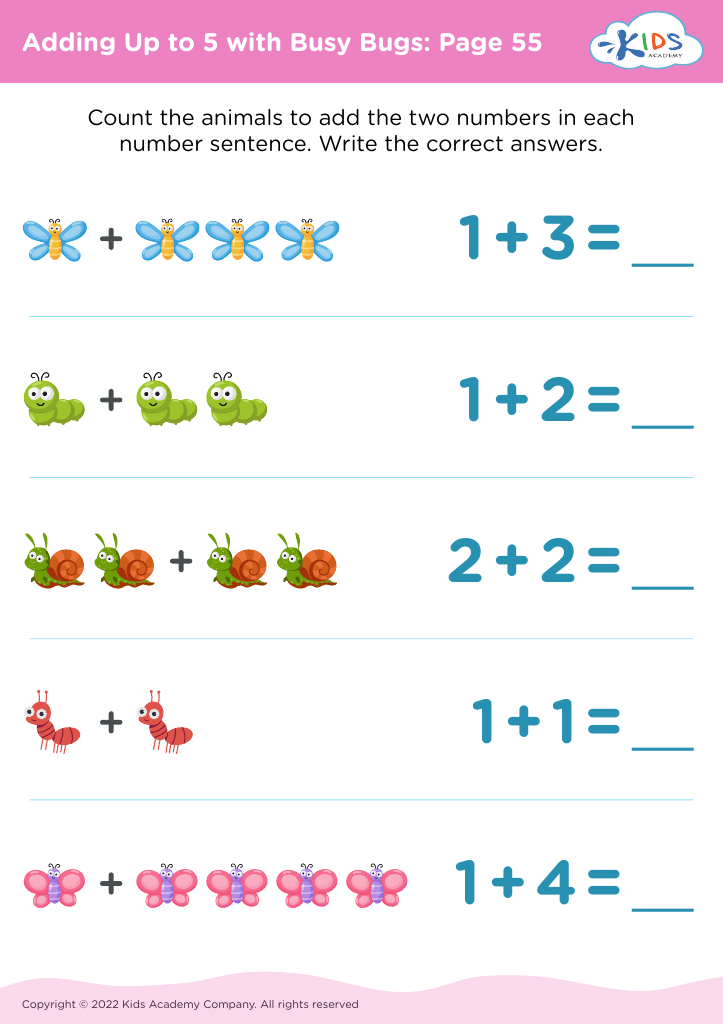
Adding Up to 5 with Busy Bugs: Page 55
Worksheet


Number recognition, along with basic addition and subtraction skills, is essential for children aged 3-5 as it lays the foundation for their mathematical understanding and overall cognitive development. During these formative years, children's brains are particularly receptive to new information, making it an ideal time to introduce them to numbers and basic math concepts.

Parents and teachers should care about this early math education for several reasons. Firstly, number recognition enhances a child's ability to engage with their environment, as it is a fundamental skill used in daily life, from counting objects to recognizing prices while shopping. Furthermore, mastering addition and subtraction helps develop critical thinking and problem-solving skills, which are crucial for their academic journeys ahead.

Engaging young learners in fun and interactive activities related to numbers can foster a positive attitude toward math, reducing math anxiety they might encounter later on. Moreover, early math skills have been shown to correlate strongly with future success in school and beyond, making it vital for parents and teachers to prioritize these foundational concepts. By nurturing number recognition and basic arithmetic, they empower children with the tools they need to thrive in their educational and personal lives.