Understanding numbers Addition & Subtraction Worksheets for Ages 3-5
4 filtered results
-
From - To
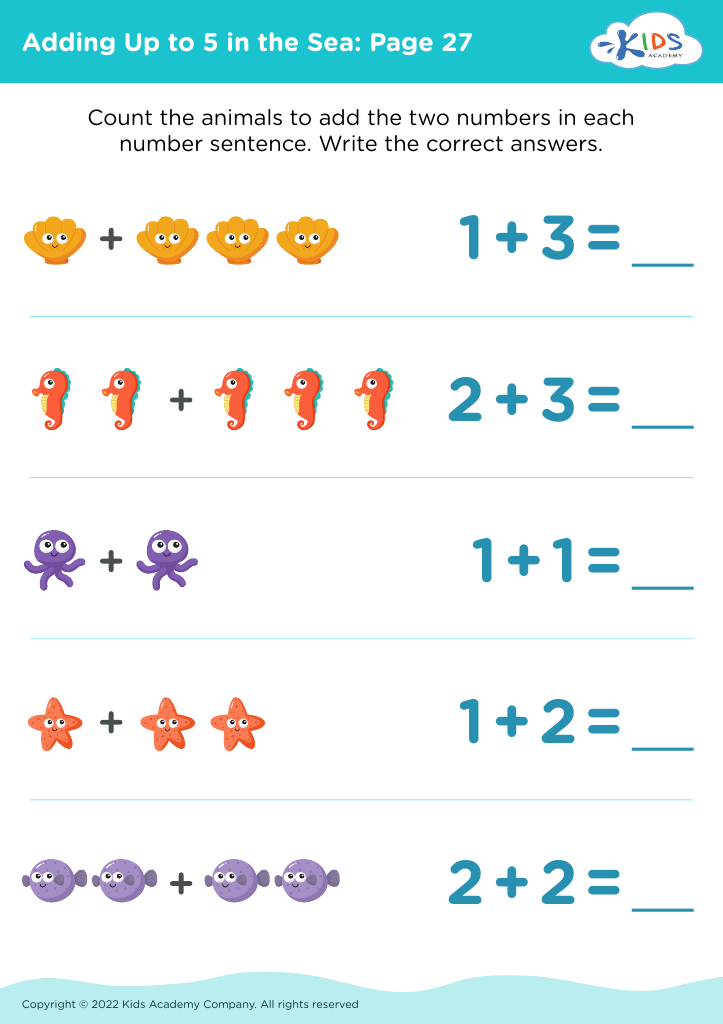
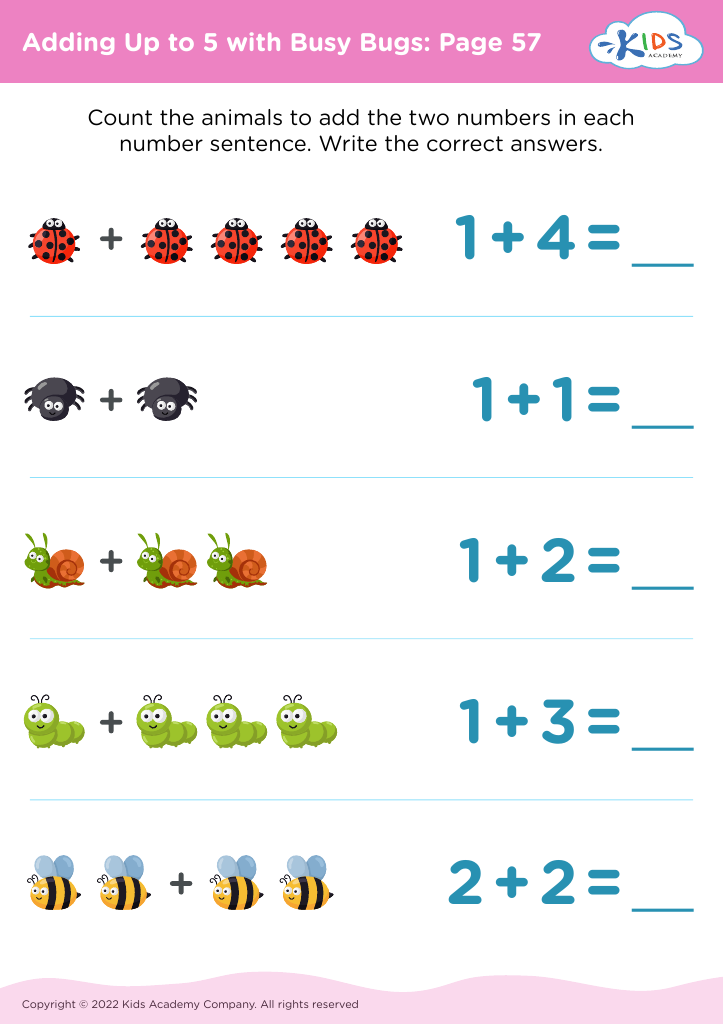
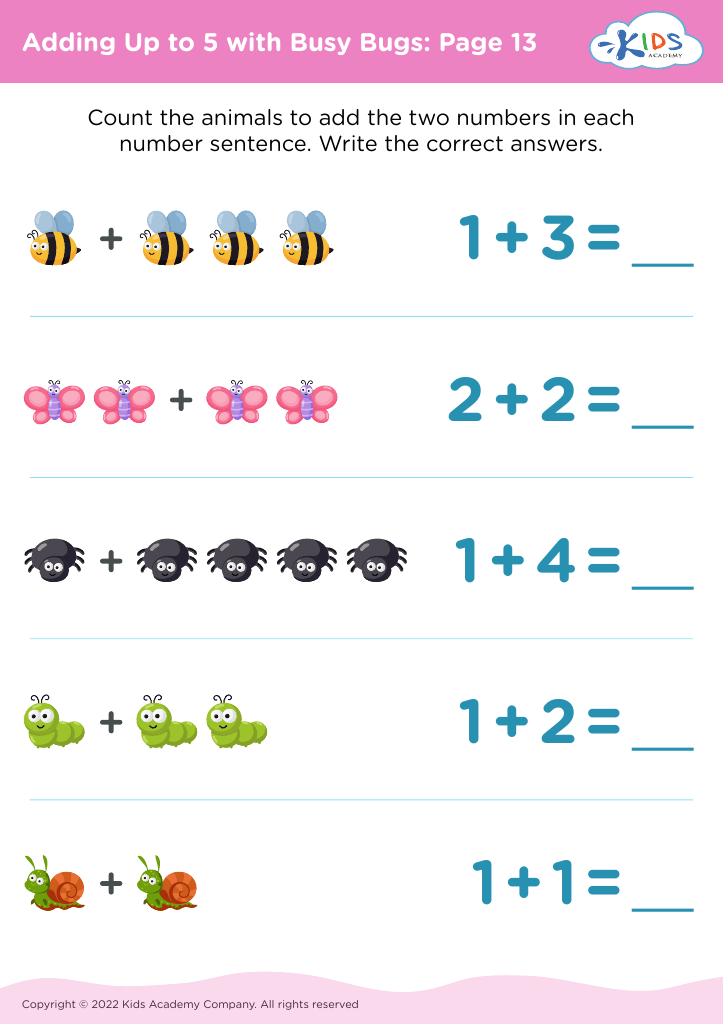
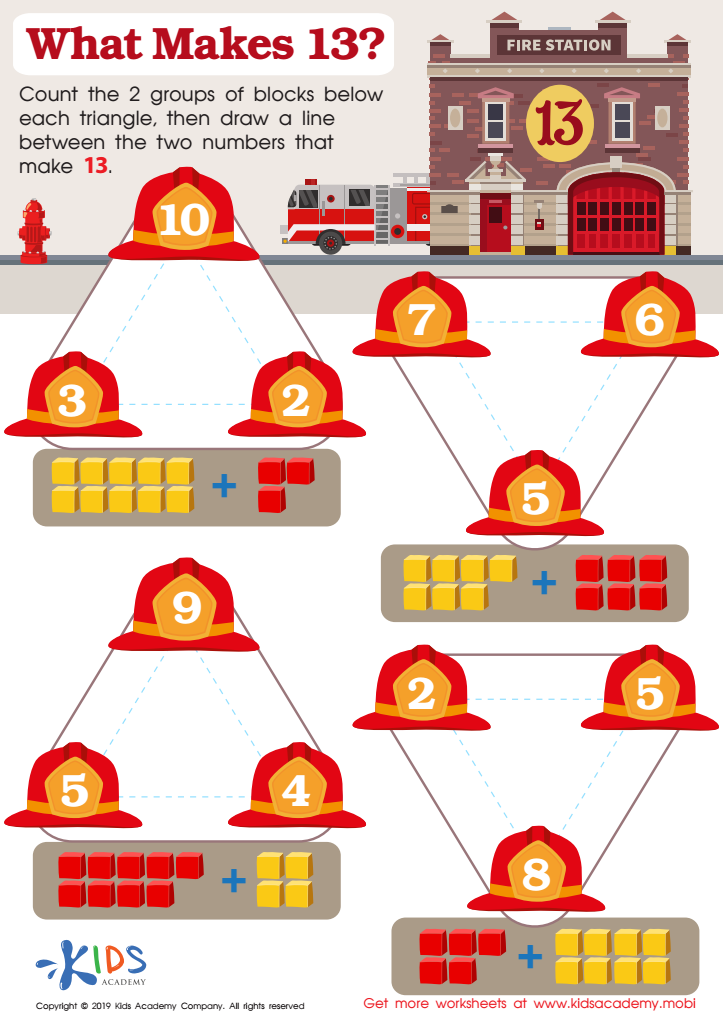
Welcome to our "Understanding Numbers: Addition & Subtraction Worksheets for Ages 3-5" page! Designed to introduce young learners to the world of numbers, these engaging worksheets provide foundational skills essential for early math success. Each activity focuses on simple addition and subtraction concepts, promoting number recognition and basic problem-solving abilities. With colorful illustrations and playful themes, children will delight in completing each task. These worksheets not only foster a love for math but also enhance fine motor skills as little ones practice writing numbers and drawing objects. Ignite your child's mathematical journey today with our fun and educational resources!
What Makes 13 Worksheet
 Assign to My Students








Understanding numbers and basic operations like addition and subtraction is crucial for children aged 3-5 as it lays the foundation for their future mathematical skills. At this developmental stage, children are naturally curious and learn best through play and exploration. Parents and teachers play a vital role in fostering that curiosity by introducing numbers in engaging ways.
Early mastery of numeracy leads to improved problem-solving skills and logical thinking, which are essential for daily life and more complex math later on. Engaging children with fun activities—like counting objects, sharing snacks, or playing number games—not only reinforces their understanding but also builds confidence in their abilities.
Moreover, numeracy skills enhance cognitive development and are linked to academic success across subjects, not just math. When children learn to add and subtract, they begin to understand relationships and patterns, paving the way for more advanced concepts.
Additionally, fostering these skills ensures that children feel positive about math, reducing anxiety and negative associations with the subject as they grow. Consequently, both parents and teachers should prioritize early numeracy to equip children with the essentials needed for their lifelong academic journey.








