Understanding Sequences Addition & Subtraction Worksheets for Ages 3-5
4 filtered results
-
From - To
Explore our "Understanding Sequences Addition & Subtraction Worksheets," specially designed for children aged 3-5. These engaging worksheets help young learners grasp fundamental math concepts by focusing on sequence recognition and number operations. Through colorful visuals and simple exercises, children will enhance their ability to add and subtract while following patterns. Our resources foster critical thinking skills, enabling kids to build a strong foundation in mathematics. Ideal for homeschooling or classroom settings, these worksheets ensure a fun and interactive learning experience. Dive into the world of numbers and watch your little ones develop confidence and curiosity in math with our structured activities!
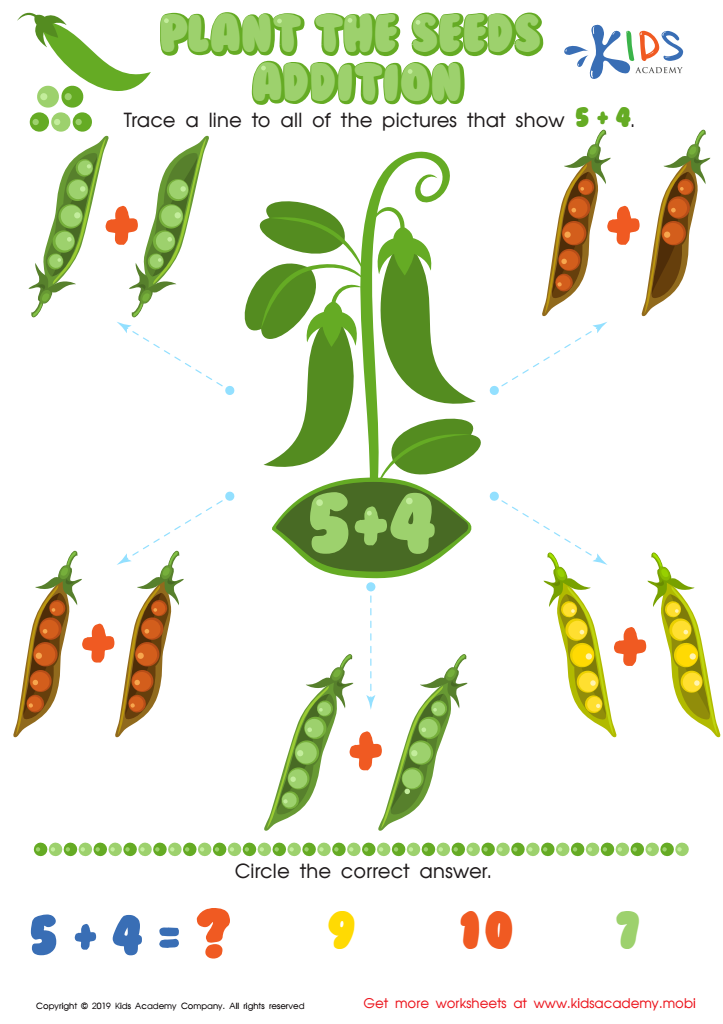
Plant the Seeds Addition Worksheet
 Assign to My Students
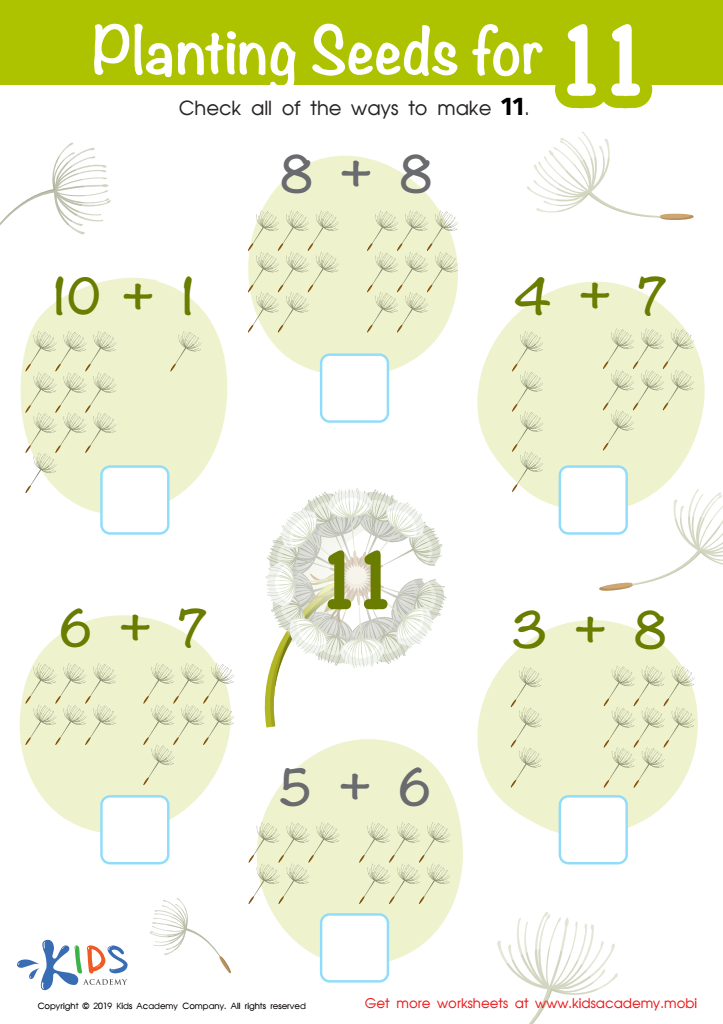
Planting Seeds for 11 Worksheet
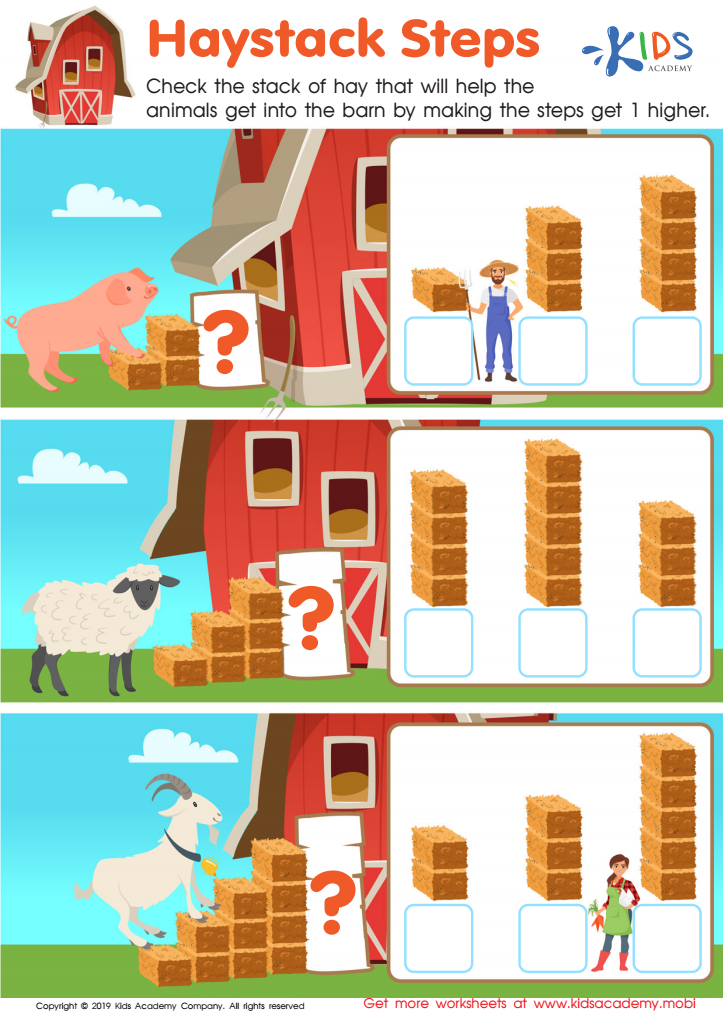
Haystack Steps Worksheet








Understanding sequences in addition and subtraction is crucial for children aged 3-5 as it forms the foundation for their mathematical journey. During this developmental stage, children embark on the journey of learning basic math concepts. By grasping the concept of sequences, they learn to recognize patterns, which enhances their critical thinking and problem-solving skills.
Introducing sequences in addition and subtraction helps children understand the relationship between numbers. For example, knowing that 2 + 1 leads to 3 allows them to predict and recognize that if we add another 1, we reach 4. This builds their confidence and enthusiasm towards math. Teachers and parents can scaffold learning through playful activities such as number games, sorting exercises, and interactive storytelling, promoting learning in a fun way.
Moreover, these early skills contribute to later mathematical proficiency, allowing children to tackle more complex concepts in school. By engaging with sequences now, children also strengthen their cognitive development, improving memory and focus. Thus, parents and teachers working together to reinforce these skills creates an enriching environment that nurtures a child’s curiosity in mathematics and prepares them for future academic success. Understanding sequences in addition and subtraction is not just a skill; it's a launchpad for lifelong learning.








