Addition Practice Addition Worksheets for Ages 3-5 - Page 3
70 filtered results
-
From - To
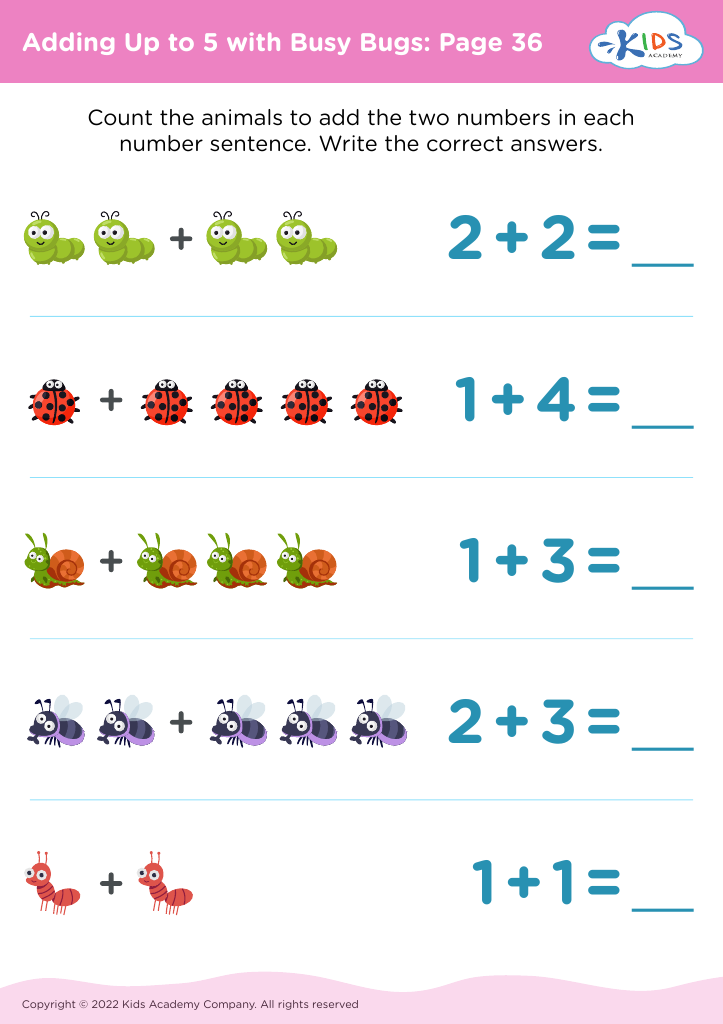
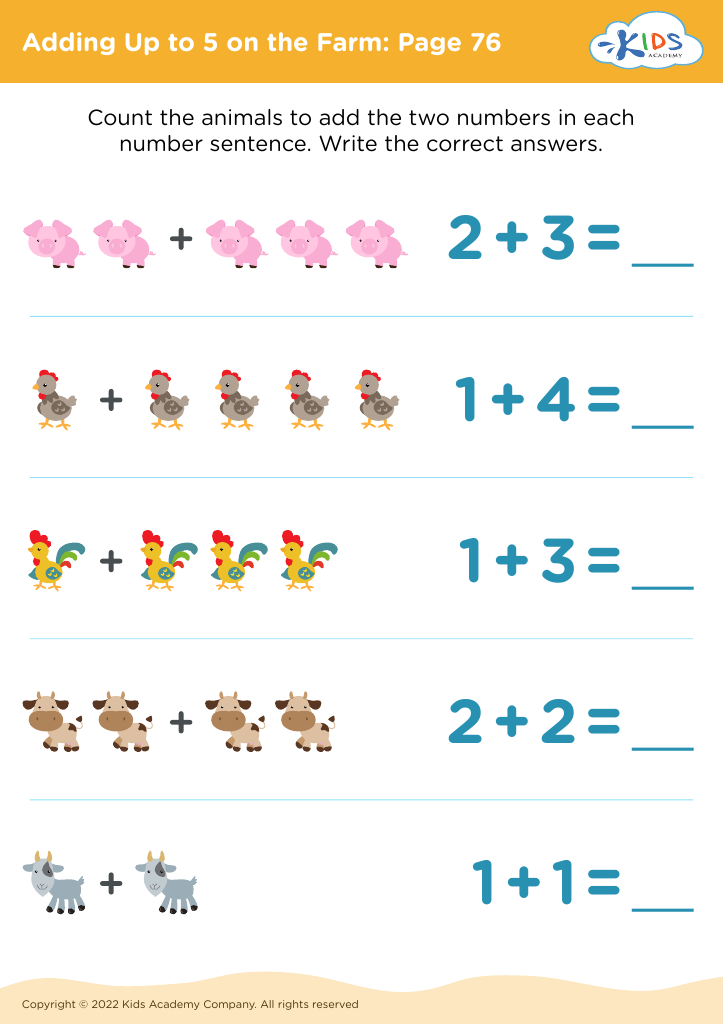
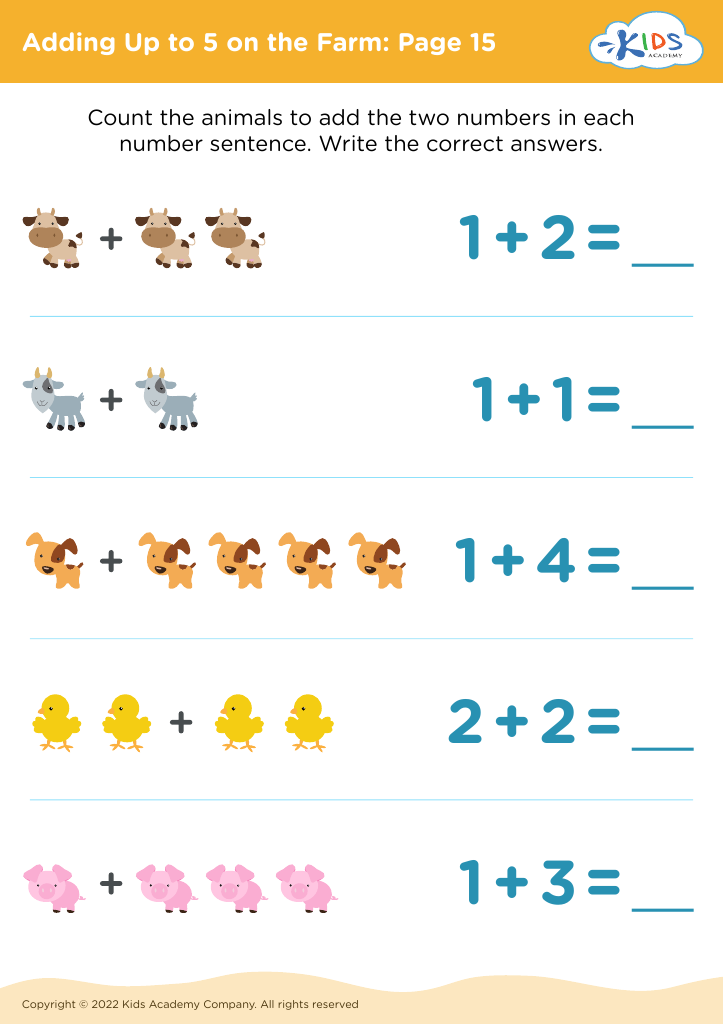
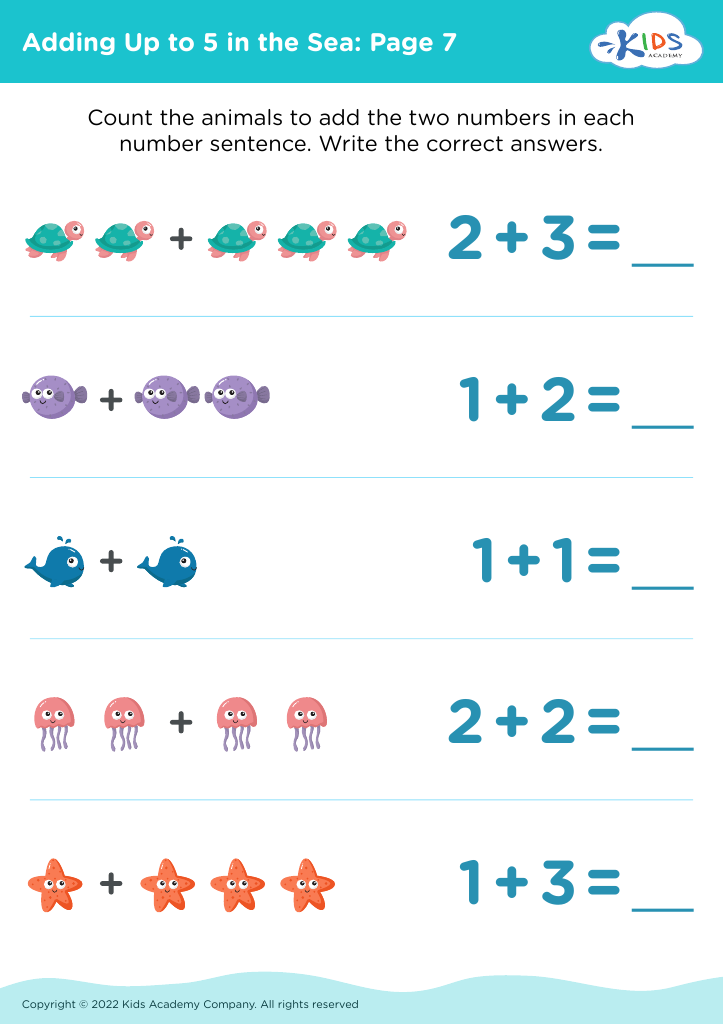
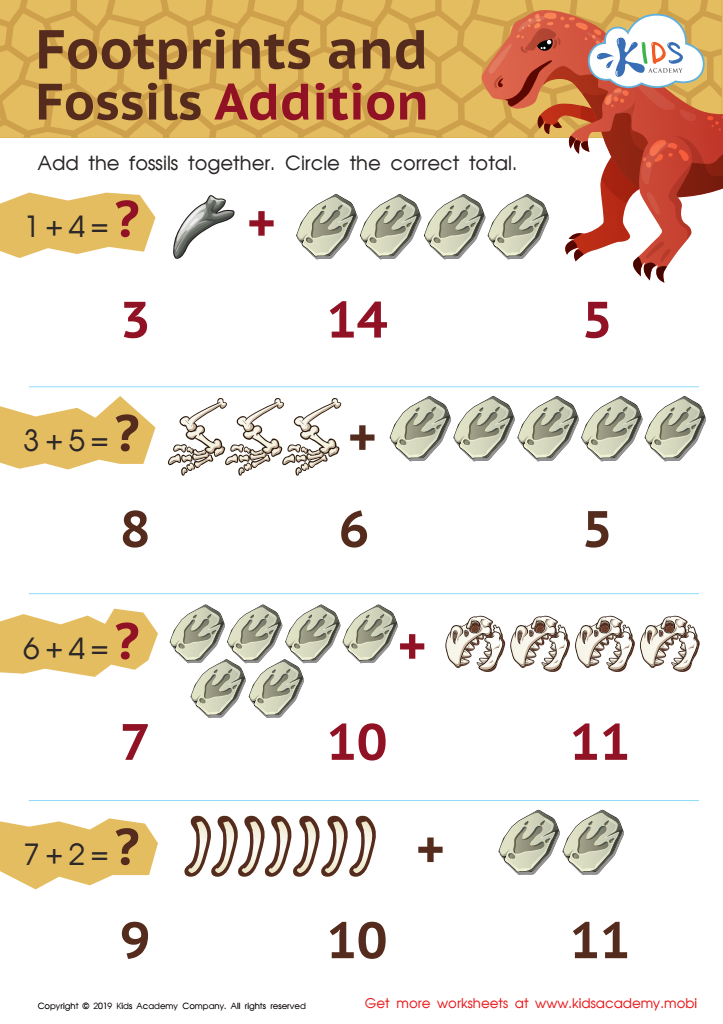
Footprints and Fossils Addition Worksheet
 Assign to My Students
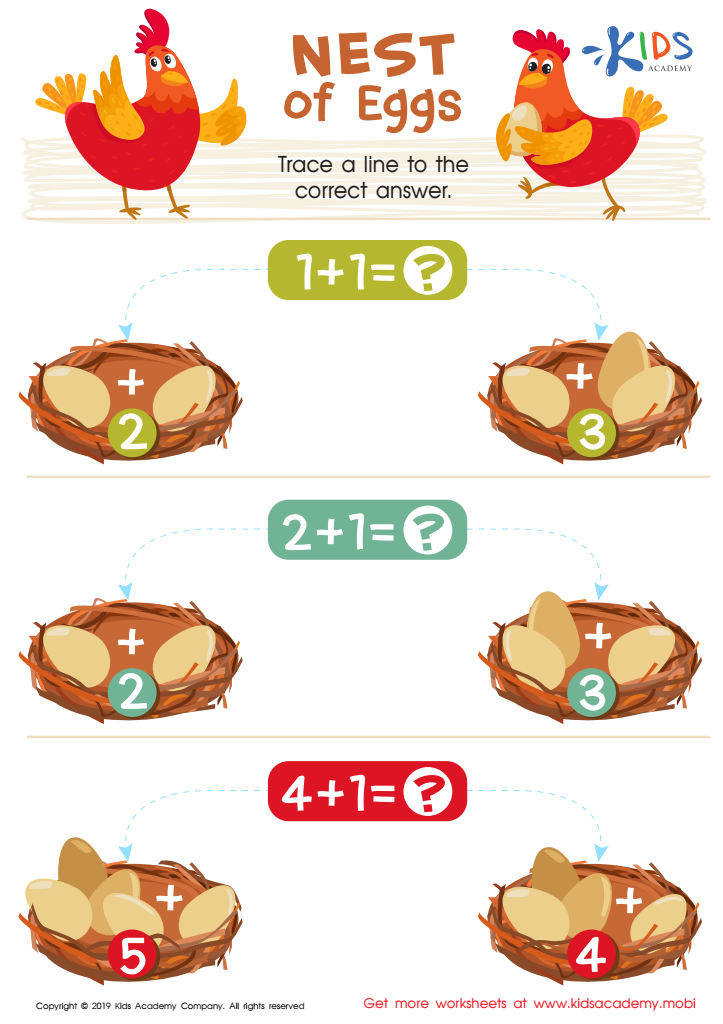
Nest of Eggs Worksheet
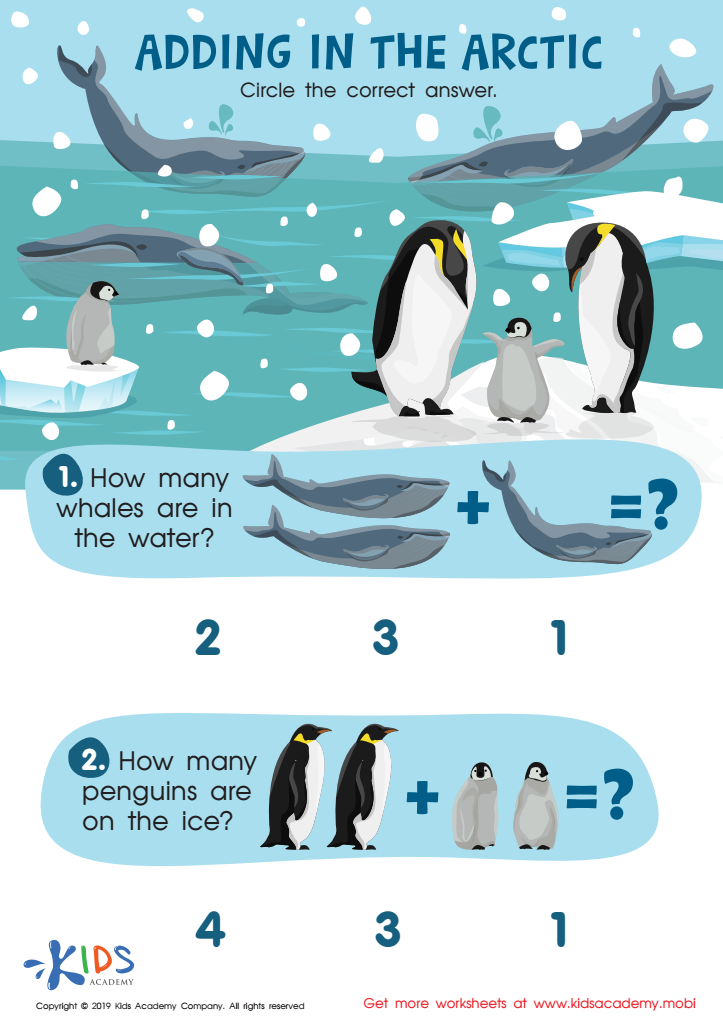
Adding in the Arctic Worksheet
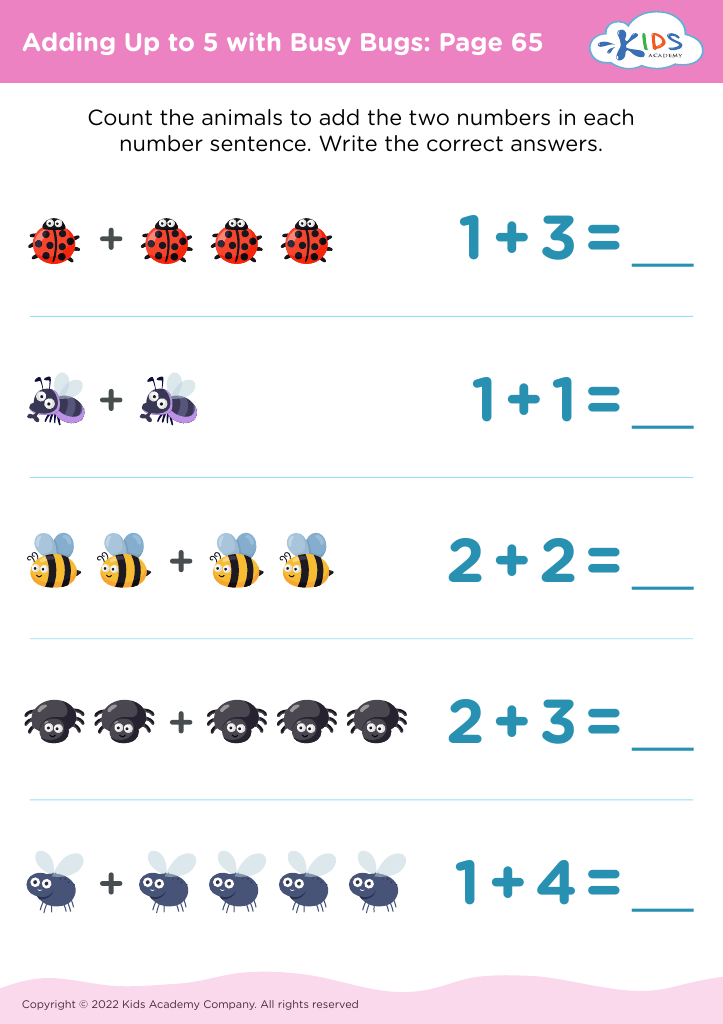
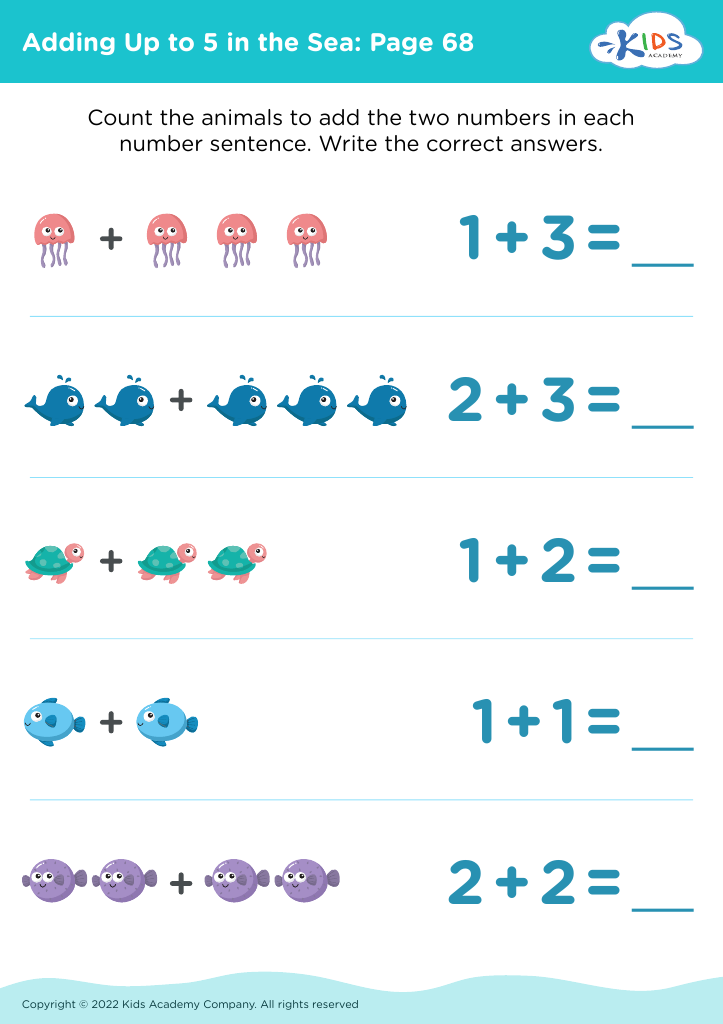
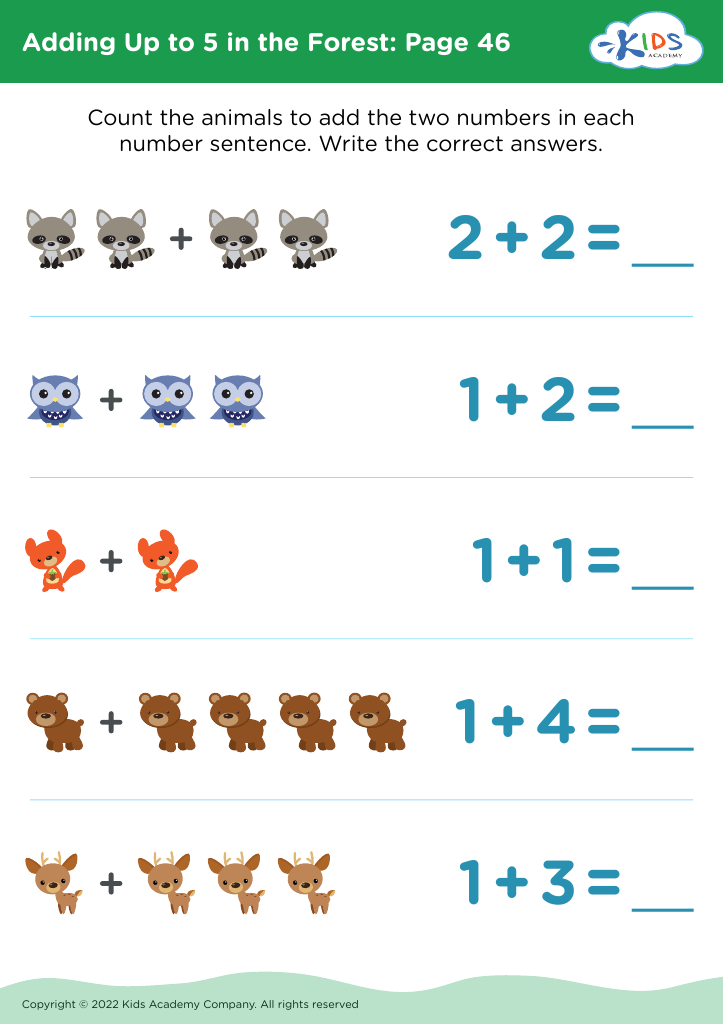
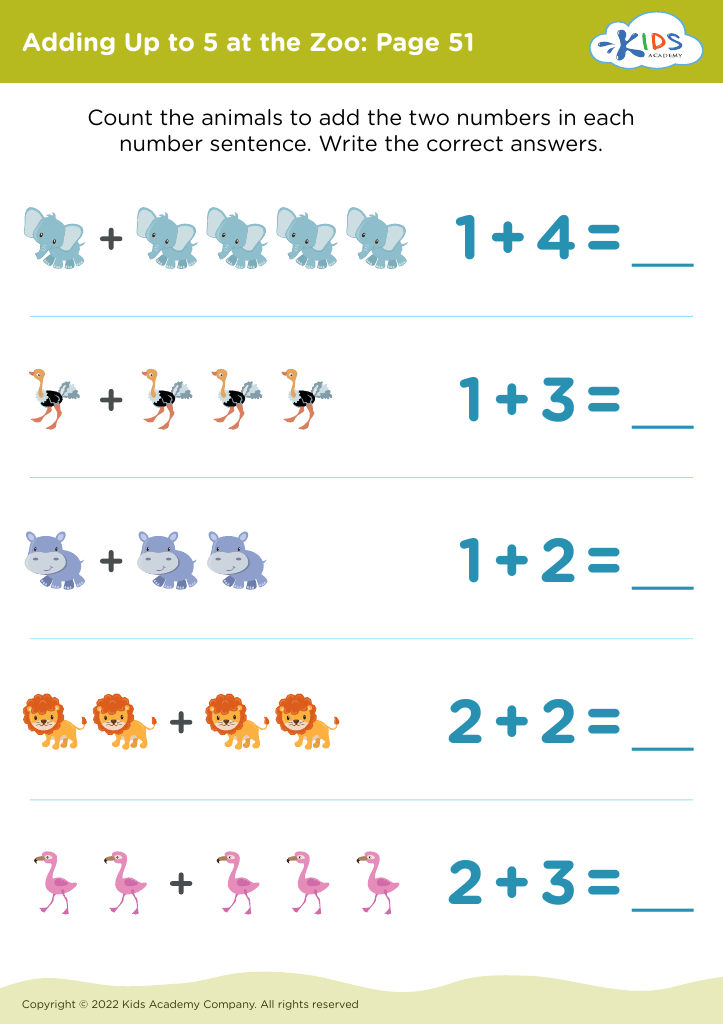
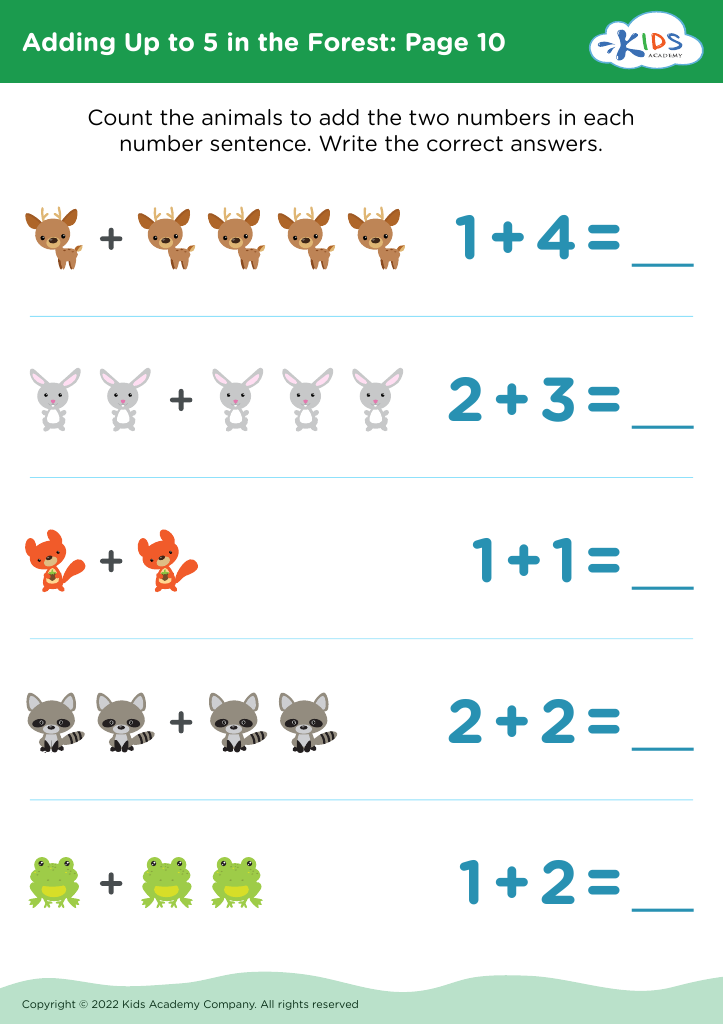
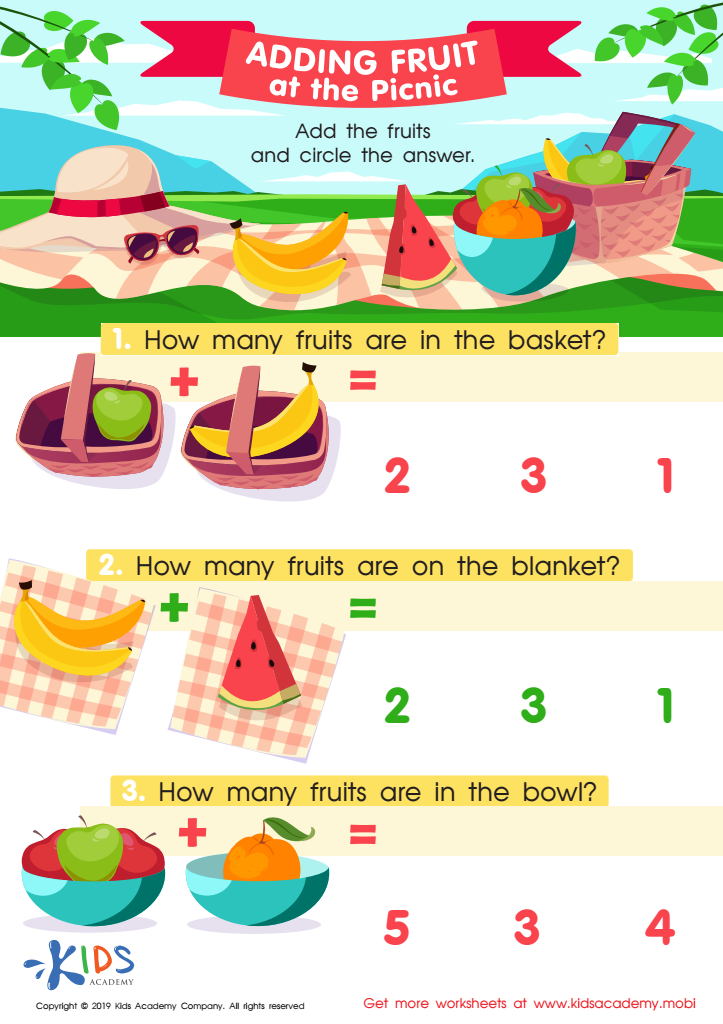
Adding Fruit at the Picnic Worksheet
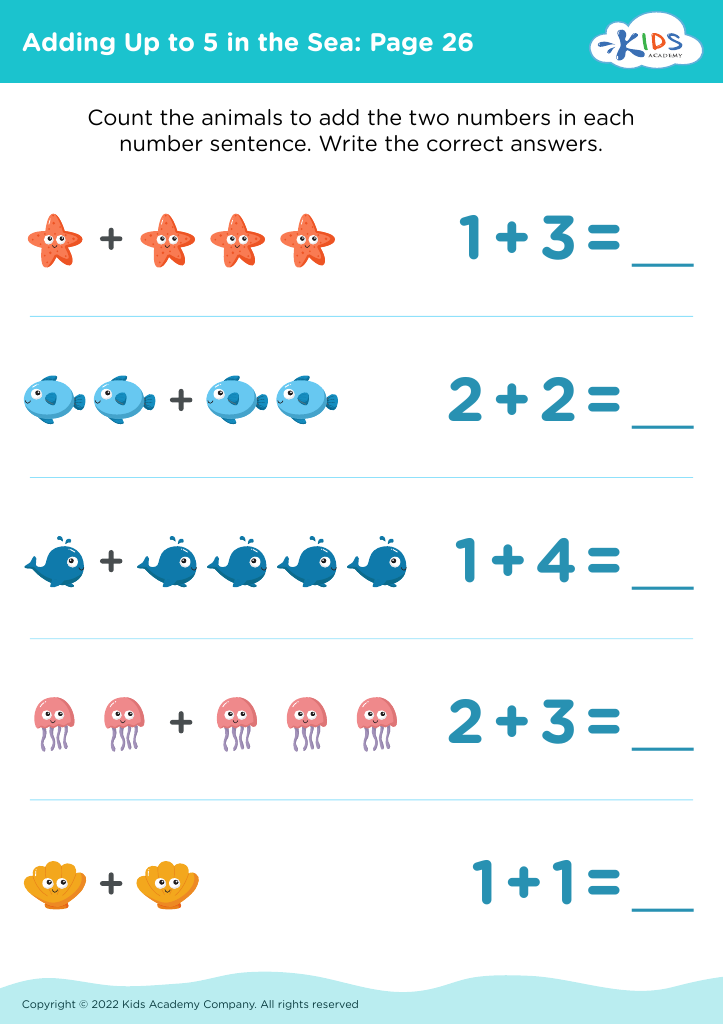
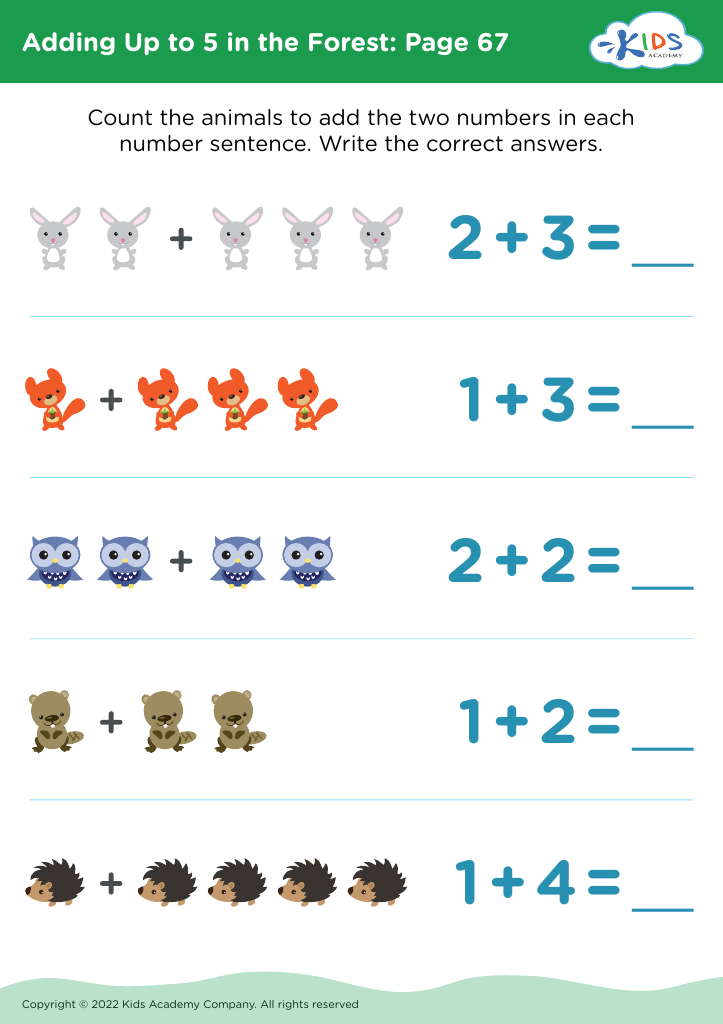
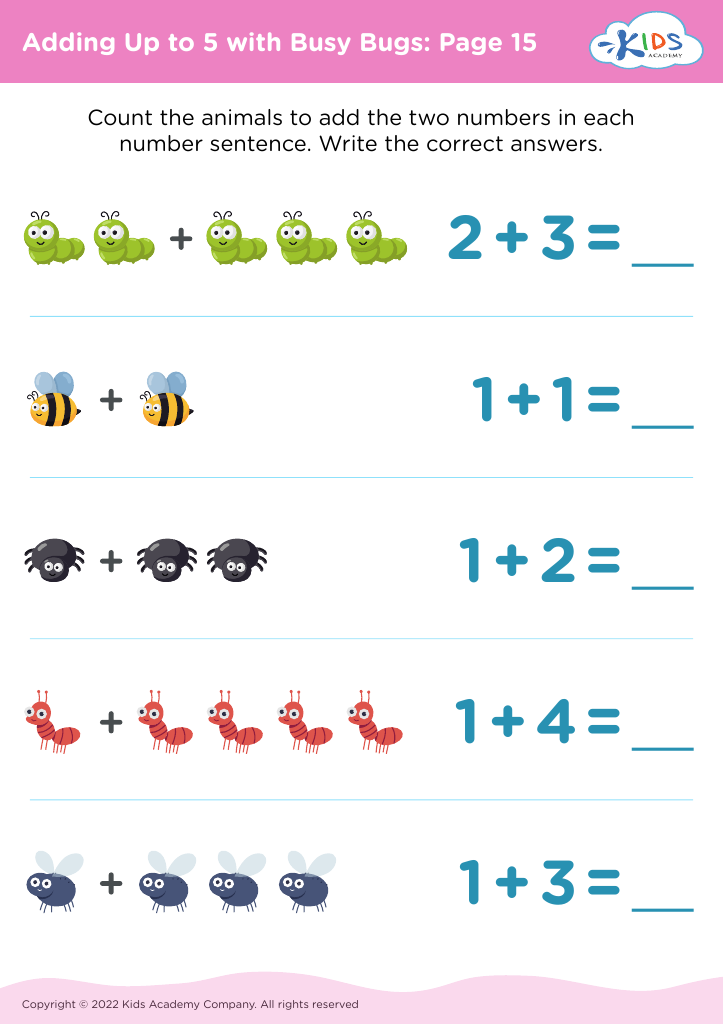








Addition practice for children aged 3-5 is crucial for their cognitive development and foundational mathematics skills. During these formative years, young learners are highly receptive to new concepts, making it an ideal time to introduce basic mathematical operations like addition. Engaging in addition activities helps children develop problem-solving skills and enhances their understanding of numbers, fostering a strong number sense that is essential for later academic success.
When parents and teachers prioritize addition practice, they also encourage critical thinking and reasoning abilities. Engaging with math in playful and interactive ways, such as using counting objects or fun games, makes learning enjoyable and promotes a positive attitude towards math. This positive reinforcement builds confidence and reduces anxiety surrounding mathematical tasks as children grow.
Moreover, early math proficiency is linked to long-term academic achievement. Studies show that children who develop strong early math skills are more likely to excel in higher-level mathematics later in their schooling. By investing time and effort into addition practice now, parents and teachers are laying a solid groundwork for children’s future educational journeys. Ultimately, enhancing early math skills through addition practice equips young learners with tools they can carry into all areas of their academic and personal lives.








