Check out this FREE Trial Lesson on Addition for age 3-5!

P

Favorites
With answer key
Interactive
  • 3-5
  • Basic Arithmetic
  • Addition
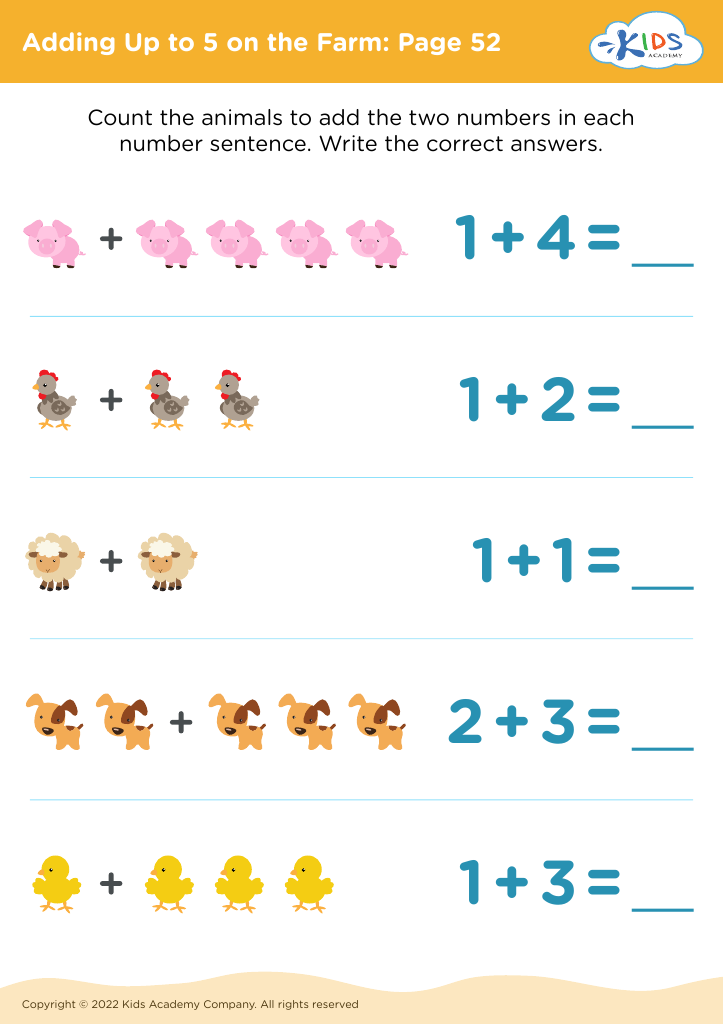
Adding Up to 5 on the Farm: Page 52
Worksheet
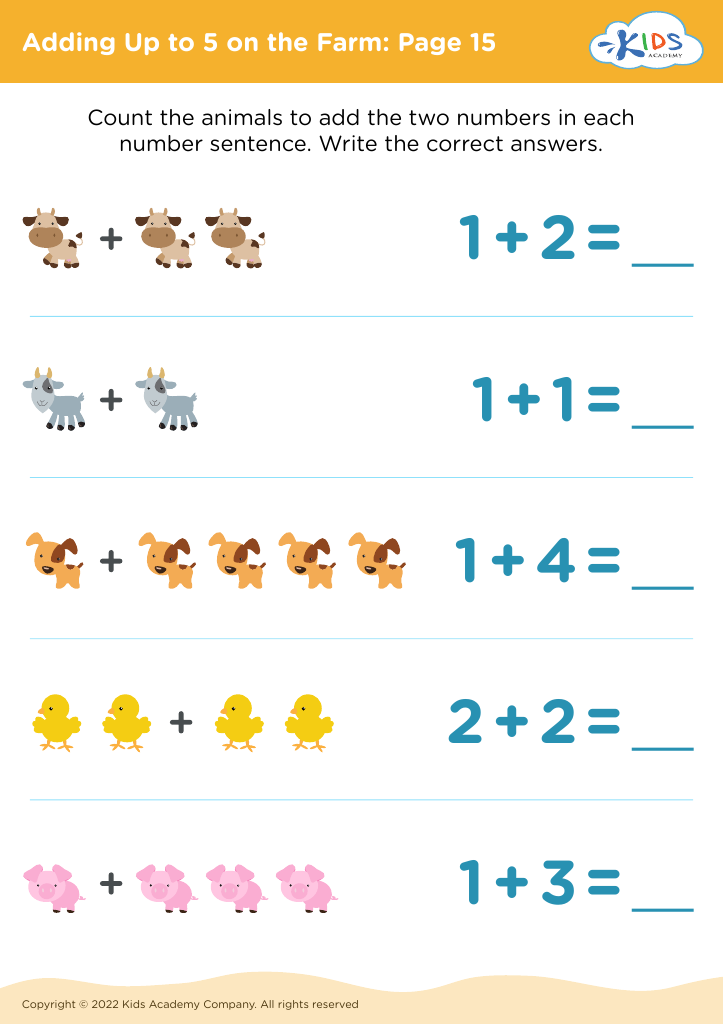
Adding Up to 5 on the Farm: Page 15
Worksheet
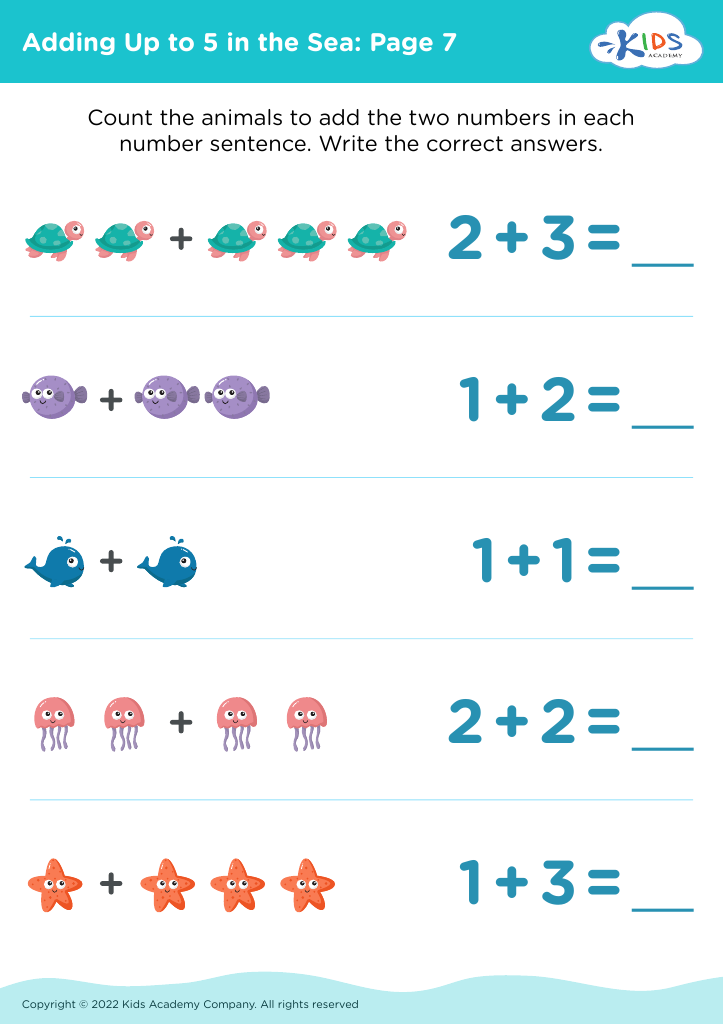
Adding Up to 5 in the Sea: Page 7

Adding Up to 5 in the Sea: Page 7

Adding Up to 5 in the Sea: Page 7
Worksheet
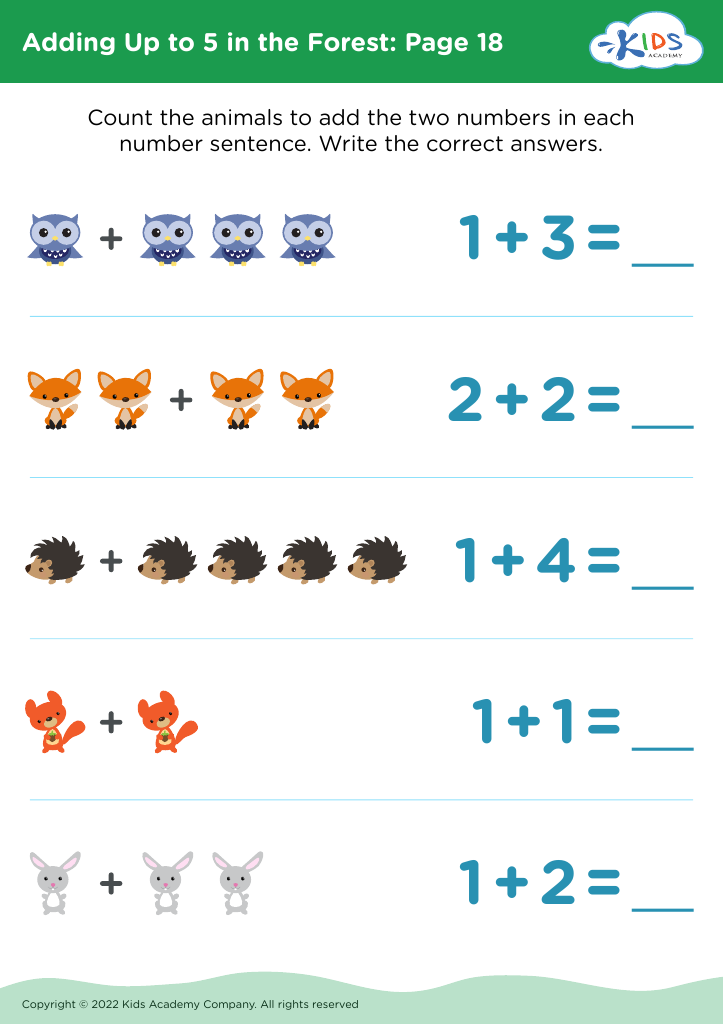
Adding Up to 5 in the Forest: Page 18
Worksheet
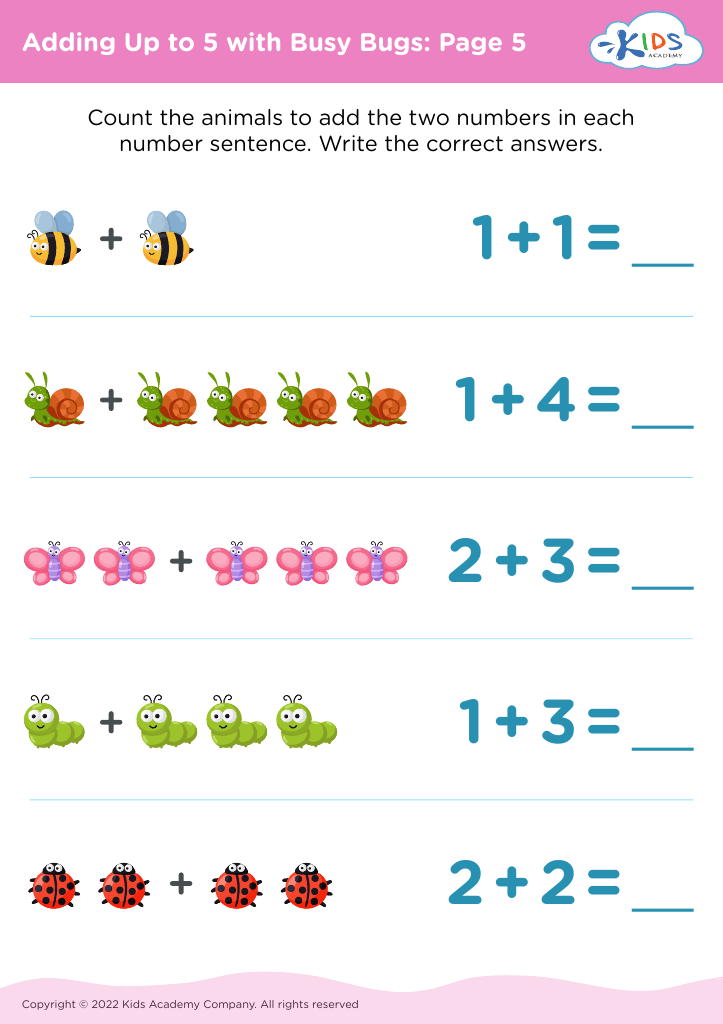
Adding Up to 5 with Busy Bugs: Page 5
Worksheet
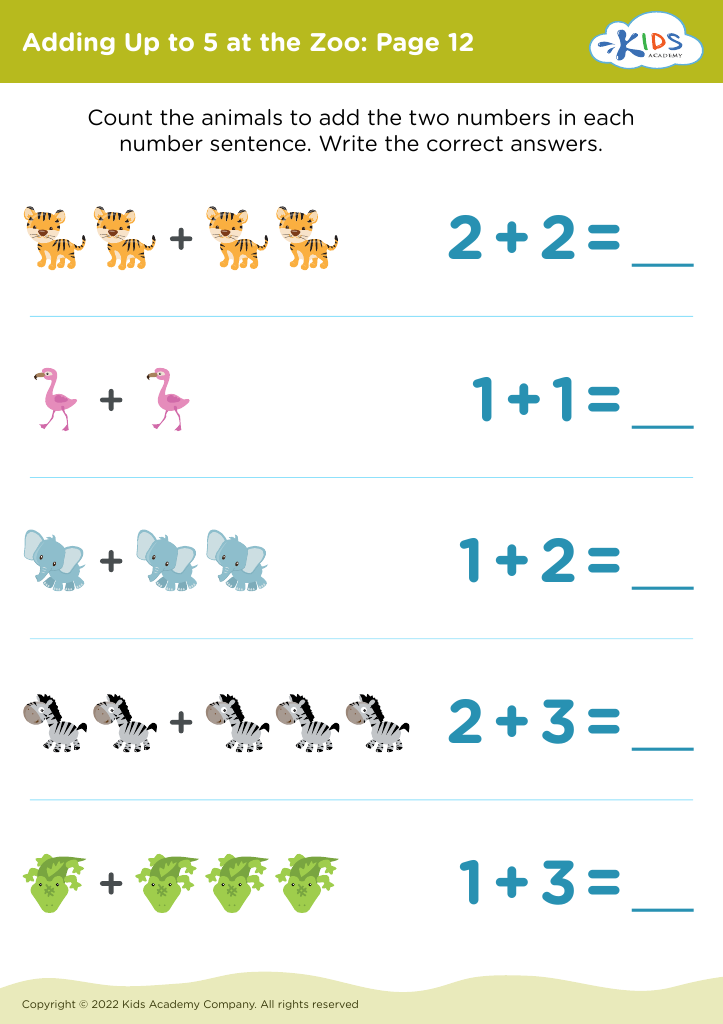
Adding Up to 5 at the Zoo: Page 12
Worksheet
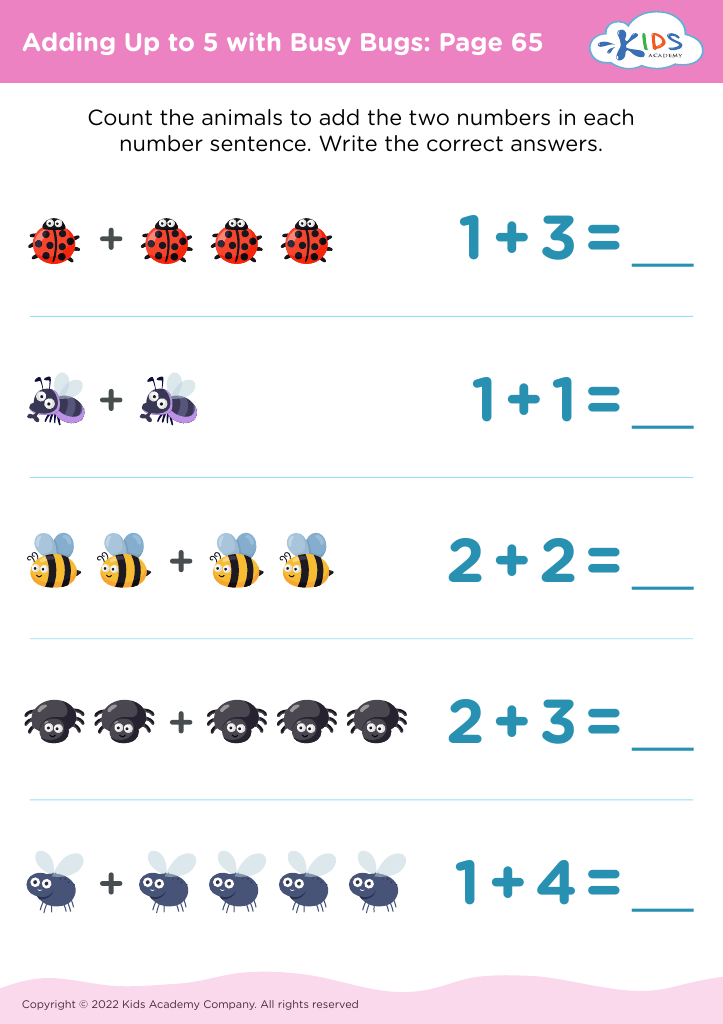
Adding Up to 5 with Busy Bugs: Page 65
Worksheet
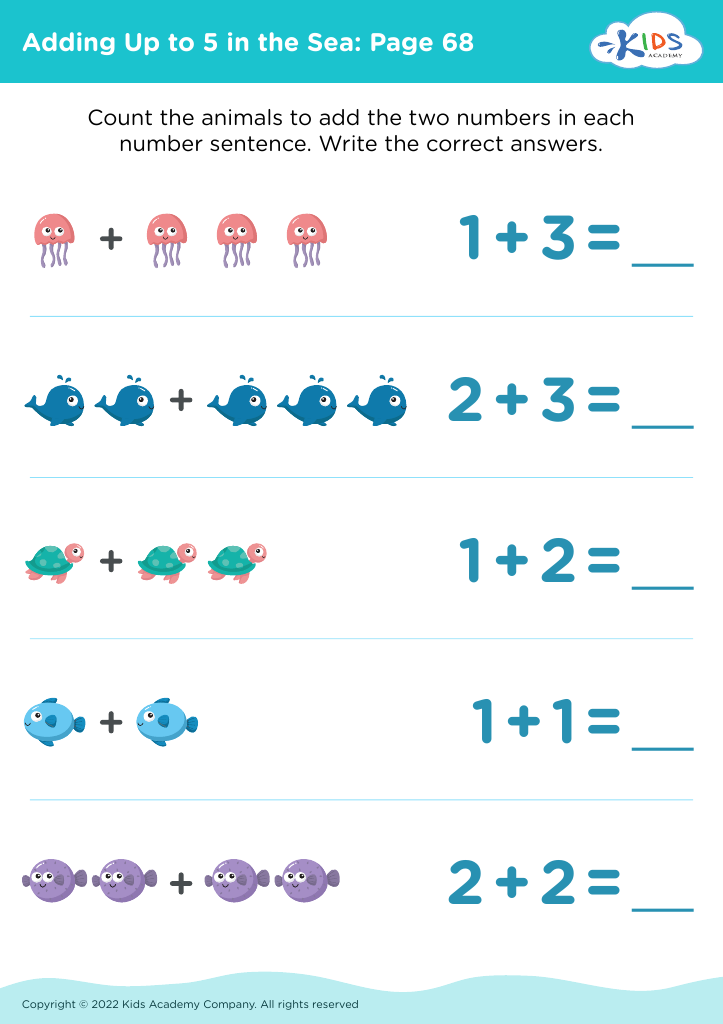
Adding Up to 5 in the Sea: Page 68
Worksheet
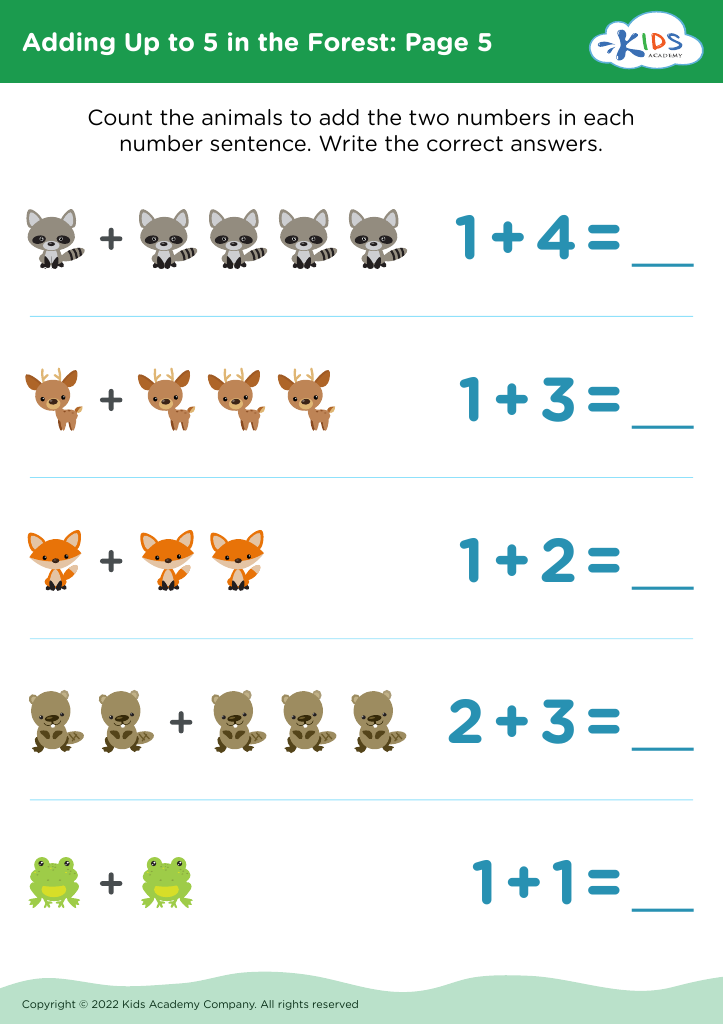
Adding Up to 5 in the Forest: Page 5
Worksheet
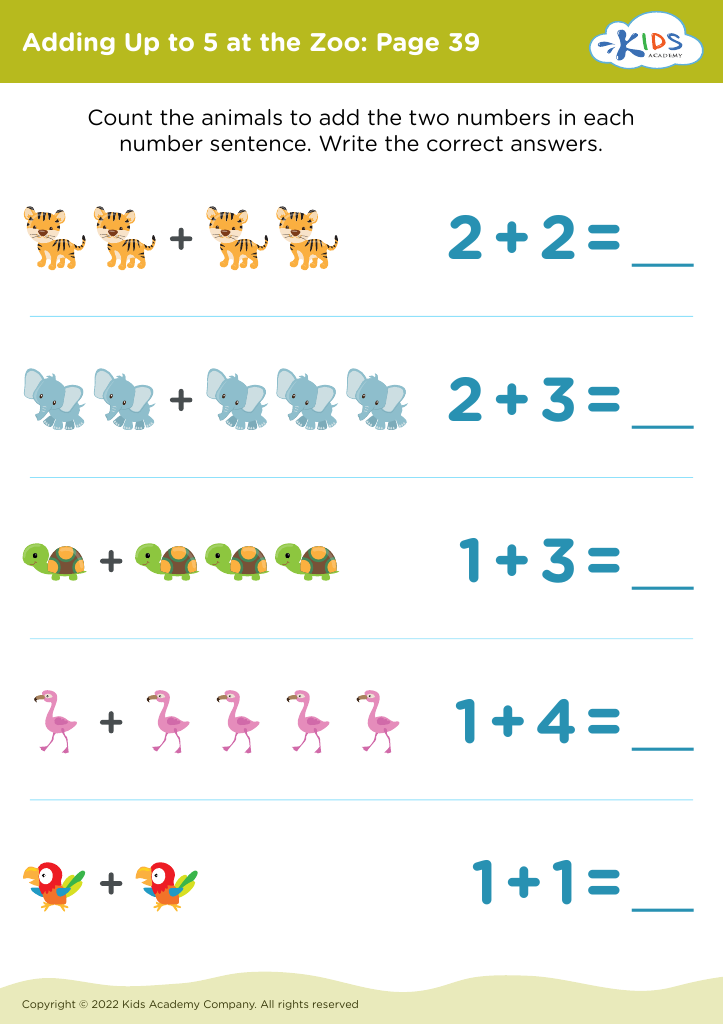
Adding Up to 5 at the Zoo: Page 39
Worksheet
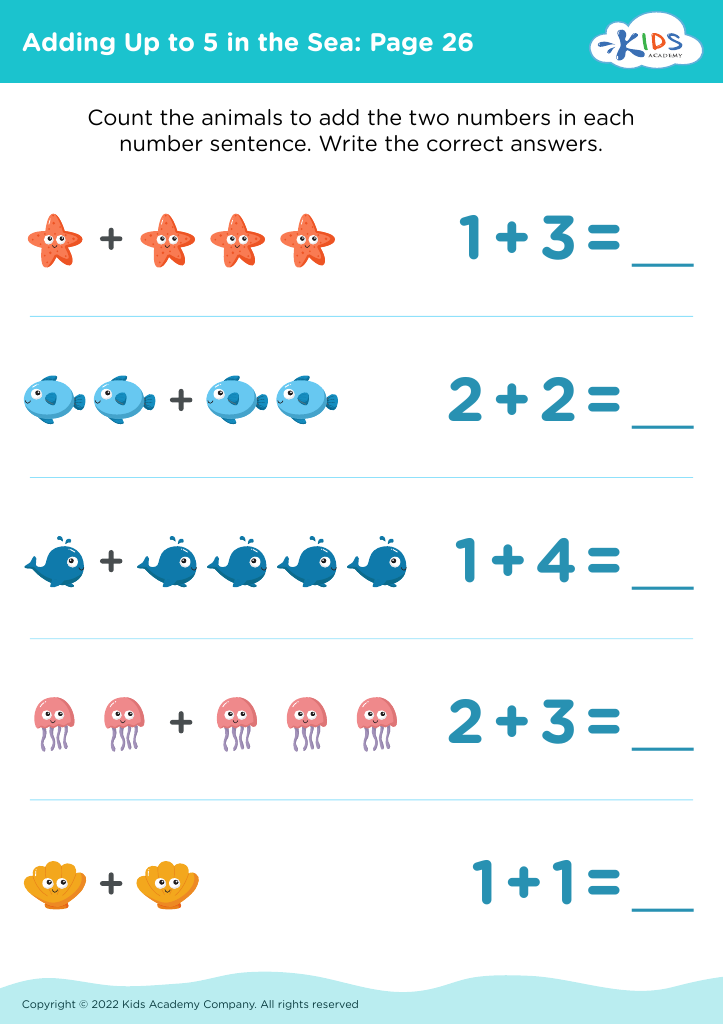
Adding Up to 5 in the Sea: Page 26
Worksheet
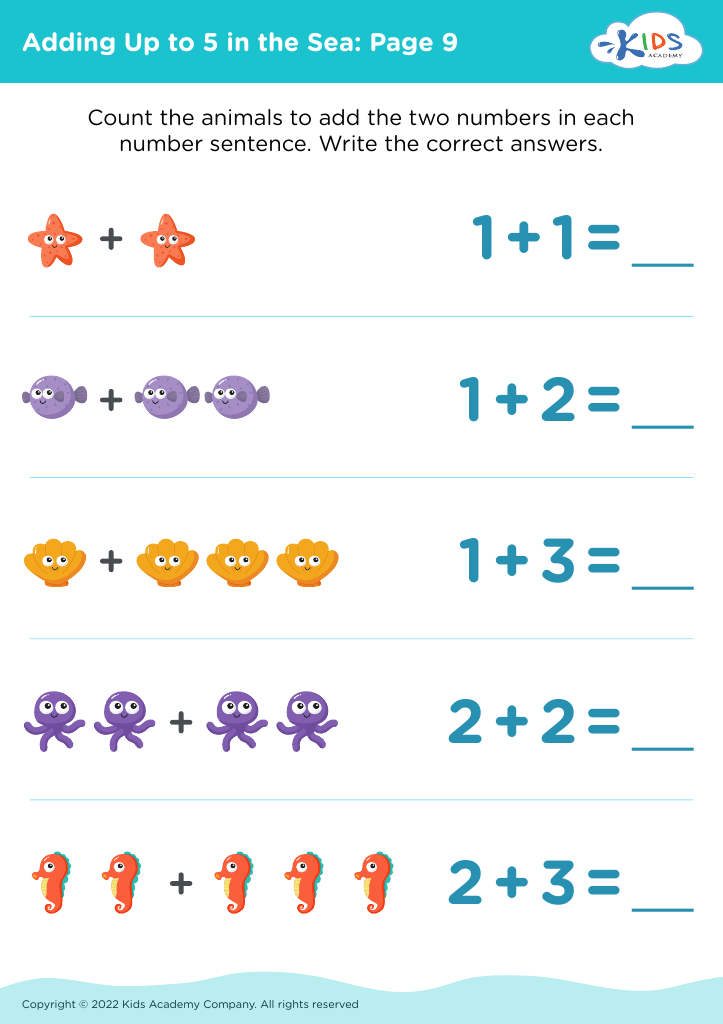
Adding Up to 5 in the Sea: Page 9

Adding Up to 5 in the Sea: Page 9

Adding Up to 5 in the Sea: Page 9
Worksheet


Basic arithmetic addition is a foundational skill crucial for children aged 3-5 as it sets the stage for their future mathematical understanding. Engaging young learners in simple addition activities fosters cognitive development, helping them to think critically and solve problems early on. By grasping the concept of addition, children learn to recognize quantities, establish relationships between numbers, and build confidence in their mathematical abilities.

Parents and teachers play a pivotal role in this learning process. When they introduce basic concepts of addition through interactive games, songs, and everyday activities, they make learning enjoyable and relatable. This active engagement not only keeps children motivated but also nurtures a positive attitude towards math, reducing future anxieties about the subject.

Moreover, early exposure to addition promotes fine motor skills and language development, as children describe their actions and results. As children master addition, they develop important skills like counting, comparing quantities, and logical reasoning, all of which are important for their overall academic success.

Ultimately, supporting children in mastering basic arithmetic addition during these formative years equips them with essential tools and a strong foundation, helping them flourish as confident, capable learners in mathematics and beyond.