Filters

101 filtered results

Clear all filters
Favorites
With answer key
Interactive

101 filtered results

Difficulty Level

Grade


Check out this FREE Trial Lesson on Addition for age 3-5!

My Family

Favorites
With answer key
Interactive
  • 3-5
  • Cognitive Development
  • Addition
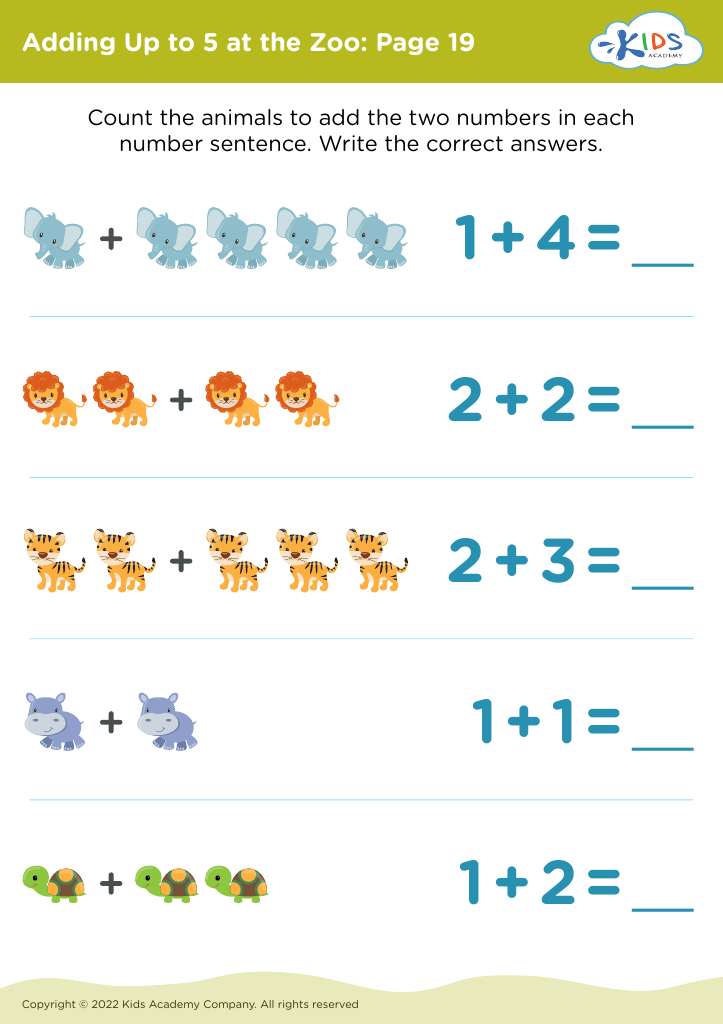
Adding Up to 5 at the Zoo: Page 19
Worksheet
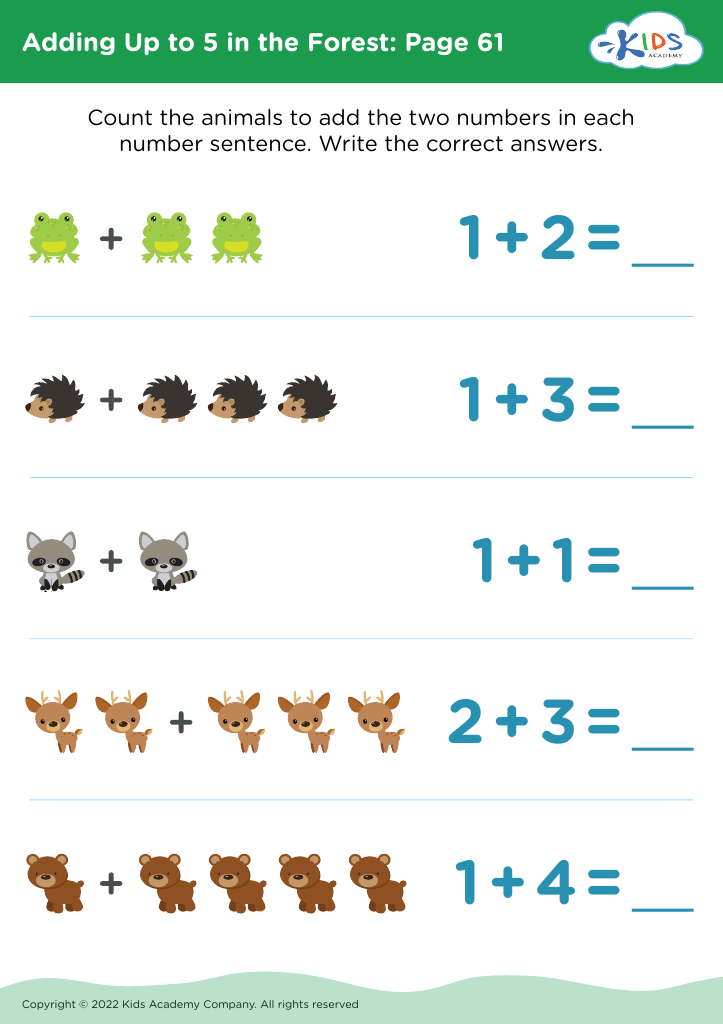
Adding Up to 5 in the Forest: Page 61
Worksheet
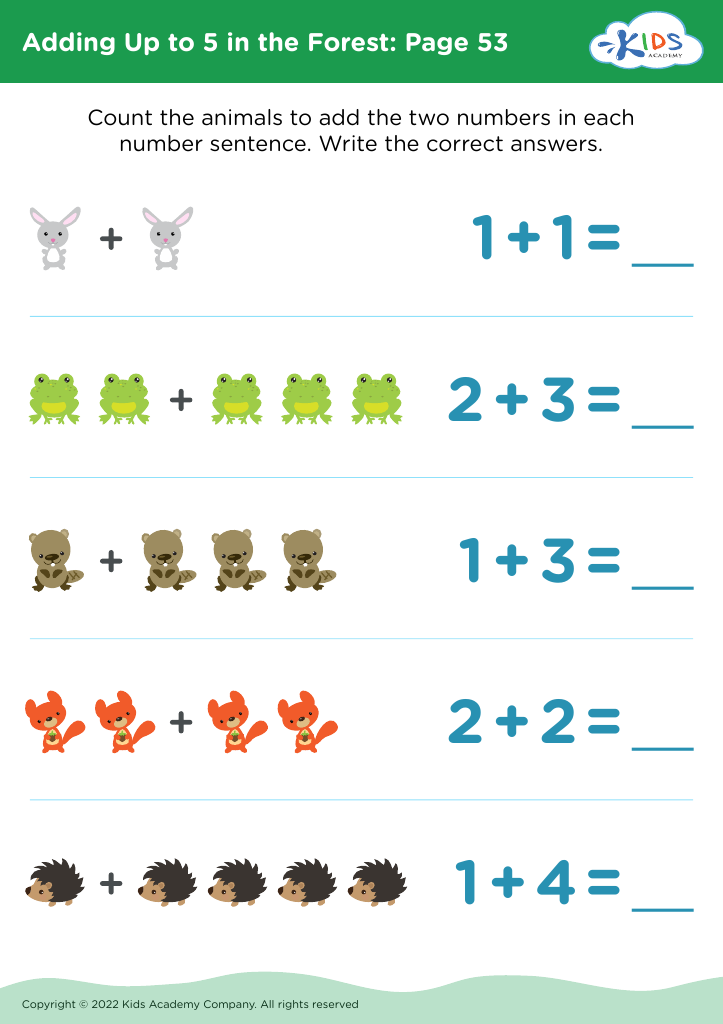
Adding Up to 5 in the Forest: Page 53
Worksheet
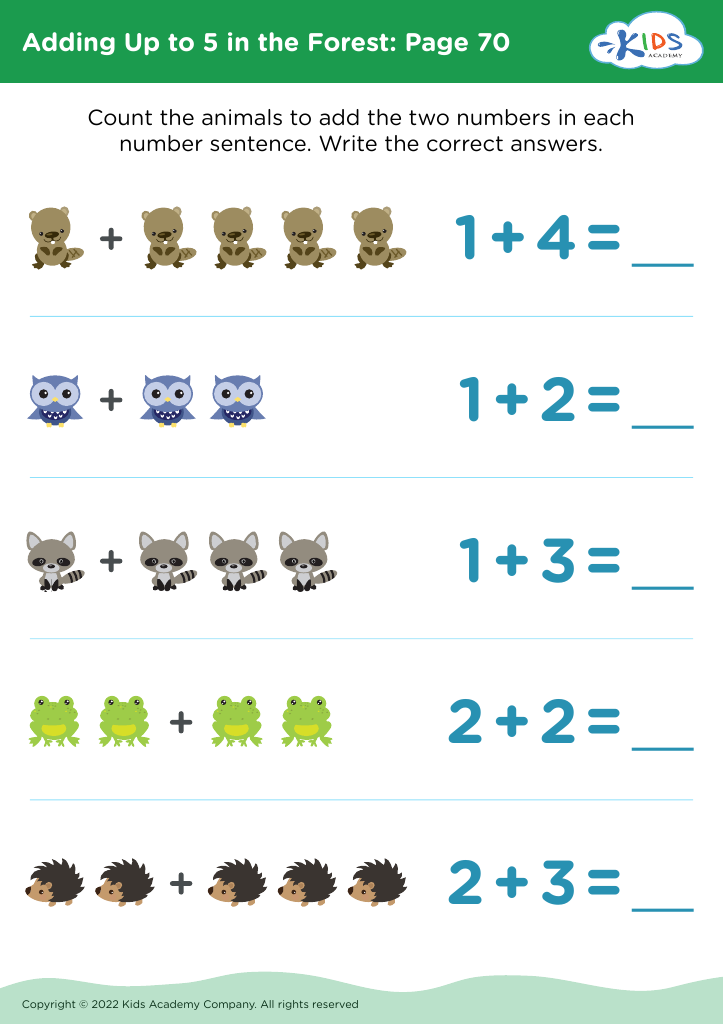
Adding Up to 5 in the Forest: Page 70
Worksheet
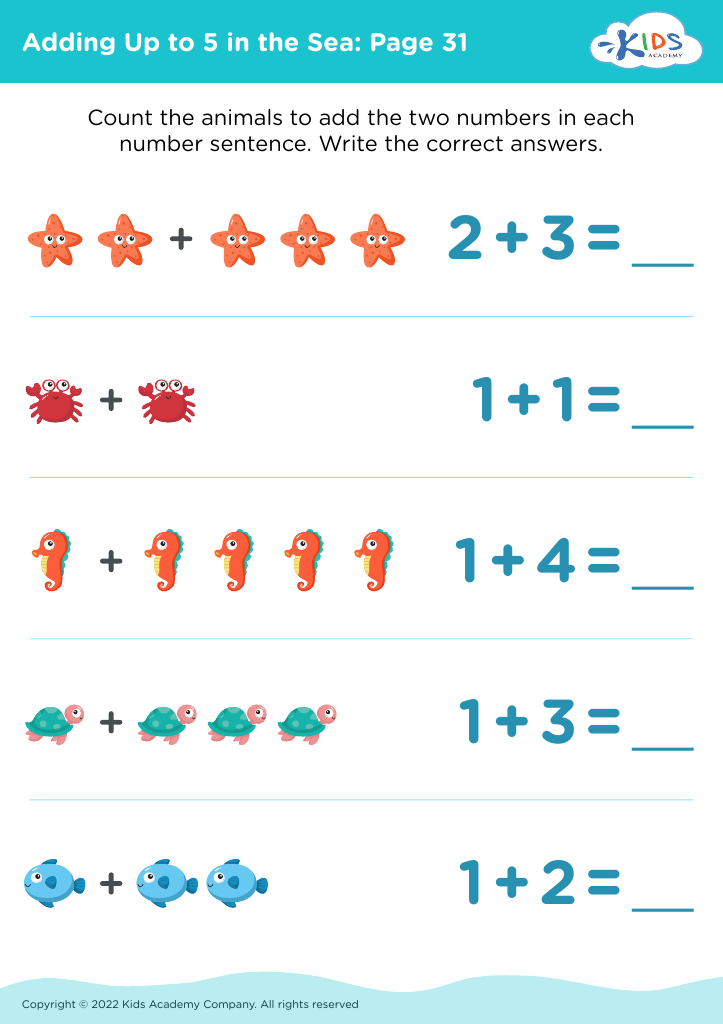
Adding Up to 5 in the Sea: Page 31
Worksheet
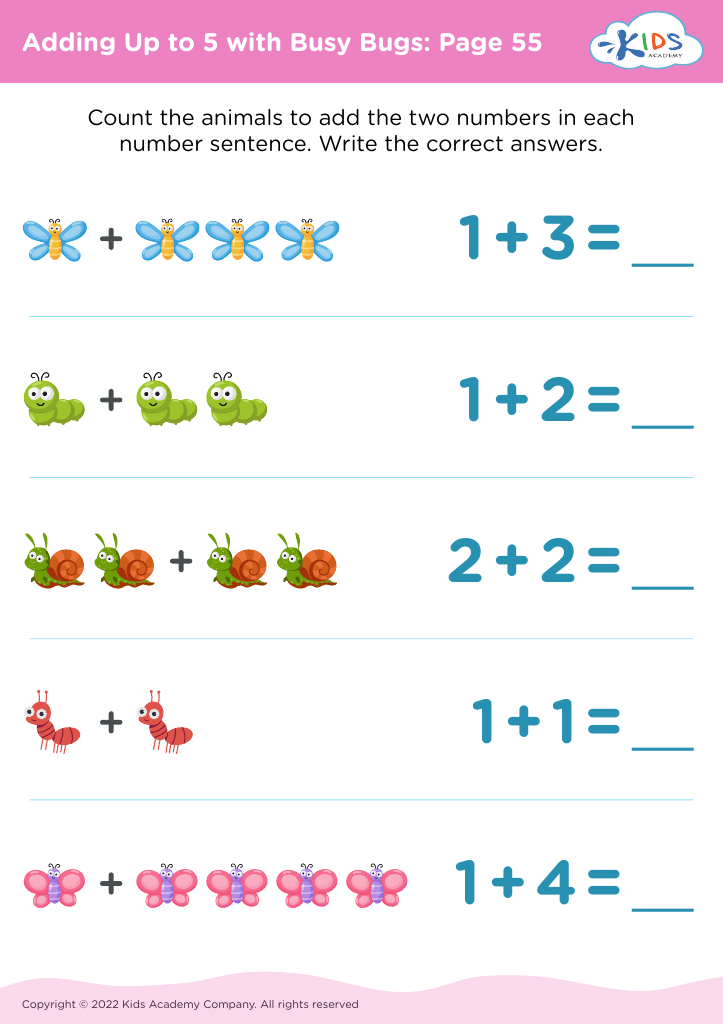
Adding Up to 5 with Busy Bugs: Page 55
Worksheet
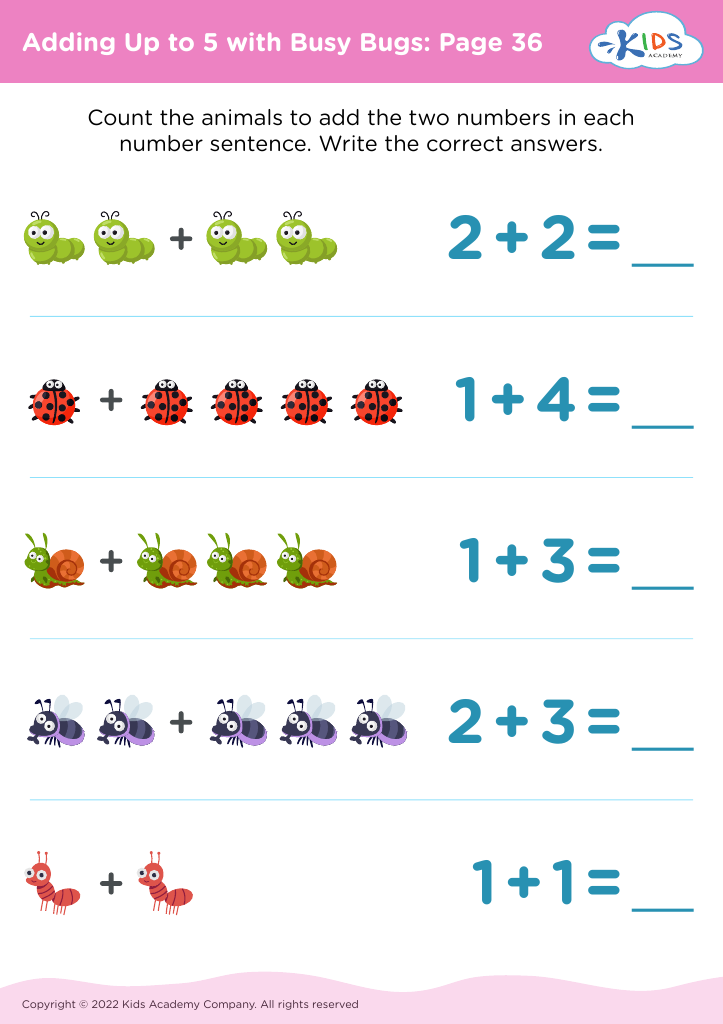
Adding Up to 5 with Busy Bugs: Page 36
Worksheet
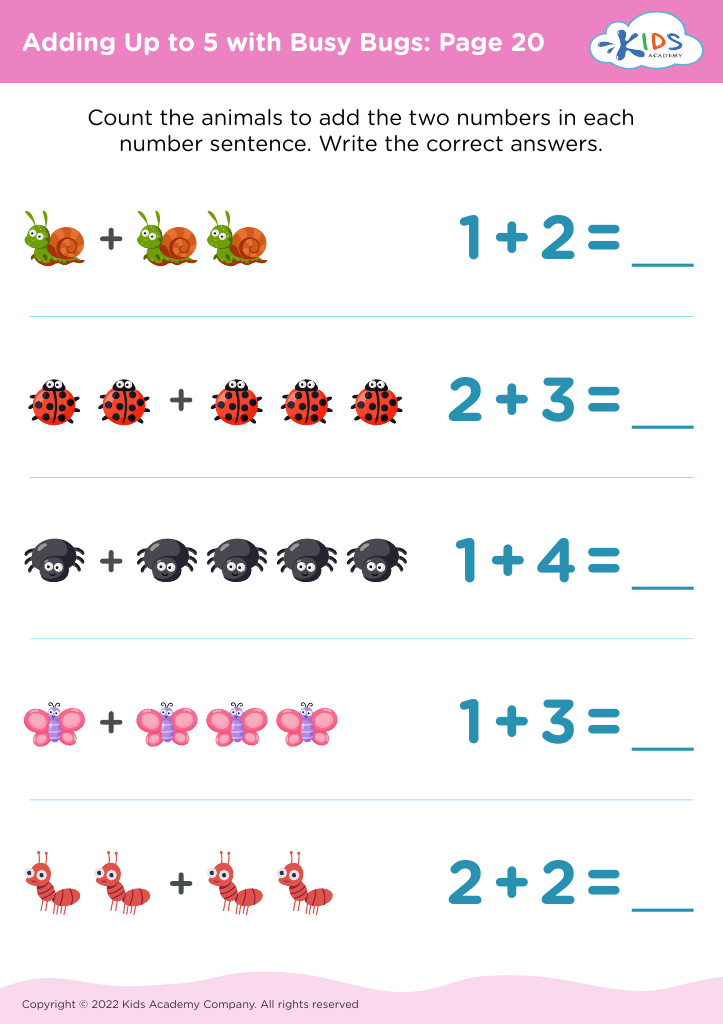
Adding Up to 5 with Busy Bugs: Page 20
Worksheet
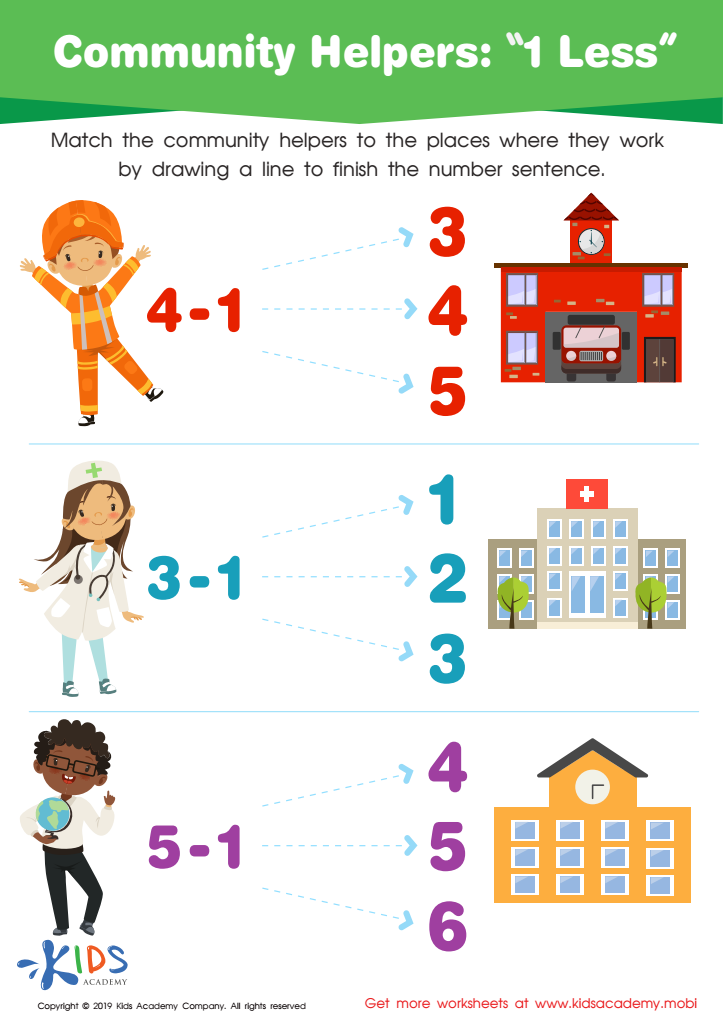
Community Helpers: 1 less Worksheet

Community Helpers: 1 less Worksheet

Look at this worksheet with your child and ask them to identify the different community helpers. Match them to the places where they work by drawing a line to finish the number sentence. This helps them identify the people that help keep the community organized and running smoothly. Examples of community helpers include doctors, police officers, firefighters, teachers, etc.
Community Helpers: 1 less Worksheet
Worksheet
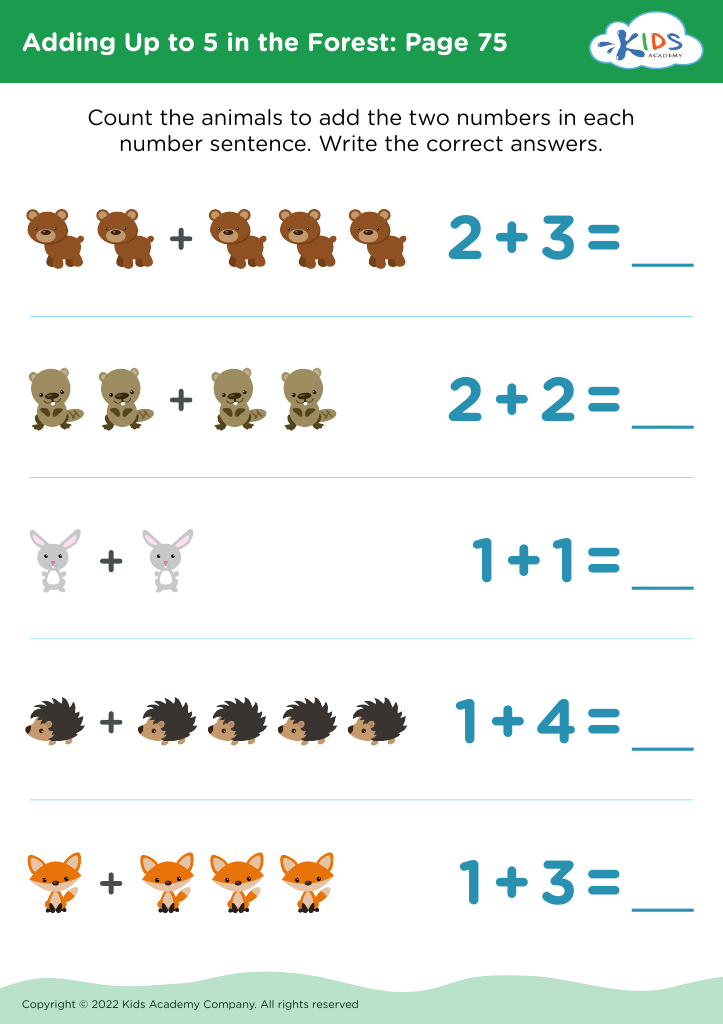
Adding Up to 5 in the Forest: Page 75
Worksheet
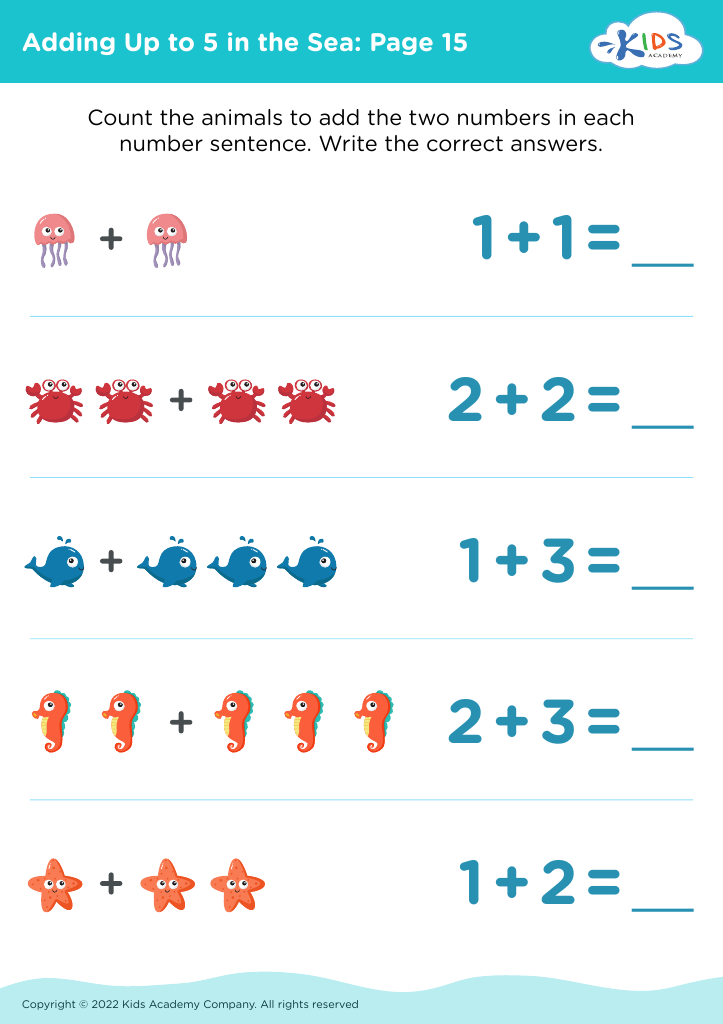
Adding Up to 5 in the Sea: Page 15
Worksheet
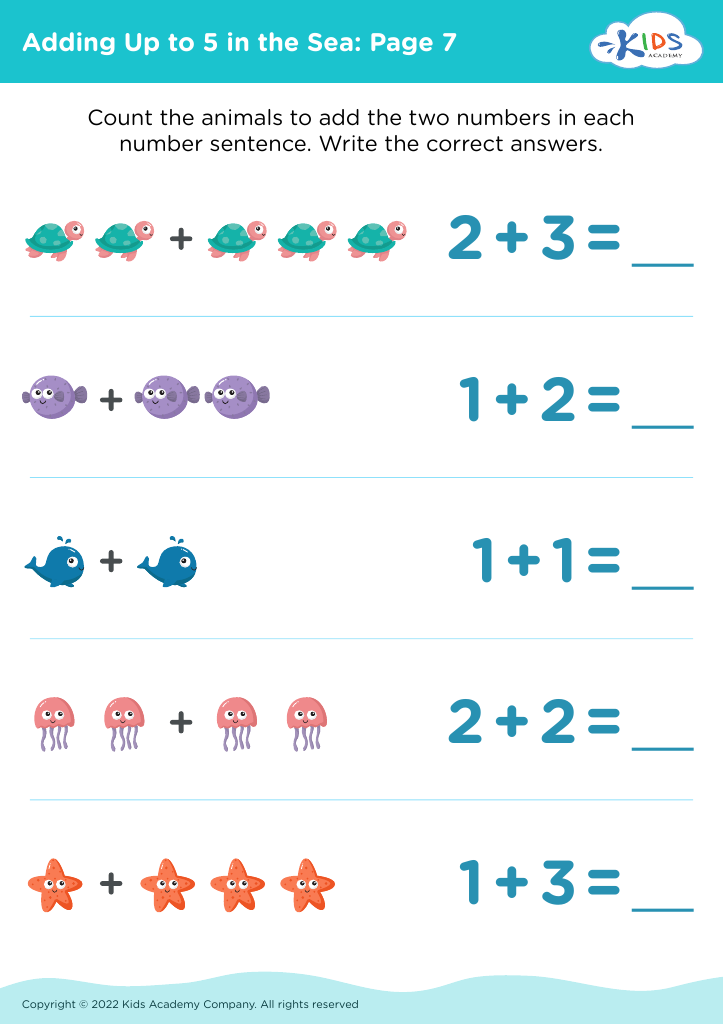
Adding Up to 5 in the Sea: Page 7

Adding Up to 5 in the Sea: Page 7

Adding Up to 5 in the Sea: Page 7
Worksheet
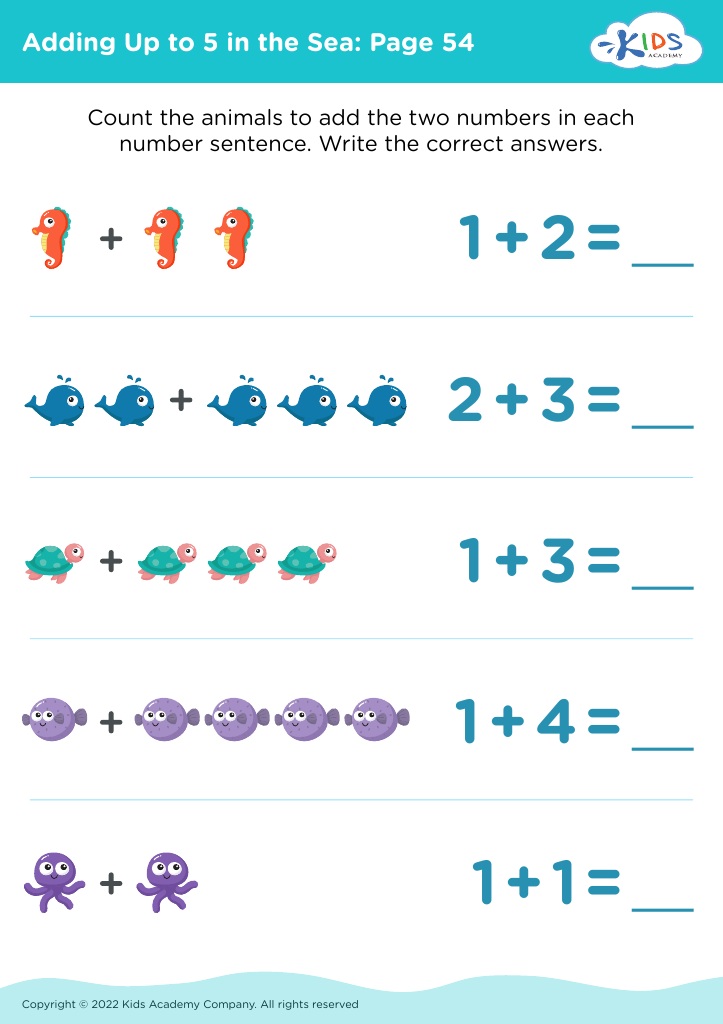
Adding Up to 5 in the Sea: Page 54
Worksheet
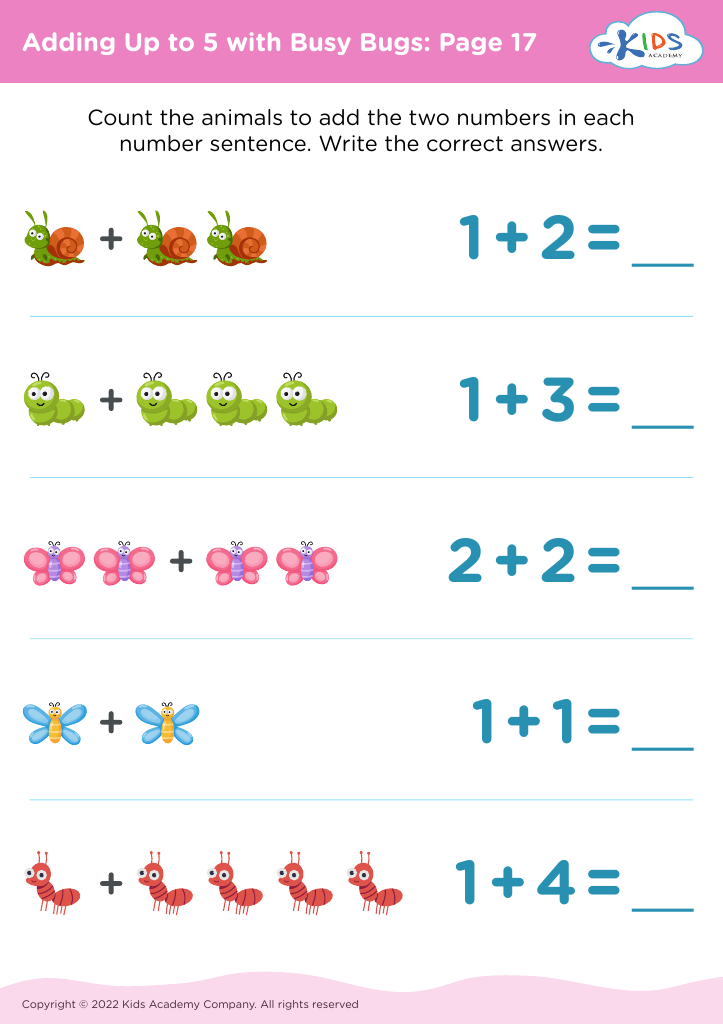
Adding Up to 5 with Busy Bugs: Page 17
Worksheet
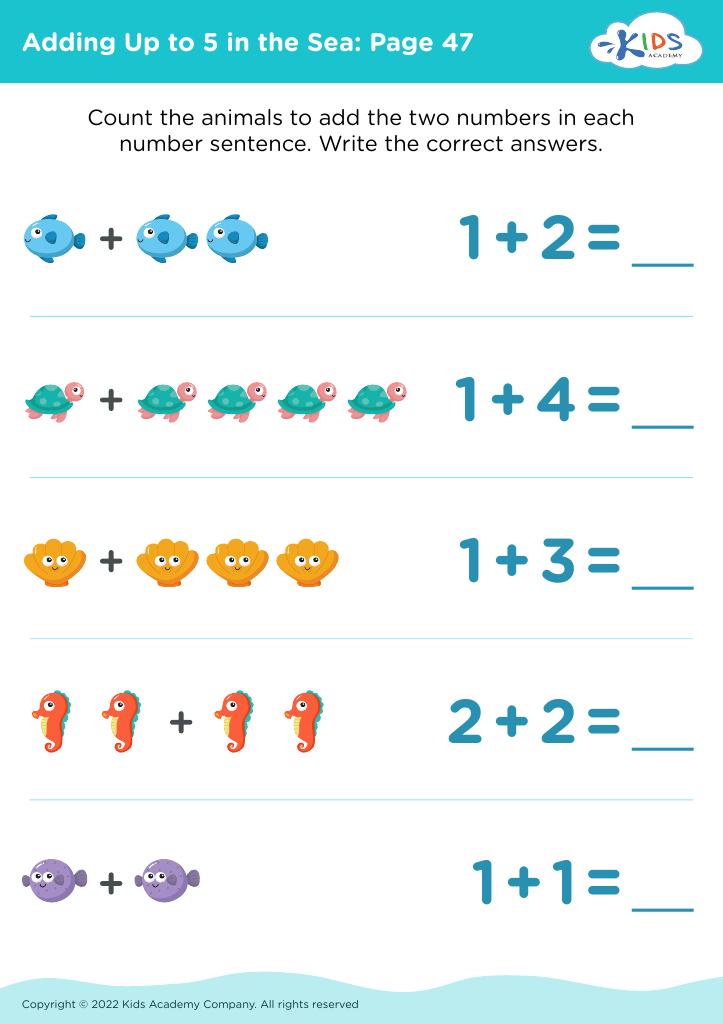
Adding Up to 5 in the Sea: Page 47
Worksheet
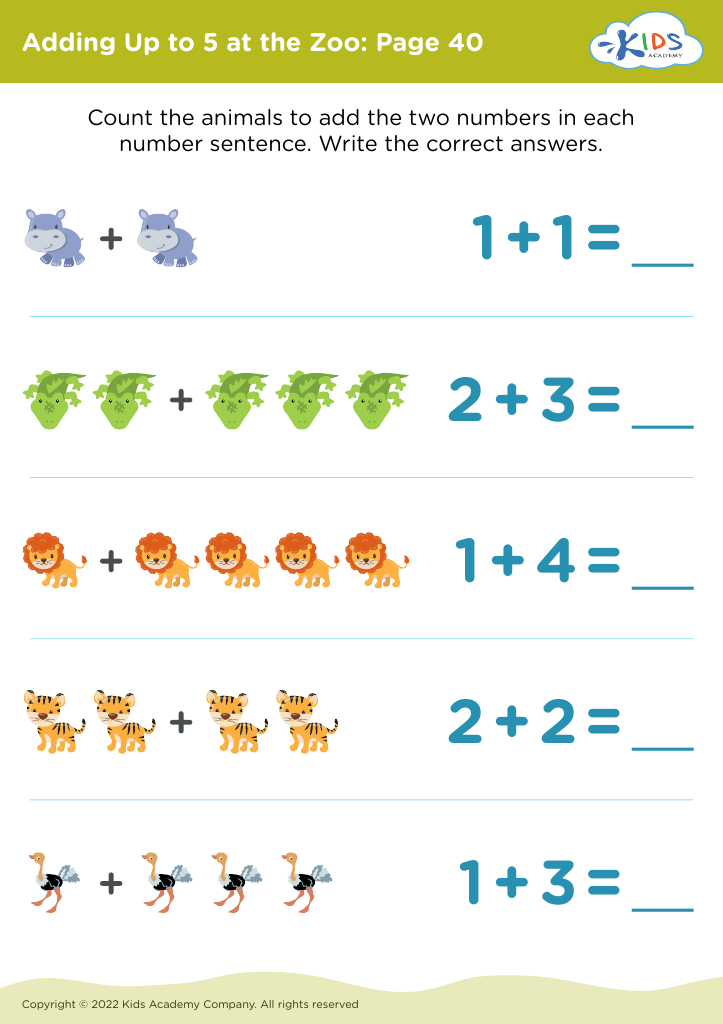
Adding Up to 5 at the Zoo: Page 40
Worksheet
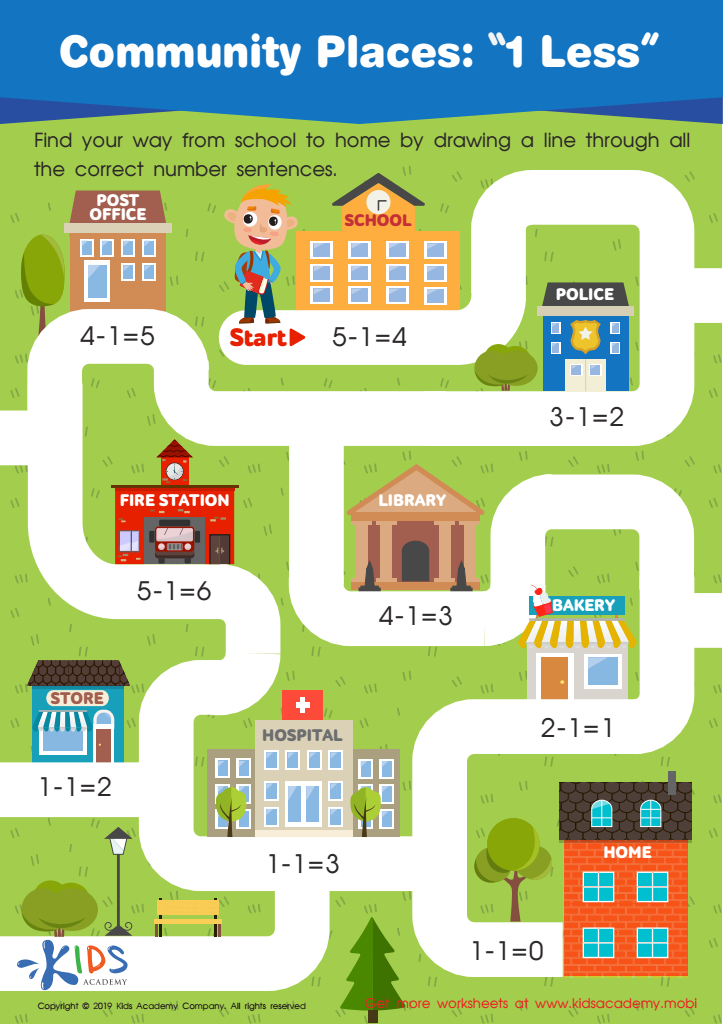
Community Places: 1 Less Worksheet
Community Places: 1 Less Worksheet
Have your kindergarteners draw a line through the correct number sentences as they find their way home from school. Ask them to identify the people, places, and buildings in their community and the jobs they do.
Community Places: 1 Less Worksheet
Worksheet
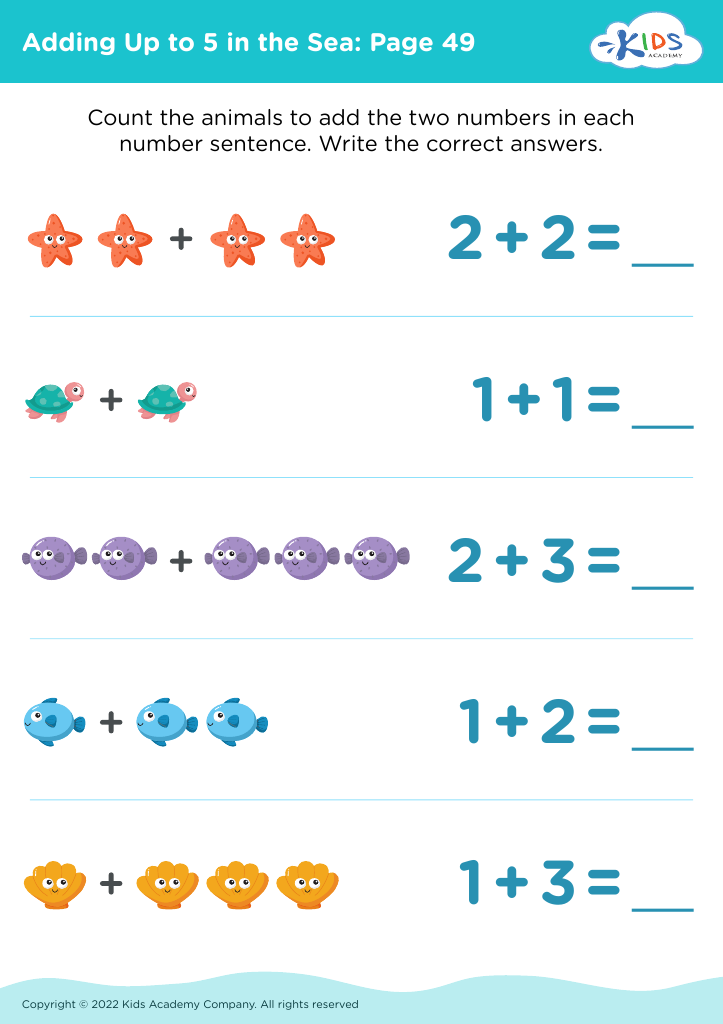
Adding Up to 5 in the Sea: Page 49
Worksheet
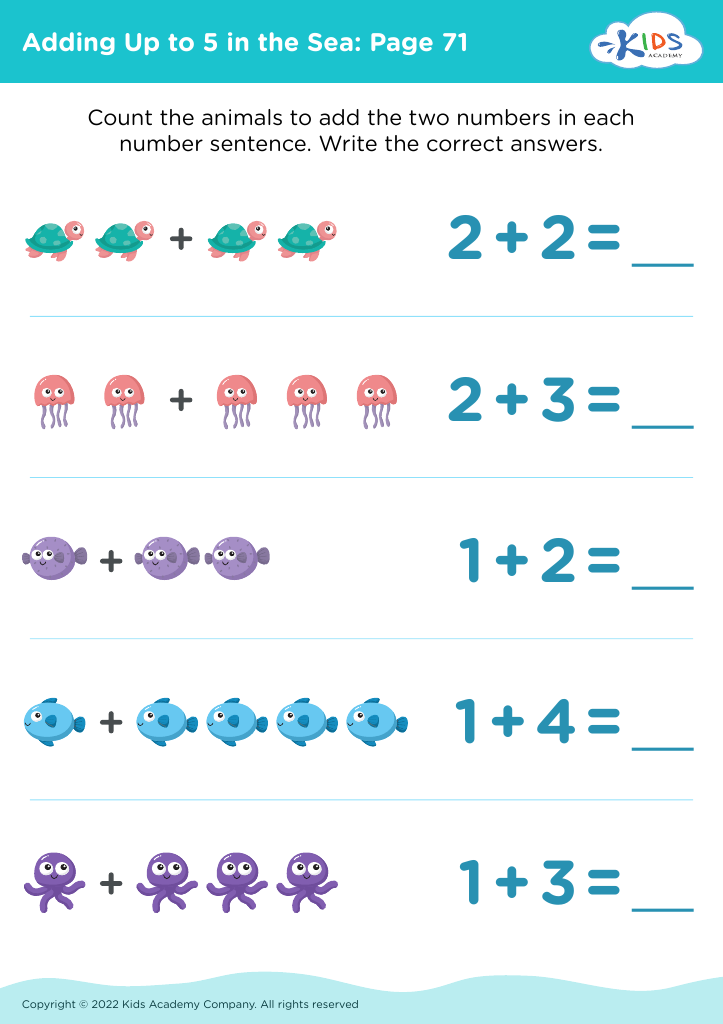
Adding Up to 5 in the Sea: Page 71
Worksheet
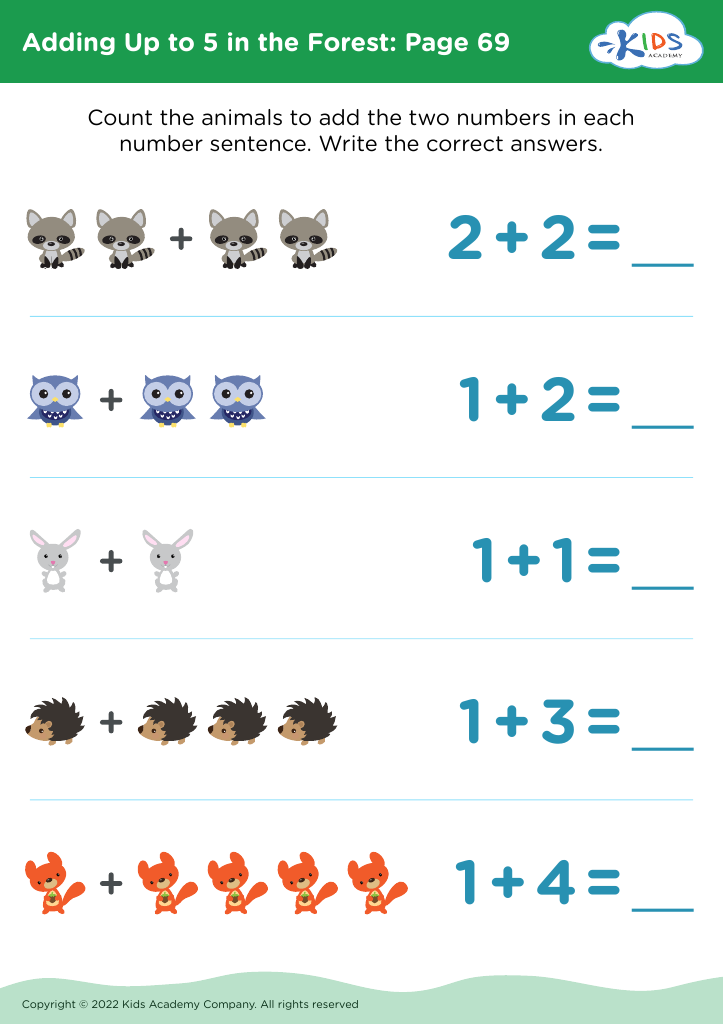
Adding Up to 5 in the Forest: Page 69
Worksheet
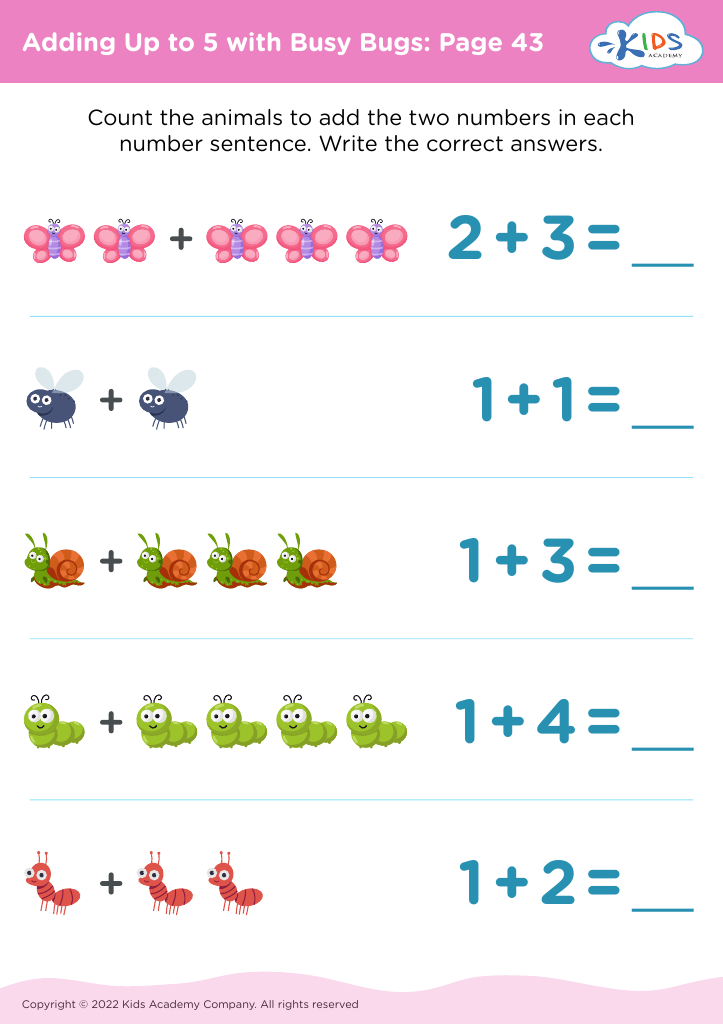
Adding Up to 5 with Busy Bugs: Page 43
Worksheet
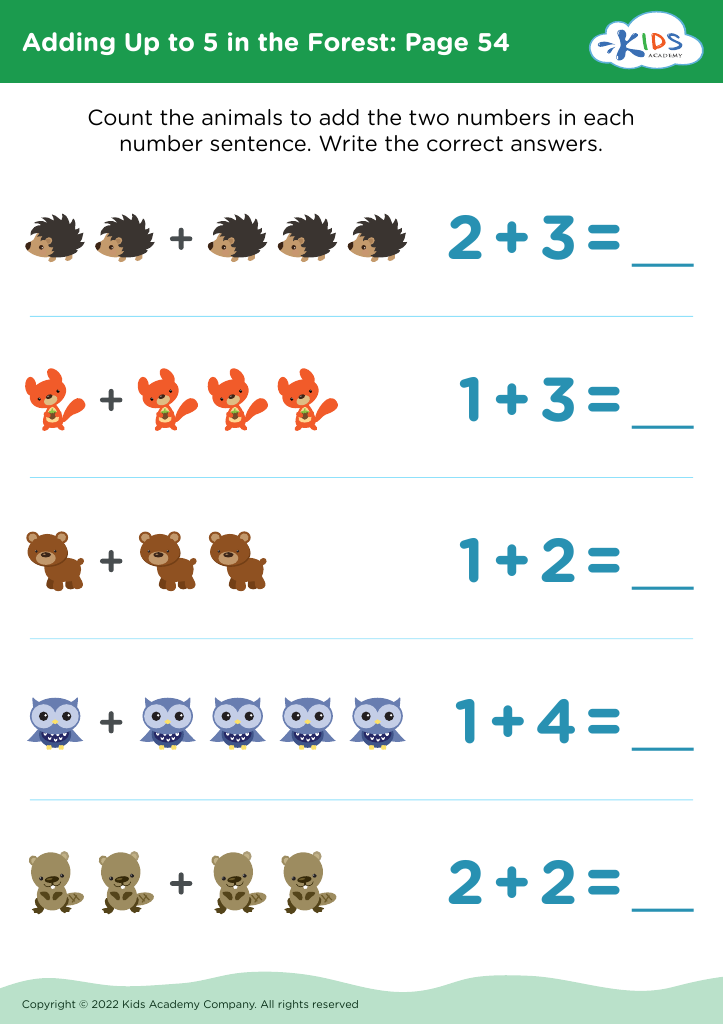
Adding Up to 5 in the Forest: Page 54
Worksheet
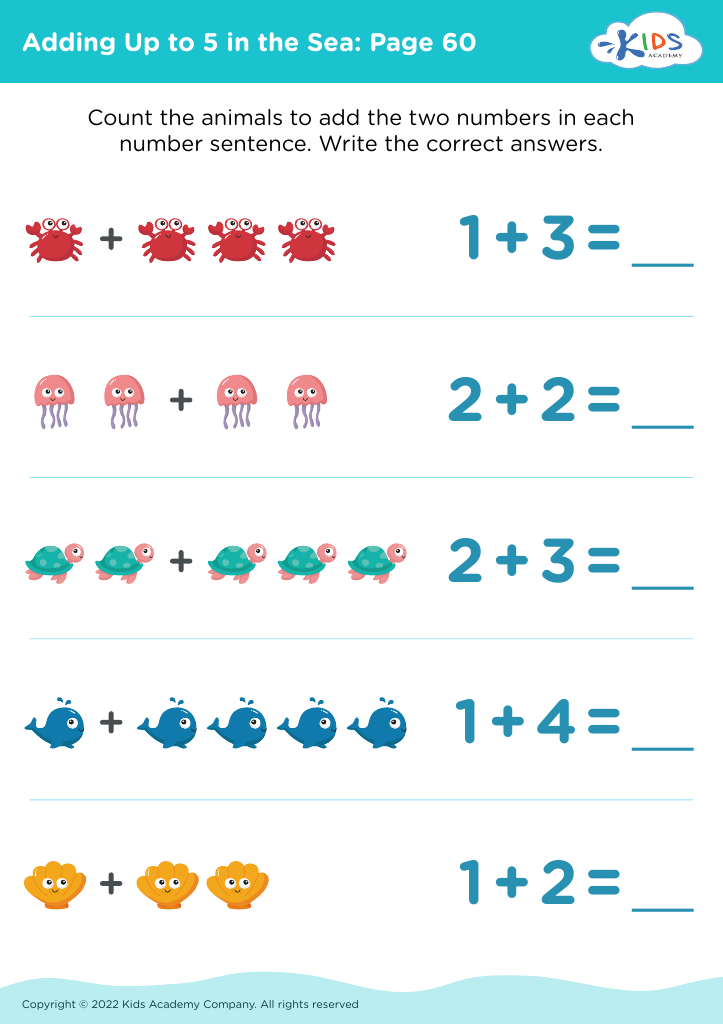
Adding Up to 5 in the Sea: Page 60
Worksheet
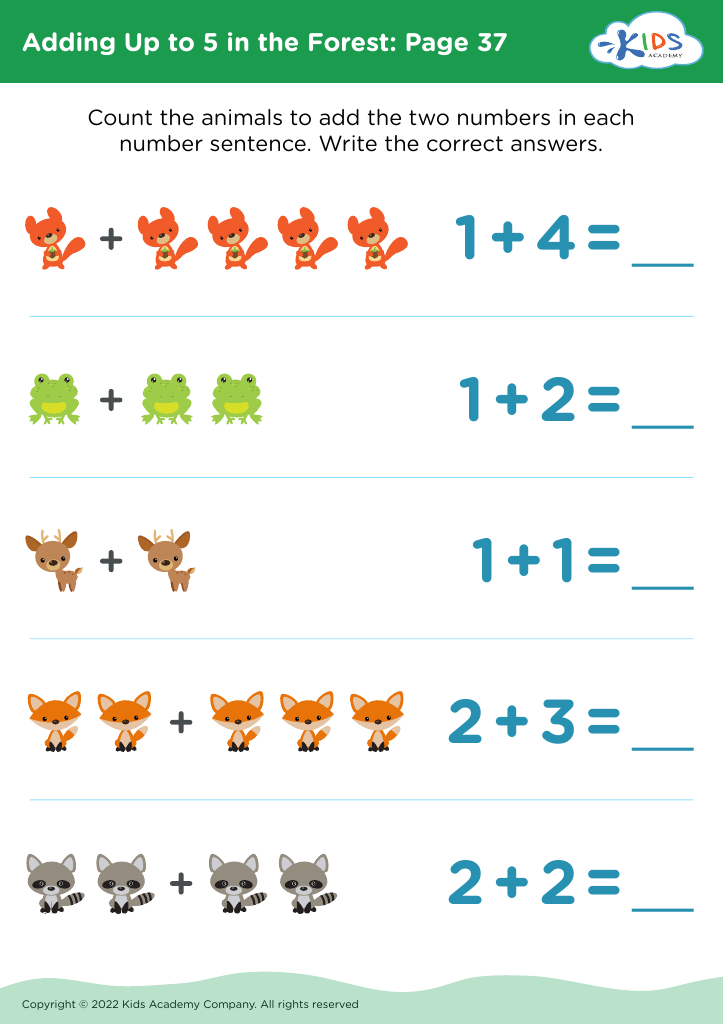
Adding Up to 5 in the Forest: Page 37
Worksheet


Cognitive development in early childhood, particularly in children aged 3-5, is crucial for laying the foundation for future learning and overall growth. During these formative years, children's brains develop at an astonishing rate, absorbing information and forming connections. Focusing on cognitive development, specifically in areas like addition, enhances critical thinking skills, problem-solving abilities, and logical reasoning.

Parents and teachers should care because early mathematical skills, such as understanding addition, are not just about numbers; they are integral to a child's ability to make sense of the world. Engaging children in fun, age-appropriate activities that encourage basic addition fosters a positive attitude toward math and boosts their confidence. This early introduction demystifies mathematics, making it more accessible and enjoyable.

Moreover, strong cognitive skills often correlate with better performance in other academic areas, including reading and writing. Children who grasp early math concepts are more likely to succeed as they progress through their education. Therefore, nurturing cognitive development through playful learning experiences around addition enriches a child's educational journey, empowers them for future challenges, and ultimately supports their social and emotional well-being. In essence, investment in this early stage pays dividends later in life.