Understanding number values Addition Worksheets for Ages 3-5
3 filtered results
-
From - To
Discover our "Understanding Number Values Addition Worksheets" designed specifically for children aged 3-5. These engaging worksheets help young learners grasp the foundational concepts of number values and basic addition through fun and interactive activities. With colorful visuals and age-appropriate challenges, children will build confidence as they explore the relationships between numbers and practice simple addition. Tailored to meet early childhood education standards, these resources are perfect for parents and educators who want to foster numerical understanding and enhance math readiness. Start your child’s math journey today with our easy-to-follow worksheets that inspire learning through play and creativity!
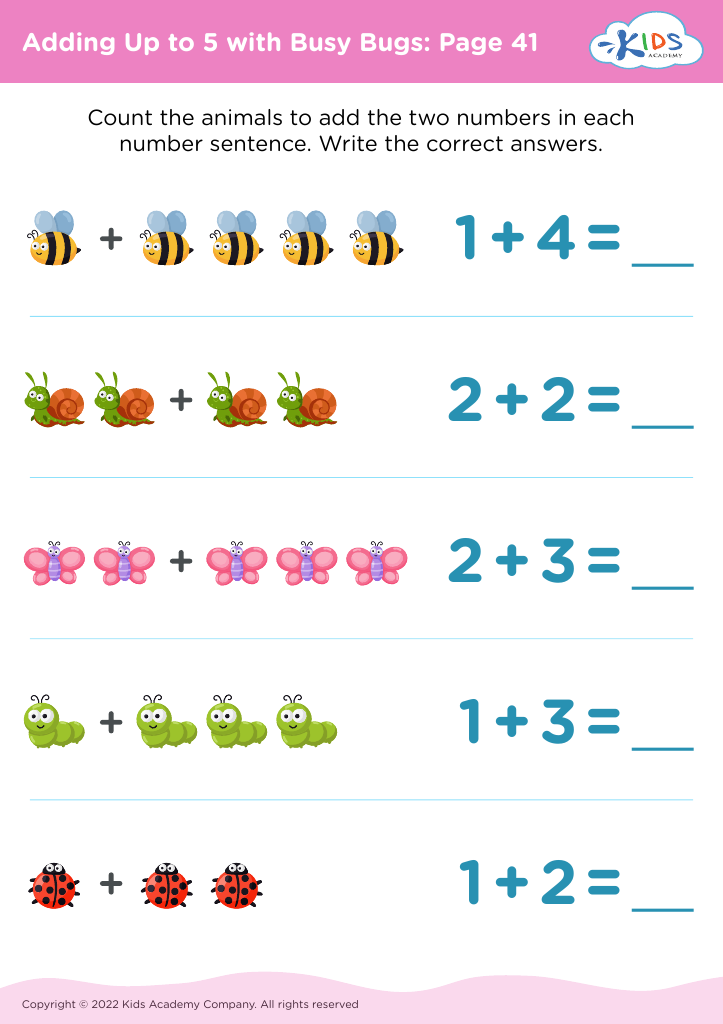
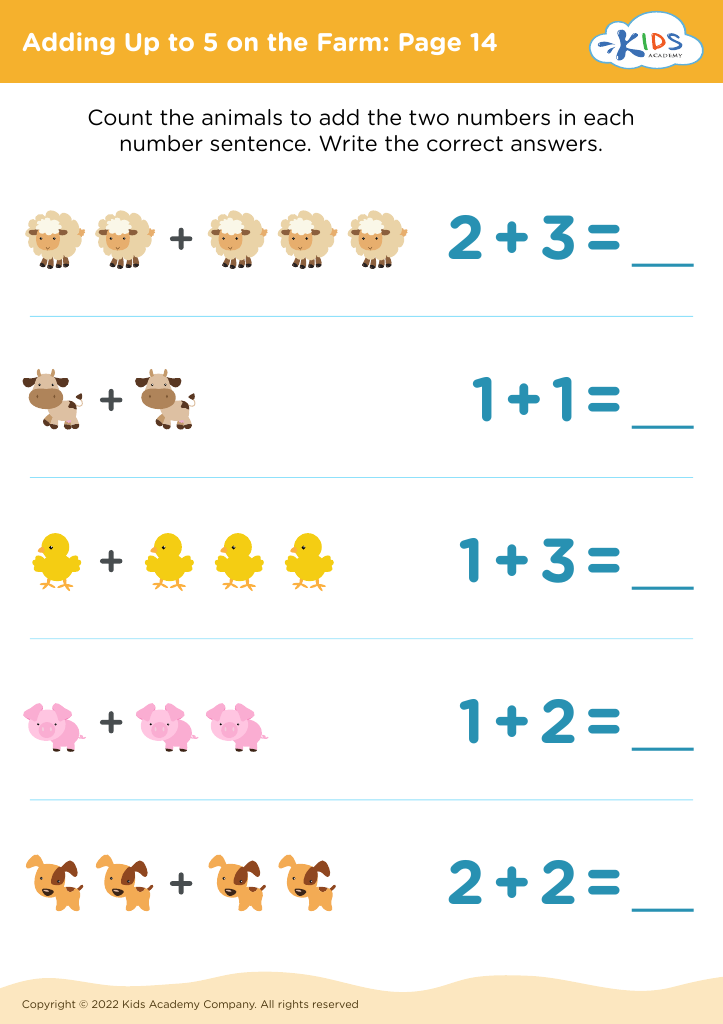
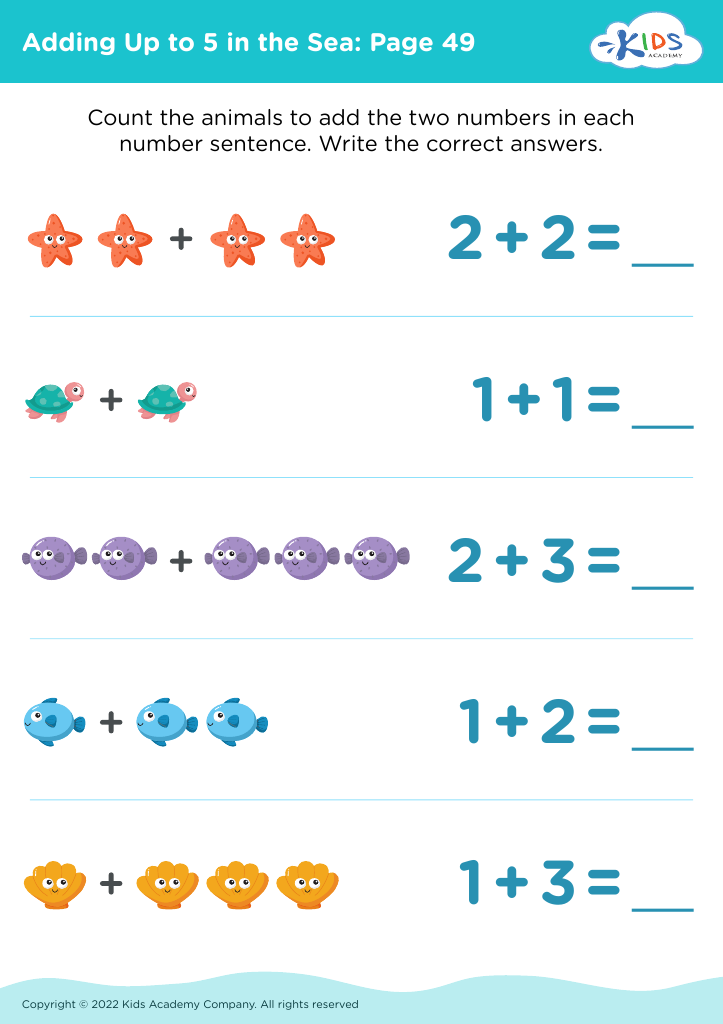








Understanding number values and addition is a vital foundational skill for children ages 3-5, paving the way for their future mathematical competence. During these early years, children are naturally curious about numbers, and nurturing that curiosity builds their confidence and promotes positive attitudes toward math.
Parents and teachers should care about this aspect of development as early math skills directly correlate with later academic success. When children grasp number values and simple addition, they enhance their problem-solving abilities and critical thinking. These skills are not only essential for math but also lay the groundwork for future learning across subjects.
Additionally, engaging with numbers allows children to develop important cognitive skills such as counting, pattern recognition, and logical reasoning. Through hands-on activities and playful interactions—like counting everyday items or playing simple math games—adults can make learning enjoyable and meaningful.
Moreover, fostering early math skills supports children's ability to communicate about numbers and understand how they relate to their world, which can improve their social interactions and confidence in classroom settings. Ultimately, supporting early number value and addition insights is crucial in helping children become resilient learners prepared to tackle more complex concepts as they progress in their education.








