Understanding numbers Addition Worksheets for Ages 3-5
3 filtered results
-
From - To
Our "Understanding Numbers Addition Worksheets" for ages 3-5 offer a fun and engaging way for preschoolers to master basic addition. These printable worksheets from Kids Academy use colorful visuals and simple exercises to help young learners grasp number recognition and develop crucial counting skills. Perfect for both classroom use and homeschooling, each worksheet ensures that learning math is an enjoyable experience. With a strong foundation in early math concepts, your child will build confidence and be well-prepared for future learning challenges. Start your child's journey with our expertly designed, age-appropriate worksheets today!
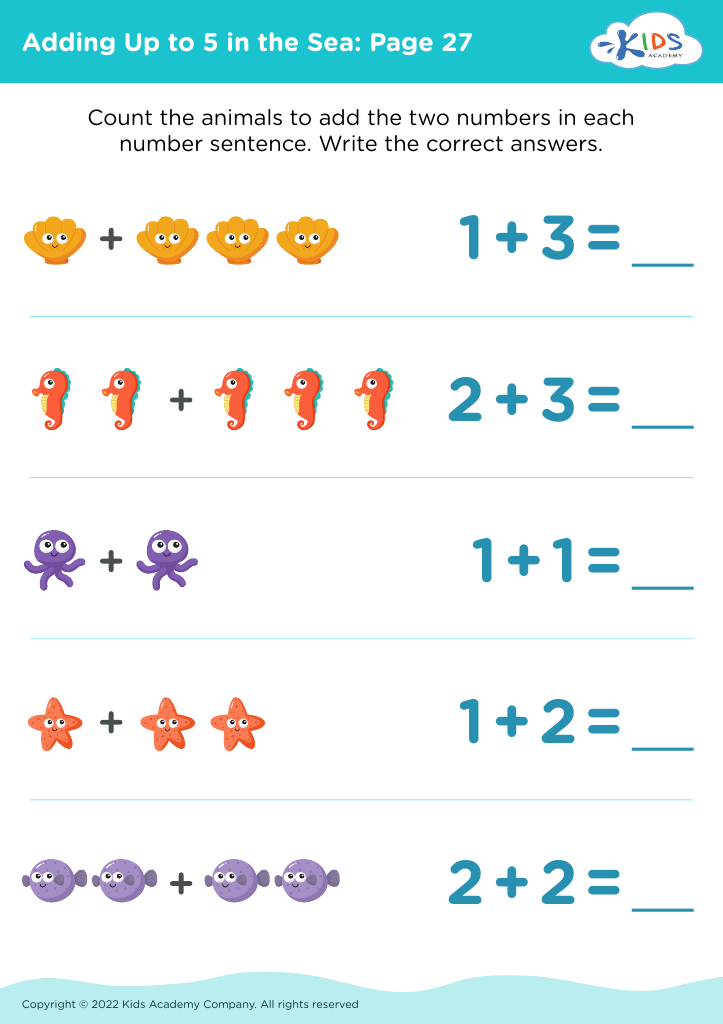
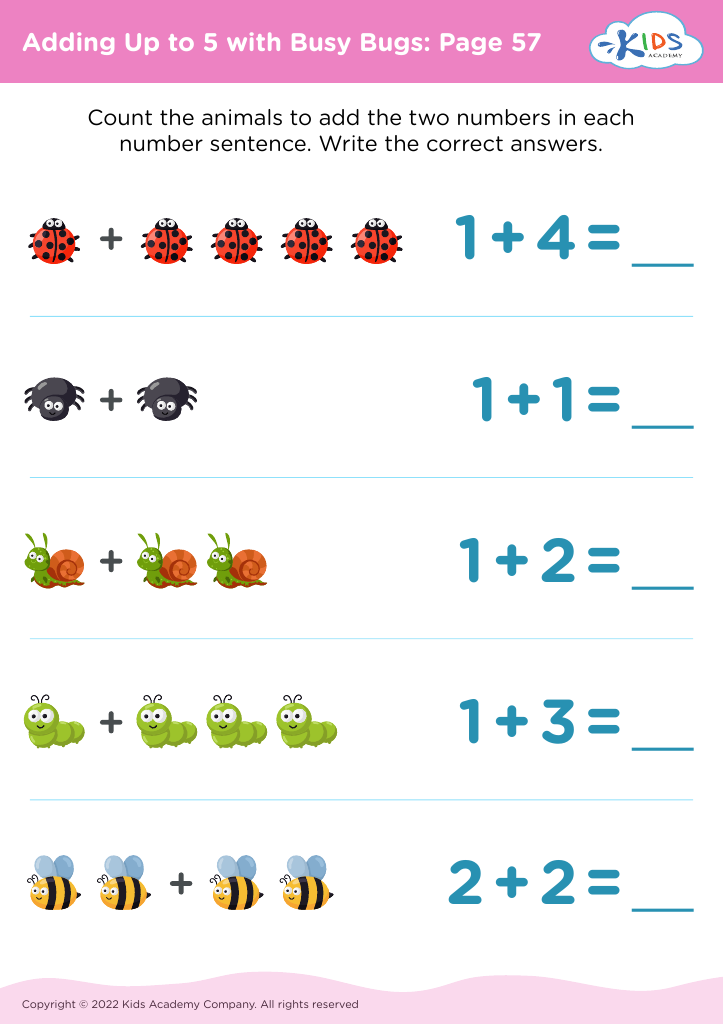
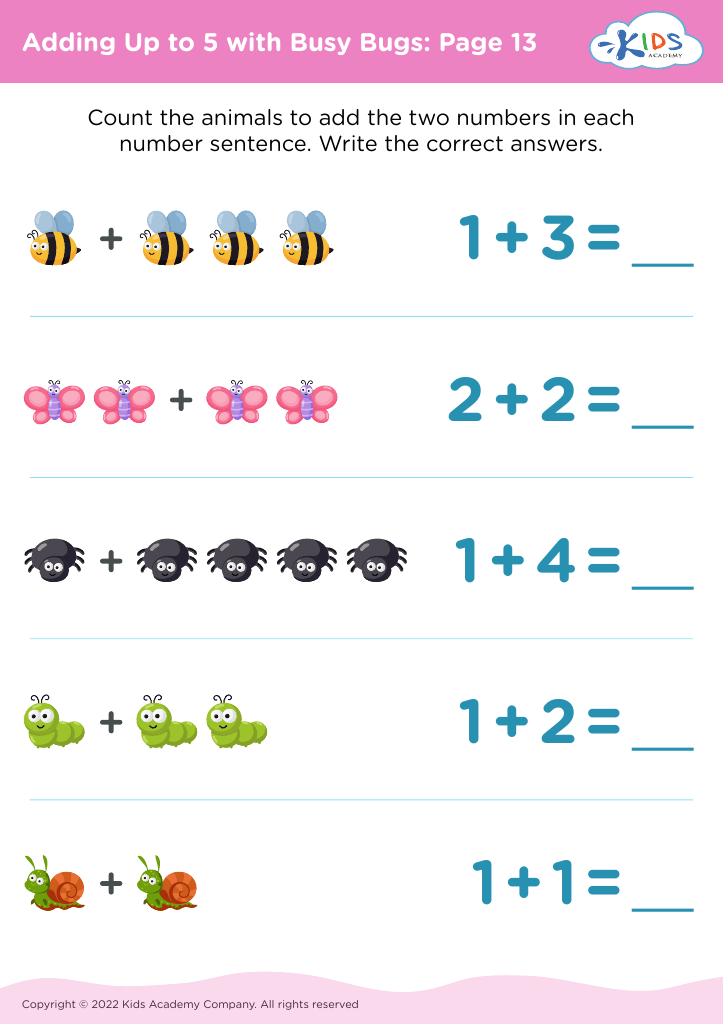








Understanding numbers and basic addition at ages 3-5 is crucial for a child's cognitive development and future learning success. This foundational math skill promotes critical thinking and problem-solving abilities, essential for academic progression in all subjects. Early math skills often predict later success not only in mathematics but also in literacy and overall academic achievement.
Young children who grasp the concept of addition learn to connect concrete objects with abstract numbers, fostering a deeper understanding of how math relates to the real world. For example, if children understand that adding 2 apples to 3 apples makes 5 apples, they can apply this knowledge to various everyday situations, such as counting toys or sharing snacks, making their world more comprehensible and organized.
Learning addition at an early age enhances memory and concentration. These children become more confident and willing to tackle challenging tasks, fostering a positive attitude toward learning in general. Informal and fun activities, such as counting games, number songs, or simple storytelling with numbers, help maintain their interest and engagement.
Parents and teachers who invest time and energy into teaching young children basic addition not only help them develop essential skills but also lay the groundwork for a lifelong appreciation and curiosity for learning. Thus, nurturing early math skills is an investment in a child's future intellectual and emotional well-being.








