Underwater animal identification Addition Worksheets for Ages 3-5
3 filtered results
-
From - To
Discover our engaging "Underwater Animal Identification Addition Worksheets" designed specifically for children aged 3-5. These interactive worksheets combine foundational math skills with the fascinating world of underwater creatures. Young learners will enjoy identifying various sea animals while practicing addition in a fun, themed environment. Each worksheet features vibrant illustrations and simple math problems tailored to their developmental stage. Perfect for parents and educators, these resources make learning enjoyable and effective, encouraging early math skills and animal recognition. Dive into a world of aquatic fun and educational growth—perfect for fostering young learners' curiosity and confidence in math!
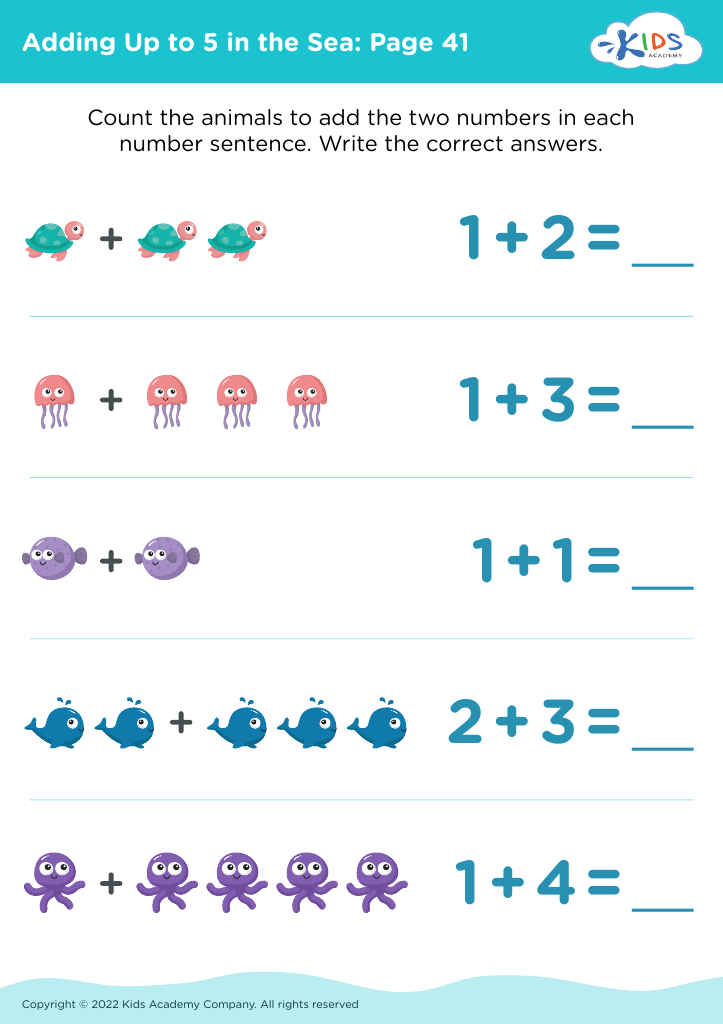
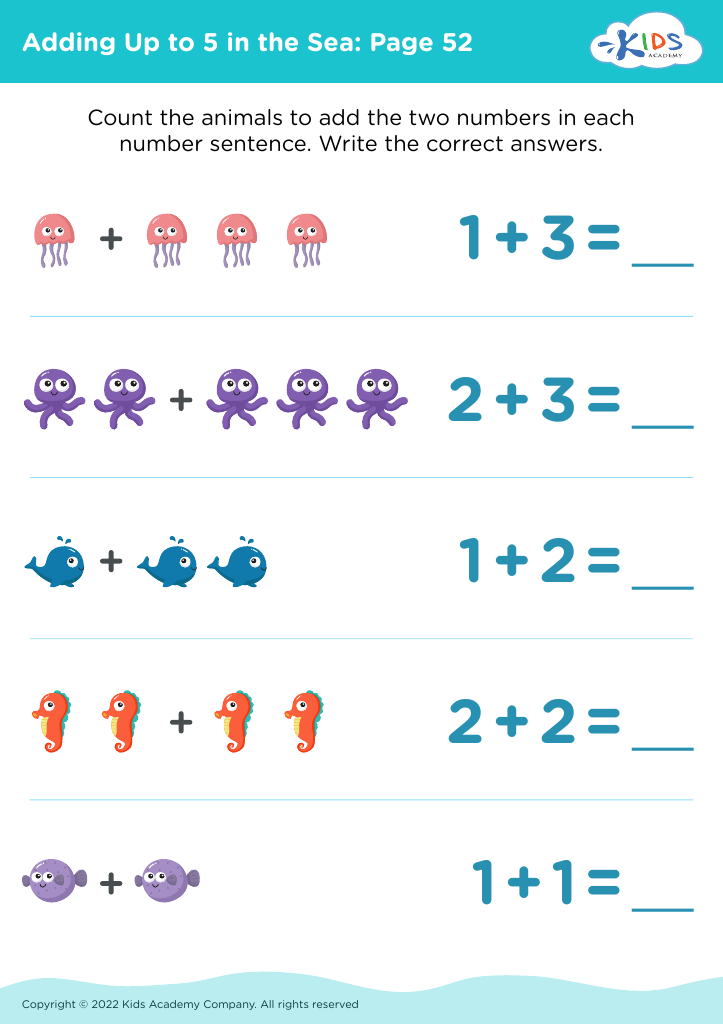
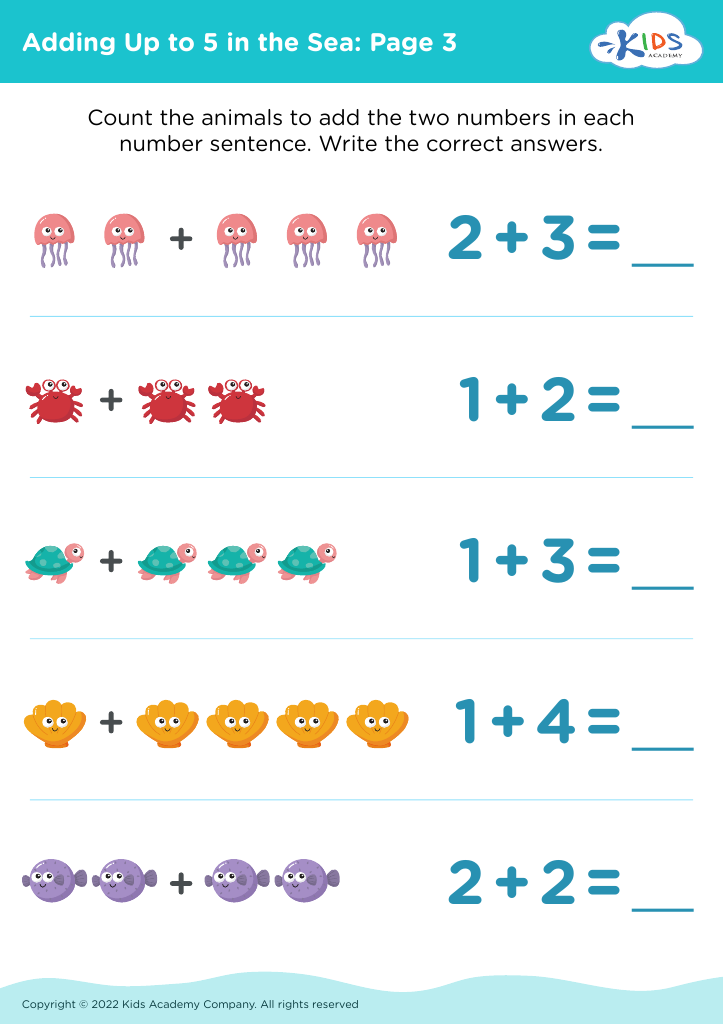








Parents and teachers should care about underwater animal identification for children aged 3-5 because it fosters curiosity and enhances early learning experiences. At this developmental stage, children are naturally curious, and engaging them with the fascinating world of underwater animals sparks their interest in nature and science. Identifying underwater animals, such as fish, dolphins, and turtles, can introduce young learners to biodiversity, engaging them in conversations about habitats, ecosystems, and the importance of conservation.
Moreover, activities that involve animal identification can support cognitive development by enhancing observational skills, memory, and critical thinking. Recognizing different species encourages vocabulary expansion as children learn new names and terms, aiding language development. It also promotes fine motor skills through fun, hands-on activities like matching games or crafting, which can be integrated into their visual learning experience.
Additionally, this knowledge may foster empathy and respect for living creatures, helping young children develop a sense of responsibility towards the environment. In doing so, parents and teachers can nurture not just a love for animals but also early ecological awareness that can have lasting effects throughout their education and lives. Ultimately, such engagement lays a foundation for lifelong learning and stewardship of our planet.








