Visual learning enhancement Addition Worksheets for Ages 3-5
4 filtered results
-
From - To
Enhance early math skills with our Visual Learning Enhancement Addition Worksheets designed specifically for ages 3-5! These engaging worksheets utilize colorful visuals and interactive elements to make learning addition both fun and effective. Tailored for young learners, our activities promote visual recognition and critical thinking through playful scenarios. With a variety of exercises, kids can practice adding objects, counting visually, and identifying numbers in an enjoyable way. Ideal for parents and educators seeking to provide a strong foundation in mathematics, our resources help foster confidence and enthusiasm for learning. Start your child’s educational journey today with our interactive and user-friendly worksheets!
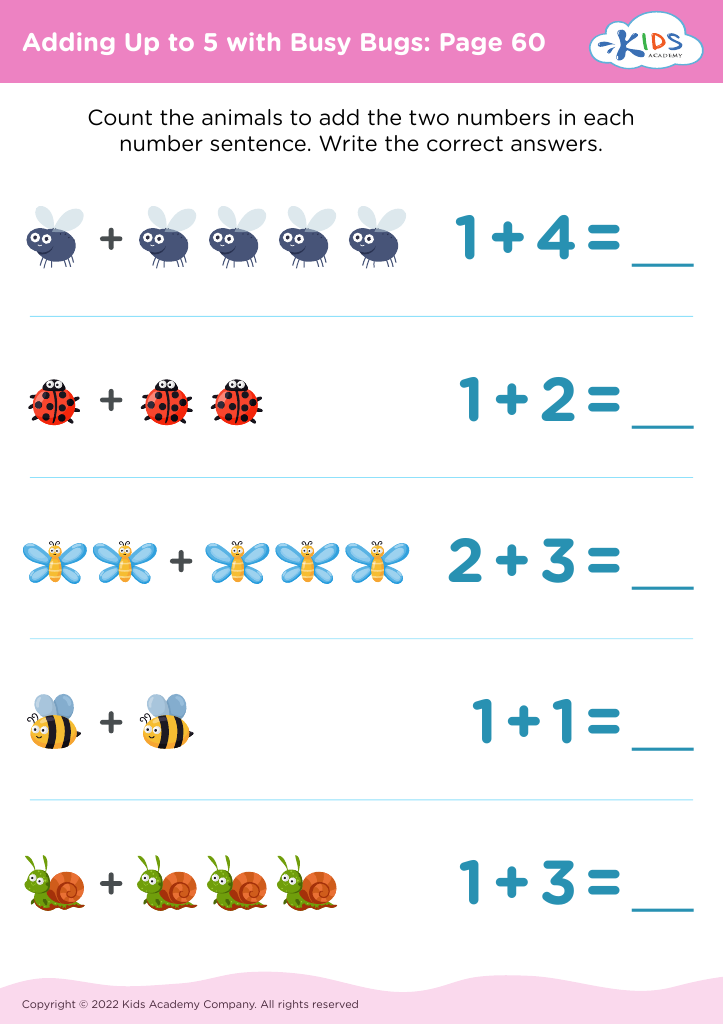
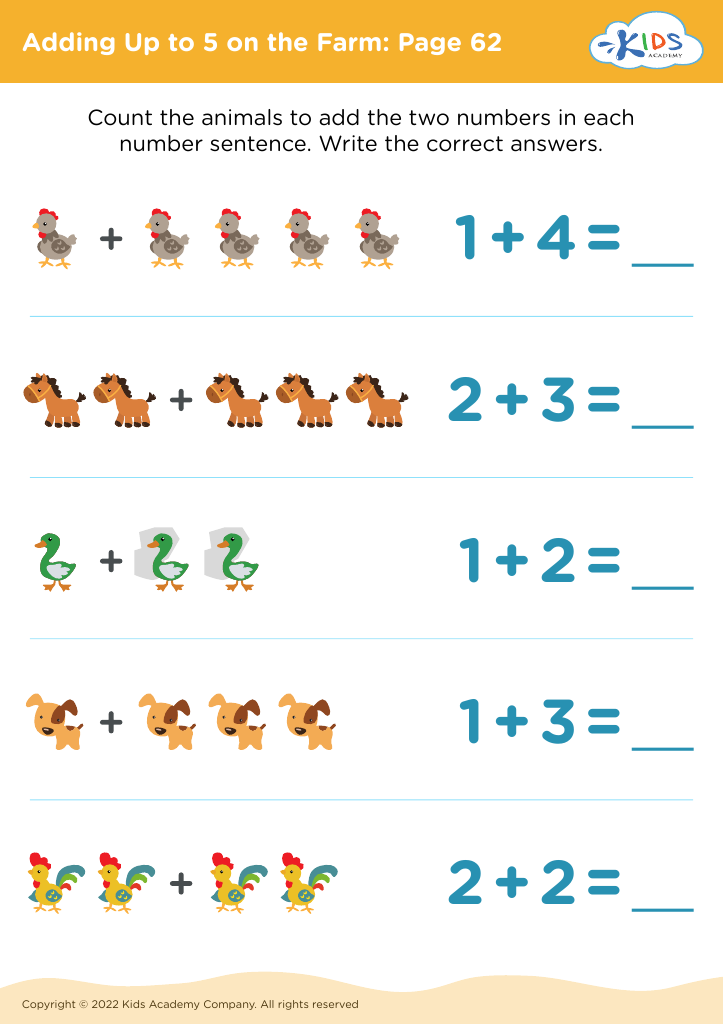
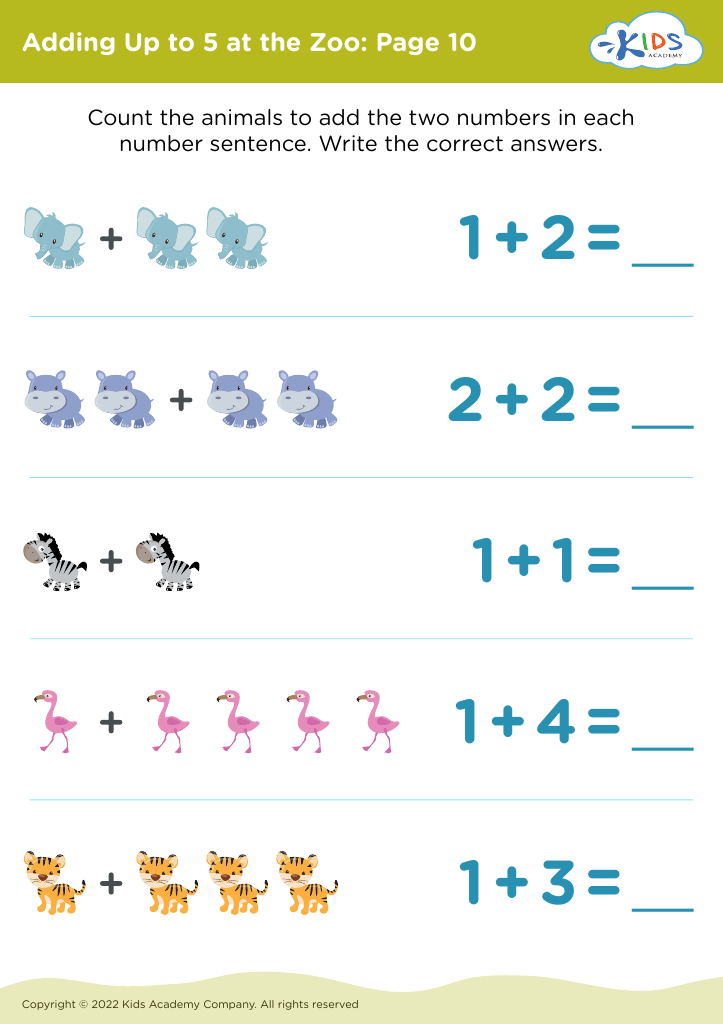
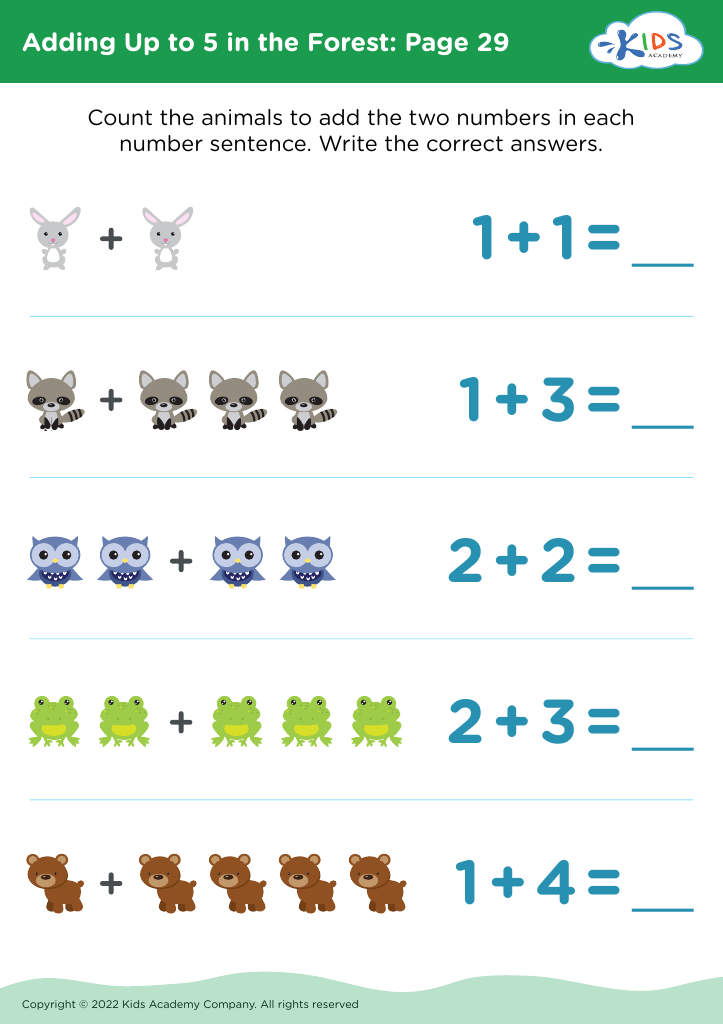








Visual learning enhancement for young children aged 3-5 is crucial for their cognitive development and educational success. At this age, children are naturally curious and learn best through engaging, visual experiences. Incorporating visual aids, such as pictures, charts, and hands-on activities, can significantly enhance their understanding of concepts, particularly in areas like addition.
When parents and teachers prioritize visual learning, they tap into children's innate abilities to recognize patterns and relationships visually. This approach helps young learners grasp mathematical concepts by using relatable imagery and concrete representations, making abstract ideas like addition more accessible. For example, visual tools such as colorful counters or number lines transform the learning process into a playful, interactive experience, helping children engage meaningfully.
Moreover, visuals cater to diverse learning styles, ensuring that each child can find approaches that resonate with them. Early exposure to these methods fosters not only foundational math skills but also boosts confidence and motivates a lifelong love for learning. By caring about visual learning enhancement, parents and teachers equip children with essential tools for future academic success, nurturing their overall development and preparedness for more complex subjects down the line.








