Financial literacy Coins Worksheets for Ages 3-5
4 filtered results
-
From - To
Boost your child’s money smarts with our engaging Financial Literacy Coins Worksheets designed for ages 3 to 5! These fun and educational printables help young learners recognize different coins, understand their values, and make simple financial decisions. Through playful activities, children develop essential math and problem-solving skills while gaining a foundational understanding of money. Perfect for parents and educators, these worksheets promote interactive learning and early financial responsibility. Start building your child’s financial future today with intuitive and entertaining resources specifically crafted for curious young minds. Explore our collection and watch your child develop confidence in money handling!
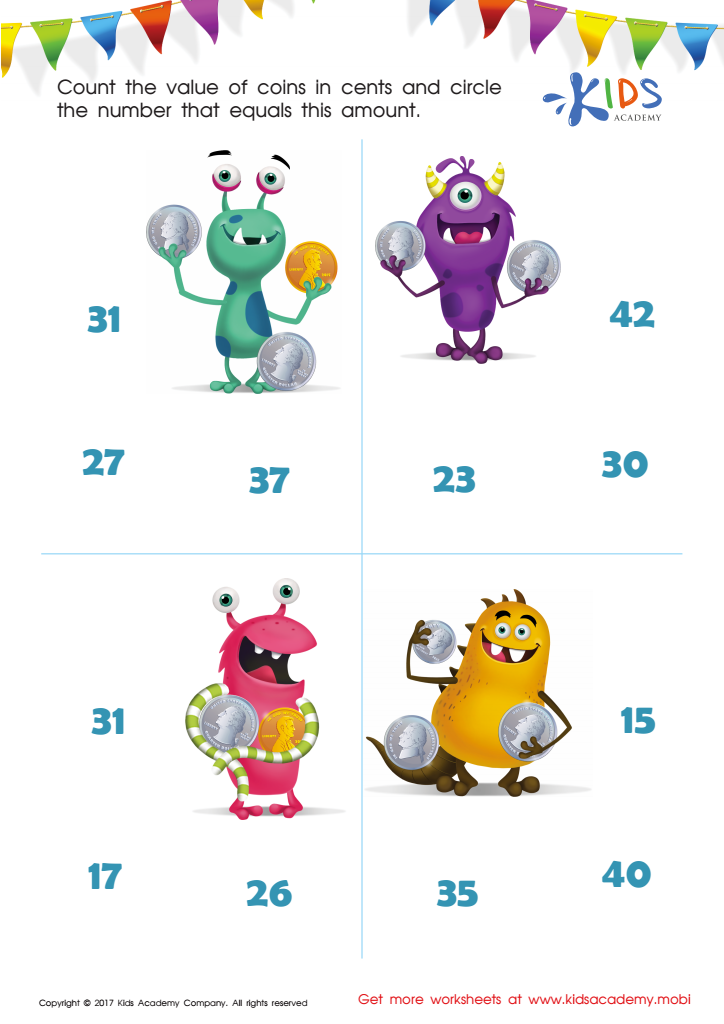
How Many Coins Money Worksheet
 Assign to My Students

Recognizing Money Money Worksheet
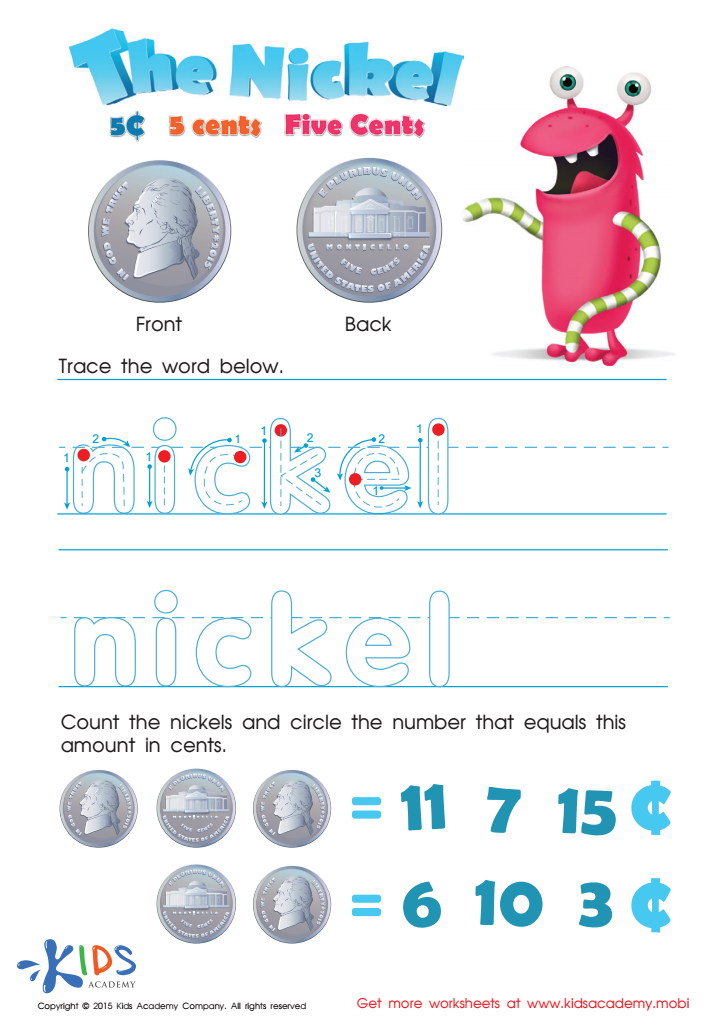
Five Cents or the Nickel Money Worksheet
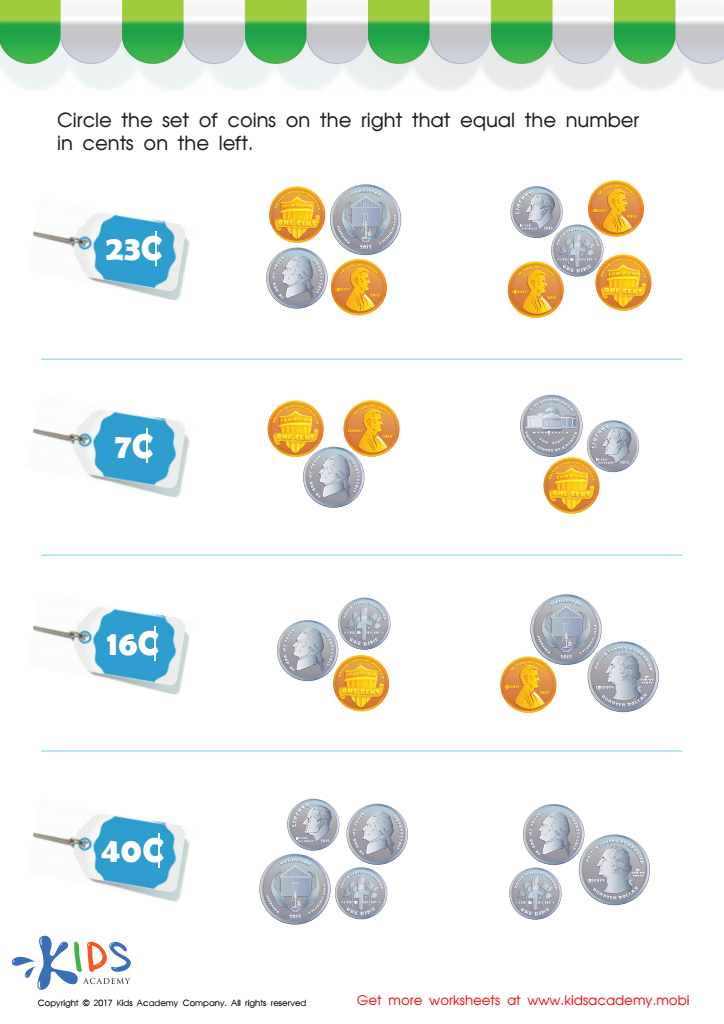
Picking the Coins You Need Money Worksheet








Financial literacy is a critical skill that shapes responsible and informed future citizens, and it can start as early as age 3 through the use of coins. At this young age, children begin to develop cognitive skills that allow for early grasping of fundamental financial concepts. Introducing coins to 3-5-year-olds helps them understand the basics of money, counting, and value, setting a foundation for more complex financial understanding later on.
Using coins in early education promotes numeracy skills as children learn to recognize, identify, and count different coins. This not only aids in mathematical development but also creates a tangible connection to real-world applications. For instance, children learn that money has value and can be used in transactions, fostering an early appreciation for earning, saving, and spending wisely.
Additionally, engaging with coins can enhance fine motor skills as young children manipulate and sort the small objects. Visual and tactile experiences with money can make the concept less abstract and more accessible.
By prioritizing financial literacy in early education, parents and teachers empower children with tools that build confidence and responsibility. Such early interventions can lead to improved financial habits and economic decision-making in adulthood, ultimately contributing to a more financially literate society.








