Money recognition Coins Worksheets for Ages 3-5
5 filtered results
-
From - To
Discover our engaging Money Recognition Coins Worksheets designed specifically for children ages 3-5! These printable resources provide a fun and interactive way for young learners to familiarize themselves with different coins and their values. Our worksheets incorporate vibrant images and straightforward activities that promote recognition and counting skills, laying a strong foundation for financial literacy. Perfect for home or classroom use, these worksheets encourage hands-on learning through exciting games and exercises. Watch as your little ones gain confidence and competence in recognizing coins while developing essential early math skills. Start their money journey today with our delightful worksheets!
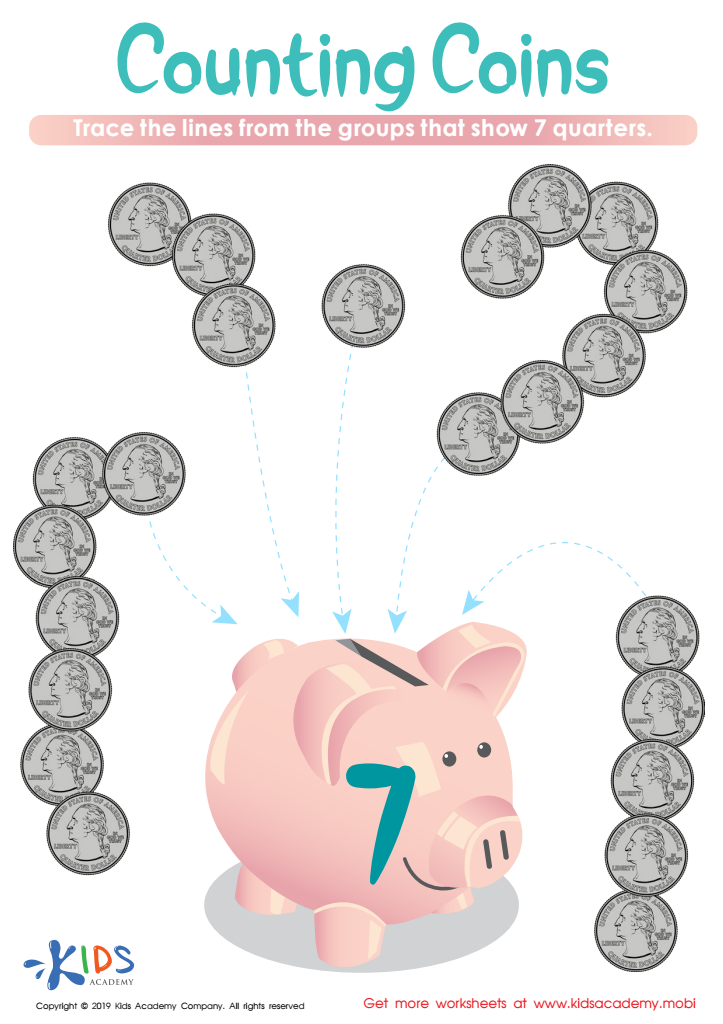
Counting Coins Worksheet
 Assign to My Students
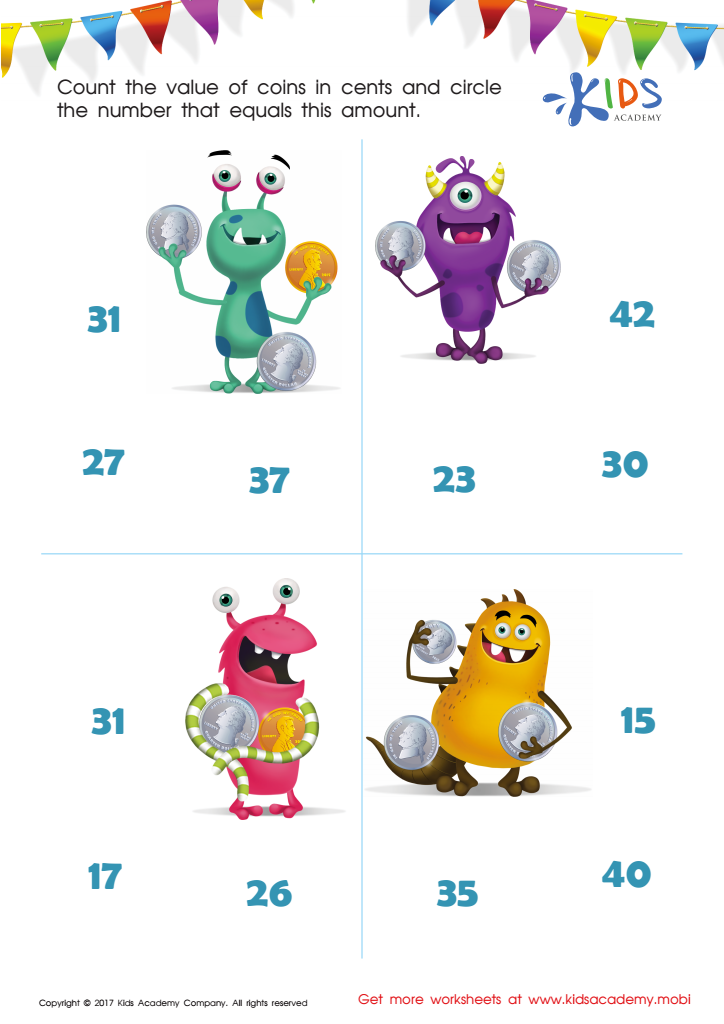
How Many Coins Money Worksheet
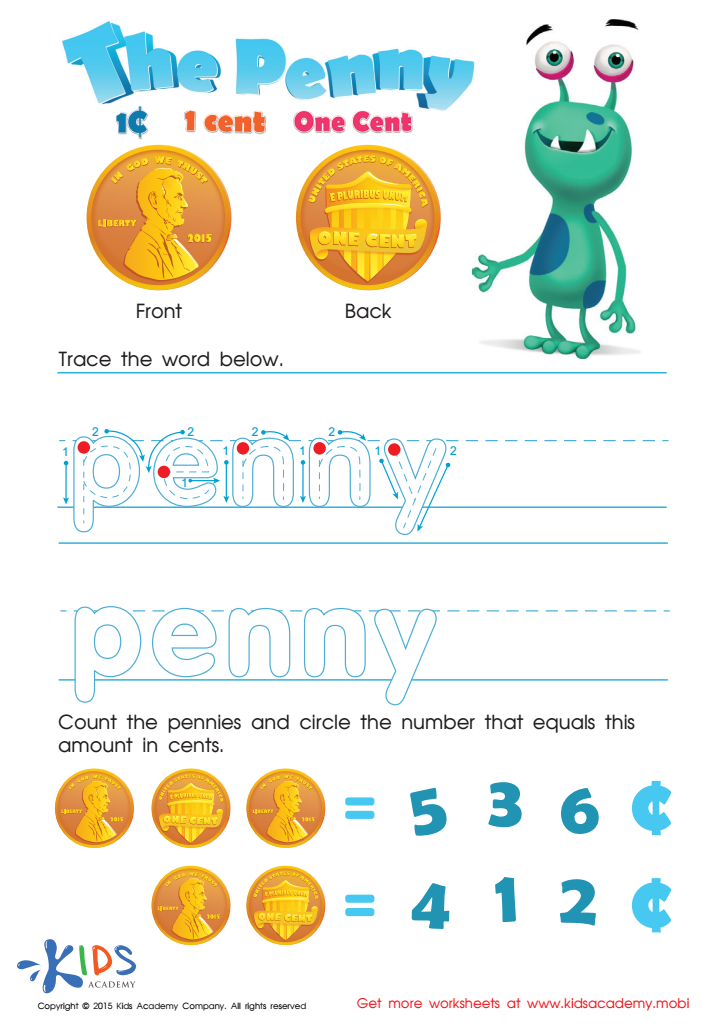
One Cent or the Penny Money Worksheet
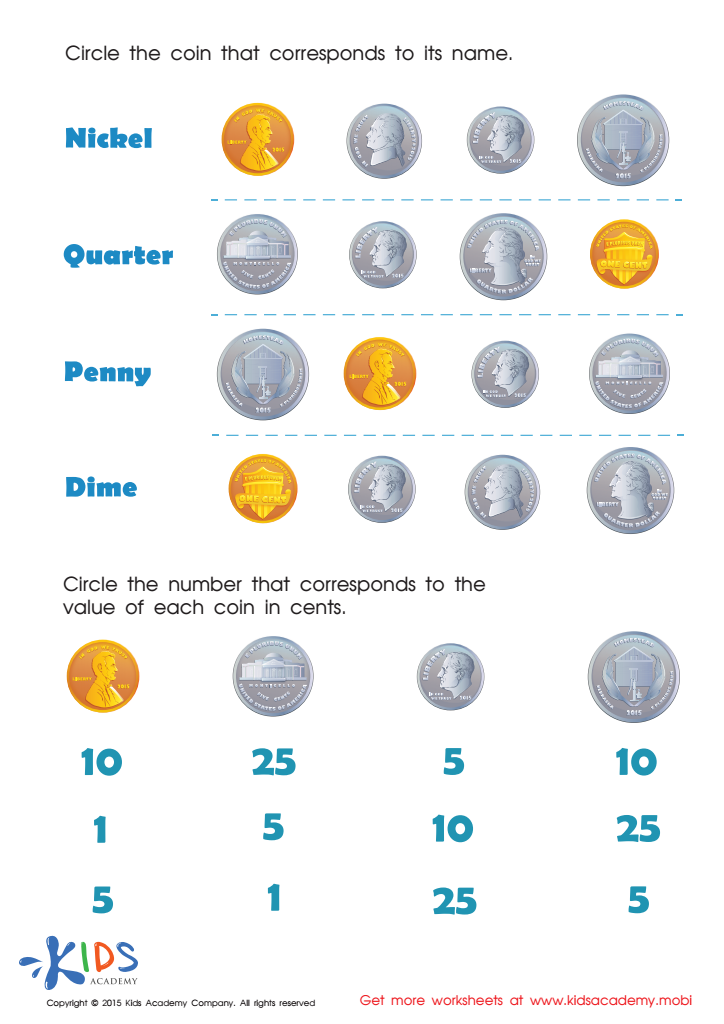
Coin Names and Values Money Worksheet
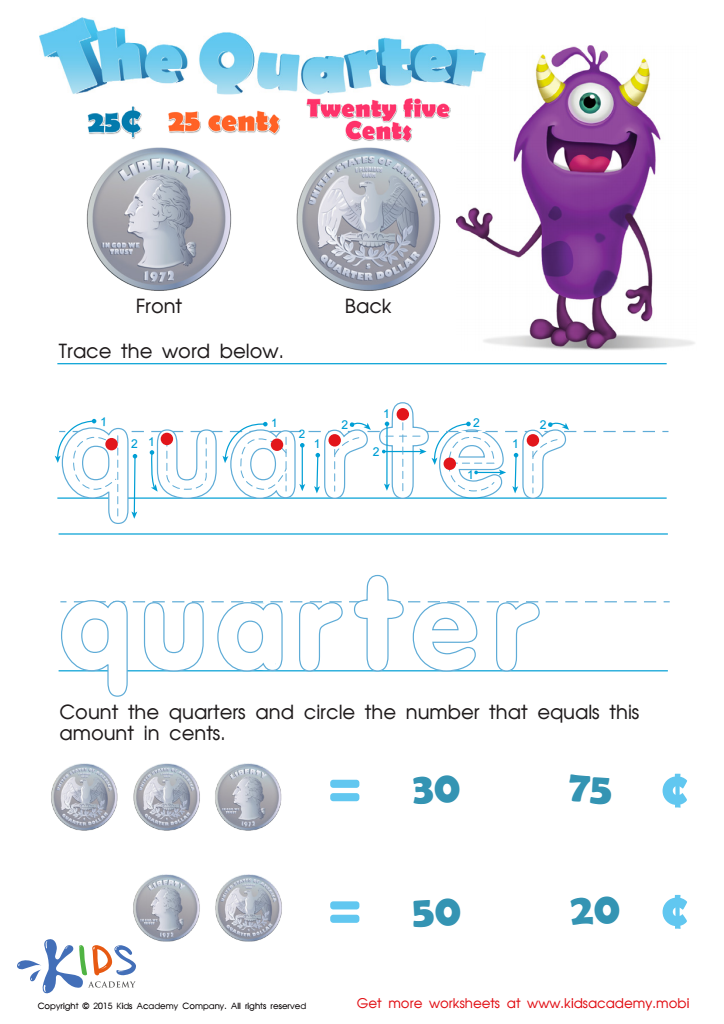
Twenty Five Cents or the Quarter Money Worksheet








Introducing money recognition, particularly coins, to children aged 3 to 5 is crucial for their early financial literacy. At this age, children are naturally curious and eager to learn about the world around them. Teaching them about coins helps develop essential life skills, such as counting, matching, and recognizing different values, laying a strong foundation for future math skills.
Understanding money also fosters independence. As children begin to distinguish coins, they gain confidence in making small purchases, whether at a store or play setting. This experience promotes decision-making abilities, as they learn to compare values and understand the concept of trade—what they give for what they receive.
Moreover, learning about coins nurtures an appreciation for saving and spending wisely. Discussing how to use money responsibly can educate them about the value of goods and services, making a lasting impact on their attitudes toward money management in the future.
Overall, engaging children with money recognition at this early age not only motivates cognitive development but also prepares them for responsible financial behaviors in adulthood. Active participation from parents and teachers ensures that these fundamental lessons are reinforced consistently and joyfully.








