Hand-eye Coordination Geometry Worksheets for Ages 3-5
3 filtered results
-
From - To
Enhance your child's cognitive development with our Hand-Eye Coordination Geometry Worksheets, specially designed for ages 3-5. These engaging activities help young learners improve their motor skills while exploring basic geometric shapes. Each worksheet combines fun exercises that promote hand-eye coordination, setting a strong foundation for future math learning. Young children will enjoy tracing, coloring, and identifying shapes, all while refining their coordination and fine motor skills. Perfect for parents and educators seeking interactive tools to boost early education, our worksheets provide a delightful and educational experience. Empower your child’s learning journey today with our creative and challenging geometry activities!
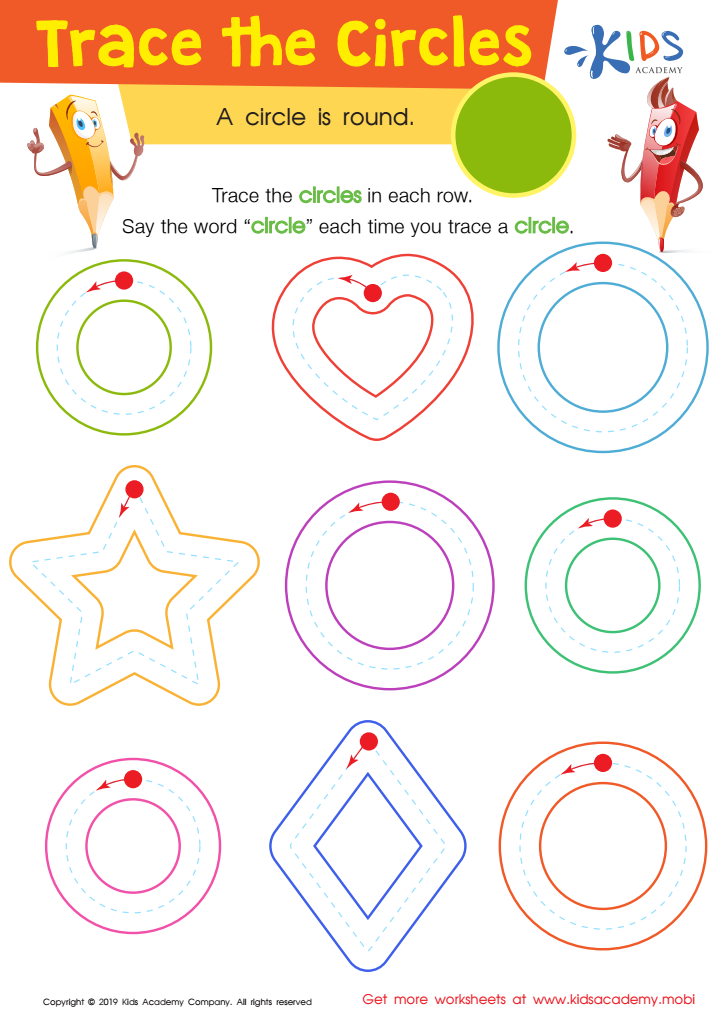
Trace The Circles Worksheet
 Assign to My Students











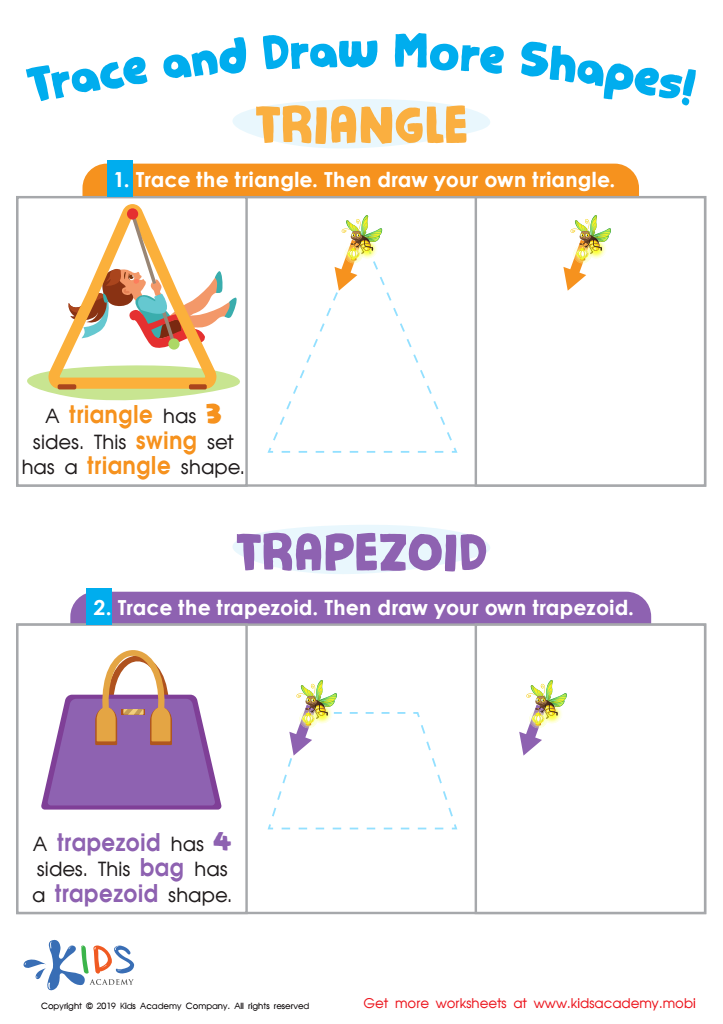
Trace and Draw More Shapes Worksheet








Hand-eye coordination is a crucial skill that develops in early childhood and plays a significant role in a child's overall development, particularly from ages 3 to 5. Parents and teachers should prioritize activities that enhance this skill as it lays the groundwork for a variety of essential academic and life skills.
Geometry is inherently linked to hand-eye coordination through activities that involve spatial awareness, manipulation of objects, and understanding shapes. When children engage in tasks that require them to manipulate appropriate geometric shapes—such as stacking blocks, completing puzzles, or drawing—they practice and enhance their hand-eye coordination. This not only improves their motor skills but also fosters critical thinking and problem-solving.
Moreover, enhancing hand-eye coordination through geometric activities fosters cognitive development. Children learn to recognize patterns, spatial relationships, and spatial reasoning. This knowledge cultivates a foundation for math and science, promoting numeracy skills that are vital as they progress through school.
In conclusion, focusing on hand-eye coordination through geometry offers young children enhanced motor abilities, cognitive growth, and a stronger foundation in mathematics. Encouraging these activities allows children to thrive in their early academic endeavors and equips them with the skills needed for lifelong learning.








