Spatial reasoning Numbers Worksheets for Ages 3-5
3 filtered results
-
From - To
Unlock your child's potential with our "Spatial Reasoning Numbers Worksheets for Ages 3-5." Designed to foster early math skills, these engaging printables combine fun activities with educational content to help little learners recognize numbers, patterns, shapes, and their positions in space. Perfect for preschoolers, our worksheets enhance cognitive development by incorporating bright visuals and interactive tasks. Encourage spatial awareness and foundational math abilities, all in a stress-free and playful learning environment. Trusted by parents and educators alike, these resources make mastering the basics of spatial reasoning and numbers enjoyable for your young mathematician. Explore, learn, and grow with us!
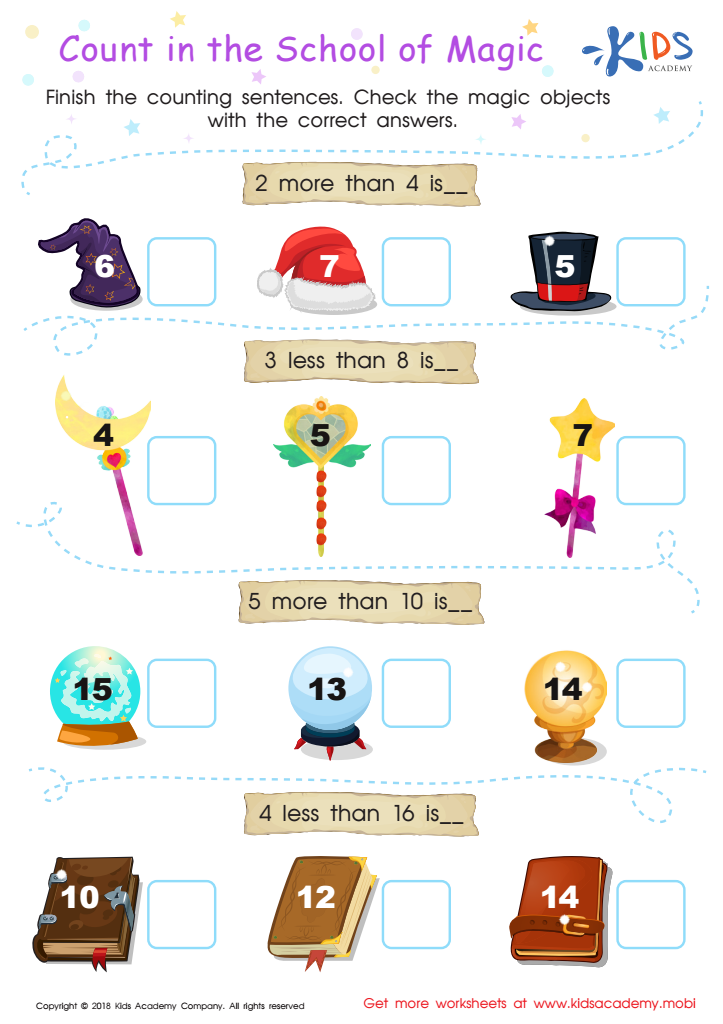
Count in the School of Magic Worksheet
 Assign to My Students
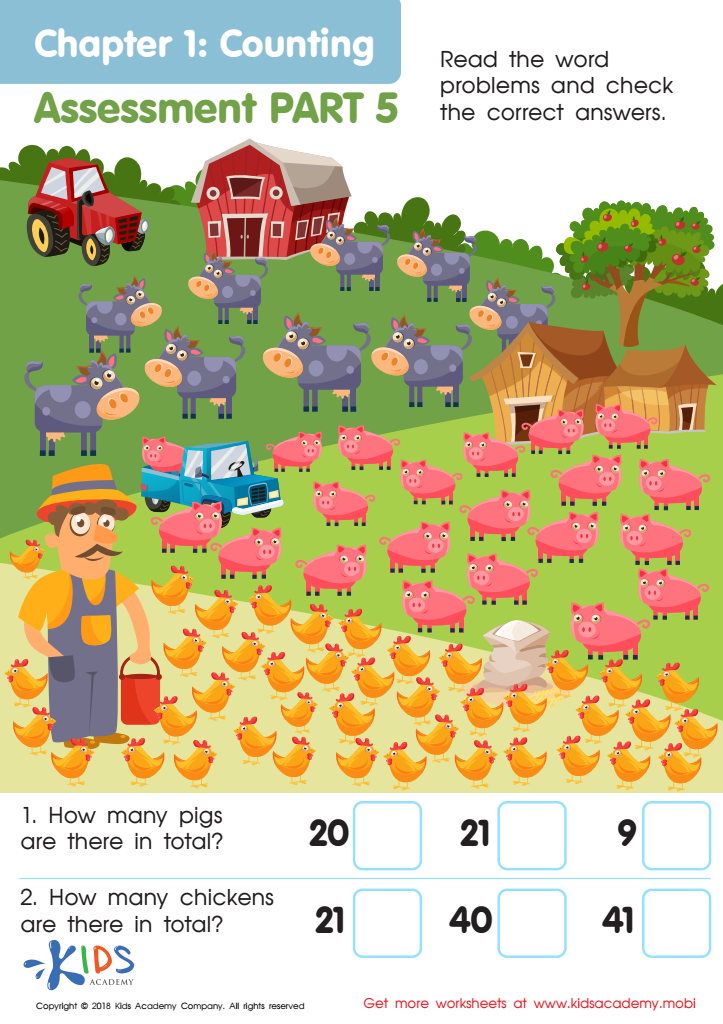
Counting: Assessment 5 Worksheet
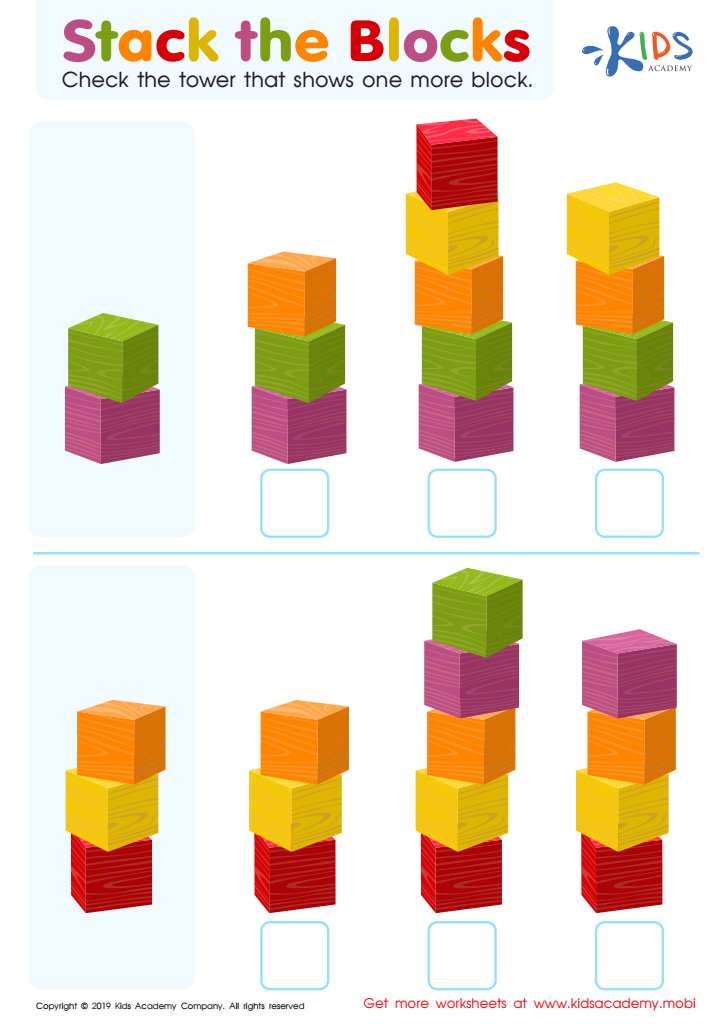
Stack the Blocks Worksheet








Spatial reasoning and numbers are foundational skills that significantly impact a child's cognitive development and success in various life areas, including math and science. Parents and teachers should focus on these skills early, particularly between the ages of 3-5, when children's brains are most plastic and receptive to new information.
Spatial reasoning refers to the ability to understand and remember the spatial relations among objects. This skill aids in problem-solving and understanding the world, from weaving through physical environments to tackling more abstract puzzles and patterns. When children develop good spatial skills early on, they are better equipped for tasks in subjects like geometry, geography, and even STEM (Science, Technology, Engineering, Mathematics) fields as they grow older. Activities like building blocks, puzzles, and drawing can naturally enhance these skills.
As for numbers, early numeracy is crucial because it lays the groundwork for future mathematical learning. Basic number skills encompass counting, recognizing numbers, and understanding concepts like more/less and sizes. These skills not only support formal education but also influence everyday tasks like measuring ingredients while cooking or managing time and money.
Incorporating activities that boost spatial reasoning and numeracy in playful, age-appropriate ways can build a strong foundation for academic success, nurturing a sense of curiosity and confidence in young learners. Parents and teachers play a pivotal role in creating a learning-rich environment that balances both of these critical skill sets.








