Understanding patterns Numbers Worksheets for Ages 3-5
3 filtered results
-
From - To
Discover the joy of learning with our "Understanding Patterns Numbers Worksheets" designed for children aged 3-5! These engaging worksheets help young learners recognize and create patterns through fun activities that spark curiosity and build essential math skills. Children will explore a variety of patterns, enhancing their ability to connect numbers, colors, and shapes in a playful way. Each worksheet is crafted to promote fine motor skills and encourage critical thinking while making learning an enjoyable experience. Perfect for parents and educators seeking to support early literacy and numeracy concepts, these resources are invaluable for empowering the next generation of thinkers!
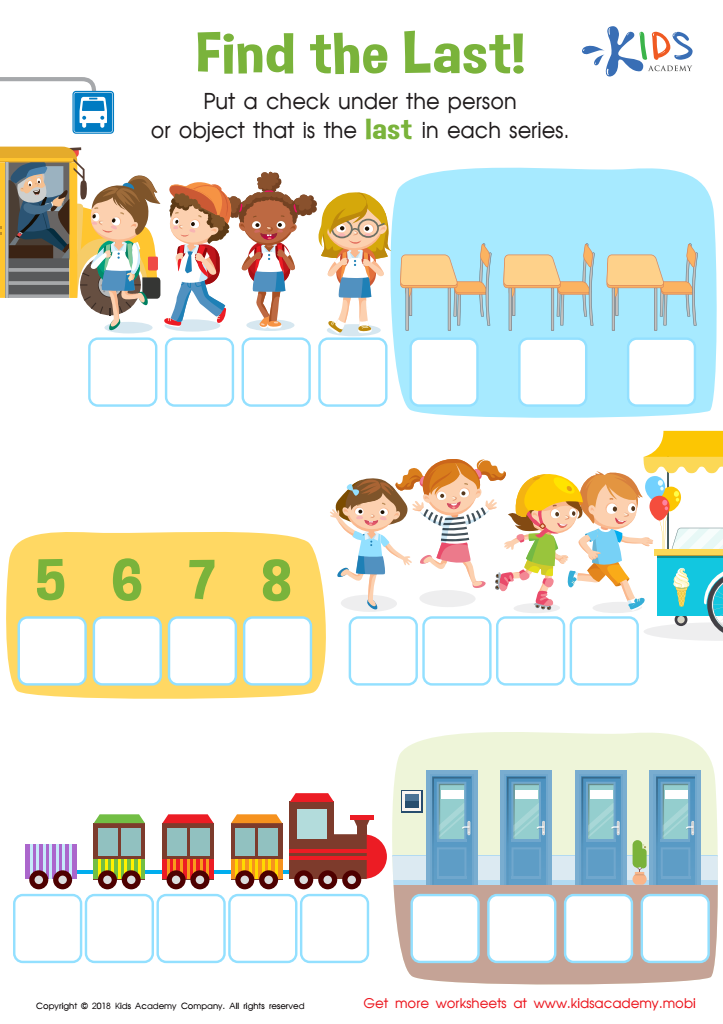
Find the Last! Worksheet
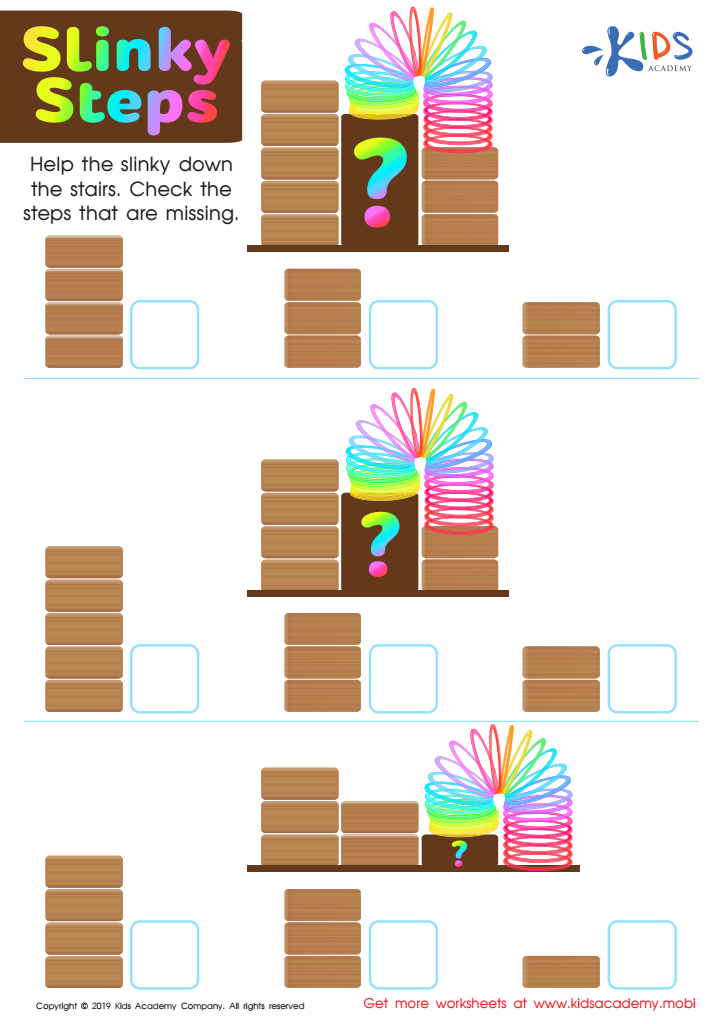
Slinky Steps Worksheet
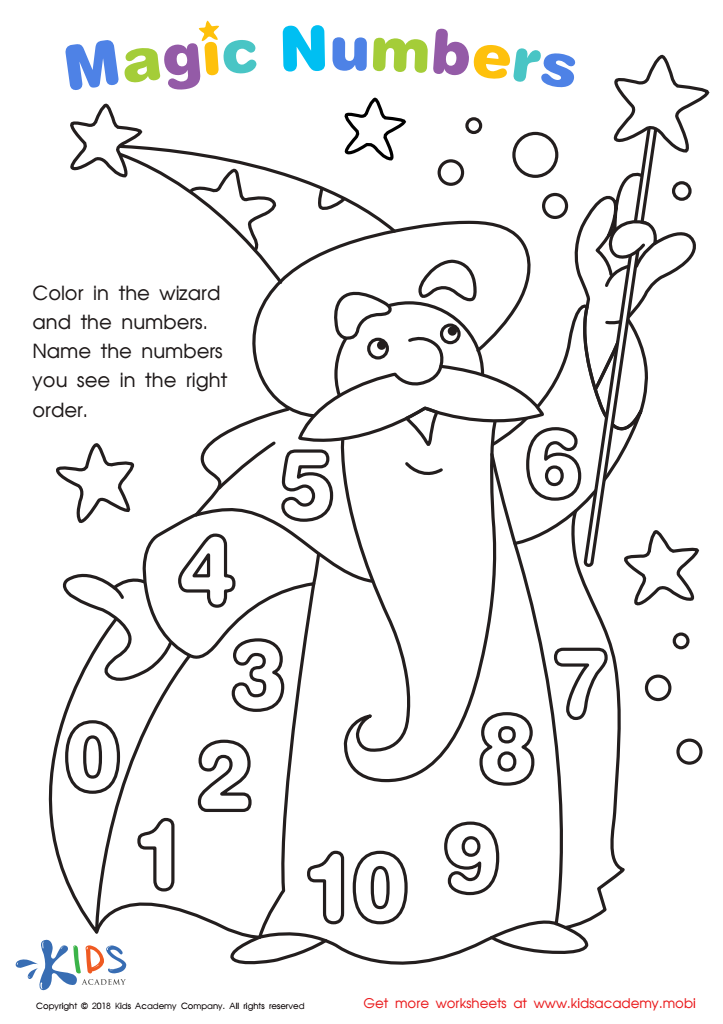
Magic Numbers Worksheet
 Assign to My Students







Understanding patterns in numbers is crucial for young children aged 3-5 as it lays the foundation for their future mathematical skills. At this early stage, learners are naturally curious and engaged with the world around them. Recognizing and creating patterns enhances their ability to think critically and improves problem-solving skills.
Patterns help children make sense of relationships in numbers and objects, fostering logical reasoning. For example, recognizing a simple AB pattern (like red, blue, red, blue) not only sharpens their observational skills but also prepares them to discover more complex mathematical concepts, such as sequencing, addition, and subtraction, later on.
Moreover, understanding patterns boosts cognitive development, encouraging children to think abstractly and recognize repeated information across various contexts. This foundational skill serves as a stepping stone to higher-order mathematics and supports language development as children learn to articulate their observations and reasoning.
Parents and teachers play a crucial role in nurturing this skill through playful activities and real-life examples. By incorporating patterns in everyday experiences—such as music, art, and nature—adults can spark a child's innate curiosity and love for learning, ultimately helping children become confident learners and problem solvers as they grow.








