Analytical thinking Math Worksheets for Ages 3-5
3 filtered results
-
From - To
Unlock your child's potential with our engaging Analytical Thinking Math Worksheets for ages 3-5! Specifically designed to foster critical thinking skills and enhance cognitive development, these worksheets introduce young learners to problem-solving concepts through fun math activities. With vibrant illustrations and age-appropriate challenges, children will explore counting, sorting, pattern recognition, and logical reasoning. Each worksheet promotes active learning, encouraging your little one to think creatively and analytically. Perfect for homeschoolers and classrooms alike, our resources provide a strong foundation for future mathematical understanding. Discover the joy of learning with our thoughtfully crafted worksheets and watch your child's confidence soar!

The 5 Sense Scientist Worksheet
 Assign to My Students

Logic Game Sorting Worksheet
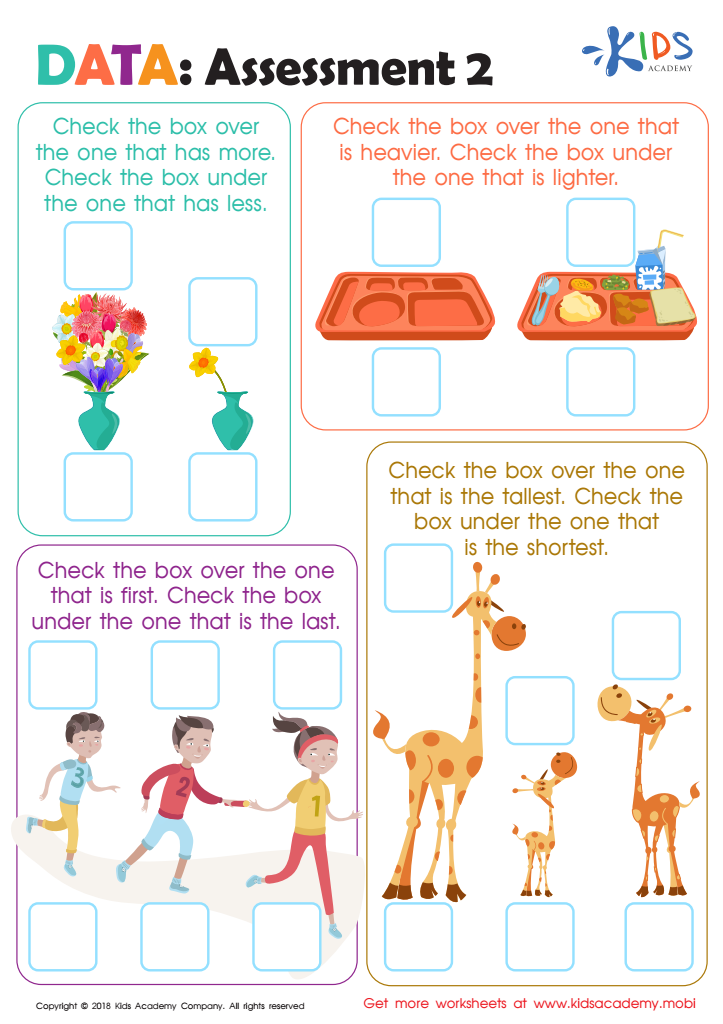
Data: Assessment 2 Worksheet







Analytical thinking in mathematics is crucial for children aged 3-5 as it lays a foundation for future academic success and problem-solving abilities. During these formative years, children begin to develop their cognitive skills, and integrating mathematical concepts can enhance their logical reasoning, critical thinking, and decision-making skills.
Engaging early in analytical thinking helps children learn to identify patterns, make comparisons, and understand relationships between numbers and objects. This is not merely about numbers; it encourages curiosity and creativity, prompting children to explore mathematical ideas through play, storytelling, and hands-on activities. For example, sorting and counting toys not only solidify basic math principles but also enhance their overall cognitive development.
Moreover, strong analytical skills are linked to better performance in all subjects as children progress through school. When parents and teachers emphasize analytical math from a young age, they equip children with the tools needed to navigate everyday challenges and foster resilience in overcoming obstacles.
Ultimately, investing time in developing these skills now will have long-lasting benefits, making analytical thinking in mathematics an essential focus for educators and parents alike. By nurturing these early stages of mathematical understanding, we empower children to thrive academically and personally.








