Basic math abilities Math Worksheets for Ages 3-5
3 filtered results
-
From - To
Discover a fun and engaging way to enhance your child's early math skills with our Basic Math Abilities Worksheets for ages 3-5. These printable resources are designed to introduce fundamental concepts such as counting, number recognition, basic addition, and problem-solving in a playful manner. Tailored specifically for young learners, our worksheets incorporate colorful illustrations and interactive activities to foster a love for mathematics. Whether at home or in the classroom, these worksheets provide valuable practice that supports early cognitive development. Equip your child with essential math abilities through enjoyable learning experiences that set the foundation for their future educational success.
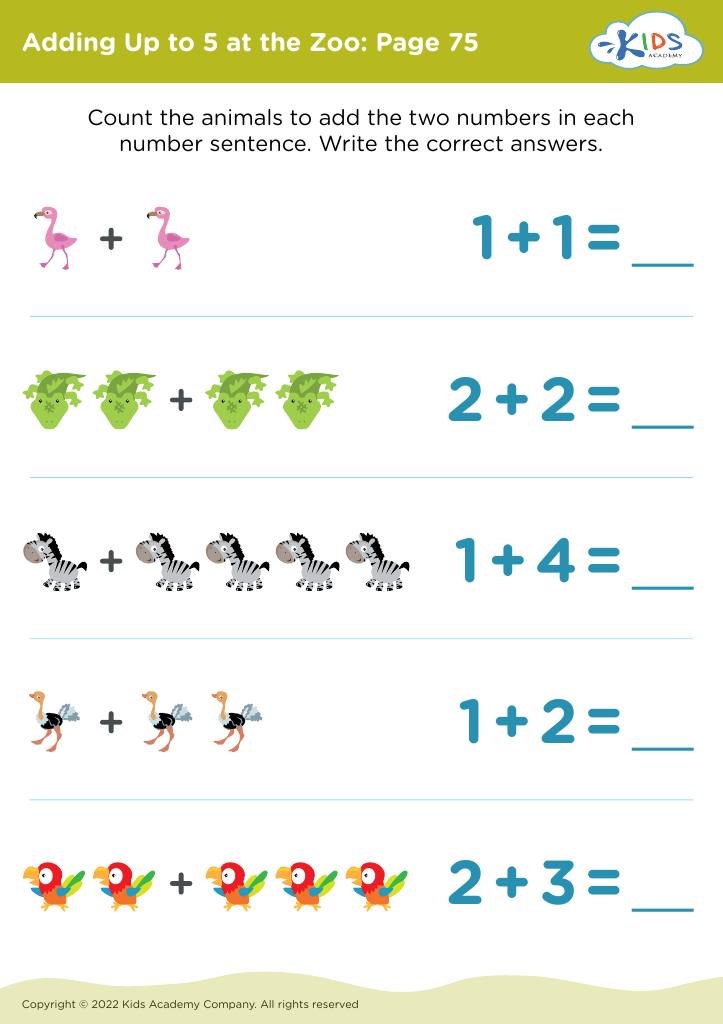
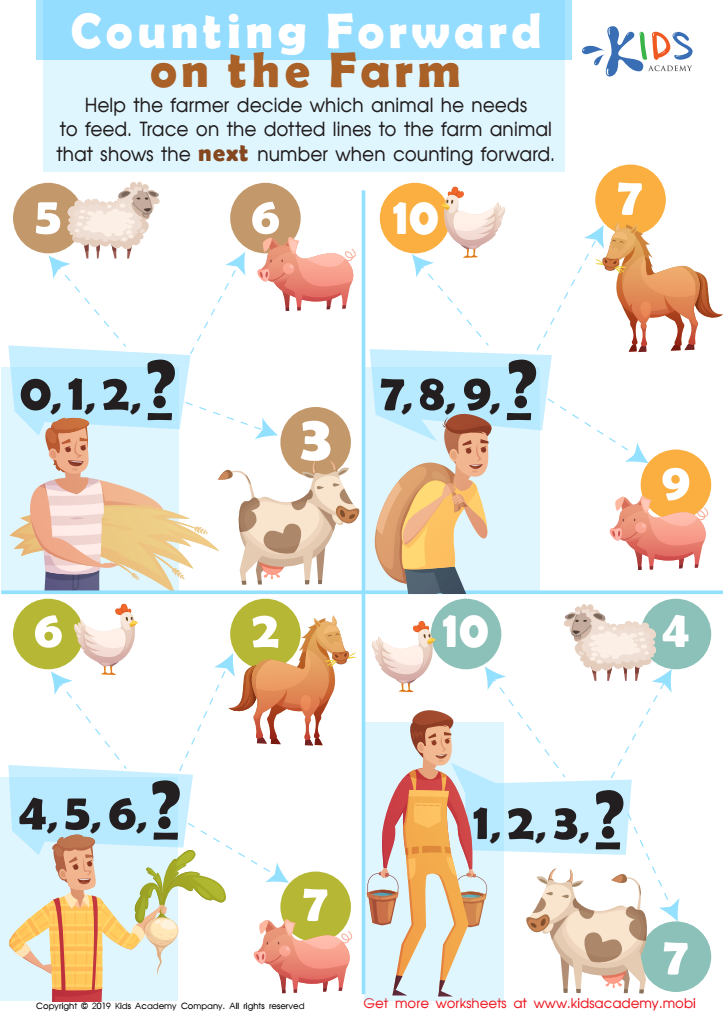
Counting Forward On the Farm Worksheet
 Assign to My Students
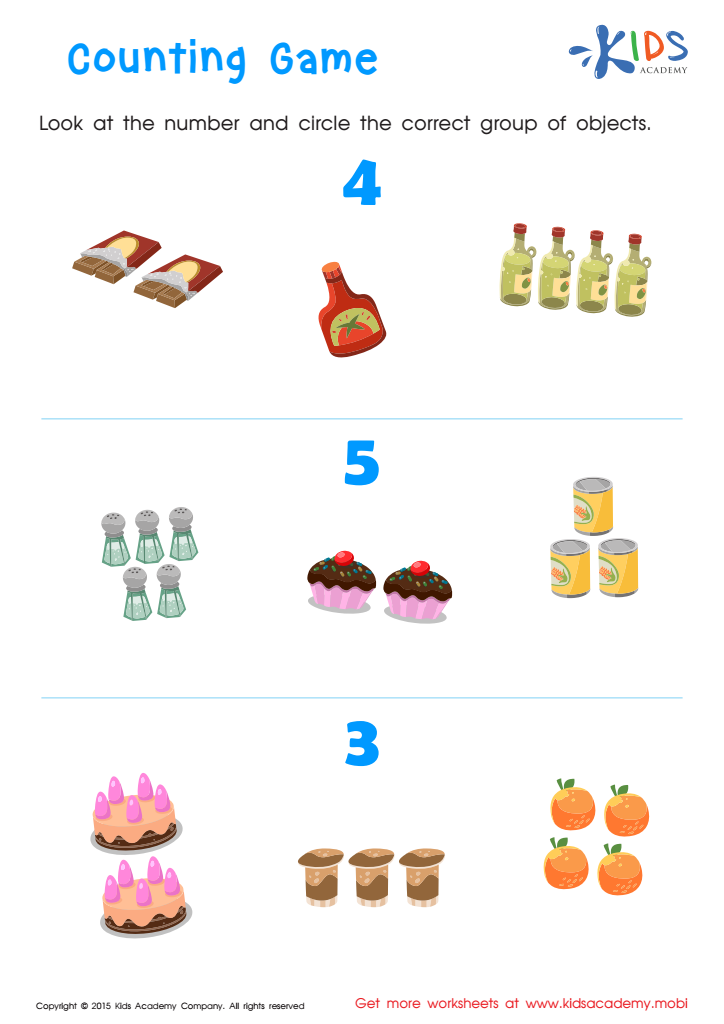
Counting Worksheet








Basic math abilities are foundational skills that significantly influence a child's overall academic success and problem-solving capabilities. For children aged 3-5, early math education lays the groundwork for logical thinking and cognitive development. Understanding simple concepts like counting, shapes, and measurements not only supports math skills but also enhances language development, critical thinking, and social interactions.
Parents and teachers should care about fostering these skills as they help children learn about relationships and patterns applicable in everyday life. Engaging children in fun math-related activities, like counting blocks during play or recognizing shapes in their environment, promotes enthusiasm for learning and reduces math anxiety in later years. Moreover, children who master basic math skills early on often perform better in their later schooling, leading to increased confidence and academic achievement.
Early engagement in math also encourages curiosity and exploration, equipping children with essential tools for problem-solving and decision-making. Supporting math development during these formative years not only empowers children academically but nurtures their ability to engage with the world around them, setting a strong foundation for future learning and growth. Therefore, prioritizing basic math abilities is crucial for every child’s development and success in school and life.








