Filters

79 filtered results

Clear all filters
Favorites
With answer key
Interactive

79 filtered results

Difficulty Level

Grade


Check out this FREE Trial Lesson on Math for age 3-5!

Classifying Objects and Count the Number of Objects in Each Category CCSS.Math.Content

Favorites
With answer key
Interactive
  • 3-5
  • Basic Math Skills
  • Math
Recycling - More or Less Worksheet

Recycling - More or Less Worksheet

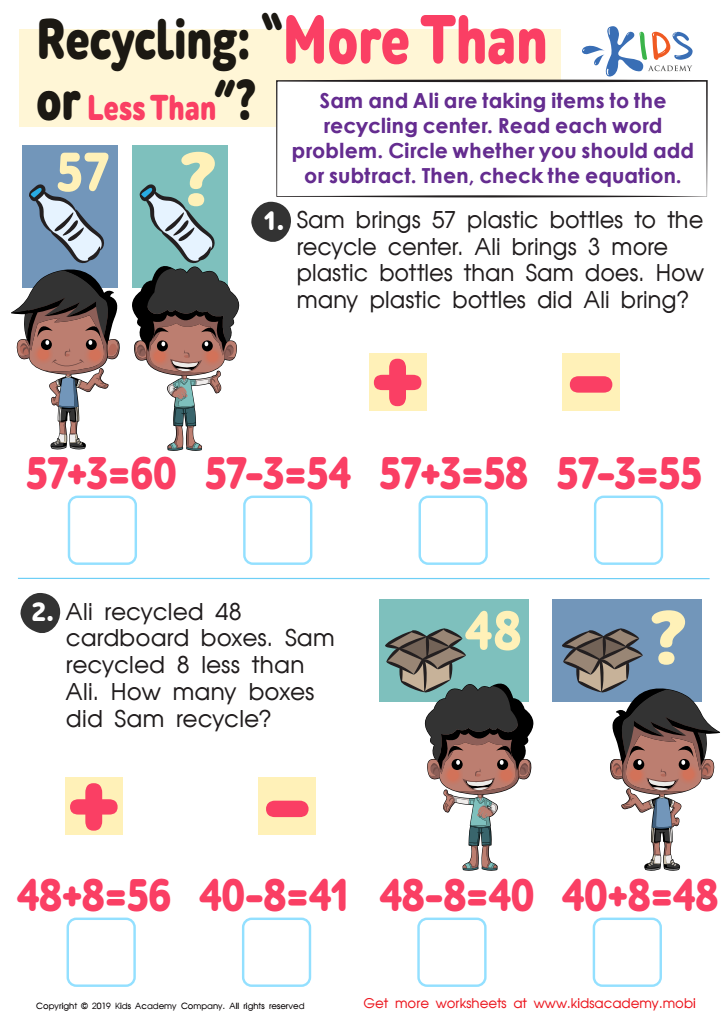
Your child can compare numbers and solve word problems with this free worksheet. Help them understand what's being asked as Sam and Ali take items to the recycling center. They can choose the correct equation to match the word problem and apply their skills in reading and pulling out the appropriate information.
Recycling - More or Less Worksheet
Worksheet
Sort and Count Candy Worksheet

Sort and Count Candy Worksheet

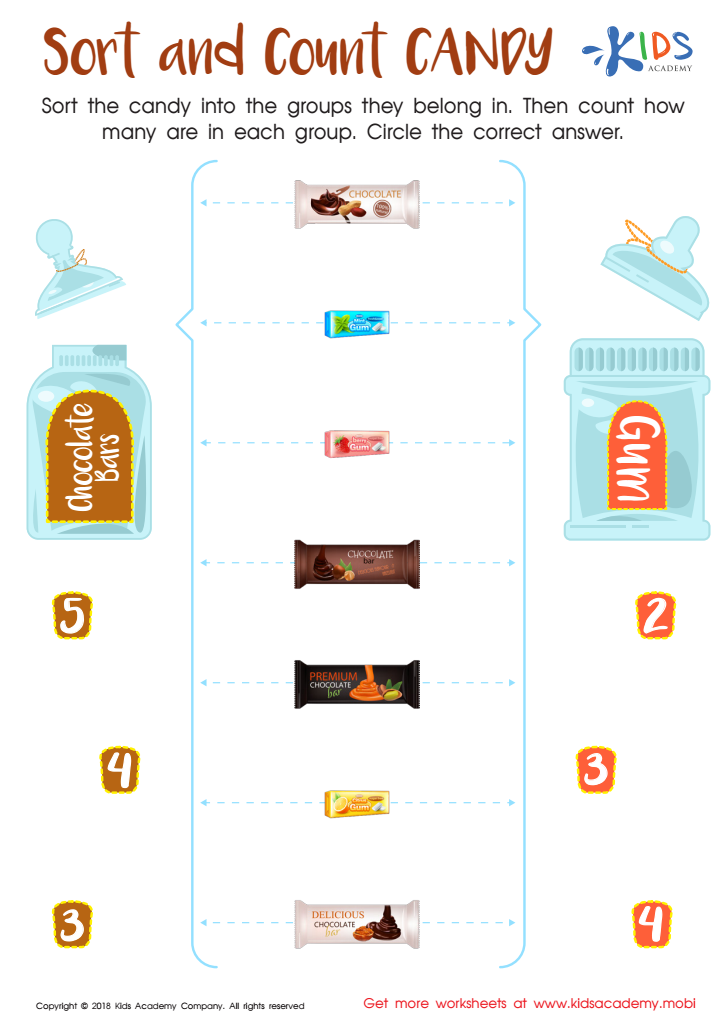
Sort chocolate and candy with your kids! Help them use recognizable items and pictures to sort, practice counting with one-to-one representation, and develop their fine motor skills with the traceable lines. Download this free worksheet to get started. Yum!
Sort and Count Candy Worksheet
Worksheet
Data: Assessment 2 Worksheet
Data: Assessment 2 Worksheet

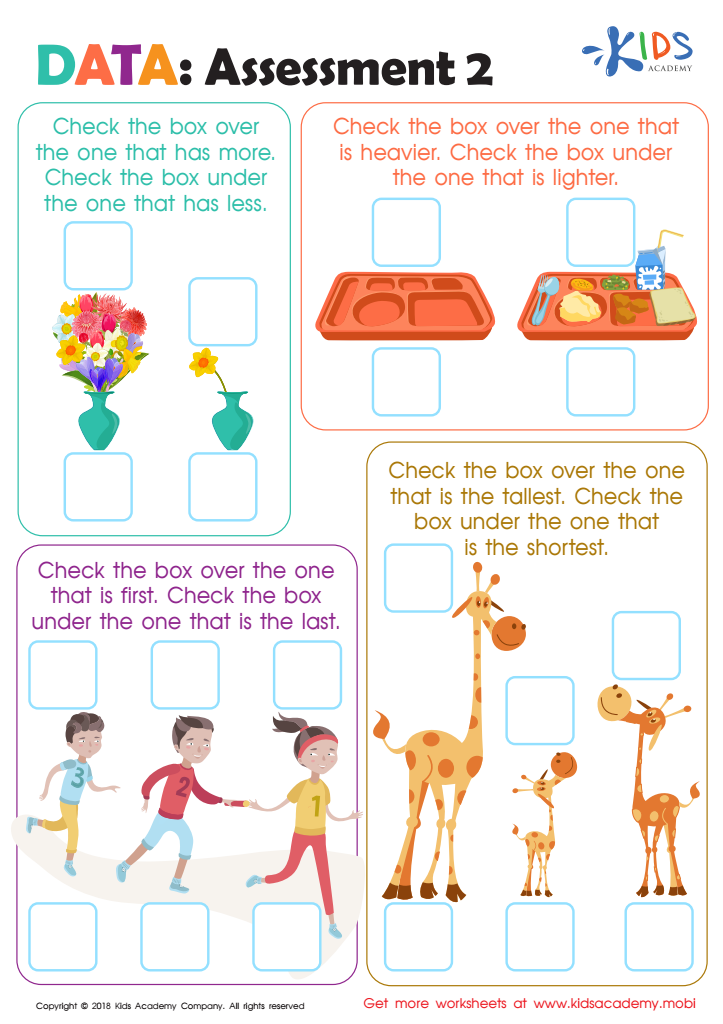
This printable worksheet tests students' understanding of words related to quantity and measurement, such as "more", "less", "heavy", "light", "first", "last", "tall", and "short". It helps children compare and contrast when solving measurement problems. Ideal for math classes, it encourages students to gain the essential skills needed in subjects like math, science, and reading.
Data: Assessment 2 Worksheet
Worksheet
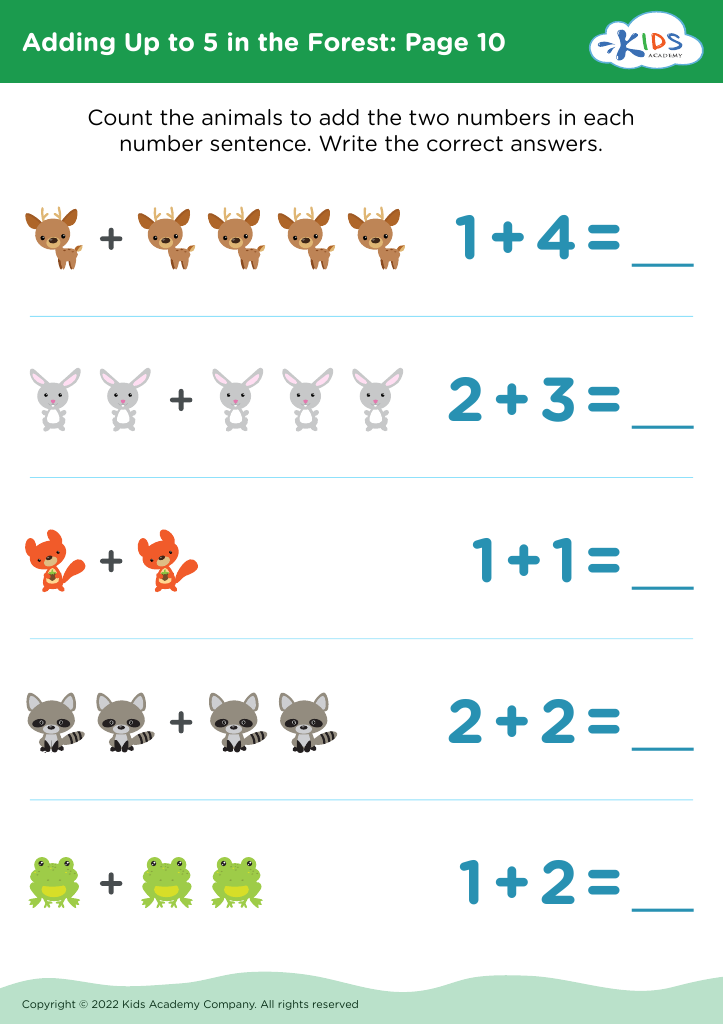
Adding Up to 5 in the Forest: Page 10
Worksheet
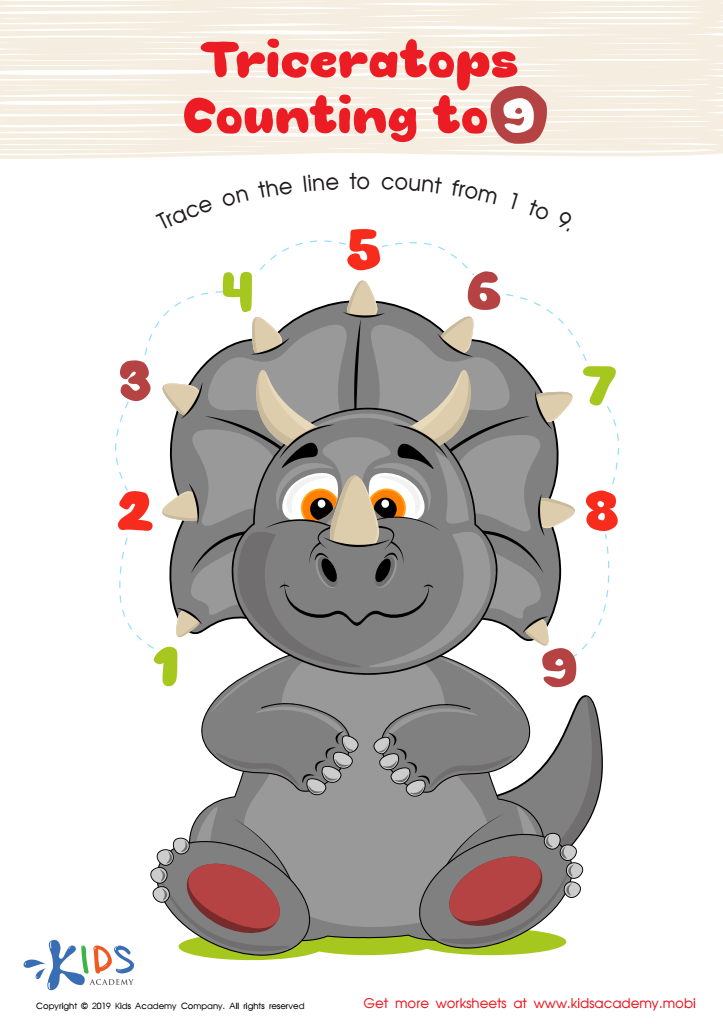
Triceratops Counting to 9 Worksheet
Triceratops Counting to 9 Worksheet

This little triceratops is here to help kids learn to count! Dinosaurs lived long before us and we've never seen one alive, but through research, we know a lot about them. Let the dinosaur help trace on the line from 1 to 9 for a fun counting practice.
Triceratops Counting to 9 Worksheet
Worksheet
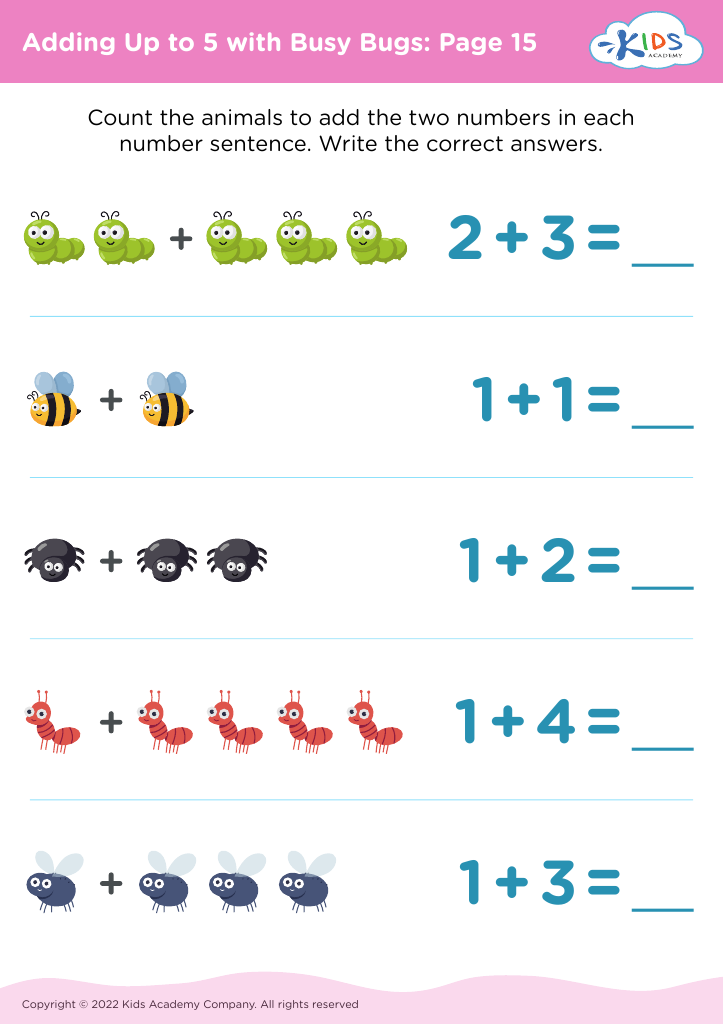
Adding Up to 5 with Busy Bugs: Page 15
Worksheet
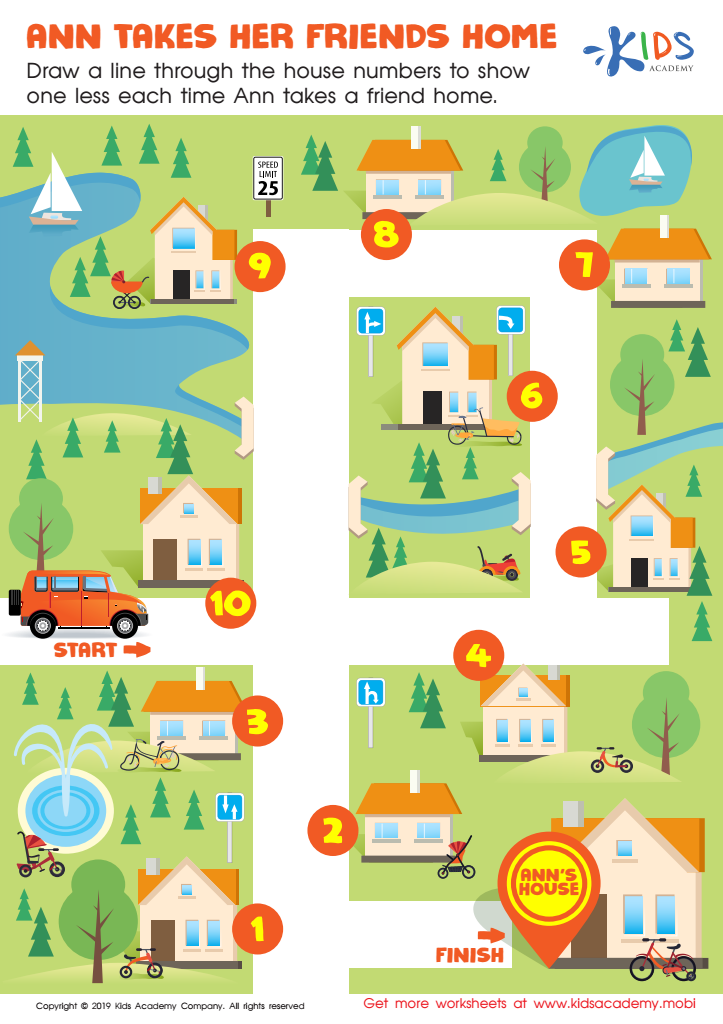
Ann Takes her Friends Home Worksheet


Ann Takes her Friends Home Worksheet

Get your kids to tell you what they enjoy doing with their friends in each other's homes. Then, encourage them to complete the worksheet. It shows Ann taking her friends to her house. Have them draw a line through the house numbers to show Ann taking one friend home at a time.
Ann Takes her Friends Home Worksheet
Worksheet


... 3 4

Parents and teachers should prioritize basic math skills for children aged 3-5 because these foundational skills set the stage for future academic success. During these formative years, children are naturally curious and eager to learn, making it an ideal time to introduce core mathematical concepts such as counting, shapes, and simple patterns. Developing early math skills enhances critical thinking, problem-solving abilities, and cognitive development, fostering a love for learning.

Moreover, early math exposure helps children build confidence and proficiency in numbers. Activities such as sorting objects, identifying shapes, or counting everyday items can create practical connections between math and real-life situations. This hands-on learning makes math accessible and enjoyable, reducing anxiety around the subject later on.

Additionally, research indicates a strong correlation between early math skills and later achievements in reading and other academic areas. By implementing engaging, age-appropriate math activities, parents and teachers can support holistic development, paving the way for lifelong learning.

In essence, investing time and resources in basic math skills for young children not only nurtures essential cognitive abilities but also lays a foundation for a positive attitude towards math as they grow, making it a wise priority in early childhood education.