Comparing objects Math Worksheets for Ages 3-5
6 filtered results
-
From - To
Discover our engaging "Comparing Objects Math Worksheets" specifically designed for children ages 3-5. These worksheets introduce young learners to the fundamental concepts of comparison, helping them understand similarities and differences through fun activities. Children will explore sizes, quantities, and characteristics of various objects, fostering critical thinking and visual perception skills. Our colorful and interactive worksheets capture the imagination, making learning enjoyable while building a strong mathematical foundation. Perfect for homeschooling or classroom use, these resources encourage hands-on practice and enhance understanding, setting the stage for future math success. Download our worksheets today and watch your little ones thrive in their learning journey!
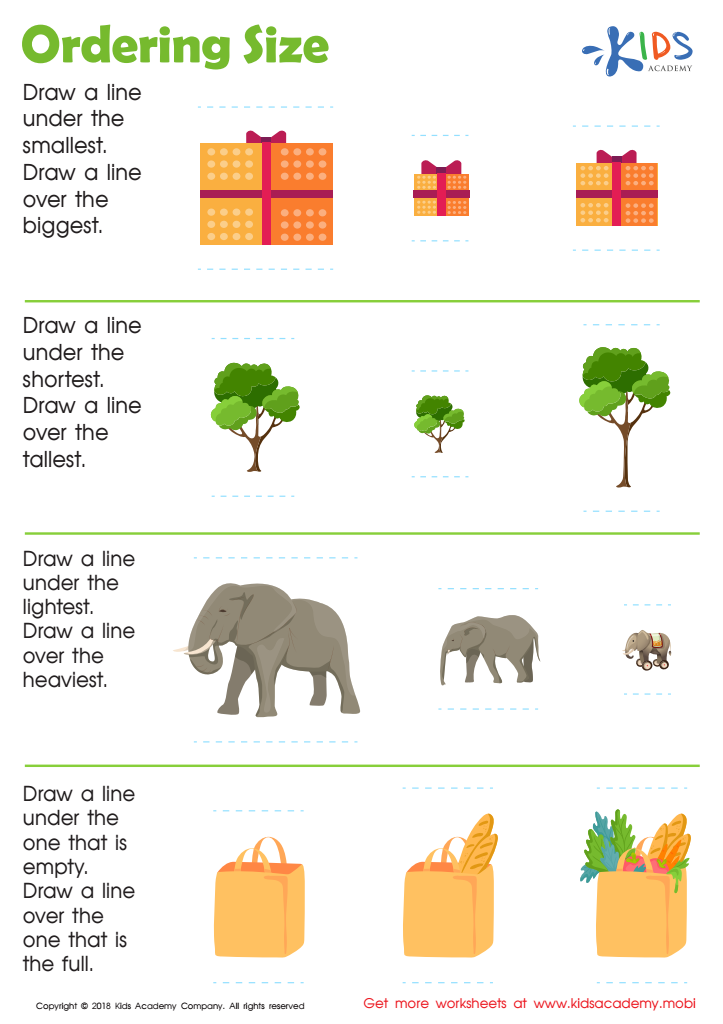
Ordering Size Worksheet
 Assign to My Students
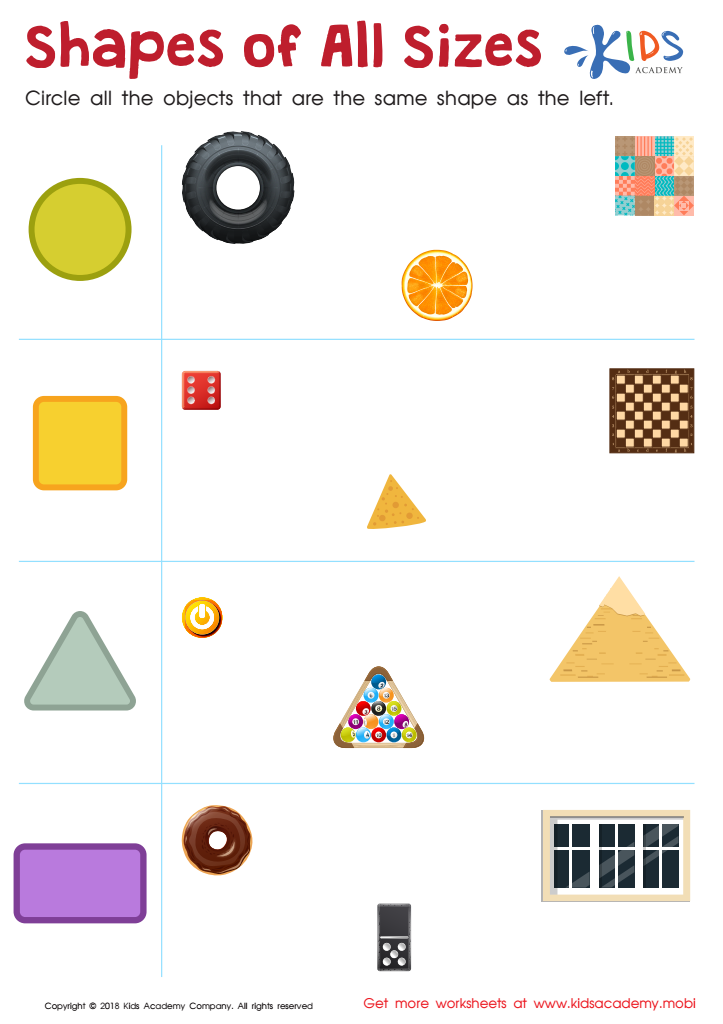
Shapes of All Sizes Worksheet
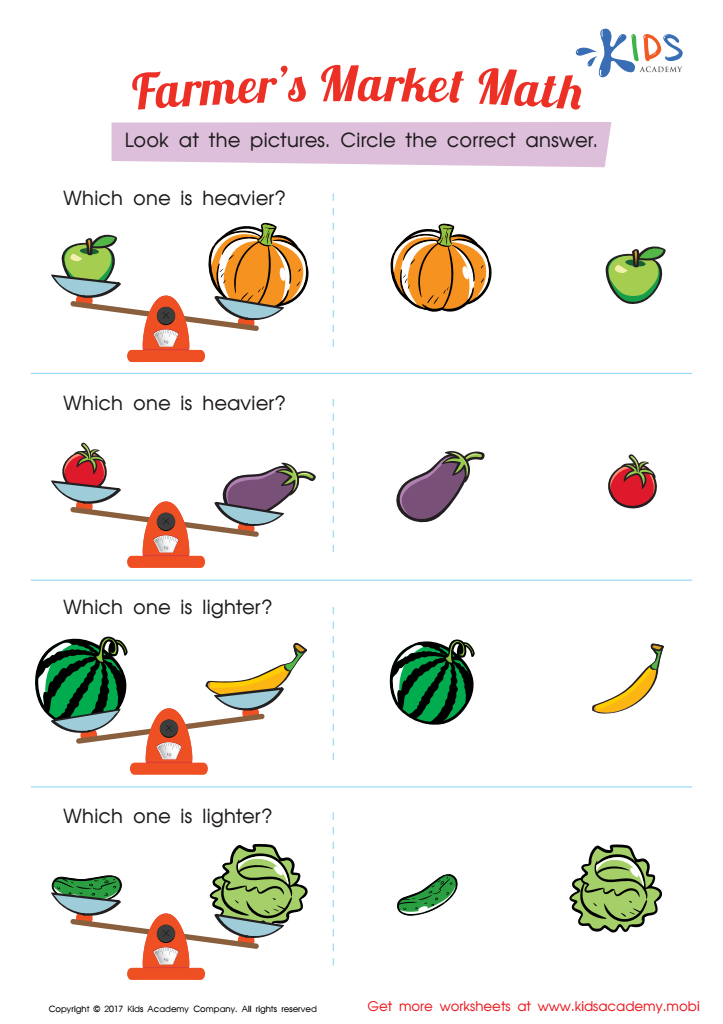
Which One Is Heavier Worksheet
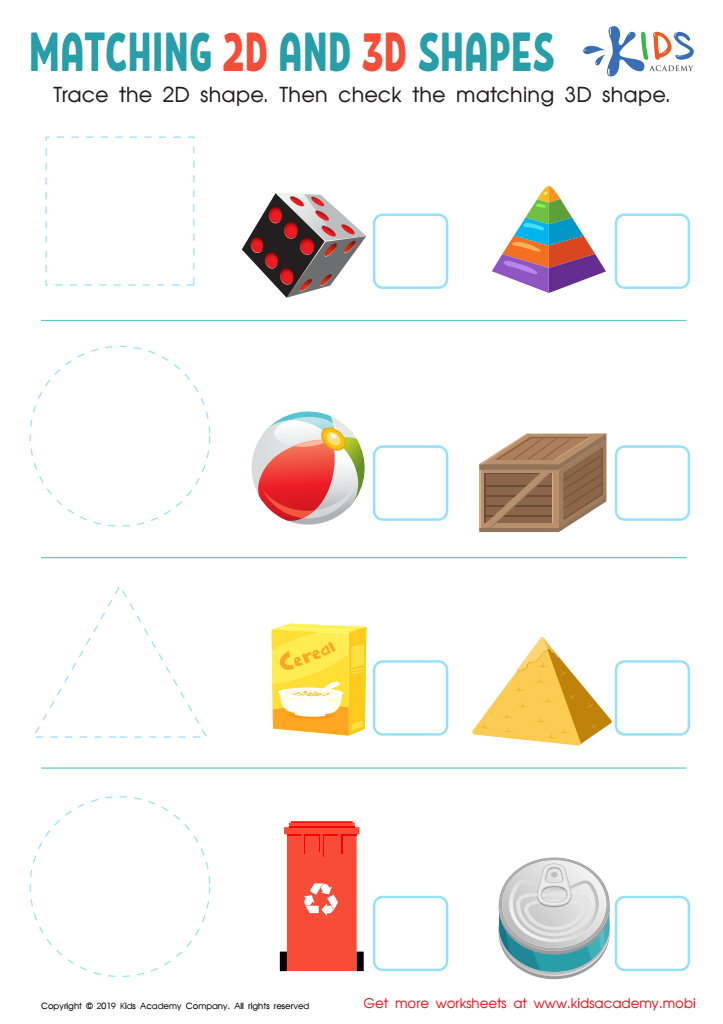
Matching 2D and 3D Shapes Worksheet
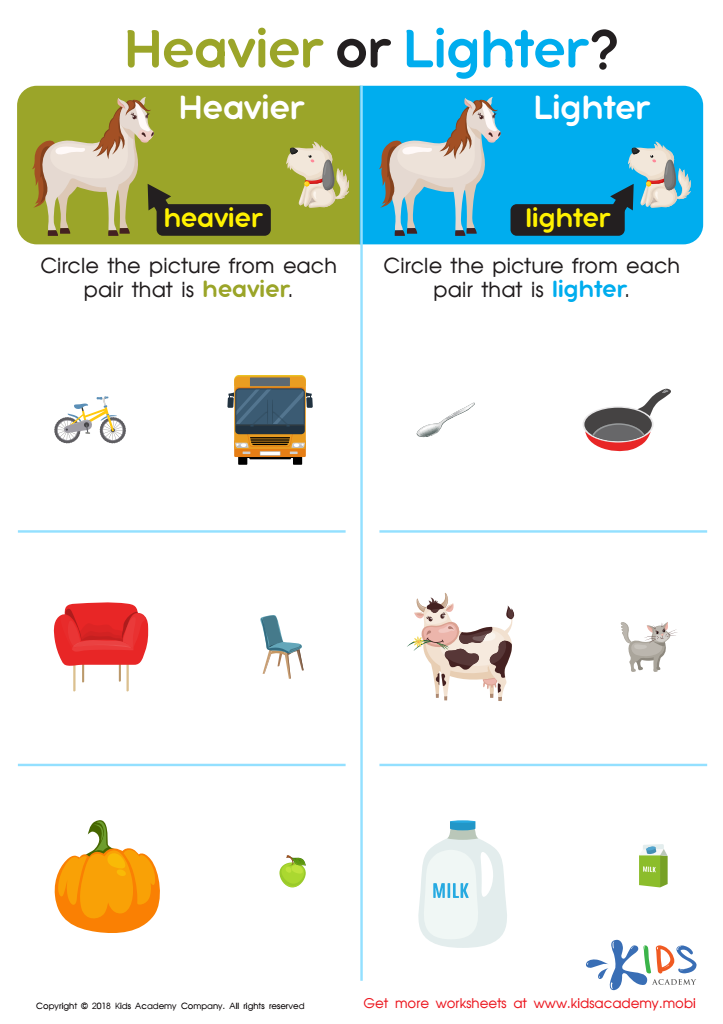
Heavier or Lighter? Worksheet
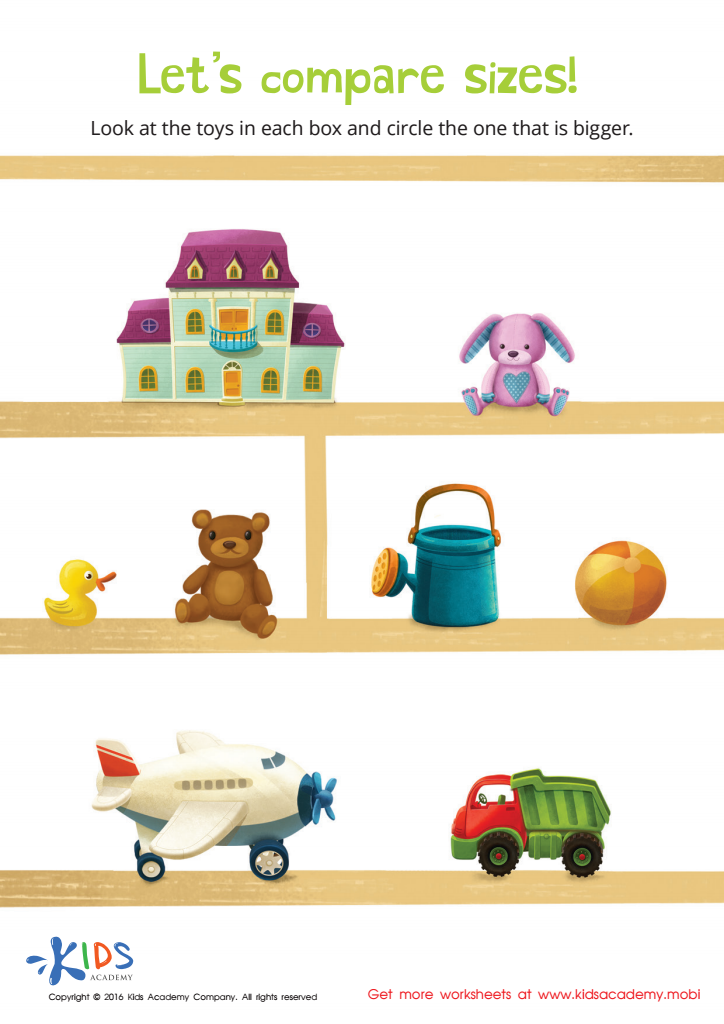
Classifying by Size Sorting Worksheet





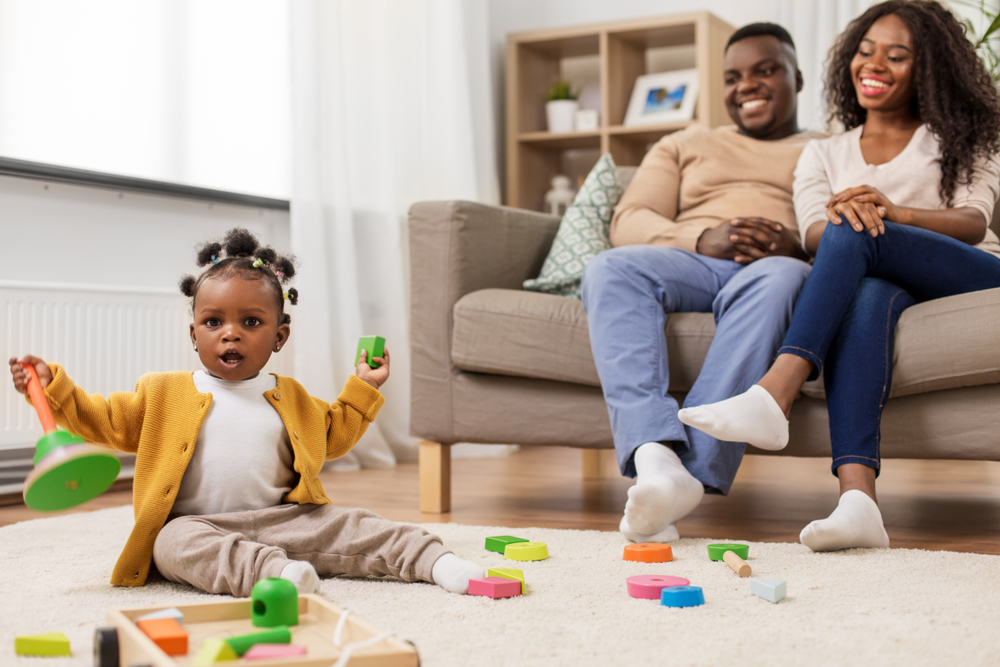


Parents and teachers should care about comparing objects in math for children ages 3-5 because it lays the foundational skills necessary for later mathematical understanding and reasoning. At this critical developmental stage, children begin to explore their world, and comparisons—such as size, quantity, and weight—enhance their observation skills. Engaging in these activities fosters critical thinking as children analyze attributes and relationships between different objects.
Comparing encourages vocabulary development; as children articulate their observations (e.g., "bigger," "smaller," "more," "less"), they build language skills necessary for communication and literacy. Additionally, comparing objects supports cognitive development by promoting problem-solving skills. Children learn to recognize patterns and make associations, essential for future math concepts such as addition and subtraction.
Moreover, this activity nurtures social skills when children collaborate with peers in comparing items, where they share ideas and negotiate differences. It also strengthens concepts of measurement, as they begin to understand the concept of “how much” or “how many,” fostering early numeracy.
In essence, encouraging children to compare objects nurtures not only their mathematical intelligence but also boosts their language and cognitive skills, enabling them to become more proficient learners overall.








