Number comparison skills Math Worksheets for Ages 3-5
3 filtered results
-
From - To
Enhance your preschooler's math journey with our engaging Number Comparison Skills Math Worksheets, designed specifically for ages 3-5! These interactive and colorful worksheets help young learners grasp essential concepts of greater than, less than, and equal to, making math fun and accessible. Through playful activities and relatable themes, children will develop critical thinking and early numeracy skills in a friendly environment. Perfect for at-home learning or classroom use, these worksheets support early childhood education and foster a love for math from a young age. Explore our collection today and watch your child build confidence as they master number comparison!
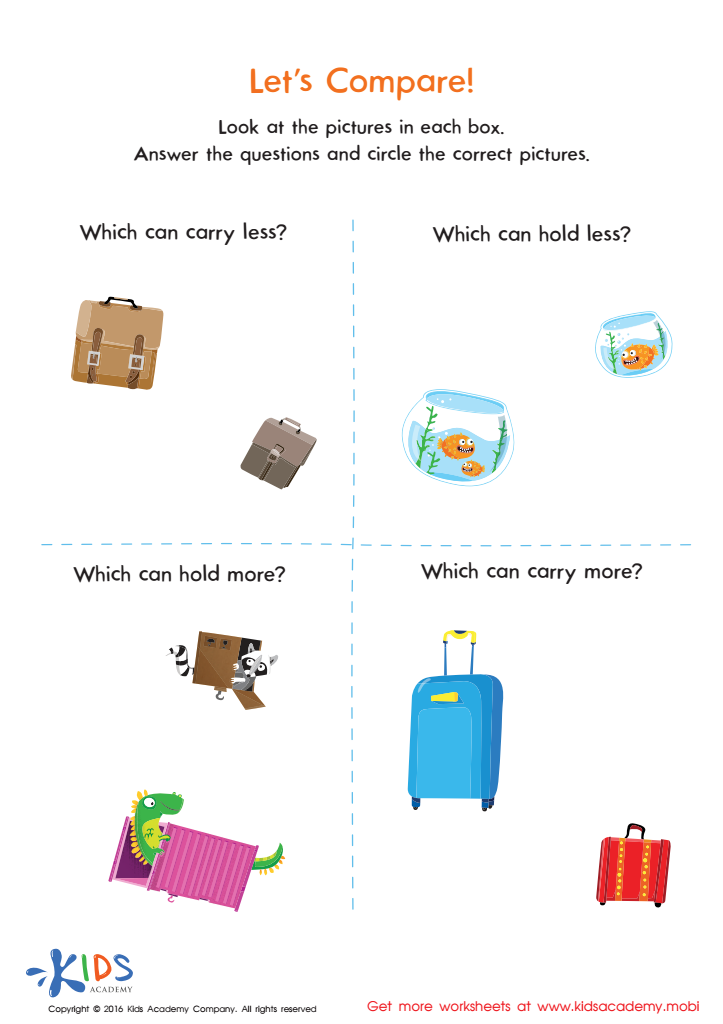
Let's Compare Worksheet: Big or Small
 Assign to My Students
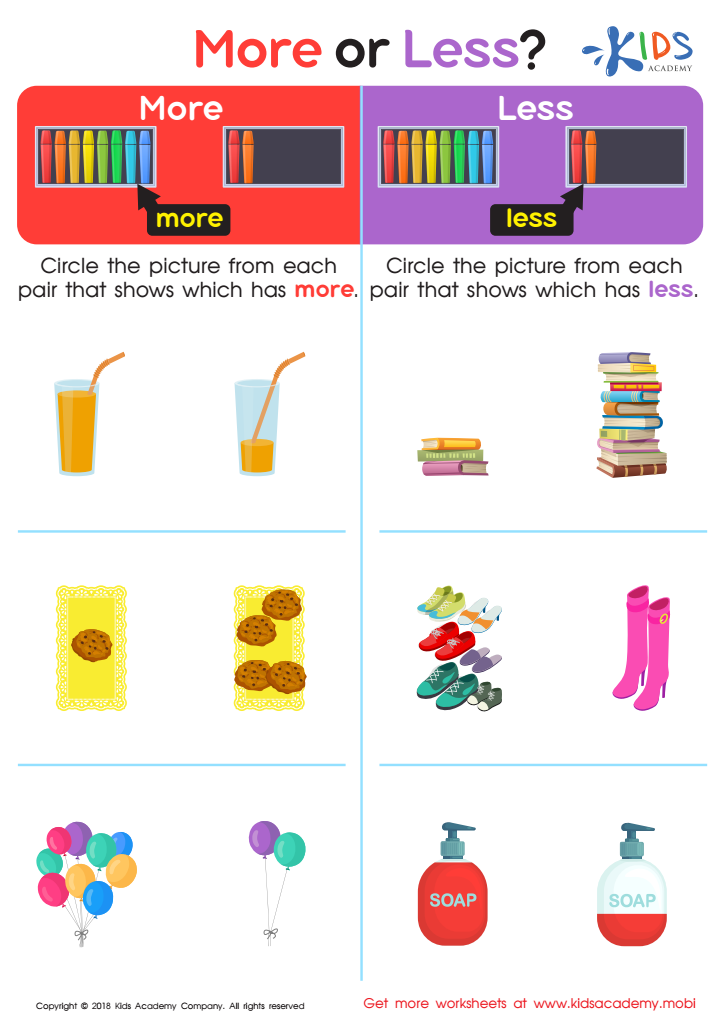
More or Less? Worksheet
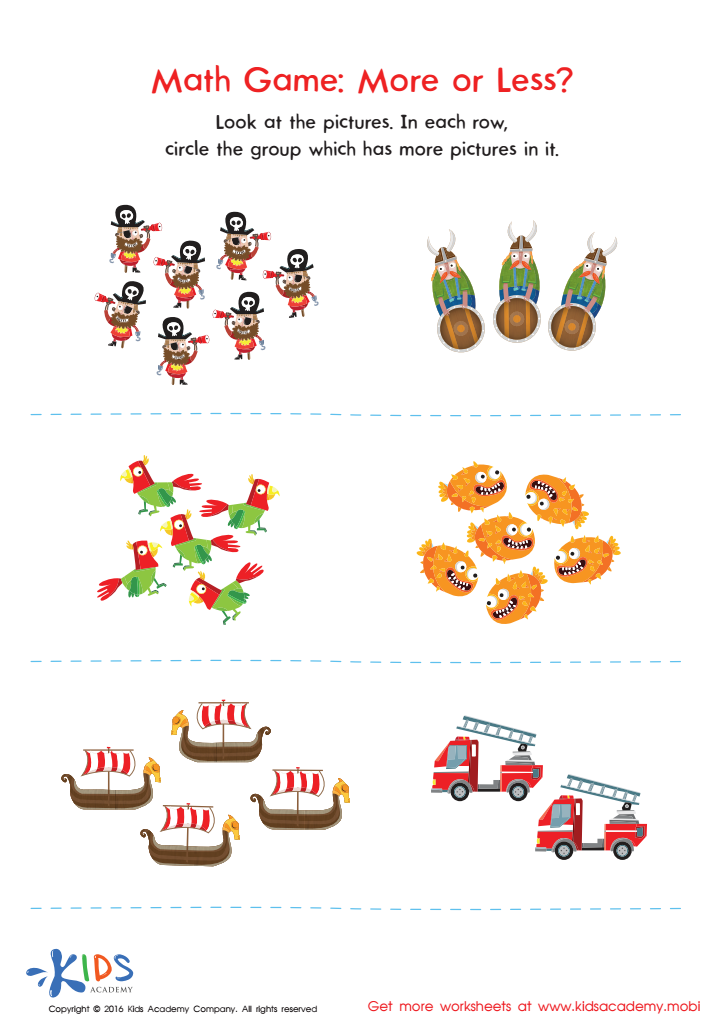
More or Less Worksheet








Parents and teachers should prioritize number comparison skills for children ages 3-5 because these foundational skills set the stage for future mathematical understanding and cognitive development. At this age, children are naturally curious and eager to explore concepts like "more," "less," and "equal," which are critical for their number sense. By engaging in number comparison activities, they develop the ability to understand quantities, enhance their counting abilities, and strengthen problem-solving skills.
Building number comparison skills at an early age promotes cognitive flexibility, helping children make connections between numbers and their meanings. This not only boosts their confidence in mathematics but also prepares them for more complex concepts in later years, such as addition and subtraction.
Furthermore, these skills promote critical thinking and analytical abilities, encouraging children to reason and evaluate information. Parental and teacher involvement in fun, interactive comparison games, like sorting objects or using visual aids, can deepen a child's understanding and enjoyment of math.
Ultimately, cultivating strong number comparison skills in young learners helps create a solid foundation for lifelong mathematical competence, enabling them to navigate everyday situations and excel in their future academic pursuits. It's an opportunity to foster a positive relationship with math from an early age.








