Filters

598 filtered results

Clear all filters
Favorites
With answer key
Interactive

598 filtered results

Difficulty Level

Grade


Check out this FREE Trial Lesson on Math for age 3-5!

Sorting Objects into 3 Categories

Favorites
With answer key
Interactive
  • 3-5
  • Number Recognition
  • Math
Adding Up to 5 on the Farm: Page 16
Worksheet
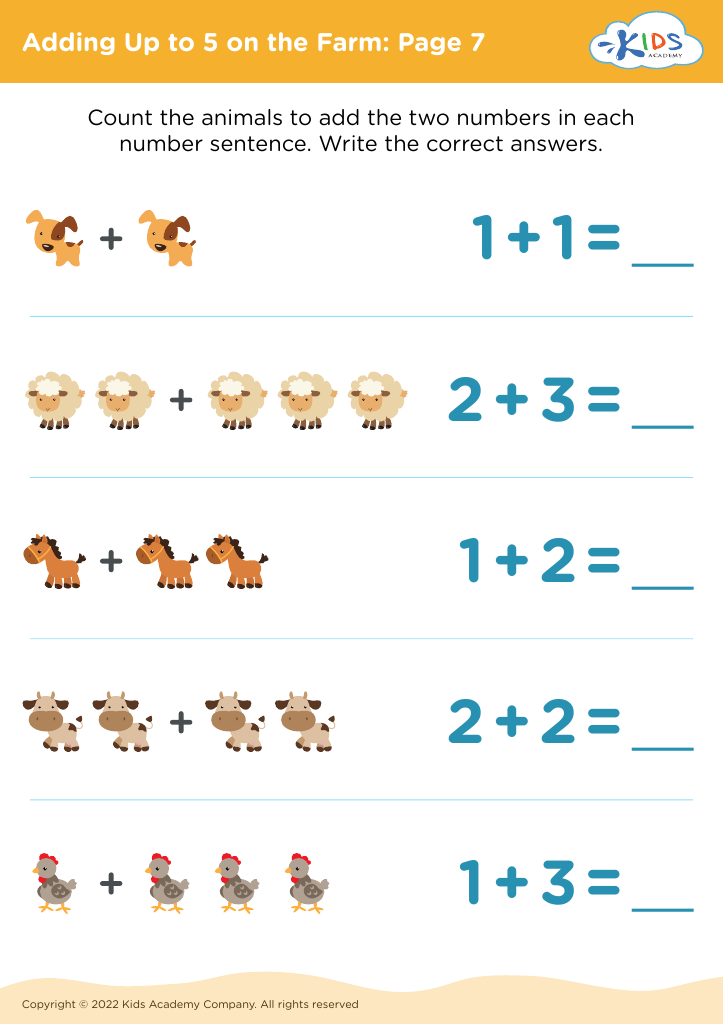
Adding Up to 5 on the Farm: Page 7
Worksheet
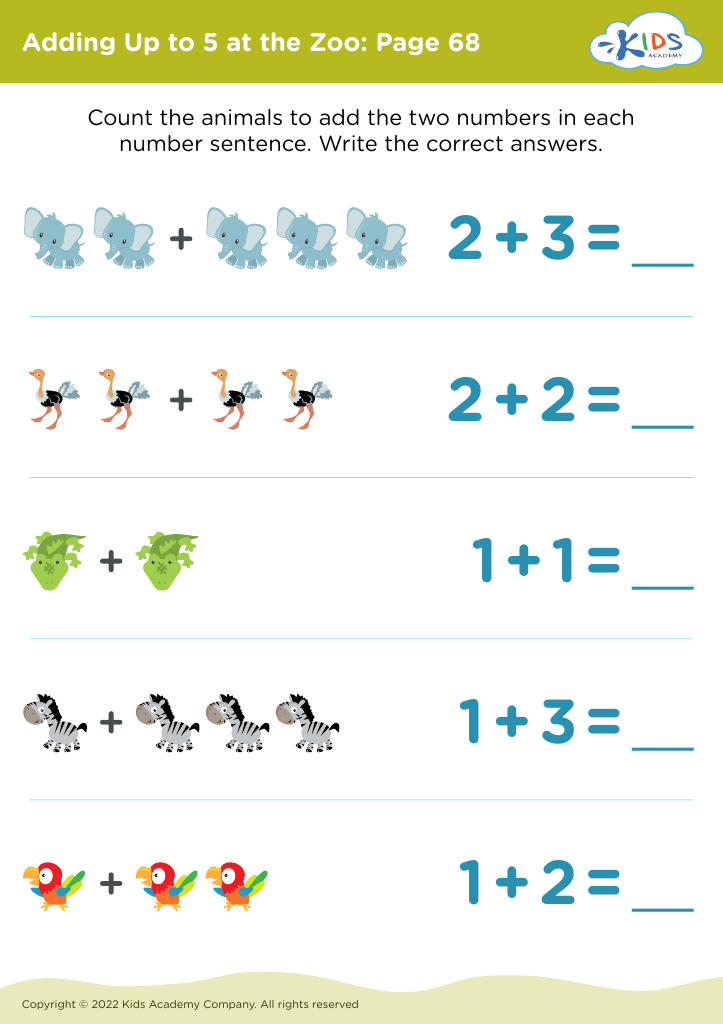
Adding Up to 5 at the Zoo: Page 68
Worksheet
Earth's Systems: Assessment 2

Earth's Systems: Assessment 2

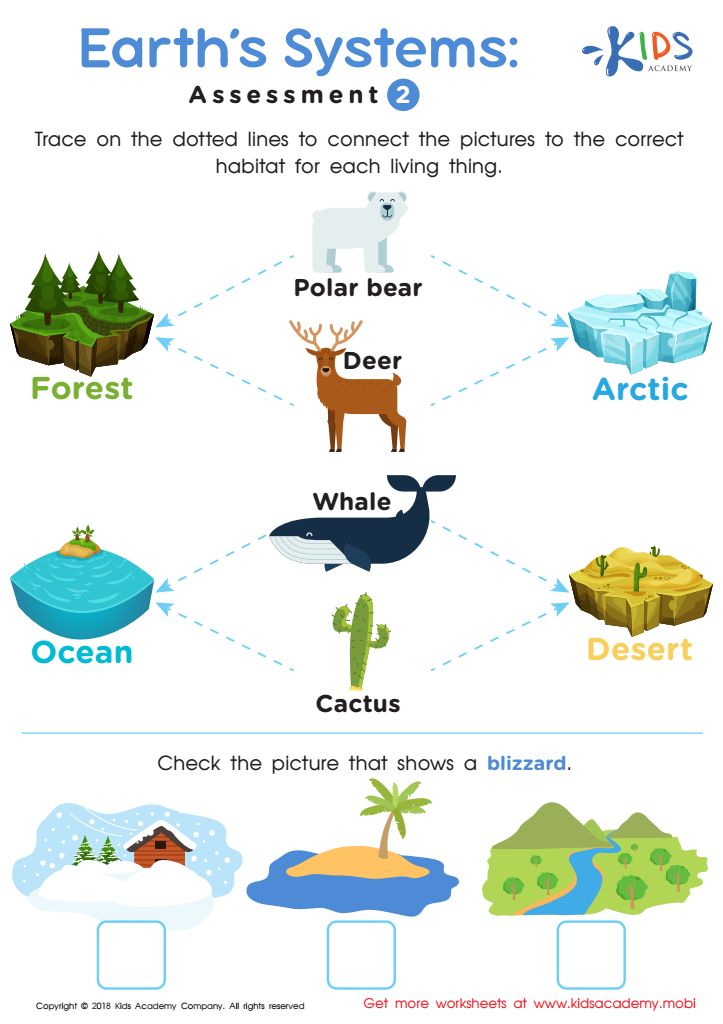
Kids will love this free printable worksheet to assess their knowledge of habitats and the living creatures found in them. They'll trace the dotted lines to connect the pictures of plants and animals to their respective habitat and identify the type of weather depicted. No, polar bears don't live in the ocean, but they do like to swim in icy waters! With this fun activity, your little learner will master earth science basics.
Earth's Systems: Assessment 2
Worksheet
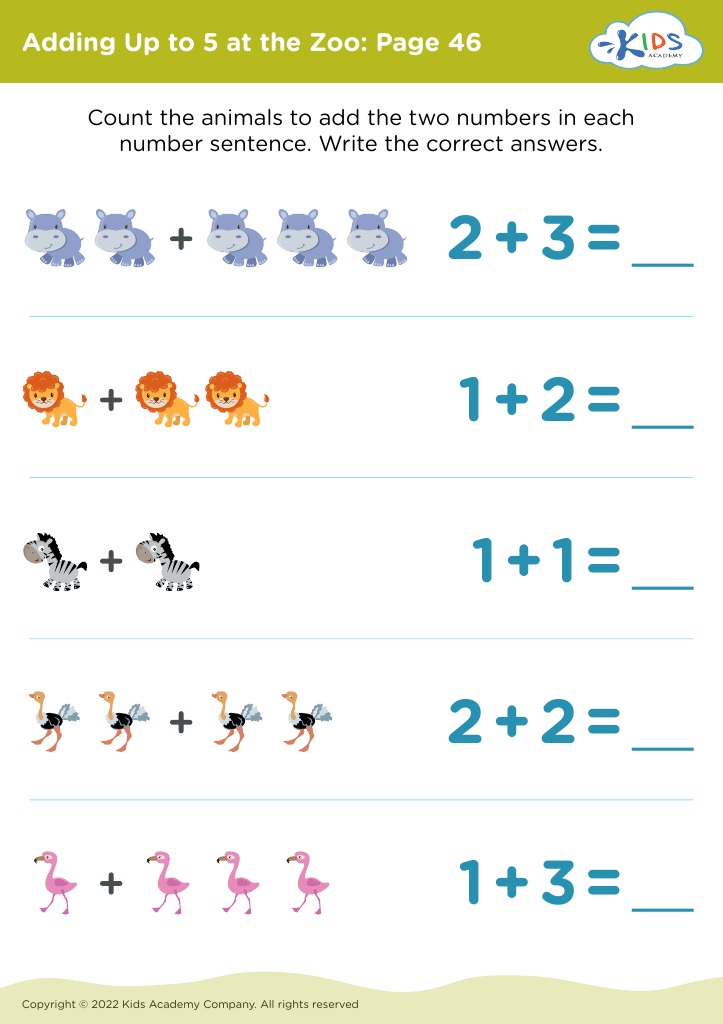
Adding Up to 5 at the Zoo: Page 46
Worksheet
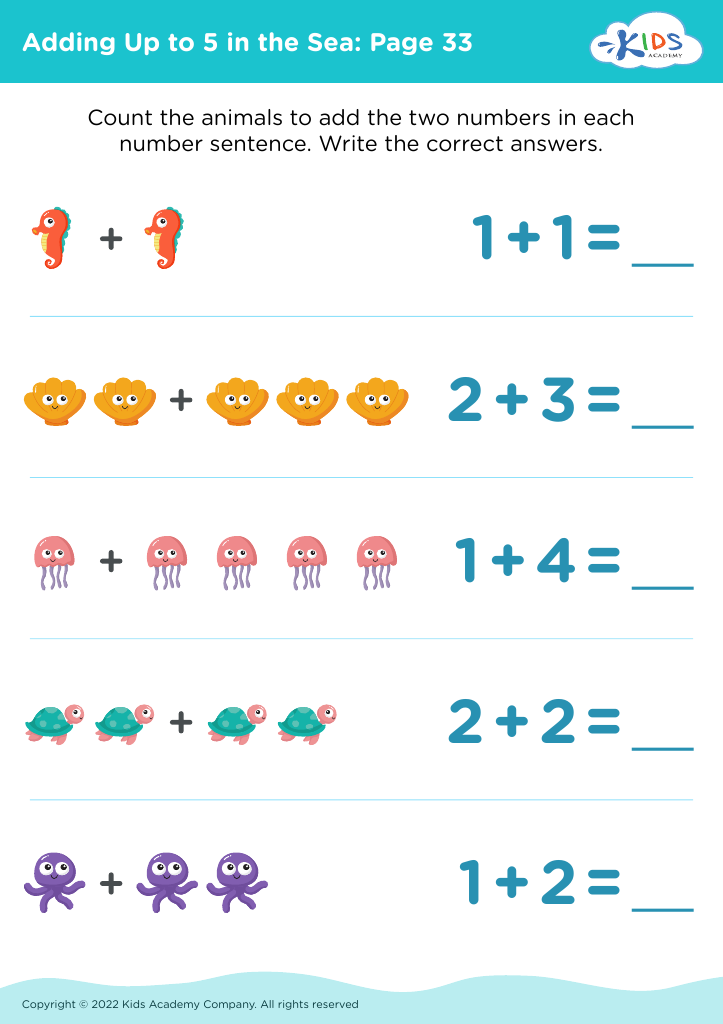
Adding Up to 5 in the Sea: Page 33
Worksheet
Write 0 Worksheet
Write 0 Worksheet

Write 0 Worksheet

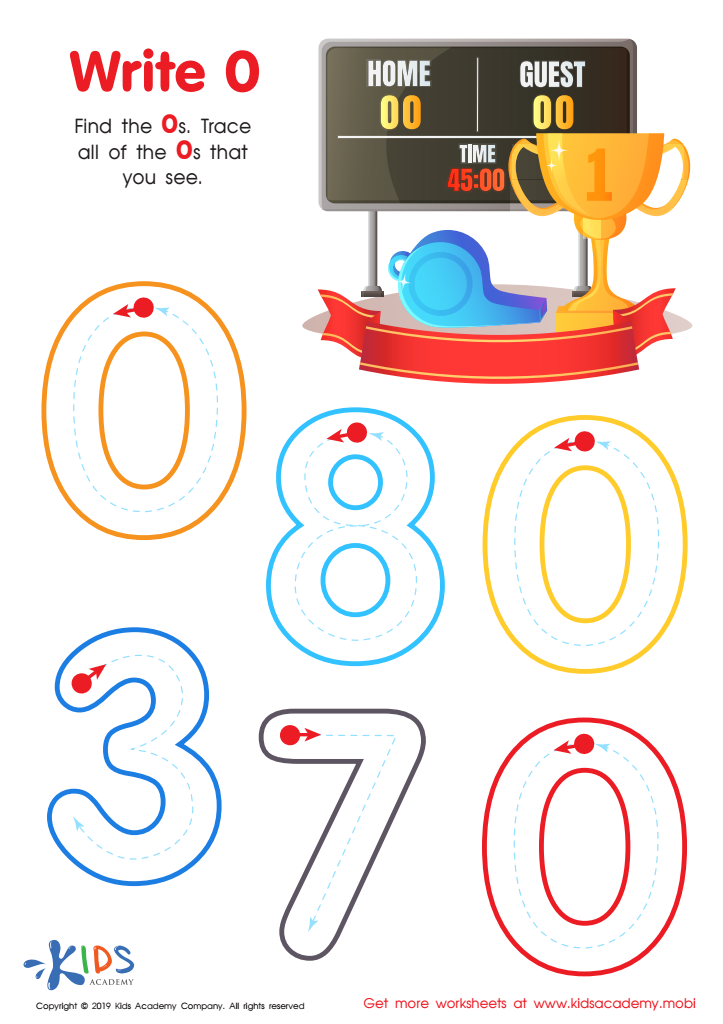
Help your children become number pros! This worksheet will give them the edge they need to count, while also helping them practice writing the number 0. Have them find the 0s in the printout, then trace them. It's a great way to build a math foundation and get them ready to succeed with more advanced math concepts.
Write 0 Worksheet
Worksheet
Number Puzzles Worksheet

Number Puzzles Worksheet

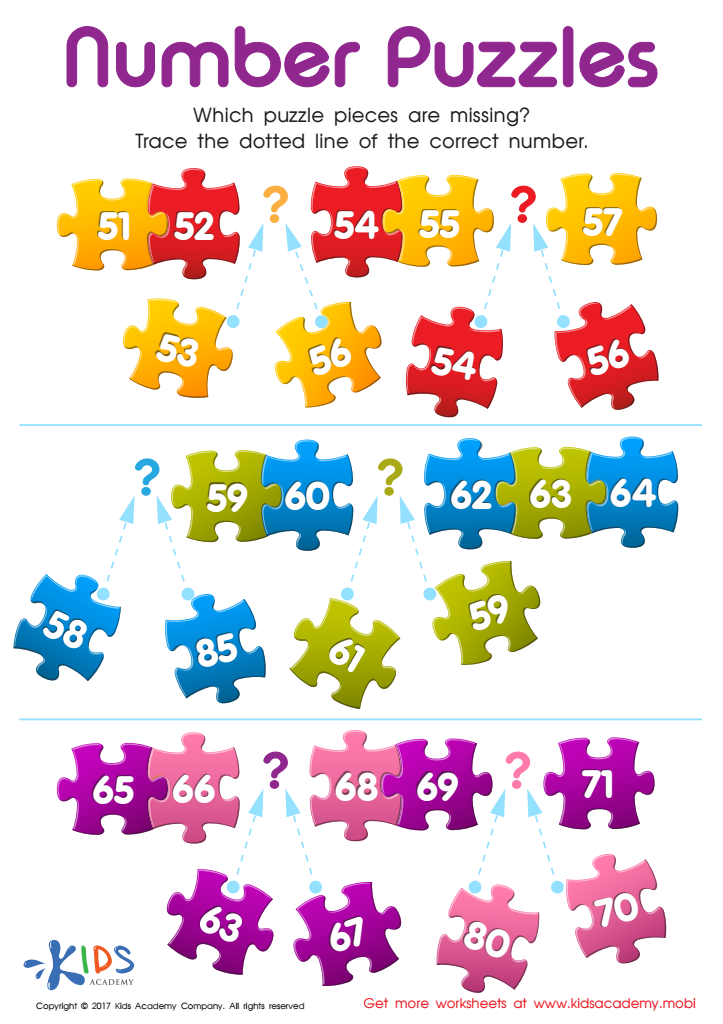
In this tracing paper, your child must identify the missing numbers in the puzzle. Guide them as they trace the line for the correct number to complete the worksheet. This activity will help boost their problem-solving skills.
Number Puzzles Worksheet
Worksheet
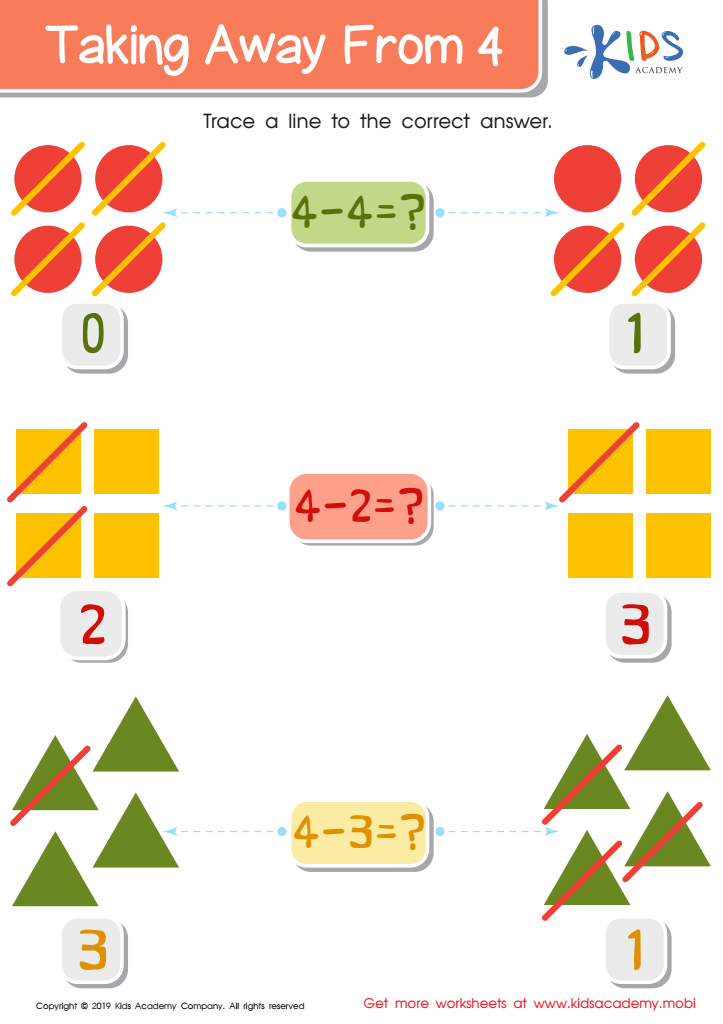
Taking Away from 4 Worksheet
Taking Away from 4 Worksheet
Patience and help will help your kids master addition and subtraction. Coaching and making math fun is key. Try these three equations: help your kids solve them and trace a line to the correct answer. Don't give up - with your guidance, success is near!
Taking Away from 4 Worksheet
Worksheet
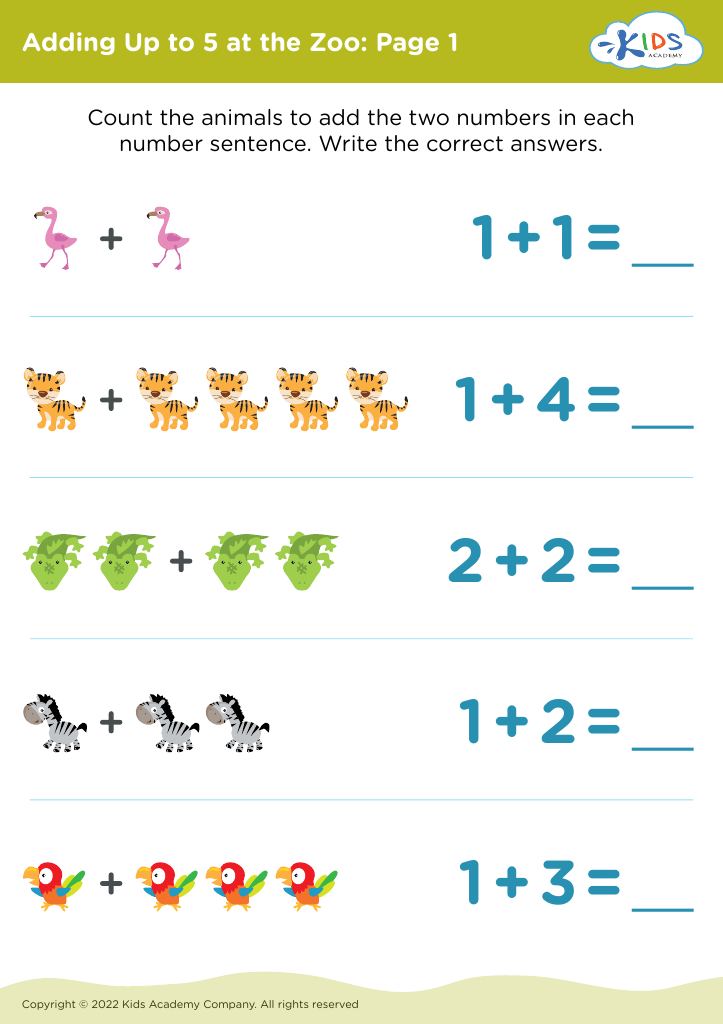
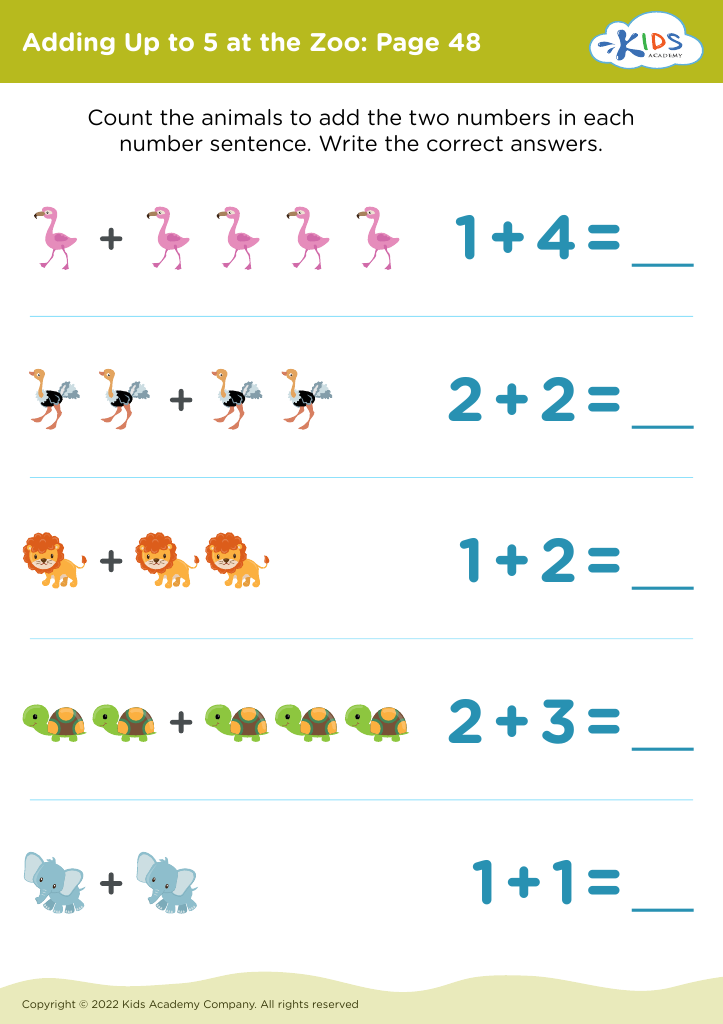
Adding Up to 5 at the Zoo: Page 1

Adding Up to 5 at the Zoo: Page 1

Adding Up to 5 at the Zoo: Page 1
Worksheet
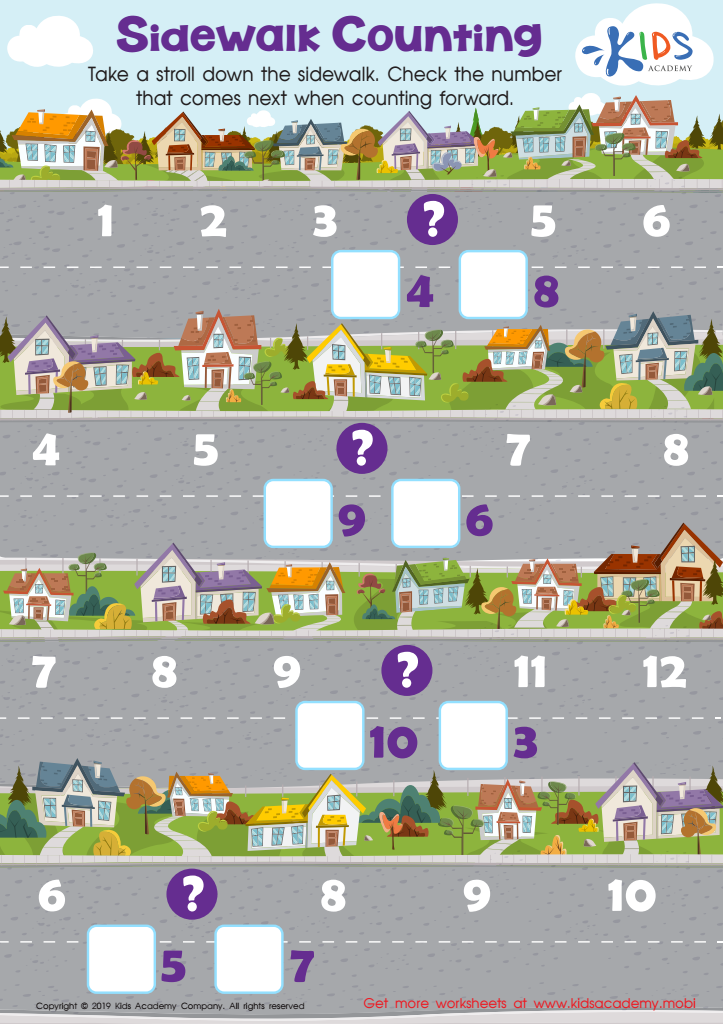
Sidewalk Counting Worksheet

Sidewalk Counting Worksheet

Counting is a vital math skill, helping kids with addition and improving their speed when solving math problems. Let them practice with this fun sidewalk counting worksheet: have them take a walk and fill in the next number in the sequence as they count.
Sidewalk Counting Worksheet
Worksheet
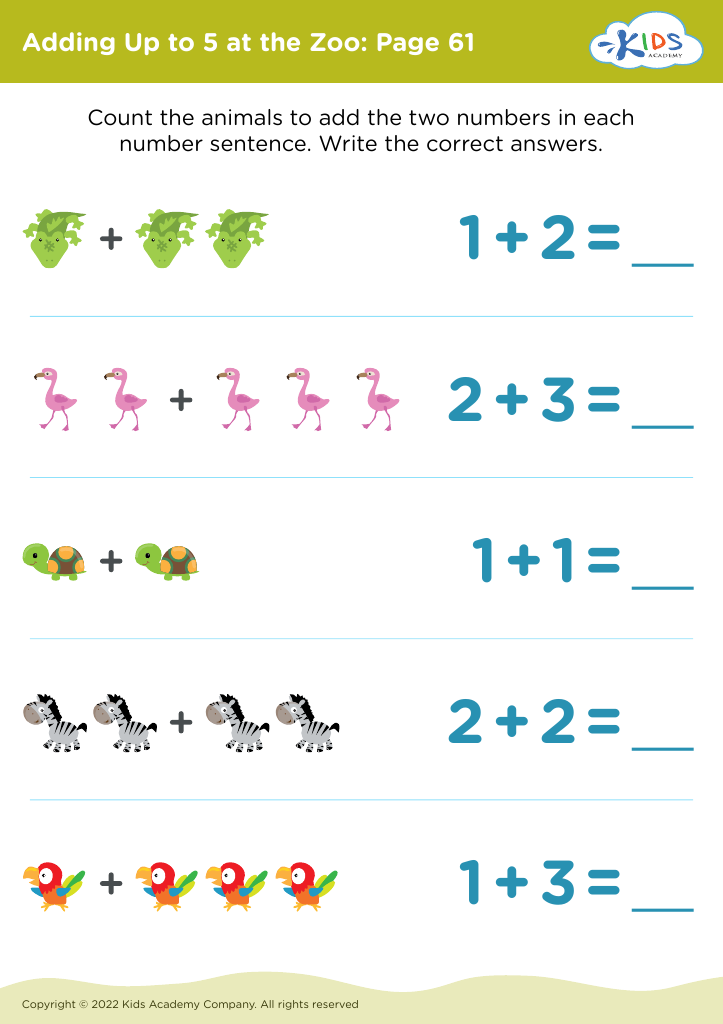
Adding Up to 5 at the Zoo: Page 61
Worksheet
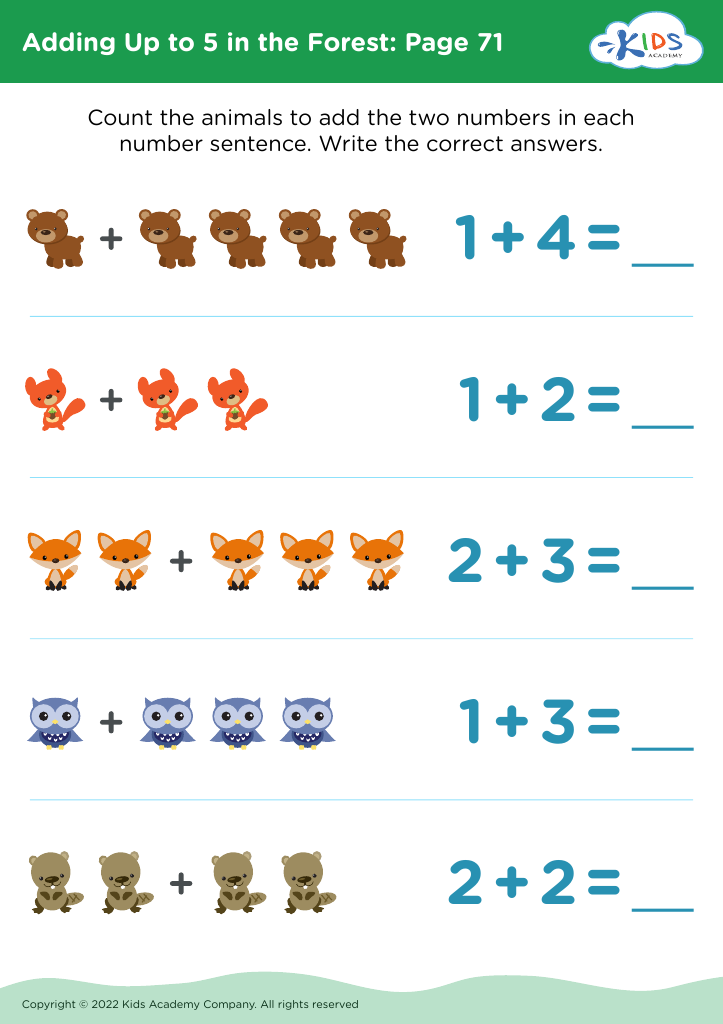
Adding Up to 5 in the Forest: Page 71
Worksheet
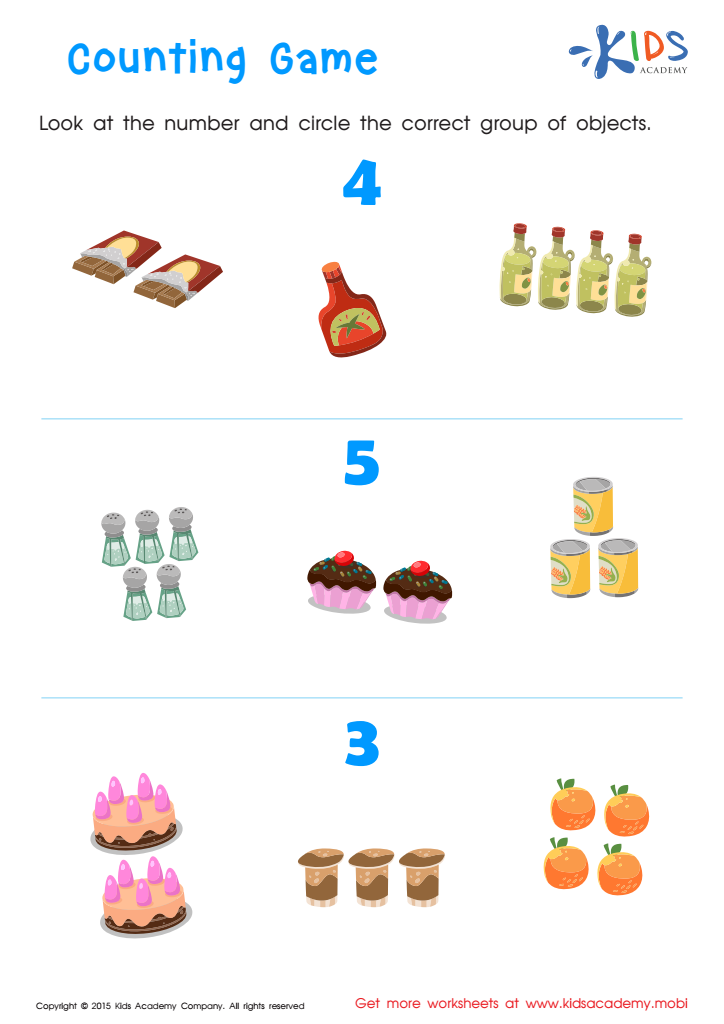
Counting worksheet for preschool

Counting Worksheet

Kids can connect printed numbers to groups of objects on this worksheet, helping them learn math by visually seeing item groups. Give your preschooler a fun, interactive way to learn counting!
Counting Worksheet
Worksheet
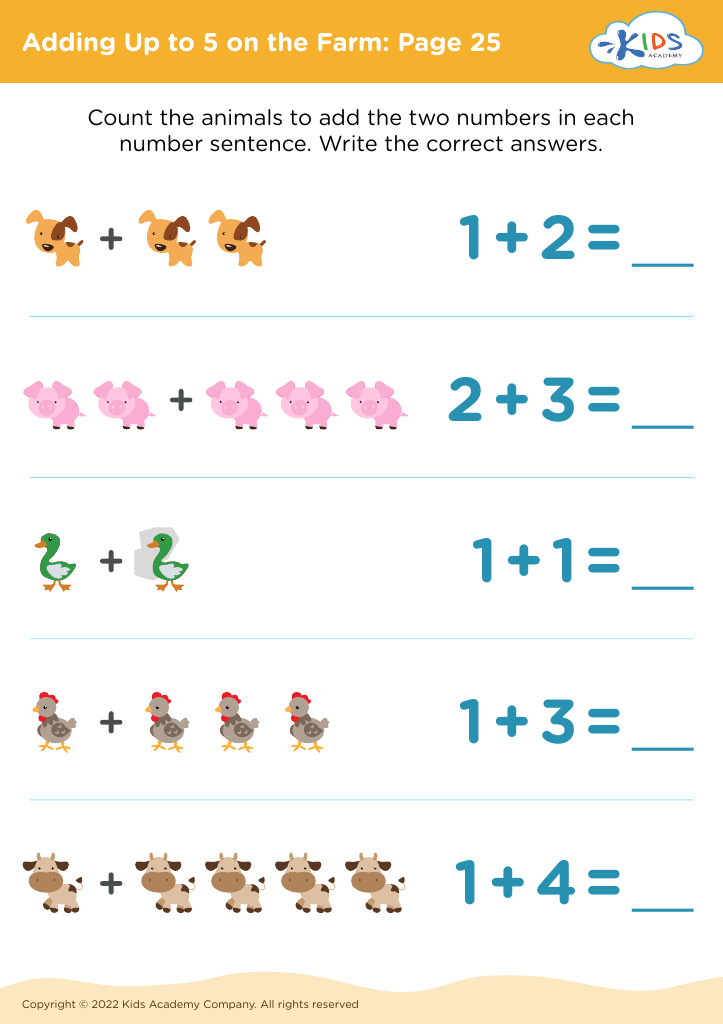
Adding Up to 5 on the Farm: Page 25
Worksheet
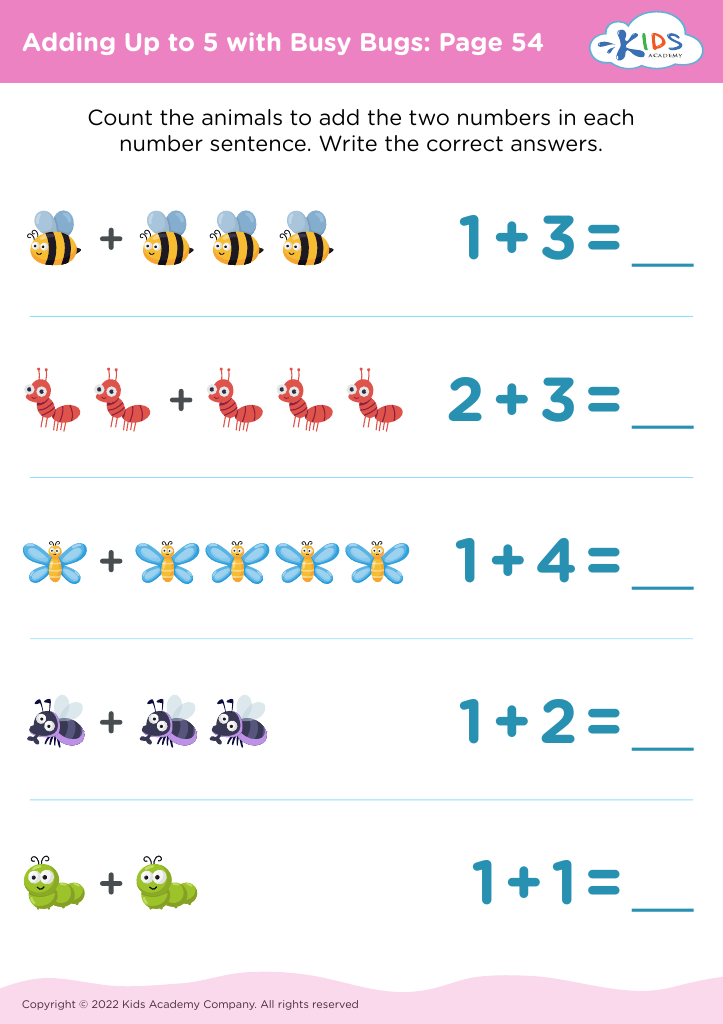
Adding Up to 5 with Busy Bugs: Page 54
Worksheet
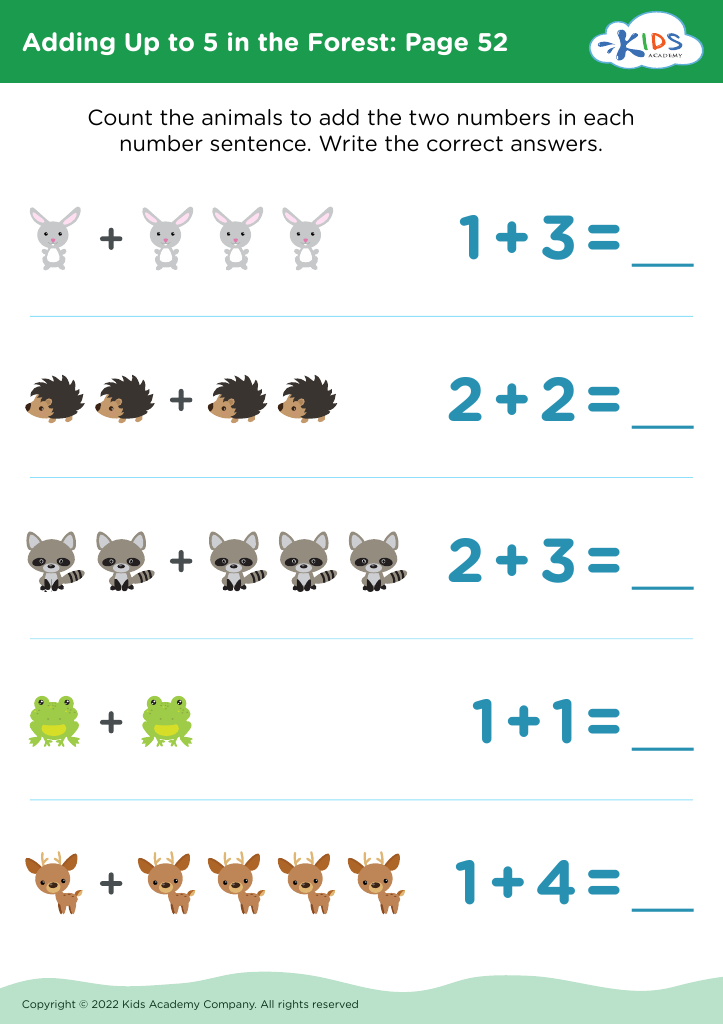
Adding Up to 5 in the Forest: Page 52
Worksheet
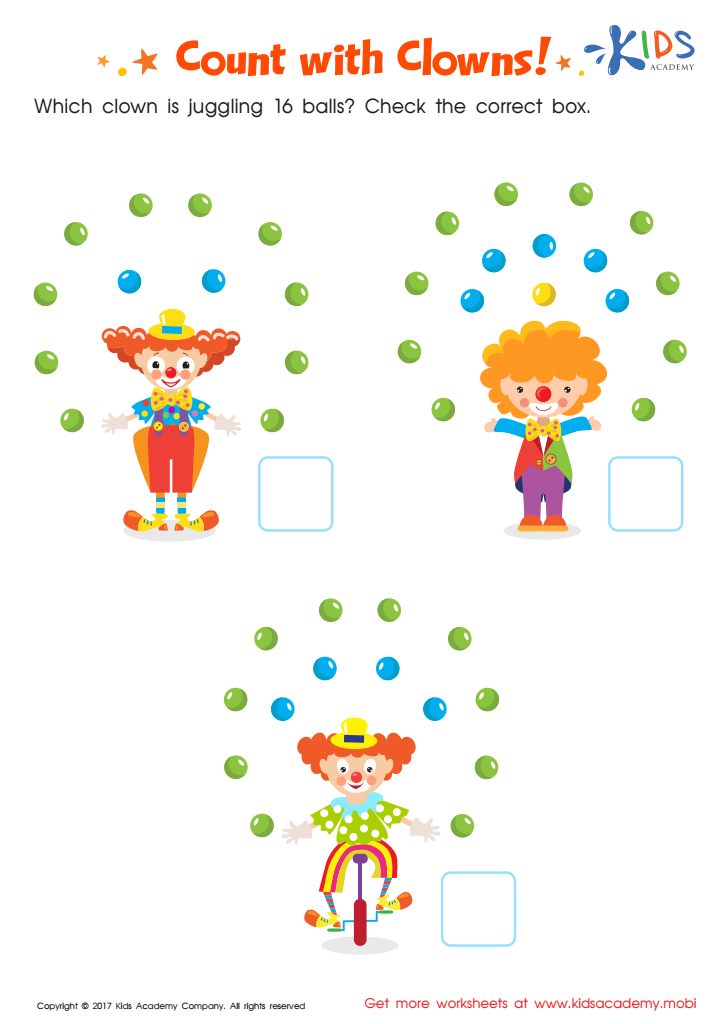
Count with Clowns Worksheet
Count with Clowns Worksheet
Math may not be a laughing matter, but this worksheet sure is! Download the PDF and get ready to count balls with the clowns! Your child will have a blast and learn how to count at the same time. It's an easy, fun way to practice math!
Count with Clowns Worksheet
Worksheet
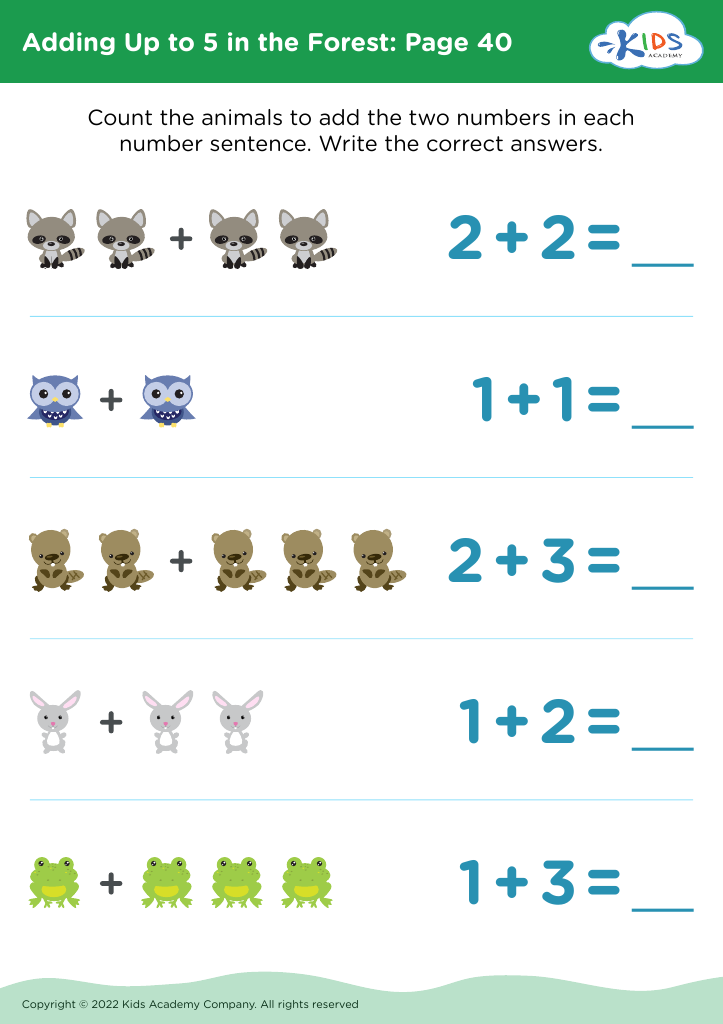
Adding Up to 5 in the Forest: Page 40
Worksheet
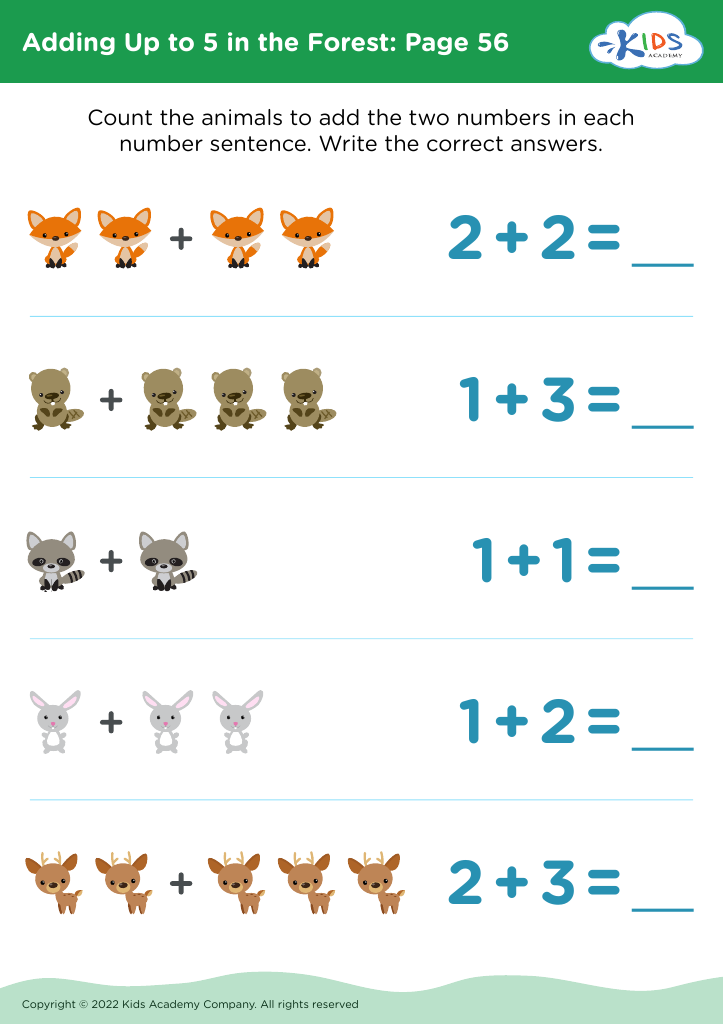
Adding Up to 5 in the Forest: Page 56
Worksheet
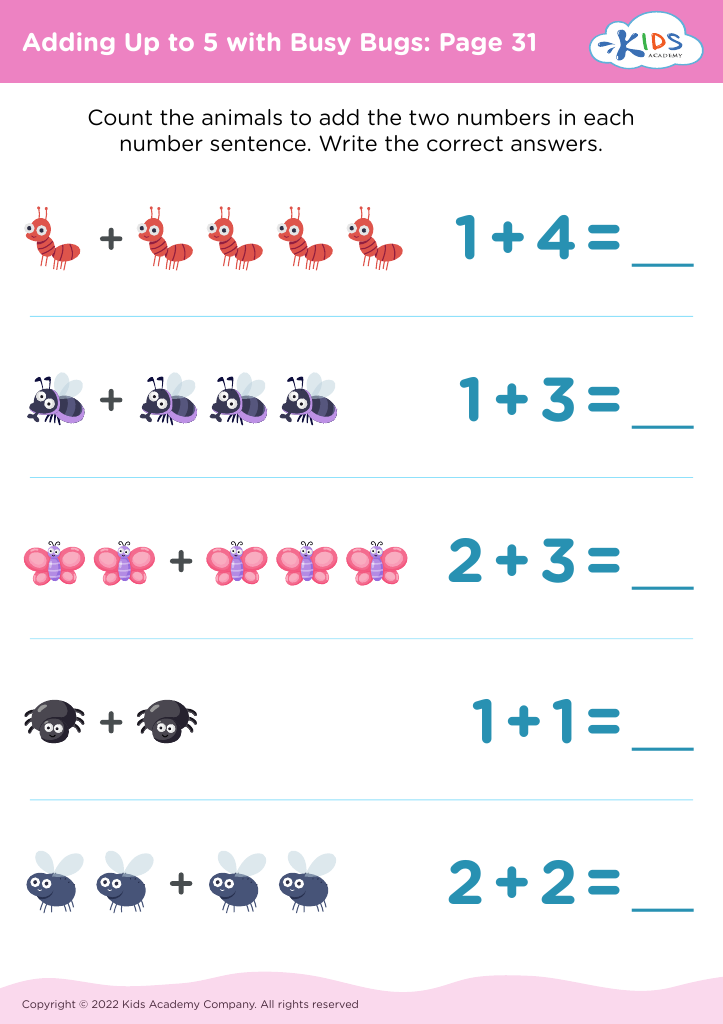
Adding Up to 5 with Busy Bugs: Page 31
Worksheet
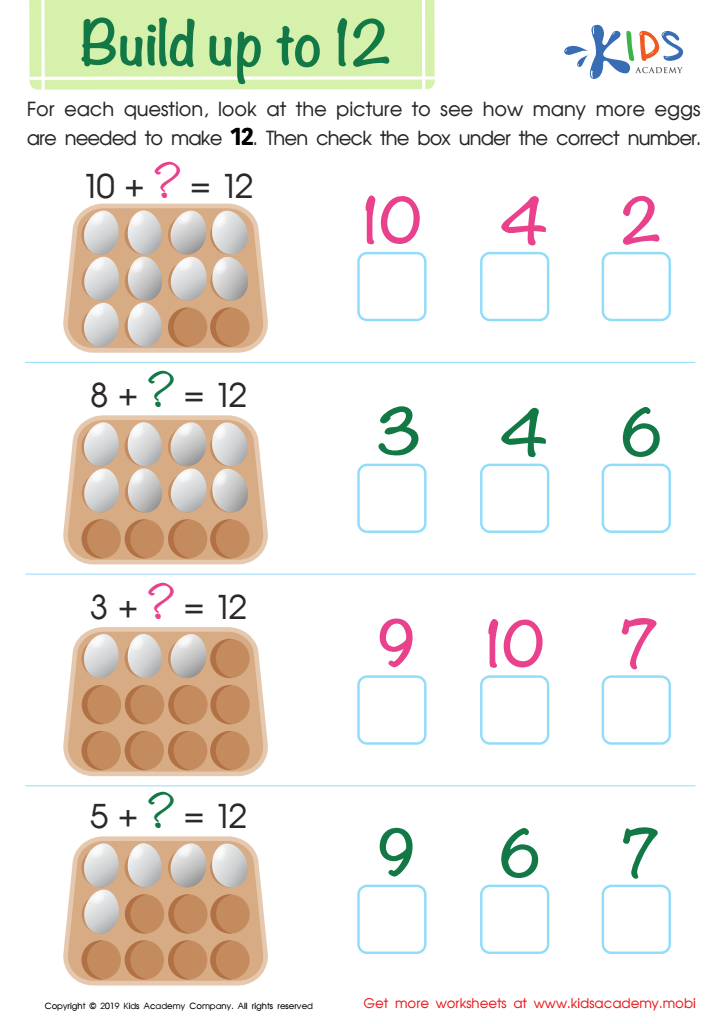
Build up to 12 Worksheet

Build up to 12 Worksheet

Love eggs? Kids can identify them in the picture in this worksheet. We need to add numbers to make 12. Look at the picture and see how many eggs are needed. Check the correct number box. Breakfast or baking, eggs are essential!
Build up to 12 Worksheet
Worksheet
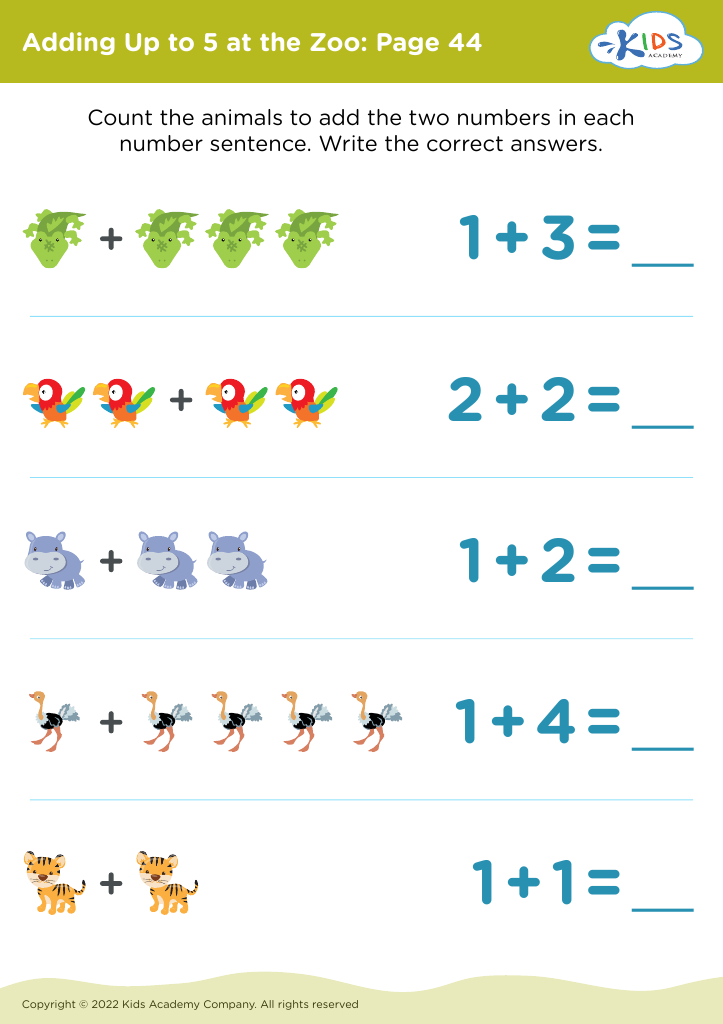
Adding Up to 5 at the Zoo: Page 44
Worksheet
Adding Up to 5 on the Farm: Page 75
Worksheet


Number recognition is a foundational skill vital for young children's mathematical development, particularly for ages 3 to 5. At this stage, children begin to explore the world of numbers, which lays the groundwork for more complex mathematical concepts later on. By recognizing numbers, children can understand quantity, compare amounts, and engage with simple math problems, making it essential for their cognitive growth.

Parents and teachers should prioritize number recognition because it enhances children's problem-solving abilities and boosts their confidence in handling mathematical tasks. Engaging in number recognition activities—like counting objects, identifying numbers in books or on signs, and playing number games—provides rich, interactive experiences that make learning enjoyable and meaningful.

Additionally, early exposure to numbers helps children develop critical early literacy skills. Understanding numbers is not just about math; it's intertwined with daily life—helping in shopping, telling time, or sharing equally among friends.

Ultimately, instilling number recognition skills in children at this age fosters a love for learning, equips them with necessary life skills, and prepares them for future academic success, making it a valuable investment for both parents and teachers.