Pattern identification Math Worksheets for Ages 3-5
3 filtered results
-
From - To
Discover our engaging Pattern Identification Math Worksheets designed specifically for children ages 3-5! These colorful and interactive resources help young learners recognize and create patterns through fun activities that promote cognitive development and early math skills. Each worksheet features age-appropriate challenges that make learning enjoyable, ensuring toddlers strengthen their analytical abilities while enhancing their problem-solving skills. Our worksheets are perfect for homeschooling, preschool, or supplementary learning at home. Download and print them easily for quick access to a world of playful, educational content that fosters a love for math from an early age! Start your child's journey to mathematical confidence today!
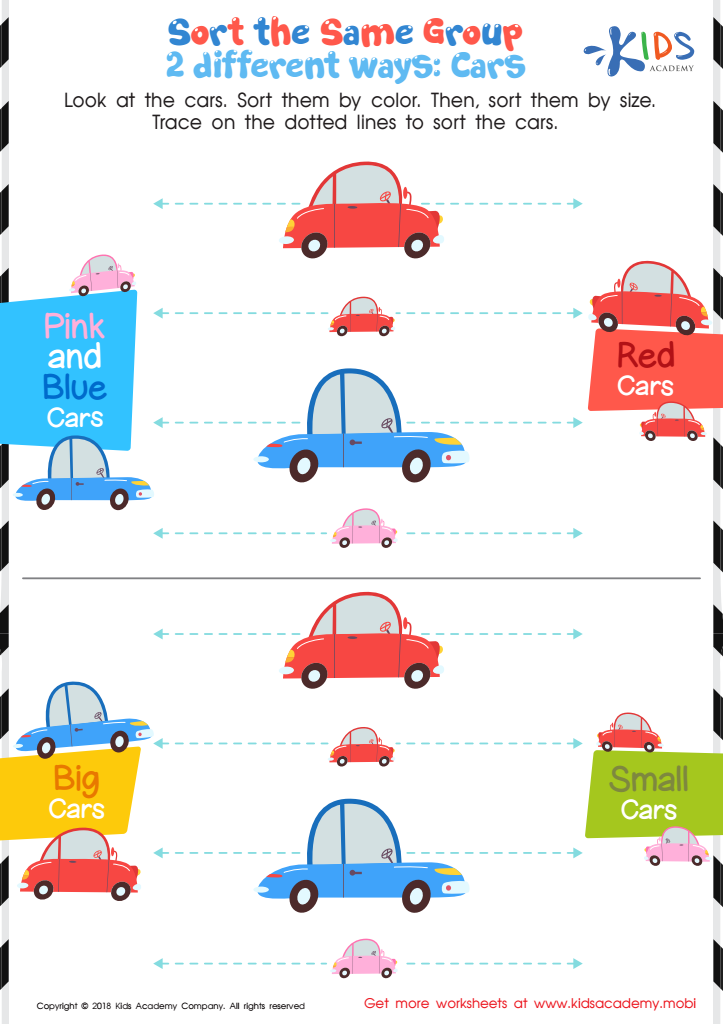
Sort the Same Group 2 Different Ways: Cars Worksheet
 Assign to My Students
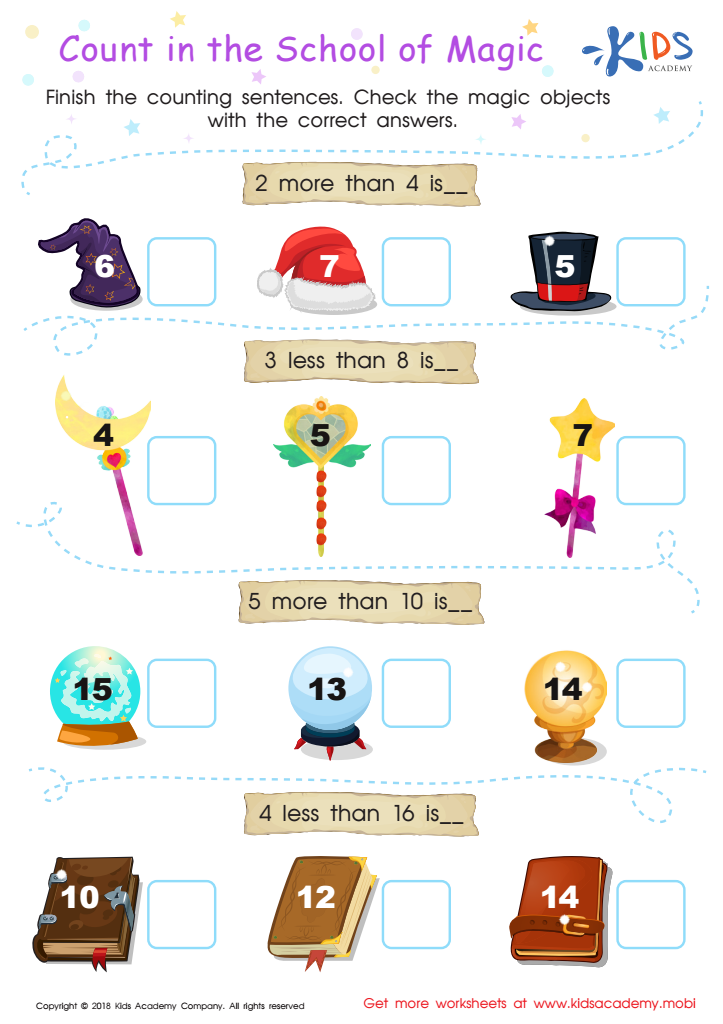
Count in the School of Magic Worksheet
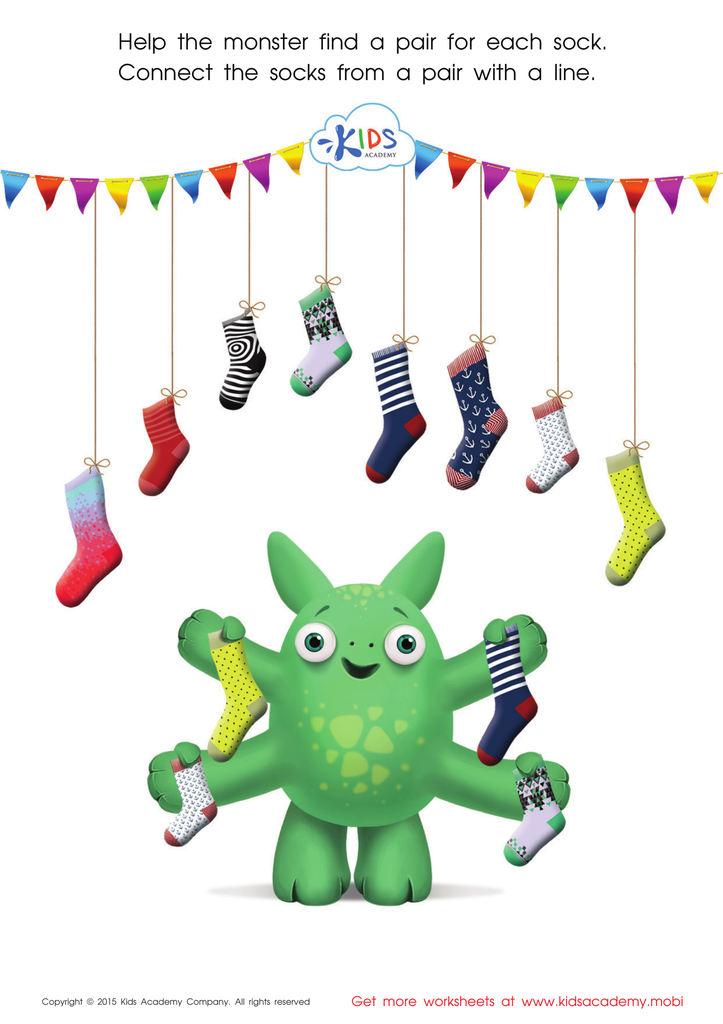
Math Matching Pairs Game: Monsterв's Socks Worksheet








Pattern identification is crucial for children aged 3-5 as it lays the foundational skills necessary for advanced mathematical thinking. At this stage of development, children are naturally inclined to recognize and create patterns, which bolsters their early cognitive skills. Engaging with patterns helps children develop critical thinking and problem-solving abilities, as they learn to predict what comes next in a sequence.
Recognizing patterns enhances a child's ability to sort and classify objects, fostering organizational skills. As they engage in pattern-related activities, children also improve their fine motor skills, through hands-on learning experiences.
Additionally, pattern identification supports language development. When discussing patterns, children learn new vocabulary, such as "repeating," "sequence," and "similar," which enriches their communication skills. Importantly, these early experiences prepare them for more complex mathematical concepts, such as addition and subtraction, as they progress in their education.
For parents and teachers, fostering an environment where pattern recognition is encouraged can enhance overall engagement and excitement for learning. It nurtures a child's curiosity and lays the groundwork for future academic achievement, making it a key focus in early childhood education.








