Real-life application Math Worksheets for Ages 3-5
3 filtered results
-
From - To
Explore our collection of engaging real-life application math worksheets designed specifically for children ages 3-5. These worksheets help young learners connect mathematical concepts to everyday situations, enhancing their problem-solving skills and number sense. Through fun activities that relate math to real-world experiences, such as counting fruits or measuring ingredients, children will develop essential math skills while enjoying hands-on learning. Our user-friendly worksheets are perfect for parents and educators, offering easy-to-follow instructions and vibrant visuals to capture children's attention. Foster a love for math and support your child's early development with our delightful real-life applications that make learning both fun and meaningful!
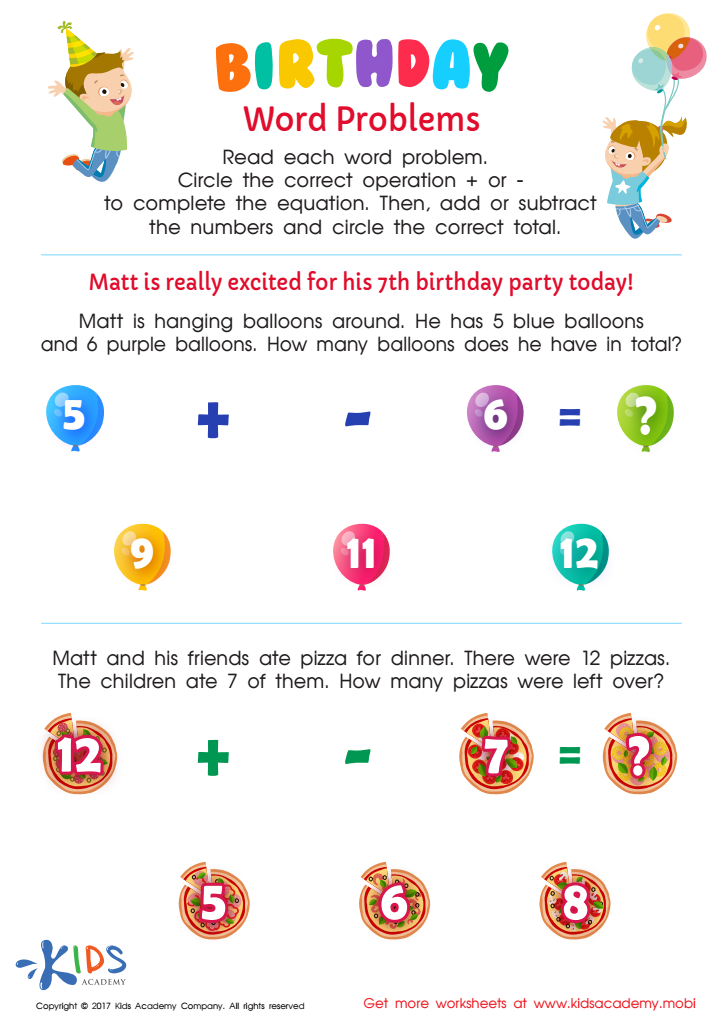
Birthday Word Problems Substraction Worksheet
 Assign to My Students
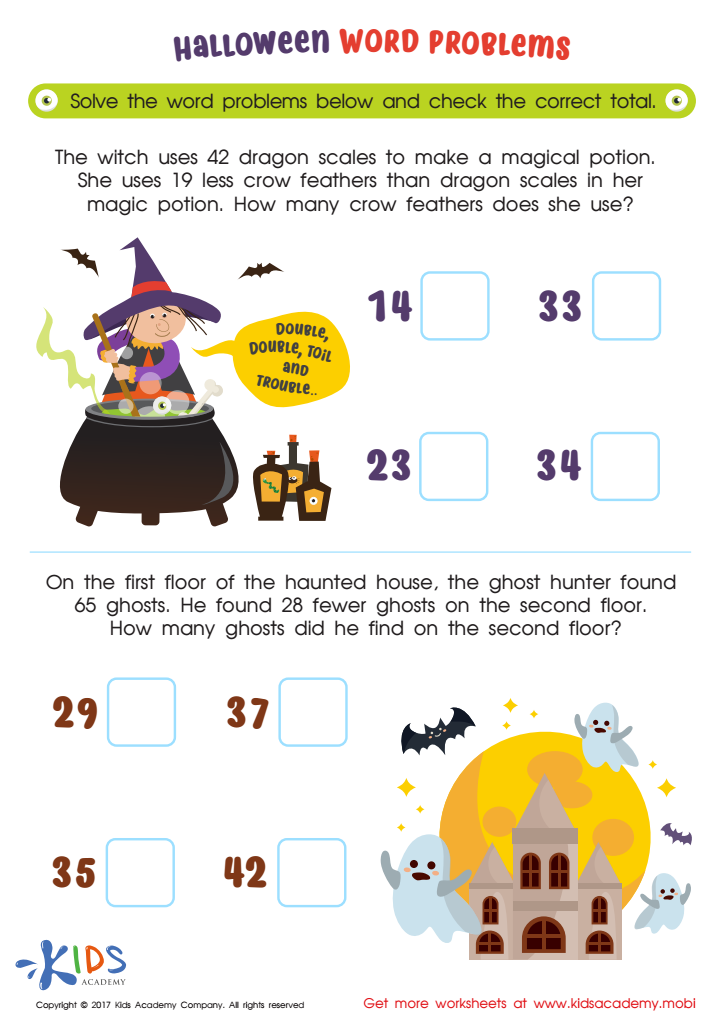
Halloween Word Problems Printable
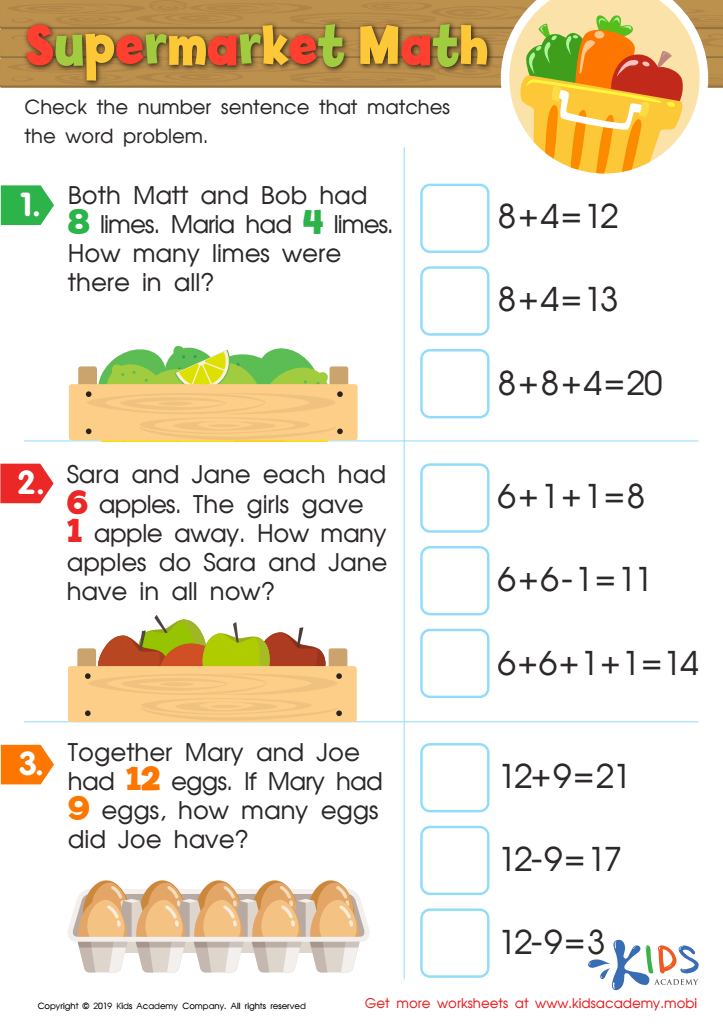
Supermarket Math Worksheet




Parents and teachers should prioritize real-life application of math for children ages 3-5 because it significantly enhances their understanding and interest in mathematics. At this young age, children learn best through play and everyday experiences. Incorporating math into real-life situations helps them grasp foundational concepts naturally and meaningfully.
For instance, counting objects while shopping or measuring ingredients during cooking links abstract numbers to tangible experiences. This context helps children recognize patterns, understand size, and develop critical problem-solving skills. Furthermore, real-life math fosters a positive attitude towards math by showing its relevance in daily life, thus reducing anxiety and building confidence.
Moreover, engaging children in mathematical conversations during routine activities encourages language development alongside cognitive skills. It promotes curiosity and encourages them to ask questions, laying the groundwork for more complex math concepts in the future. When parents and teachers integrate fun, everyday math practices, they create an engaging learning environment that nurtures a child's overall intellectual development, fostering lifelong mathematical thinking. Ultimately, these experiences help prepare children for future academic success, making math an integral, enjoyable part of their everyday lives.








