
Vocabulary development Math Worksheets for Ages 3-5
5 filtered results
Difficulty Level
Grade
Age
-
From - To
Subject
Activity
Standards
Enhance your child's vocabulary and math skills with our engaging vocabulary development math worksheets designed for ages 3-5. These worksheets offer a fun and interactive way for young learners to familiarize themselves with essential math vocabulary. Incorporating colorful illustrations and age-appropriate exercises, kids will build their word bank while understanding fundamental math concepts. Each worksheet aligns with educational standards, promoting cognitive growth and language development. Encourage your little ones to express themselves confidently in both math and verbal communication. Ideal for home, preschool, or kindergarten settings, our worksheets make learning enjoyable and effective. Discover the power of words in math with Kids Academy today!
Favorites
With answer key
Interactive
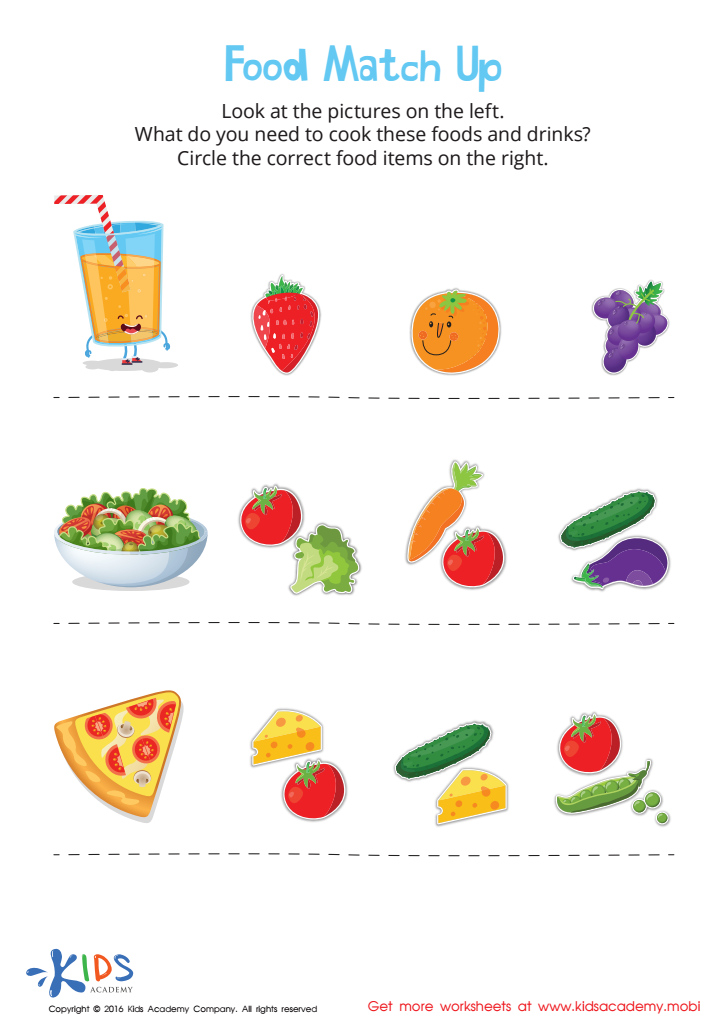
Food Match Up Worksheet
This worksheet will help your preschooler develop early math and cognitive skills. It challenges them to pay attention to details, understand how smaller parts make a whole, and increase important matching skills. Use it to give them a hands-on learning experience in the kitchen, and watch them understand how ingredients come together to make something delicious!
 Assign to My Students
Food Match Up Worksheet
Worksheet
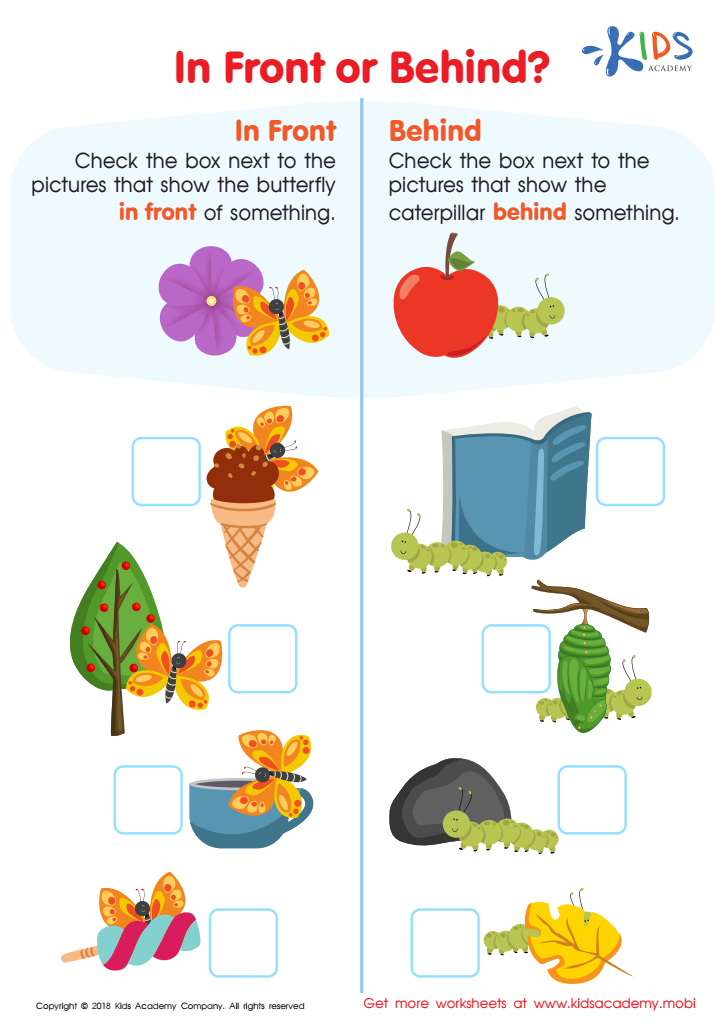
In Front or Behind Worksheet
Hone your child's spatial skills with 'in front' and 'behind'! This knowledge is essential for communication and study. Get them started with this free PDF worksheet - check off the pictures that show the butterfly in front and caterpillar behind!
In Front or Behind Worksheet
Worksheet
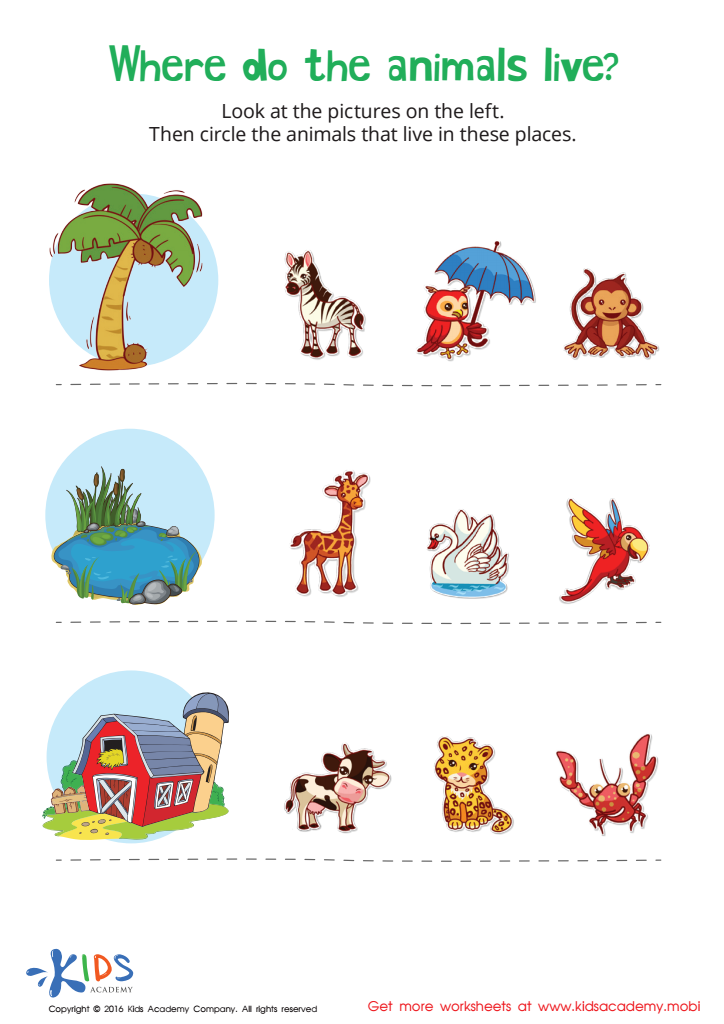
Where Animals Live Worksheet
Teaching early reading and math skills is important, but don't forget about science. With the Where Animals Live PDF worksheet, kids can identify their favorite animals and the environments they live in. Ask them what type of environment the animals like and introduce them to geography. It's great for logical reasoning and classification skills. Your kid will practice with their favorite animals and love the trip to the zoo afterwards!
Where Animals Live Worksheet
Worksheet
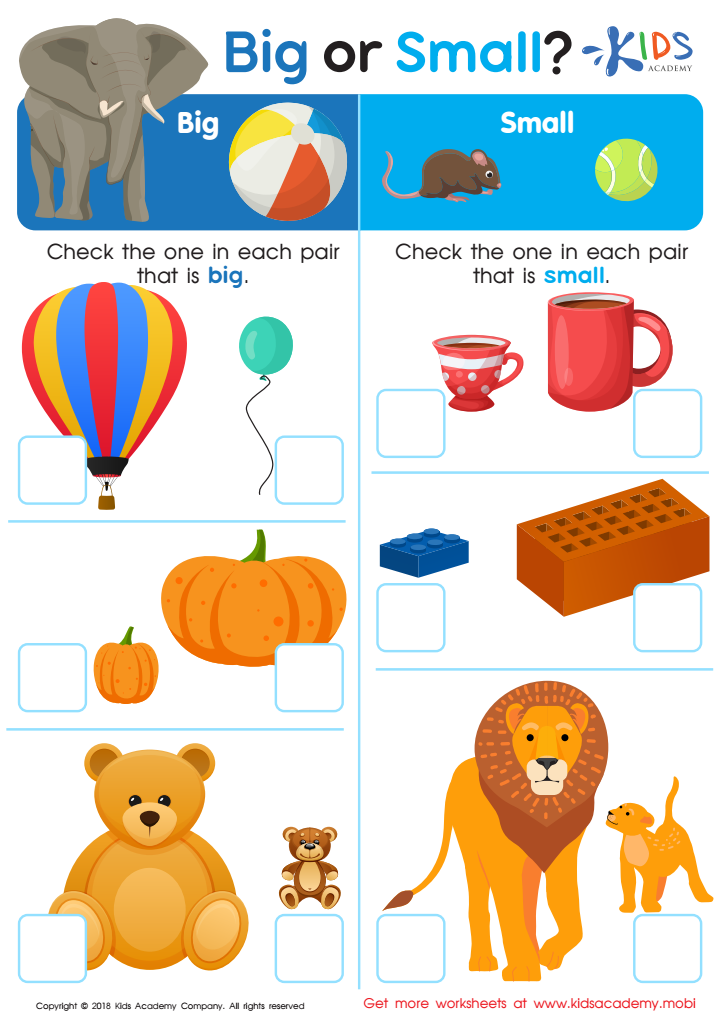
Big or Small? Worksheet
Kids need visuals to understand bigger and smaller concepts. This free PDF worksheet offers fun pictures that let them compare and gain a stronger understanding of sizes. Kids will enjoy it and won't realize they're learning since the pictures are so engaging. It's great preparation for future measurements.
Big or Small? Worksheet
Worksheet
Join Kids Academy for Free
Who is primarily going to use this learning content?







Vocabulary development in math for children ages 3-5 is crucial for several reasons. First, early exposure to mathematical vocabulary lays the foundation for later academic success. Understanding terms like "more," "less," "add," and "subtract" not only supports children in performing basic operations but also enhances their ability to engage in problem-solving tasks.
Secondly, math vocabulary is interlinked with overall language development. As young children learn to articulate mathematical concepts, they are simultaneously expanding their general vocabulary skills. This linguistic growth is beneficial for literacy, as children who are proficient in both math and language are better prepared for future learning experiences.
Additionally, enriched math vocabulary helps children develop critical thinking skills. Teaching children to describe their reasoning, such as explaining why they think a certain amount is correct, fosters deeper comprehension and self-expression.
Lastly, engaging in math-related conversations during play or daily activities leads to natural learning moments. Parents and teachers can create a rich, supportive environment for learning by incorporating mathematical language in meaningful contexts, thereby nurturing a child’s cognitive development and making math concepts accessible. In essence, attention to math vocabulary cultivates a balanced educational experience that benefits children across all areas of learning.








