Categorization skills Sorting Worksheets for Ages 3-5
5 filtered results
-
From - To
Boost early learners' cognitive development with our "Categorization Skills Sorting Worksheets for Ages 3-5." These engaging activities are designed to build critical thinking and organization skills in young minds. Children will enjoy sorting objects by various attributes like color, shape, and size, making learning fun and interactive. Our worksheets encourage independent problem-solving and fine motor skill development, essential for their academic journey. Perfect for preschool and kindergarten-aged children, these printable resources offer endless opportunities for educational play. Foster your child's ability to group, classify, and make connections with our expertly crafted sorting worksheets!
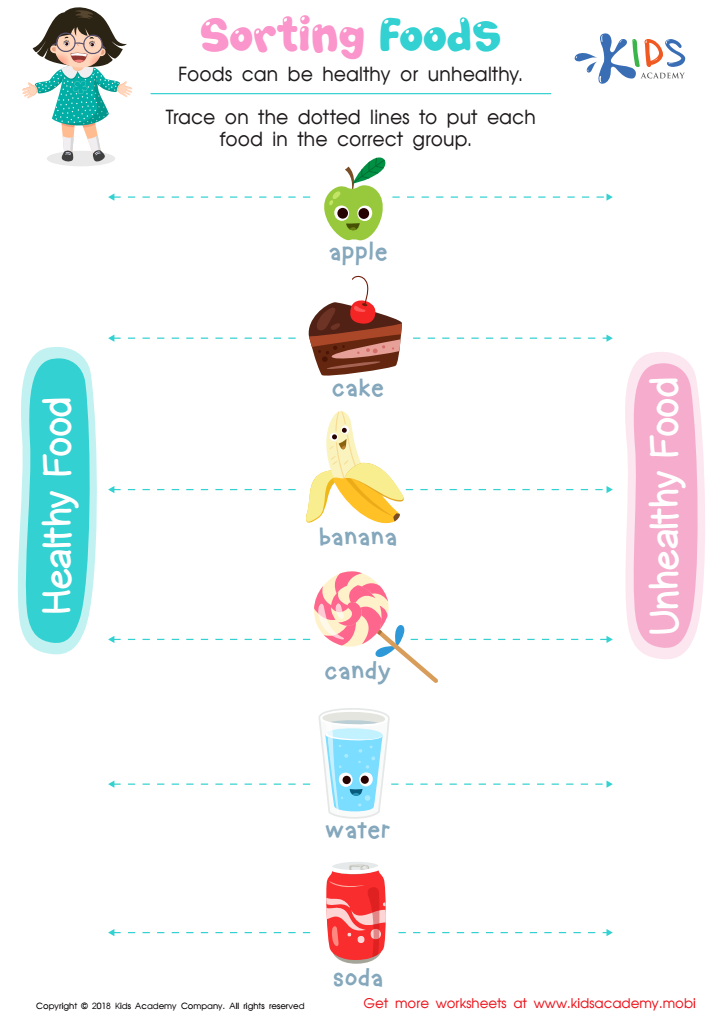
Sorting Food Worksheet
 Assign to My Students
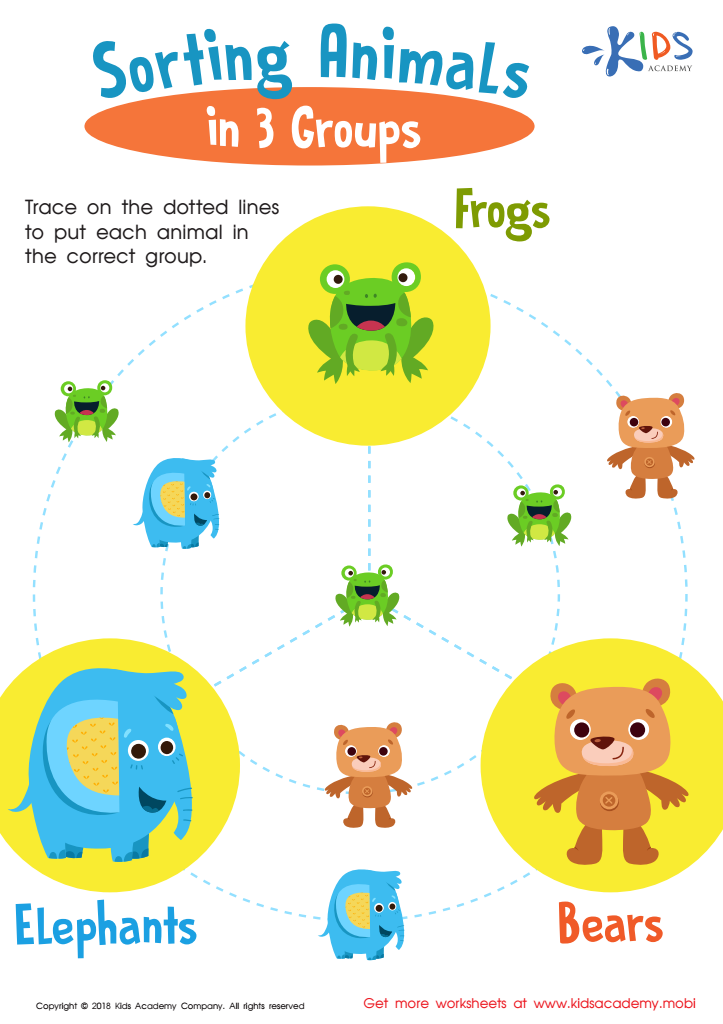
Sorting Animals in 3 Groups Worksheet
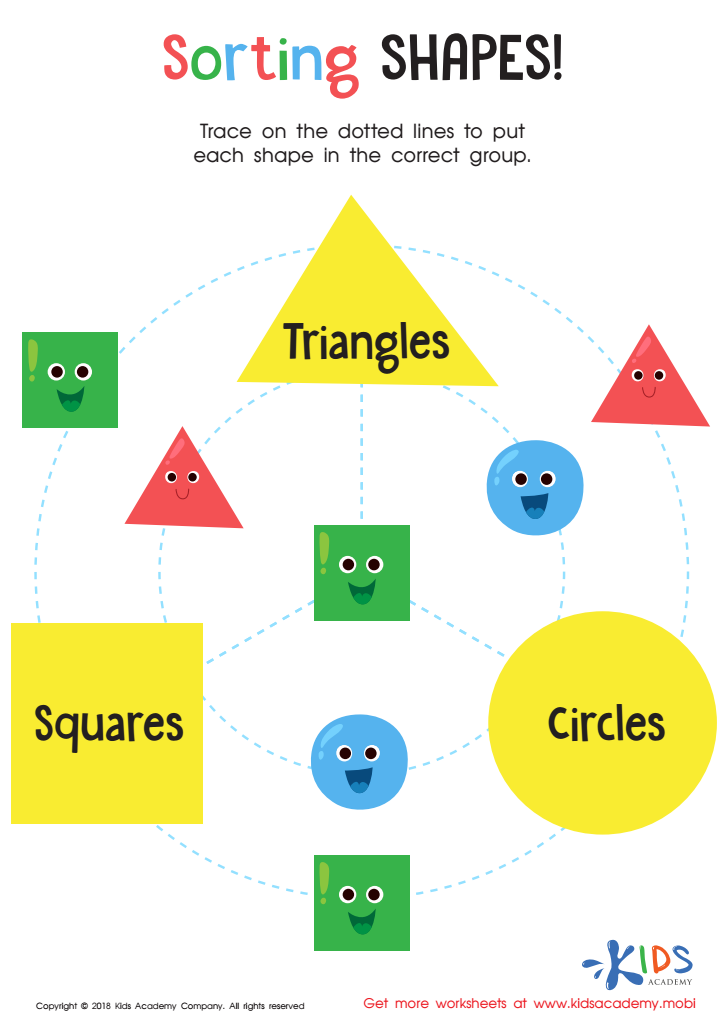
Sorting Shapes - Part 3 Worksheet
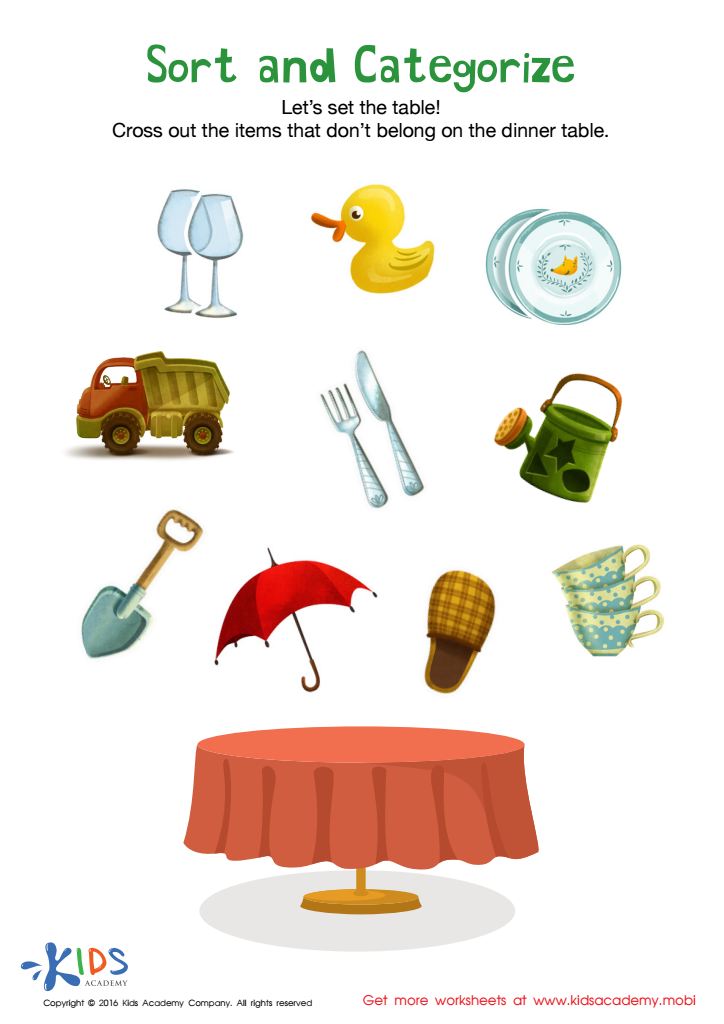
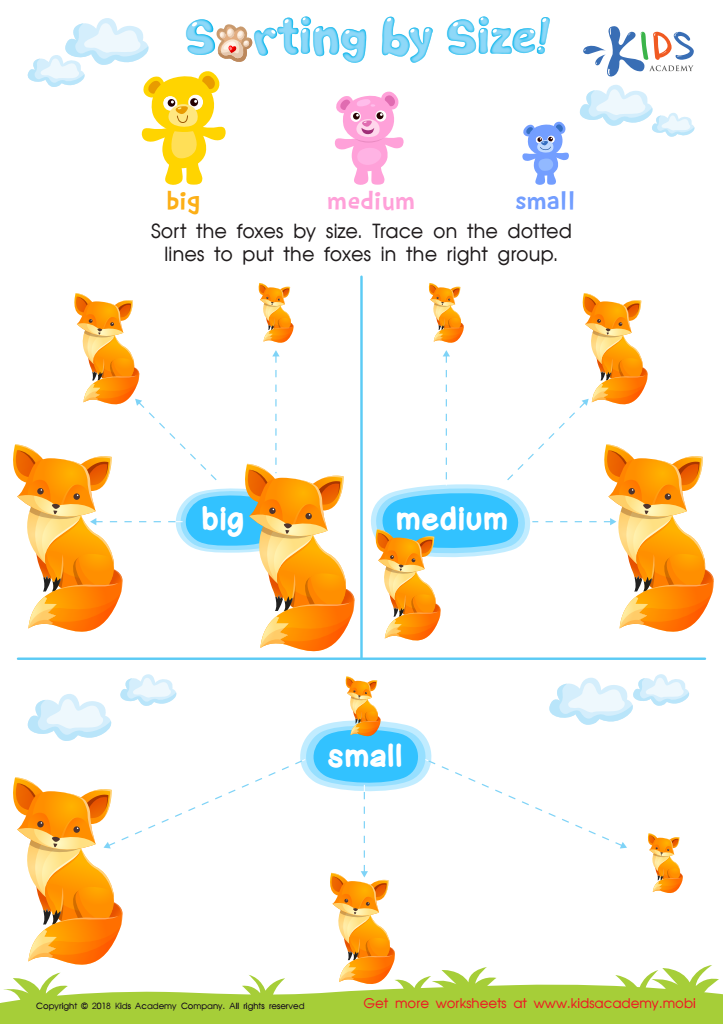
Sorting by Size Worksheet


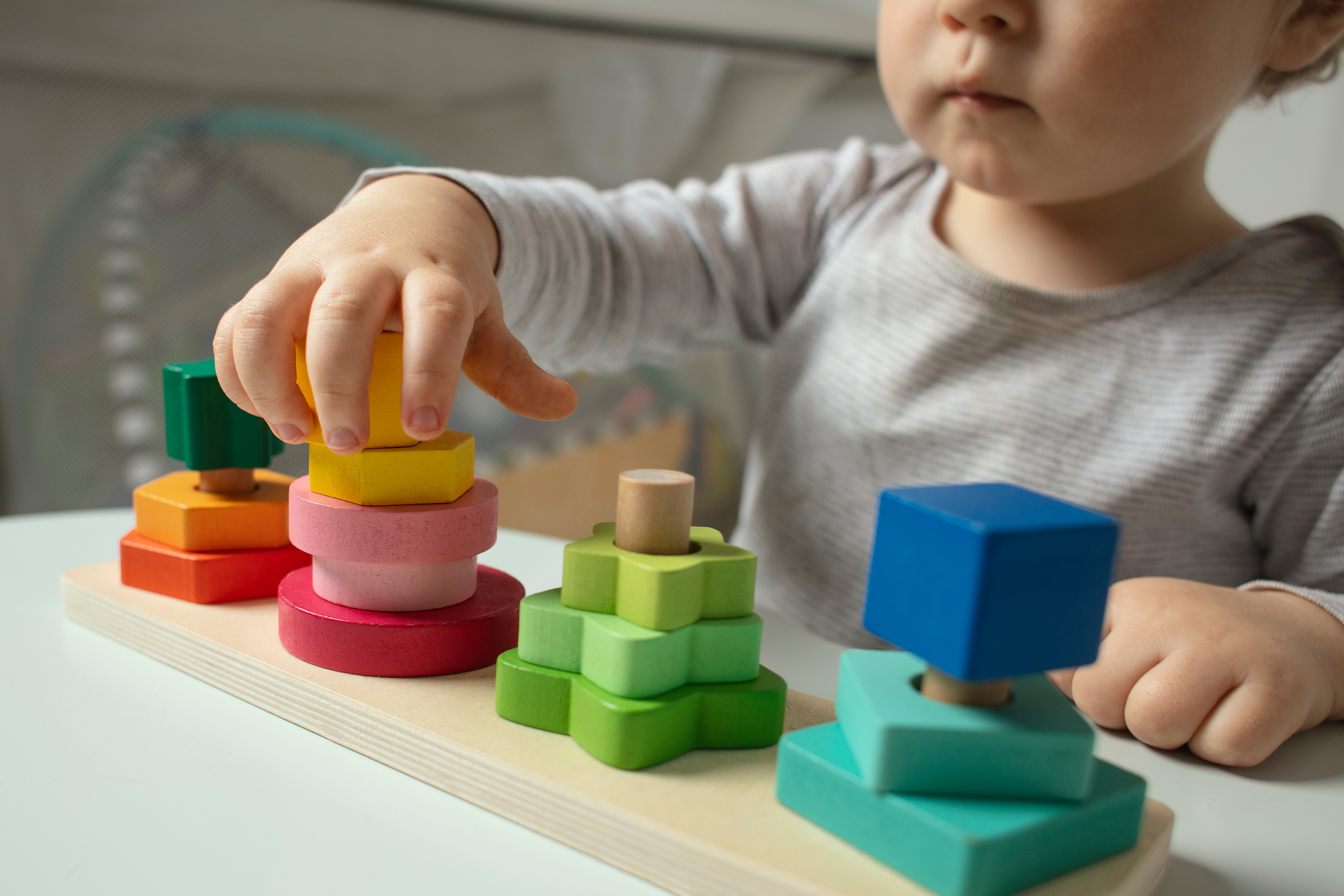





Categorization and sorting skills are critical cognitive abilities that develop in children between ages 3-5 and should be a primary focus for parents and teachers. These skills lay the groundwork for crucial intellectual processes, such as the ability to organize information, make decisions, and foster problem-solving abilities. By recognizing categories and sorting objects by characteristics like color, shape, or size, children enhance their understanding of the world around them.
This early skill development provides a foundation for mathematical thinking. For instance, sorting objects into groups is an essential precursor to understanding concepts such as classification, number patterns, and even basic arithmetic. In reading, recognizing letters and their sounds, and understanding the categorization of words based on phonetic or semantic attributes are built on sorting skills.
Furthermore, categorizing and sorting enhance language development. As children explain their sorting decisions, they practice using descriptive language and improve their vocabulary. Socially, these activities promote cooperation and communication when performed in group settings, improving interpersonal skills.
Given these wide-ranging benefits, fostering categorization and sorting abilities in young children is crucial. Integrating these skills into play and everyday activities enables young minds to develop intellectually and socially, providing a holistic growth foundation essential for future academic success.








