
Basic math operations Word Problems Worksheets for Ages 3-5
3 filtered results
Difficulty Level
Grade
Age
-
From - To
Subject
Activity
Standards
Discover our engaging Basic Math Operations Word Problems Worksheets designed for children ages 3-5. These worksheets provide a fun and interactive way for young learners to develop essential math skills through relatable word problems. Each activity focuses on fundamental concepts such as addition and subtraction using colorful illustrations and scenarios that resonate with children’s everyday experiences. Perfect for parents and teachers, these worksheets not only enhance problem-solving abilities but also strengthen comprehension and reasoning skills. With a variety of exercises to choose from, your little ones will enjoy practicing math while building a strong foundation for future learning!
Favorites
With answer key
Interactive
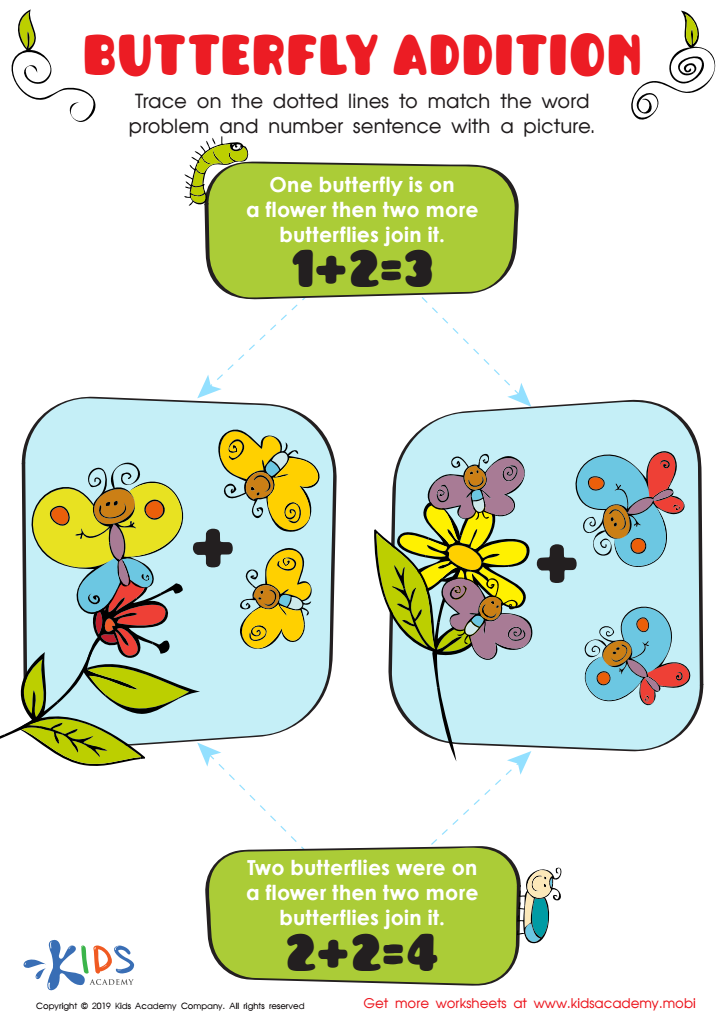
Butterfly Addition Worksheet
This tracing sheet is great for kids to work on math skills and have fun too. Read the word problems to them, then help them trace the dotted lines to match the problem and number sentence to a picture. Not only is it educational, it's beautiful too - your kids will love learning about butterflies!
 Assign to My Students
Butterfly Addition Worksheet
Worksheet
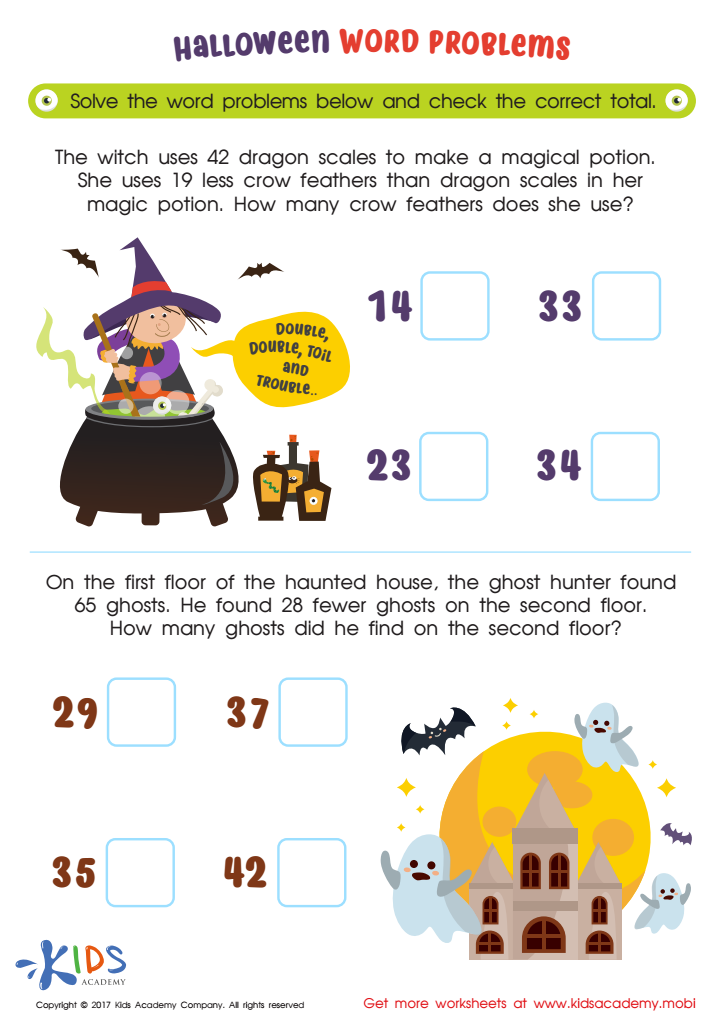
Halloween Word Problems Printable
Ghosts, witches, and other spooky characters make these problems exciting and interactive. Get ready to have some math fun!
Halloween Word Problems Printable
Worksheet
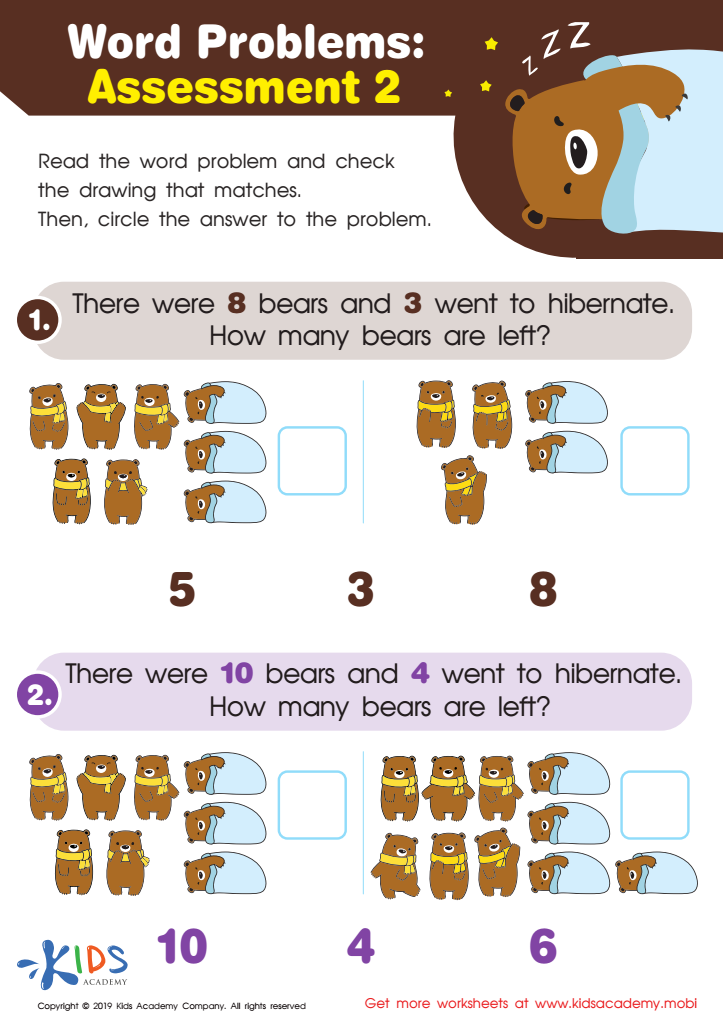
Word Problems: Assessment 2 Worksheet
This bear-themed worksheet is a great way to test subtraction skills. Have your child read the word problems and match the correct drawing with the answer. It's a fun way to quiz them without them even knowing. Enjoy counting cute snoozing bears! (80 words)
Word Problems: Assessment 2 Worksheet
Worksheet
Join Kids Academy for Free
Who is primarily going to use this learning content?








Parents and teachers should prioritize basic math operations and word problems for children aged 3-5 because these foundational skills are critical for early cognitive development. Understanding basic math concepts, such as addition and subtraction, through relatable word problems fosters a child’s ability to think critically and solve problems in everyday situations. Engaging with word problems helps children learn to interpret and process information, teaching them how to analyze a scenario and determine what mathematical operations are relevant.
Additionally, introducing math through playful, context-based activities and stories increases engagement and makes learning enjoyable, enhancing motivation and retention. This early exposure lays the groundwork for more complex mathematical concepts as they progress in school. Furthermore, mastering these skills at a young age correlates with greater academic success later. Word problems also strengthen language development as children learn the vocabulary associated with math concepts, enriching their communication skills.
Ultimately, integrating basic math operations into learning activities cultivates a positive attitude toward math, helping to dispel potential anxieties. Fostering a strong mathematical foundation promotes confidence and encourages lifelong learning. This early investment in their skills not only benefits their current academic trajectory but sets the stage for future growth and a love of learning throughout their lives.








