Visual Learning Word Problems Worksheets for Ages 3-5
5 filtered results
-
From - To
Discover our engaging Visual Learning Word Problems Worksheets designed specifically for children aged 3-5. These worksheets combine vibrant illustrations with thoughtful math problems, making learning both fun and interactive. By integrating visual elements, children can easily grasp essential concepts, enhance their problem-solving skills, and foster a love for math. Our resources help develop critical thinking as kids visualize scenarios and apply logic to solve word problems. Perfect for parents and educators, these worksheets support early math skills in a playful manner. Start your child's math journey today with our visually stimulating and educational worksheets that make learning an enjoyable experience!
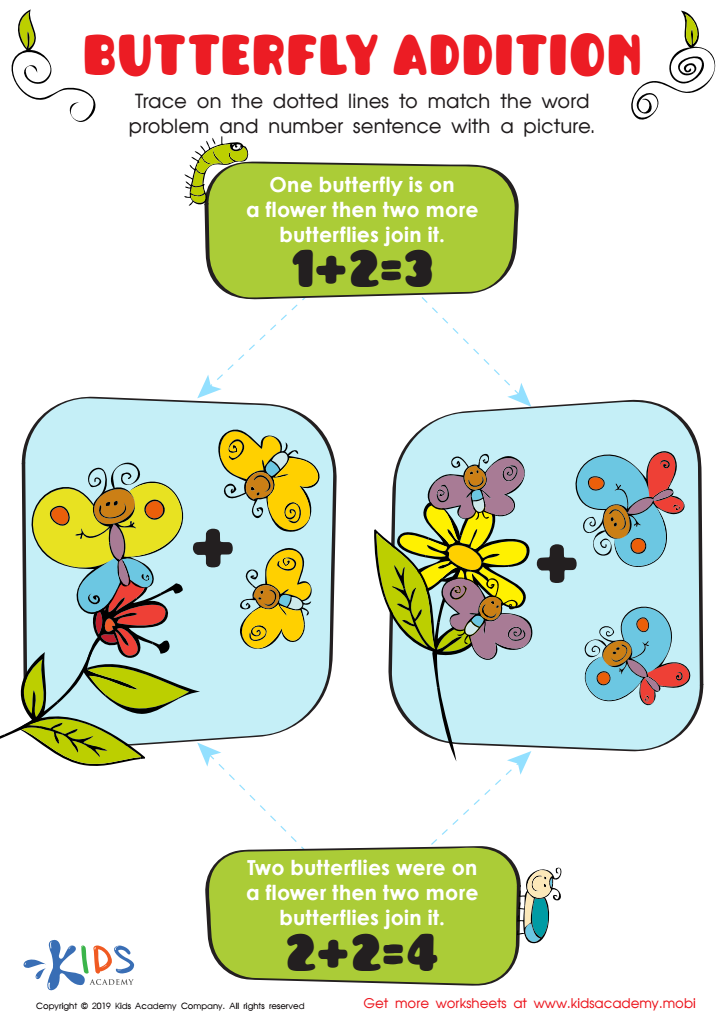
Butterfly Addition Worksheet
 Assign to My Students
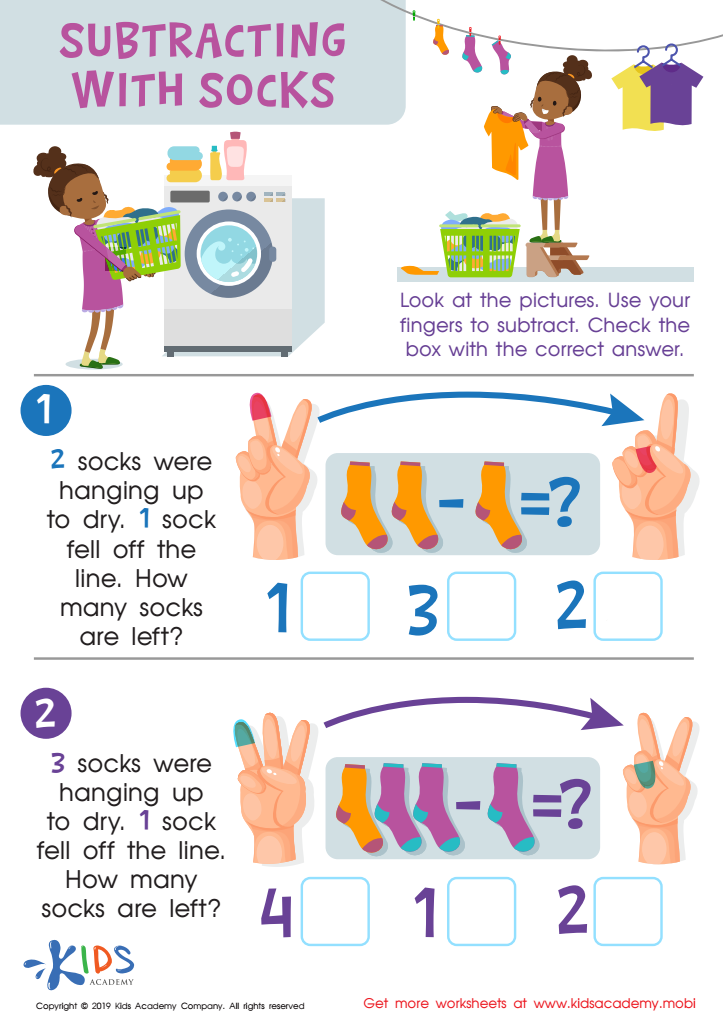
Subtracting Socks Worksheet
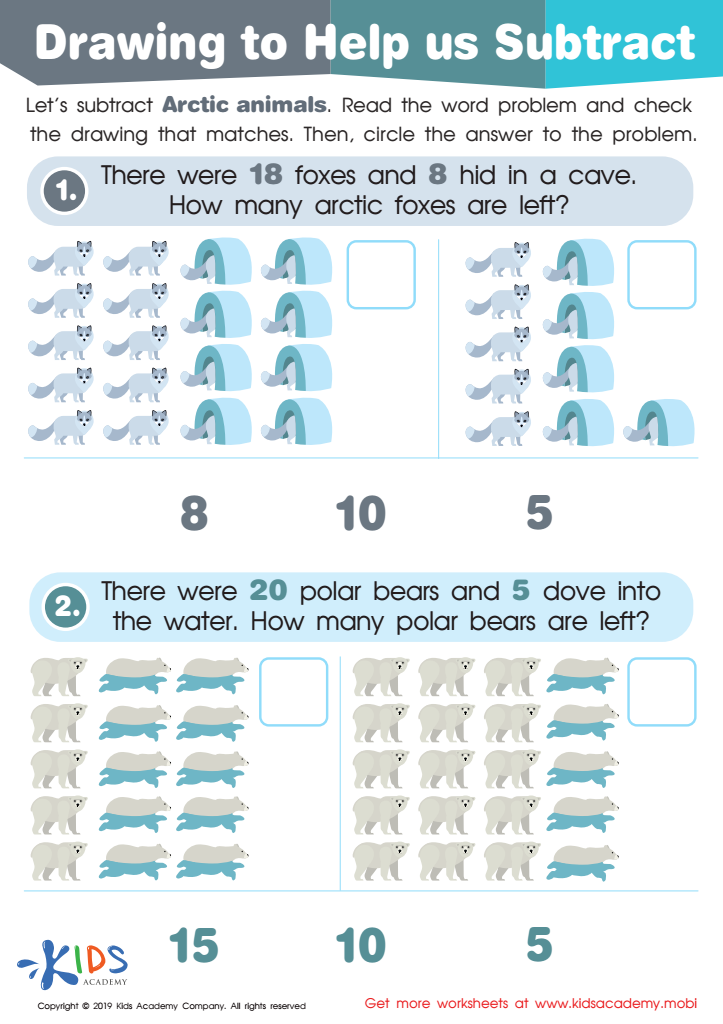
Drawing to Help Us Subtract Worksheet
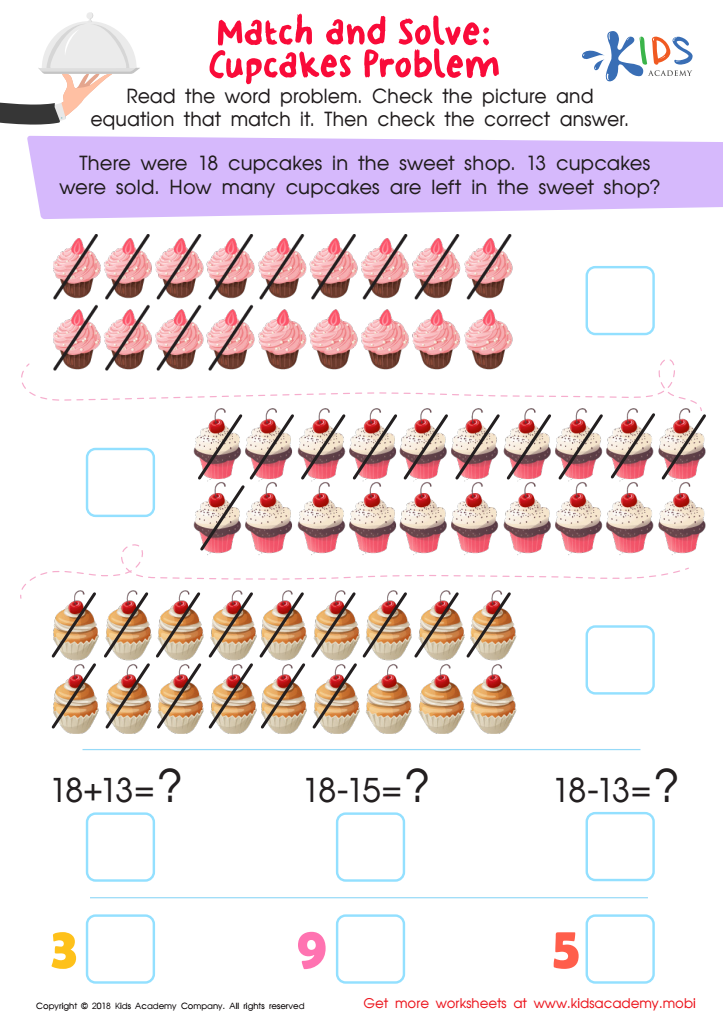
Match and Solve: Cupcakes Problem Worksheet
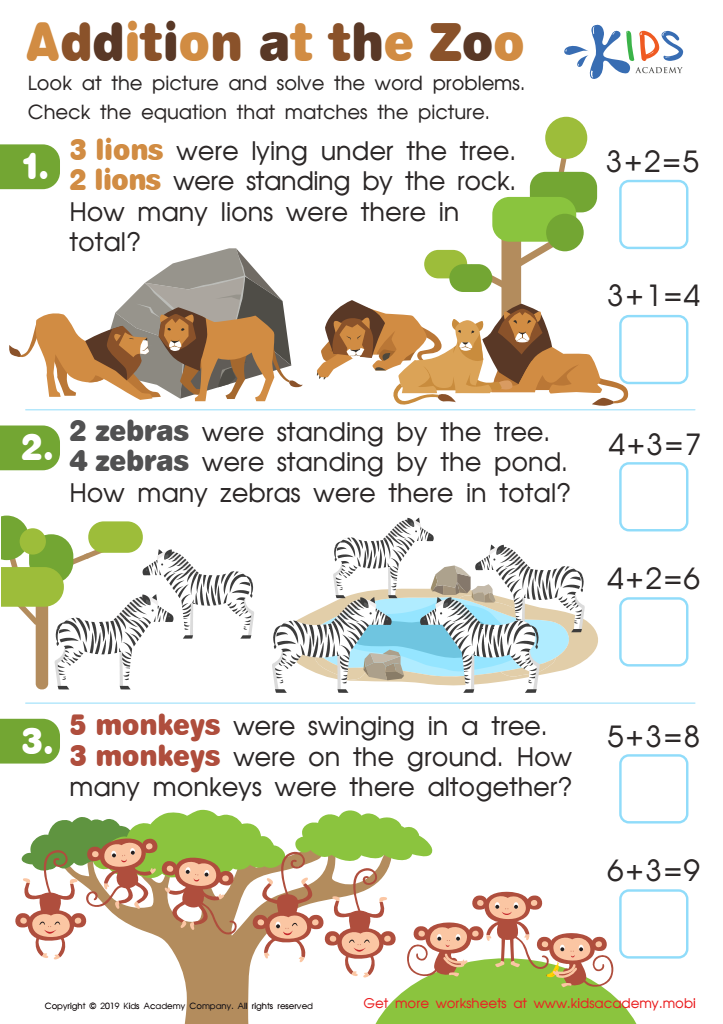
Addition at the Zoo Worksheet








Visual Learning Word Problems are vital for children aged 3-5, as they significantly enhance cognitive development and facilitate understanding of mathematical concepts through engaging visuals. At this age, children learn best through play and interaction, making visual learning strategies particularly effective. When parents and teachers incorporate visuals into word problems, they are tapping into children's natural curiosity and eagerness to explore.
Visual word problems help develop critical thinking and problem-solving skills by translating abstract concepts into concrete examples. Children can easily grasp the meaning and context of mathematical challenges when they see pictures, diagrams, or real-life objects. This approach cultivates mathematical fluency and encourages active participation, often leading to a deeper comprehension of numbers, patterns, and basic operations.
Moreover, visual learning supports language development as children describe what they observe, encouraging vocabulary growth and communication skills. By addressing different learning styles, visual problems foster an inclusive learning environment where every child has the opportunity to succeed. Ultimately, investing in visual learning for word problems lays a strong foundation for future academic success, builds confidence, and instills a love for learning in young children. Thus, parents and teachers should prioritize this strategy to nurture essential lifelong skills.








