Coloring skills Building Vocabulary Worksheets for Ages 3-5
3 filtered results
-
From - To
Enhance your child's language and motor skills with our "Coloring Skills Building Vocabulary Worksheets" designed specifically for ages 3-5. These engaging worksheets combine the fun of coloring with essential vocabulary-building exercises. Children will explore a variety of themes, helping them learn new words while expressing their creativity. The vibrant illustrations encourage young learners to practice essential words, improving both language comprehension and fine motor skills. Ideal for home or classroom use, these worksheets promote early literacy in an enjoyable way. Watch your little ones thrive as they combine learning and play—making vocabulary acquisition a colorful adventure!
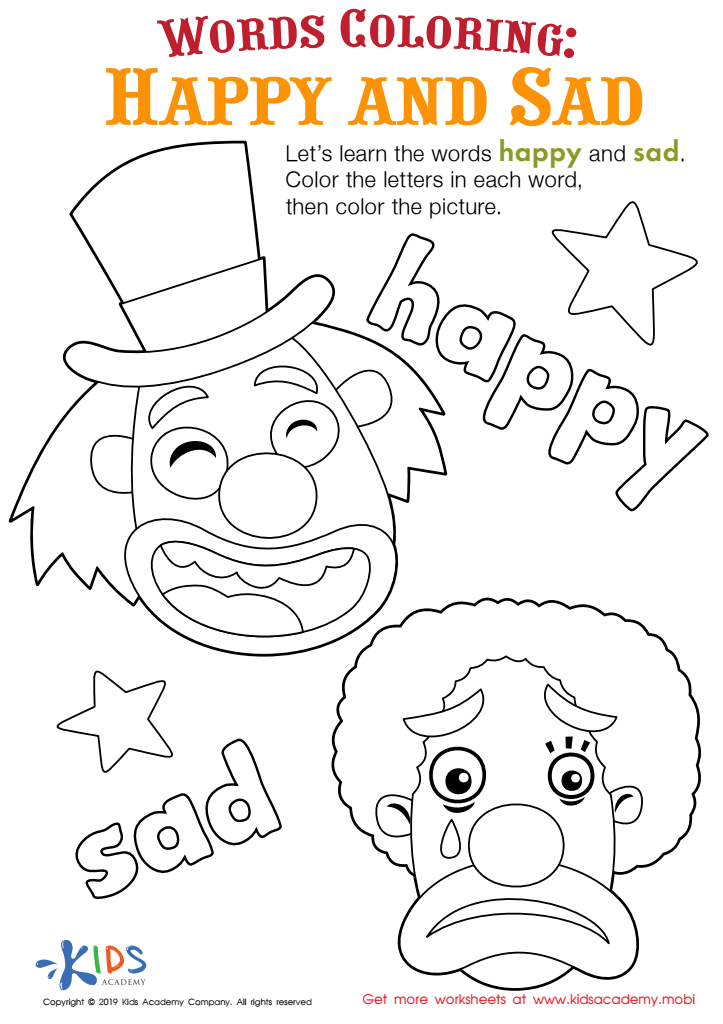
Happy and Sad Words Coloring Worksheet
 Assign to My Students











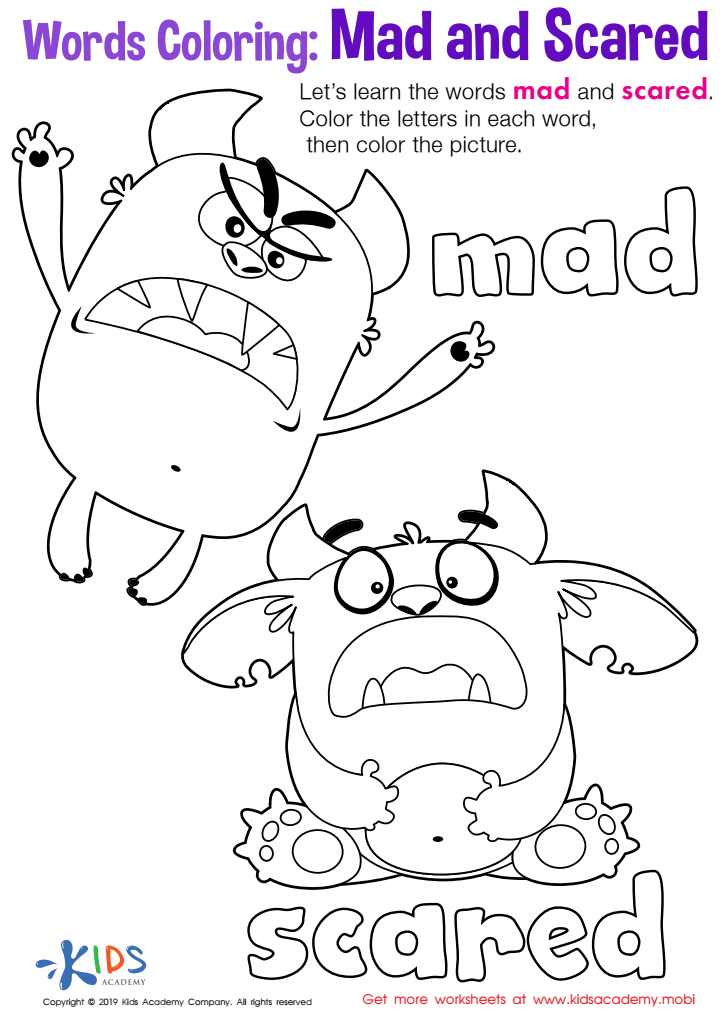
Mad and Scared Words Coloring Worksheet
Assign to My Students
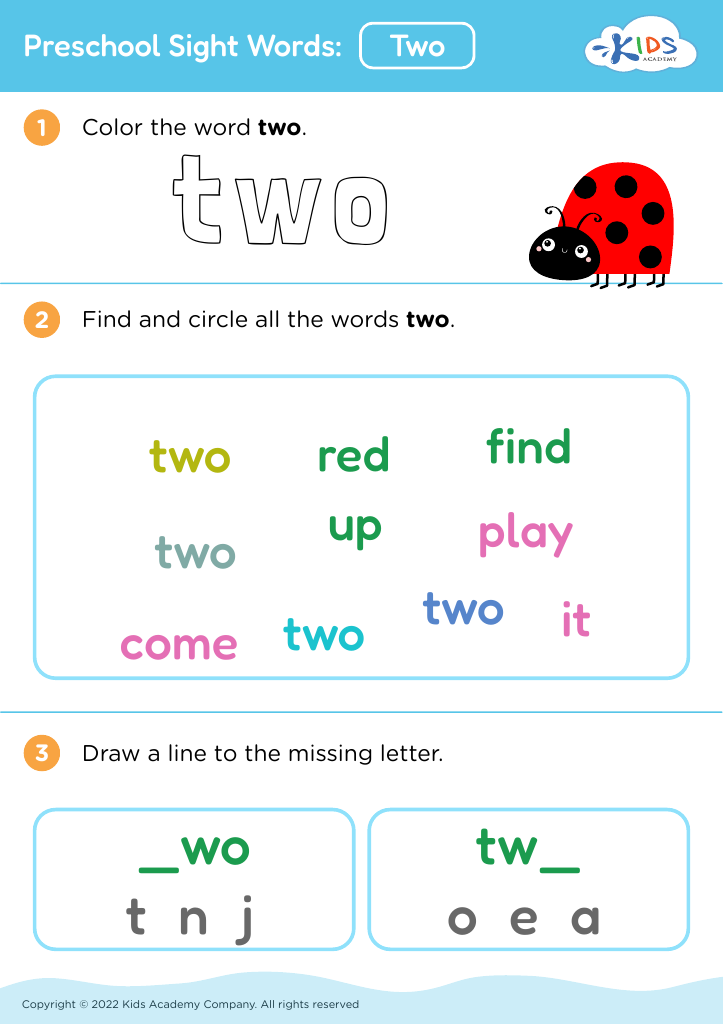







Coloring skills play a vital role in the cognitive and emotional development of children aged 3-5, making it essential for parents and teachers to prioritize this activity. Firstly, coloring enhances fine motor skills, which are crucial for tasks like writing, drawing, and self-care as children grow. Developing these skills early can lead to better hand-eye coordination and precision in movements.
Moreover, coloring encourages creativity and self-expression, allowing children to explore their imagination and make choices. This creative process fosters independence, as they learn to make decisions about colors, shapes, and designs. As young learners engage in coloring activities, they can also build vocabulary. Discussing colors, shapes, and themes within their artwork enhances language skills. For instance, parents or teachers can introduce new words related to the pictures they are coloring, enriching the child’s vocabulary authentically and contextually.
Furthermore, coloring can be a social activity. Group coloring sessions promote collaboration, communication, and sharing among peers, essential skills for developing emotional intelligence and social interactions. Overall, prioritizing coloring skills is crucial for a well-rounded early education, contributing to fine motor development, creativity, vocabulary enhancement, and social skills—all foundational for lifelong learning.








