
Word Recognition Building Vocabulary Worksheets for Ages 3-5
9 filtered results
Difficulty Level
Grade
Age
-
From - To
Subject
Activity
Standards
Enhance your child’s vocabulary with our "Word Recognition Building Vocabulary Worksheets for Ages 3-5". Designed to captivate young learners, these worksheets combine colorful illustrations and engaging activities to make learning fun. They focus on helping children recognize and understand common words, boosting their reading skills and language development. Perfect for preschoolers, these printable sheets cover the basics of word recognition, encouraging early literacy and a love for reading. Our expertly crafted worksheets provide a solid foundation for your child’s educational journey. Start building your child’s vocabulary today with our easy-to-use resources!
Favorites
With answer key
Interactive
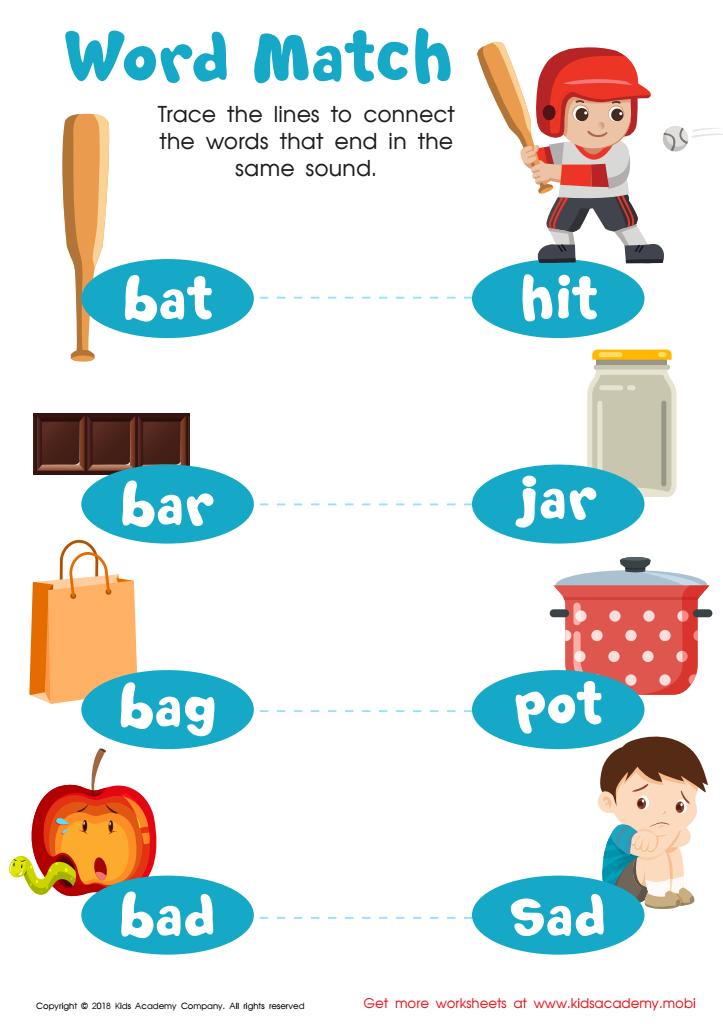
Word Match Reading Worksheet
This printout helps children learn to read fluently by connecting words with the same sound. Colorful pictures aid understanding and context for kindergarten-level students. Tracing lines, they learn to identify the sounds made by letters of the alphabet and deepen their knowledge of phonics.
Word Match Reading Worksheet
Worksheet











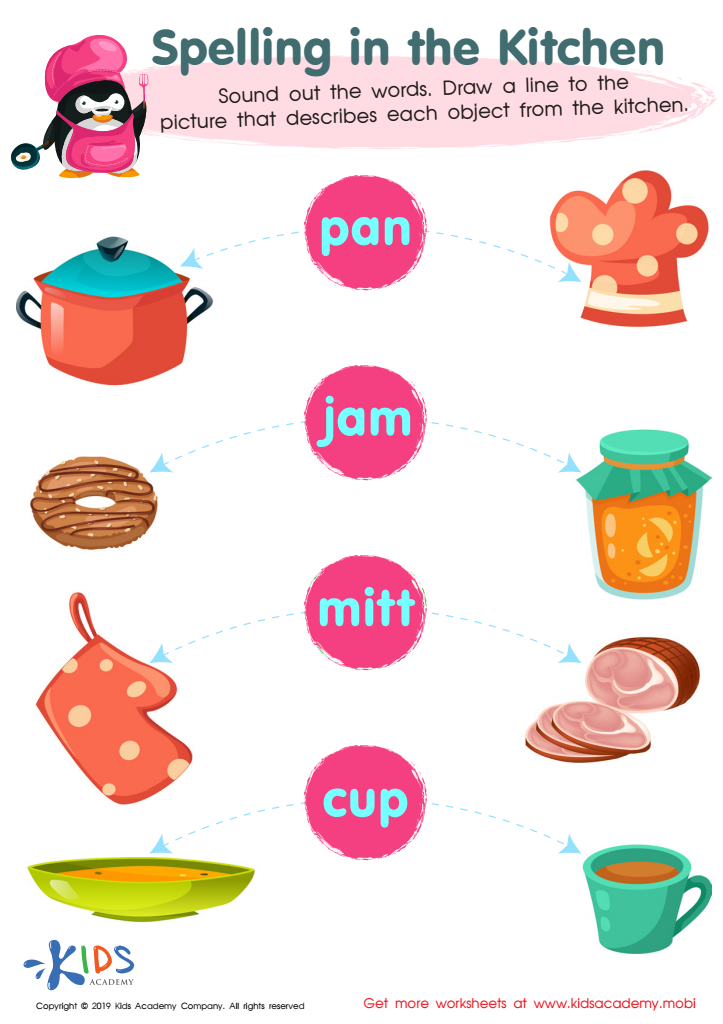
Spelling in the Kitchen Worksheet
Your little ones can learn a lot if they help in the kitchen. Get them to identify and say the name of each item in the picture in this worksheet. Sound out the words for them and help draw a line to the right picture. It's a great way for them to learn about kitchen items!
Spelling in the Kitchen Worksheet
Worksheet
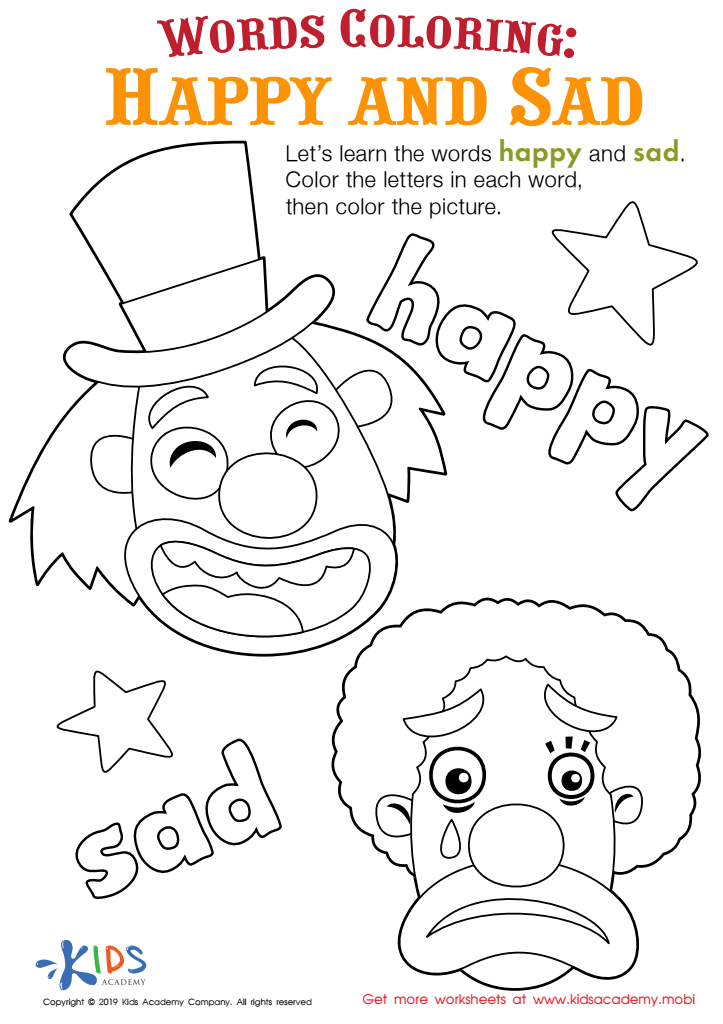
Happy and Sad Words Coloring Worksheet
Help students understand emotions by using this fun worksheet. It features smiling and sad clowns and the words 'happy' and 'sad'. Read the words with your students, then have them color the clowns and the emotion words. This PDF is an effective way to teach kids how to express how they feel.
Download (PDF)
 Assign to My Students
Assign to My Students
Happy and Sad Words Coloring Worksheet
Worksheet
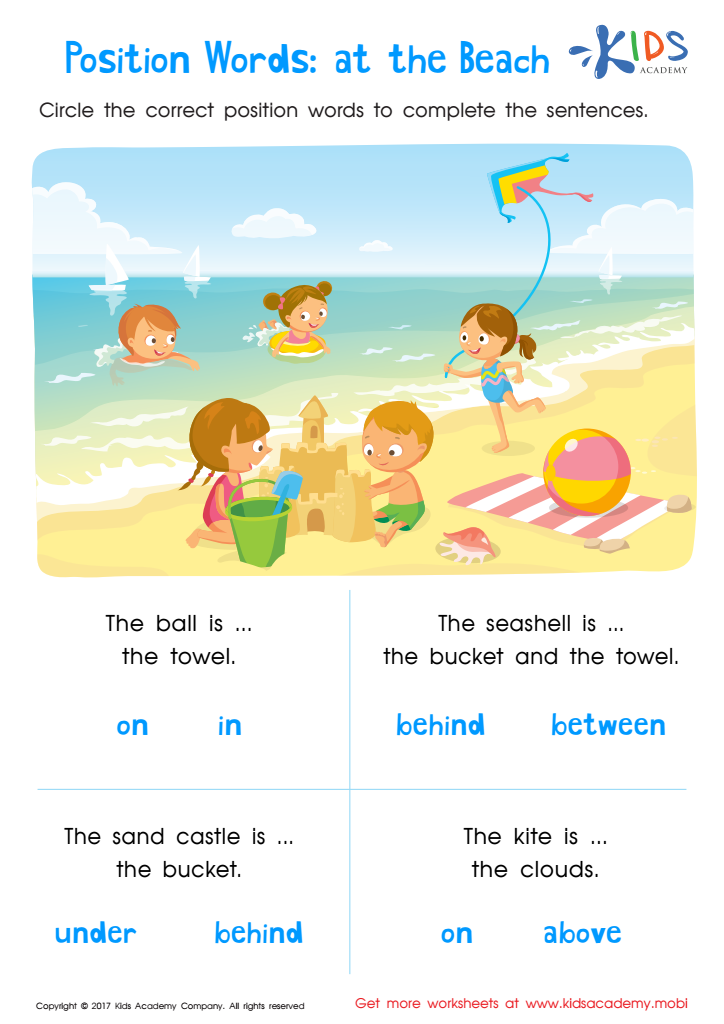
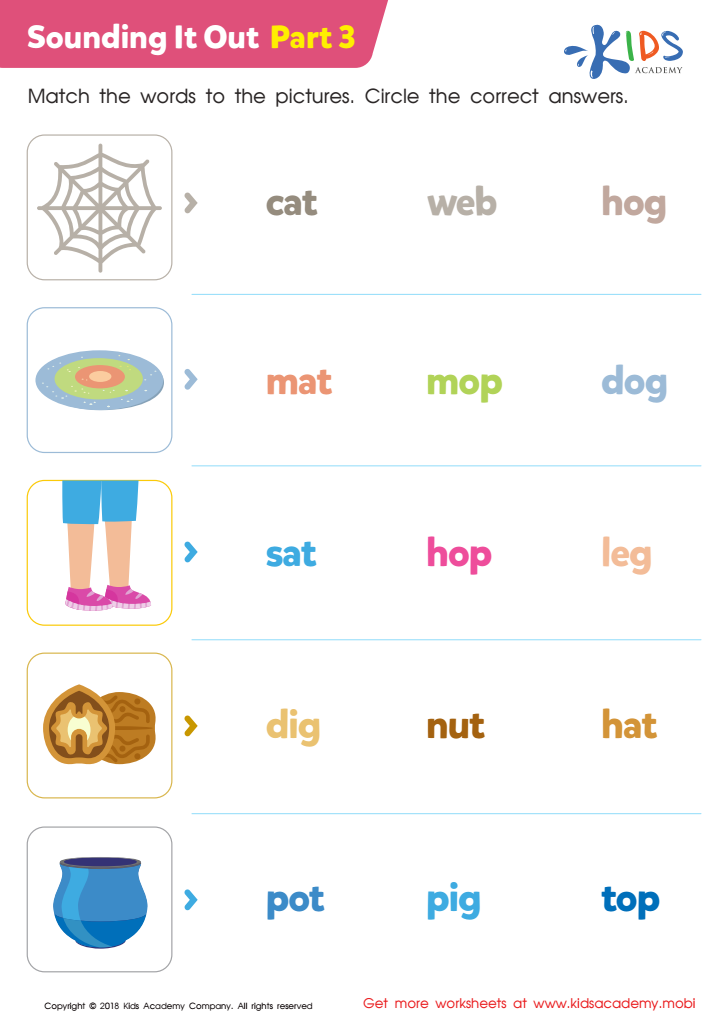
Sounding it Out: Part 3 Worksheet
Once Parts 1 and 2 are complete, this printable phonics worksheet will help kids take their reading skills to the next level! As they gain confidence, give them hints less often and direct their attention to three words in a row. Ask them to read and circle the correct word to complete!
Sounding it Out: Part 3 Worksheet
Worksheet
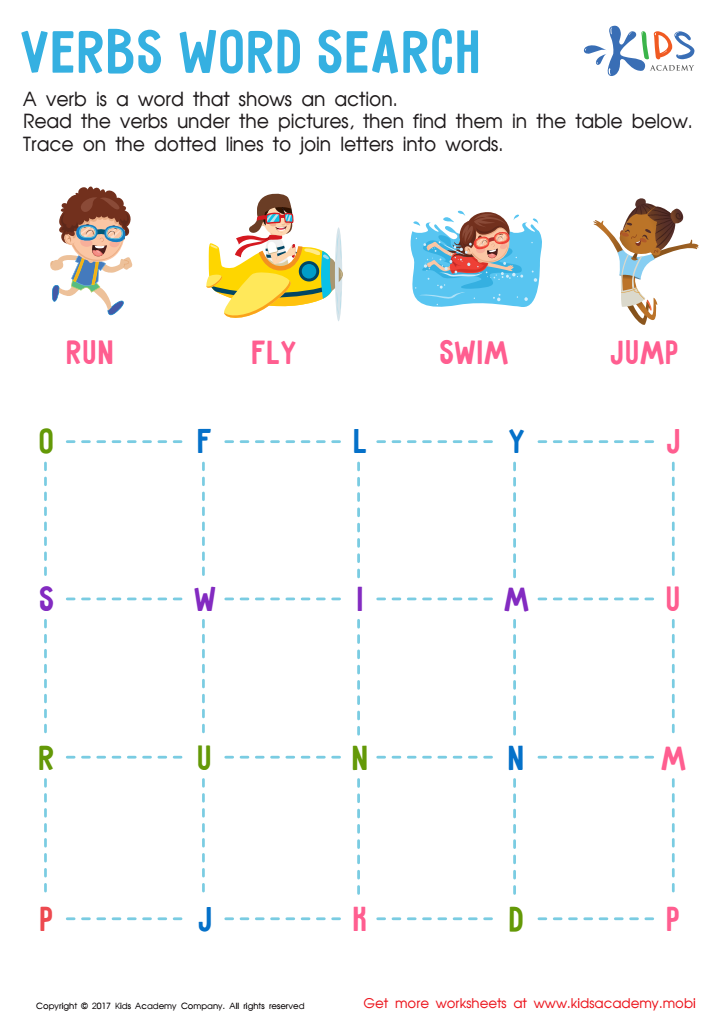
Verbs Word Search Worksheet
Ask your child if they understand the meaning of the word "verb". If not, explain that it's a word that shows an action. Give examples of familiar verbs. Then look at the pictures in the tracing sheet and read the words. Ask your child to follow the dotted lines to find the hidden words. Perfect tool to teach spot and use verbs!
Verbs Word Search Worksheet
Worksheet
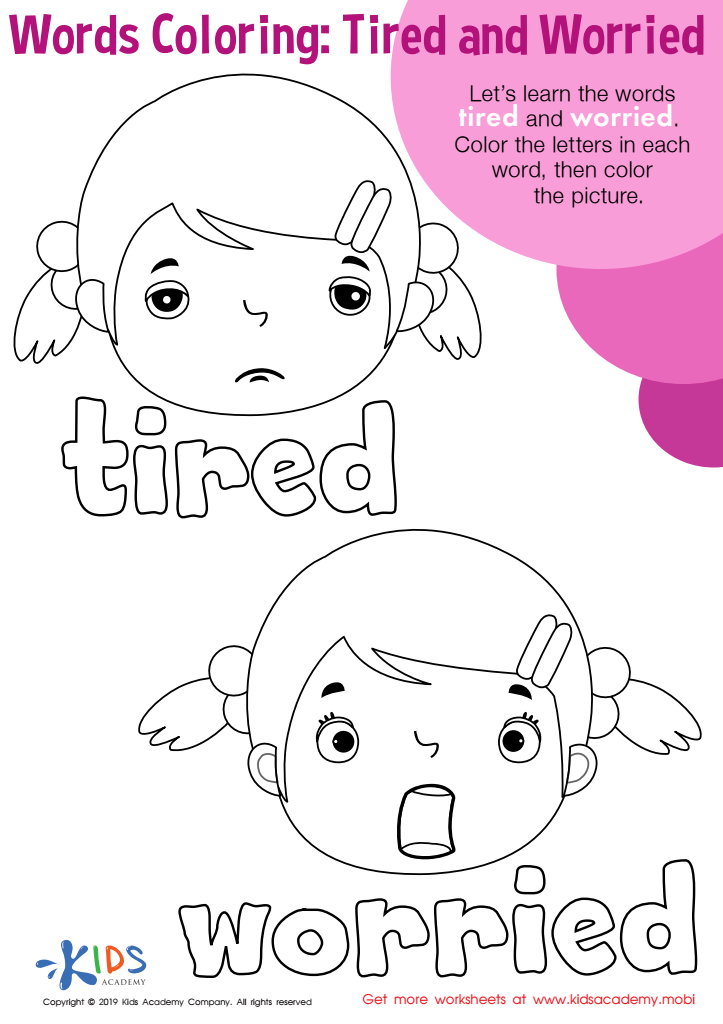
Tired and Worried Words Coloring Worksheet
Teach your students about "tired" and "worried" with this worksheet. Have them read and color the emotion words, then color the pictures of a tired girl and a worried girl. Discuss what makes them tired and worried. Expand their vocabulary with this fun coloring activity!
Download (PDF)
Assign to My Students
Assign to My Students
Tired and Worried Words Coloring Worksheet
Worksheet
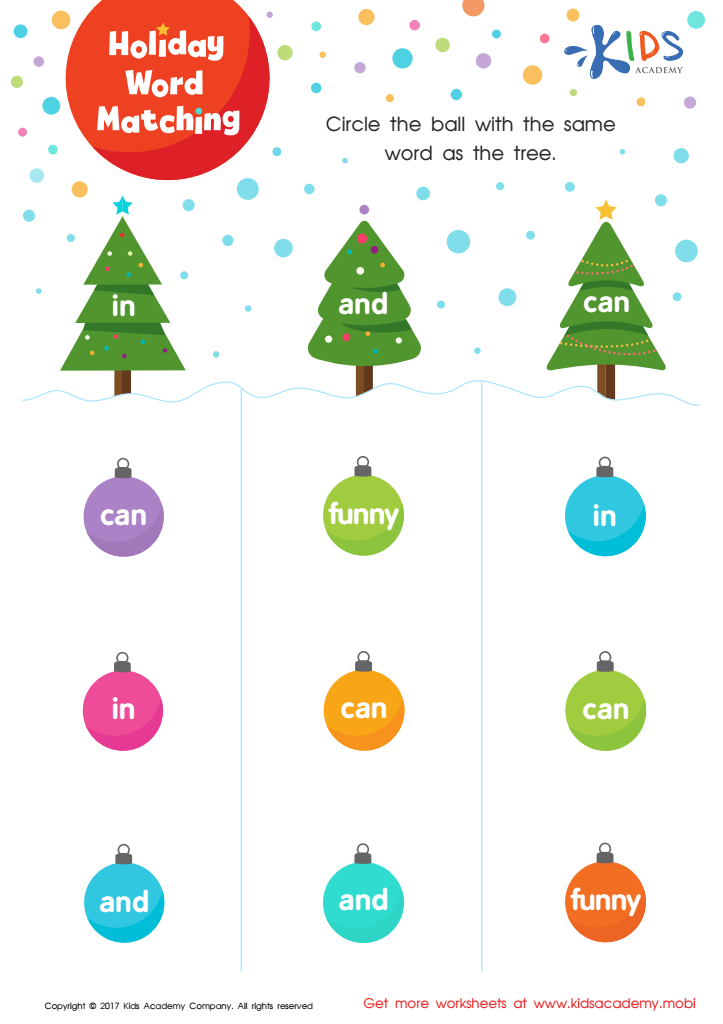
Holiday Word Matching Worksheet
Decorate with Kids Academy this year! Keep kids learning this holiday season with this festive worksheet. Let them look for sight words on Christmas trees then circle the matching ornament to decorate. It's a fun and educational way to enjoy the holidays!
Holiday Word Matching Worksheet
Worksheet
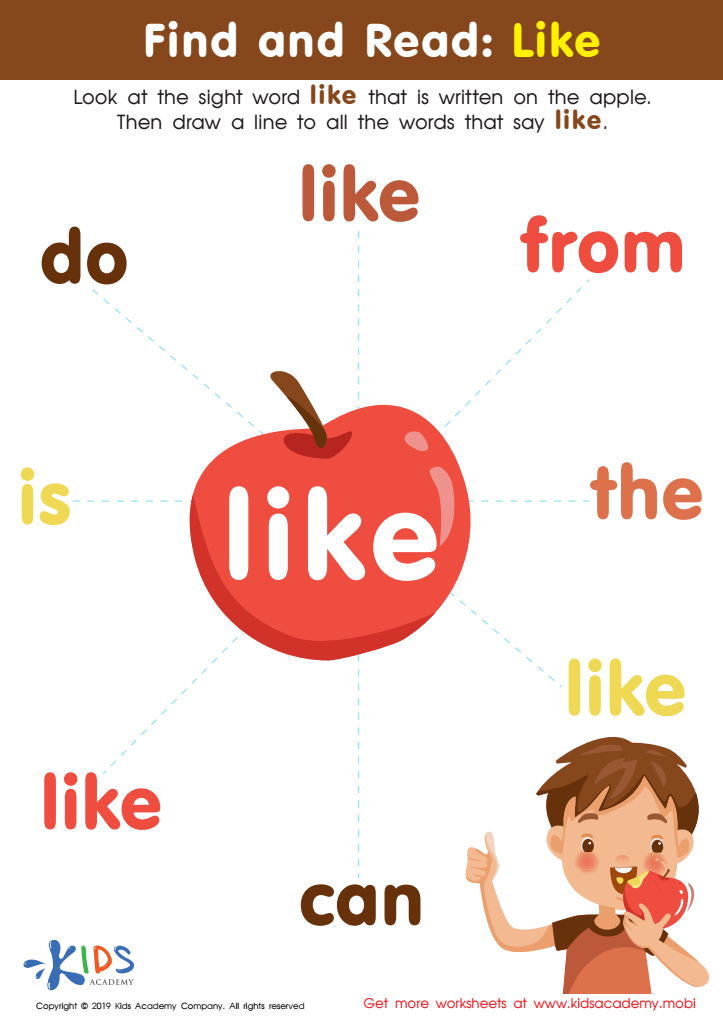
Find and Read: Like Worksheet
Reading starts with learning sight words. This free PDF worksheet helps kids learn the word "like" in various ways. It encourages their visual discrimination skills with its colorful design and traceable lines. It's a great way to help them recognize and differentiate this common sight word from other words that look similar.
Find and Read: Like Worksheet
Worksheet
Join Kids Academy for Free
Who is primarily going to use this learning content?








Word recognition and vocabulary building are fundamental elements in the linguistic and cognitive development of children aged 3-5. During these formative years, children's brains are highly adaptable and responsive to learning new information, making it an ideal time to lay the groundwork for future academic success.
First and foremost, a robust vocabulary enhances communication skills. When children know more words, they can better express their thoughts, emotions, and needs, reducing frustration and enabling richer interactions with others. This early mastery also fosters social skills and builds confidence in classroom settings.
Word recognition aids in reading fluency. As children become familiar with more words, they're better equipped to decipher written texts quickly and accurately. This automaticity allows them to focus on comprehending the material, rather than getting bogged down by decoding each word.
Furthermore, vocabulary is closely tied to cognitive development. Exposure to diverse words and concepts enriches children's understanding of the world around them, promoting critical thinking and problem-solving abilities. The more words they know, the more they can learn and connect new ideas.
For all these reasons, an emphasis on word recognition and vocabulary during the ages of 3-5 is crucial. It sets a strong foundation for lifelong learning, intellectual curiosity, and effective communication. Parents and teachers play a key role in nurturing these skills to help children reach their full potential.








