Coloring skills Reading Worksheets for Ages 3-5
3 filtered results
-
From - To
Boost your child's early reading and fine motor skills with our engaging Coloring Skills Reading Worksheets designed for ages 3-5! These vibrant, printable worksheets make learning fun while helping children practice essential color recognition and hand-eye coordination. Each worksheet features delightful images associated with simple words, encouraging young learners to explore their creativity as they color and develop foundational literacy skills. Ideal for homeschooling or classroom activities, our resources make learning enjoyable and interactive. Get started today to inspire a love for reading and creativity in your little ones! Explore our collection and watch your child's skills blossom!
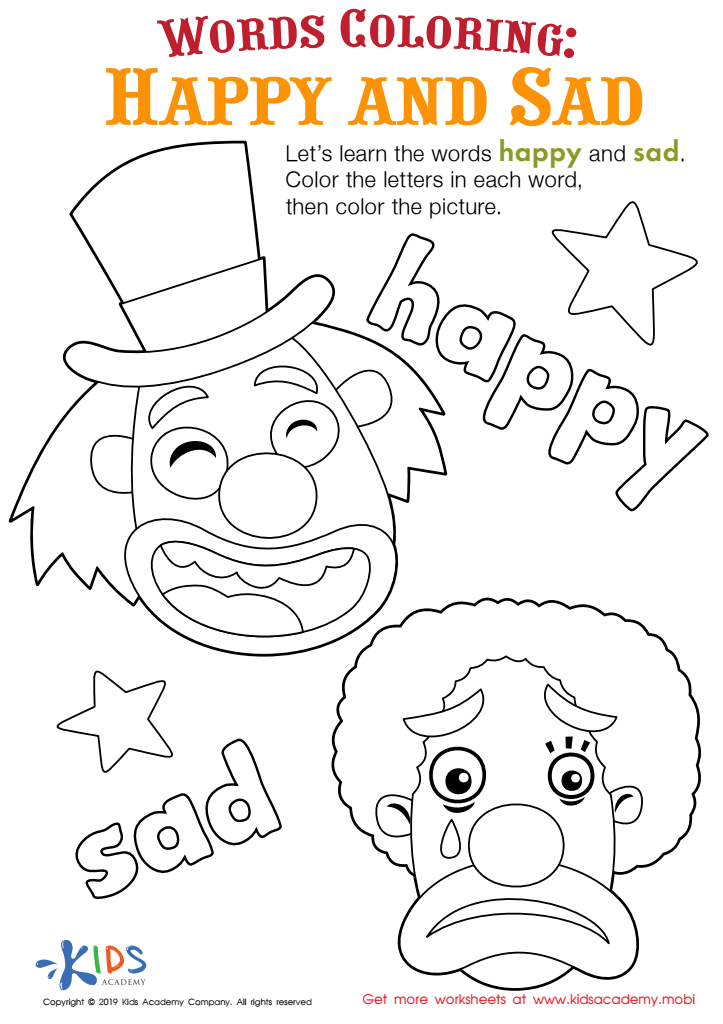
Happy and Sad Words Coloring Worksheet
 Assign to My Students
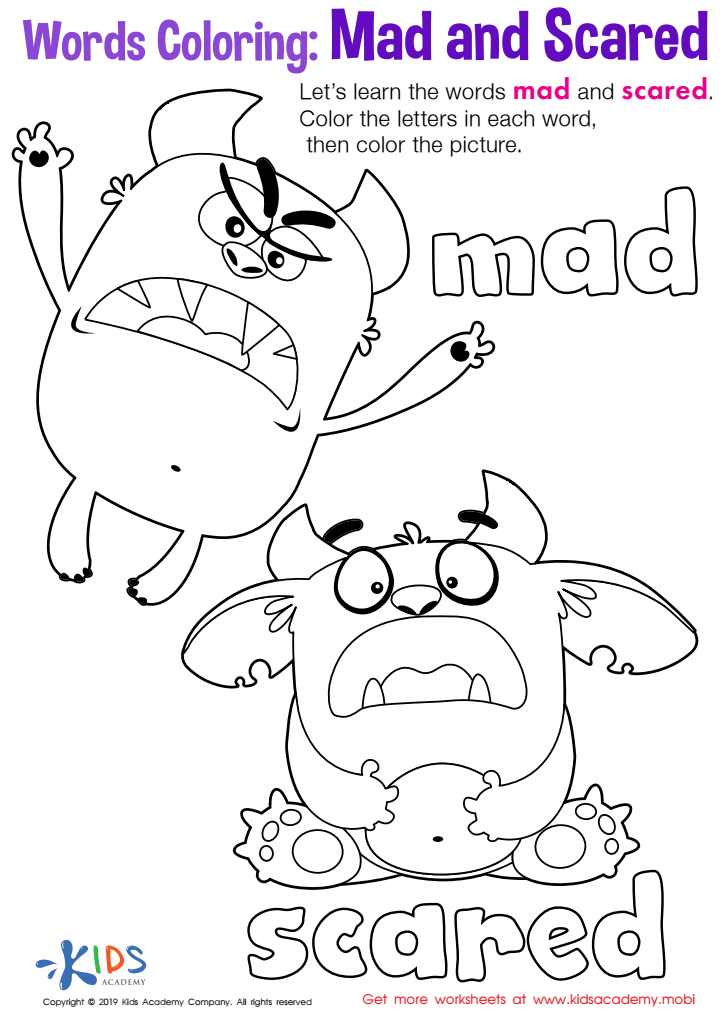
Mad and Scared Words Coloring Worksheet
Assign to My Students
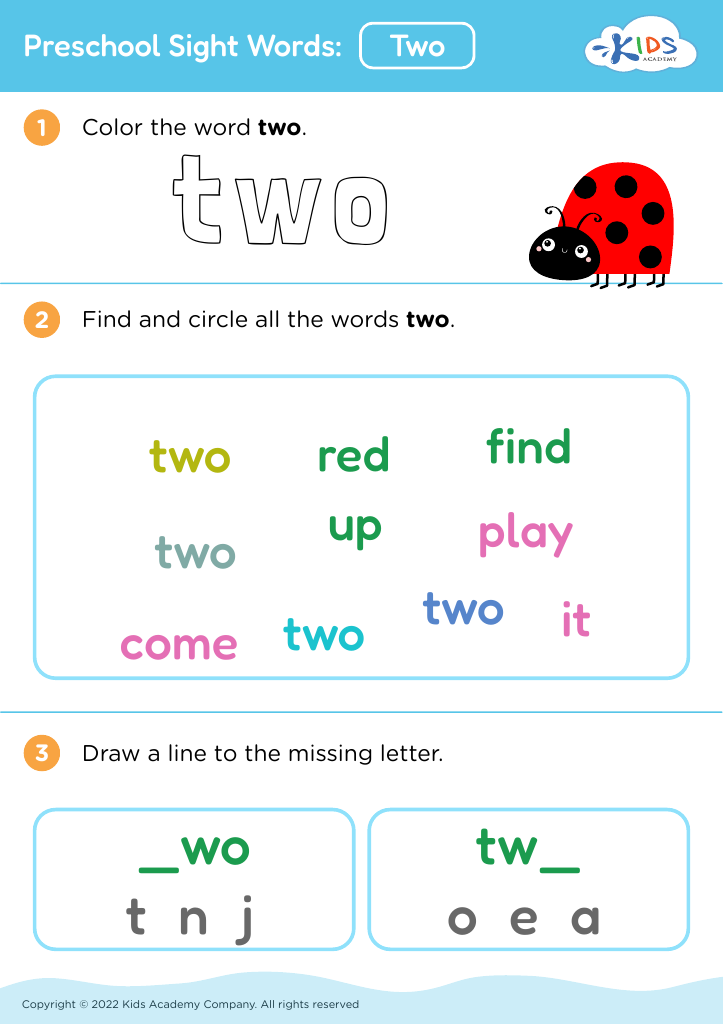








Coloring skills in children ages 3-5 play a pivotal role in their overall development, particularly in fostering reading readiness. Firstly, coloring enhances fine motor skills, which are essential for writing and other academic tasks. As children manipulate crayons, markers, or colored pencils, they develop the coordination needed to hold a pencil and form letters.
Additionally, coloring activities stimulate creativity and imagination, serving as a foundation for storytelling. By encouraging children to express themselves through colors, parents and teachers help them develop narrative skills that are crucial for reading comprehension. When children describe their coloring choices, they practice verbal communication, enhancing their language skills.
Furthermore, engaging in coloring promotes focus and concentration, allowing children to improve their ability to pay attention to tasks. This concentration is vital when transitioning to reading, as it prepares them to focus on books and stories.
Coloring also fosters early literacy skills by exposing children to shapes, patterns, and letters, as they often color alphabet-themed pages or story illustrations. Thus, by supporting coloring skills, parents and teachers contribute to a well-rounded foundation that enriches reading abilities and embraces the joys of learning in young children.








