
Problem-Solving Skills Reading Fiction Worksheets for Ages 3-5
3 filtered results
Difficulty Level
Grade
Age
-
From - To
Subject
Activity
Standards
Enhance your child's problem-solving skills with our engaging reading fiction worksheets designed for ages 3-5. These entertaining activities not only captivate young minds but also introduce essential cognitive skills through storytelling. Each worksheet features age-appropriate stories that encourage critical thinking and creativity as children navigate challenges faced by their favorite characters. By discussing plot twists and character decisions, little ones learn to analyze situations and develop solutions in a fun and interactive way. Perfect for parents and teachers, our worksheets foster a love for reading while building the foundational skills necessary for future success. Explore our collection and watch your child thrive!
Favorites
With answer key
Interactive
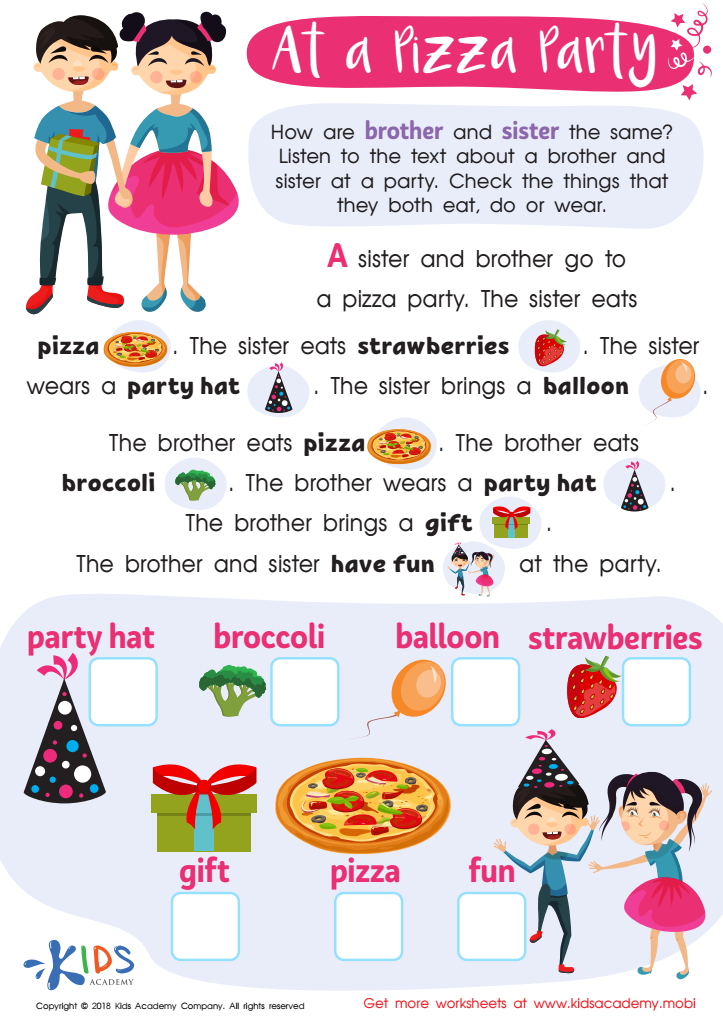
At a Pizza Party Worksheet
Parties are the best! Eating, playing, singing, dancing and gift-exchange - what's your child's fave part? In this worksheet, a brother and sister are eager to enjoy their party. Read the text to them and help them check what they do, eat, and wear. 80 words.
 Assign to My Students
At a Pizza Party Worksheet
Worksheet
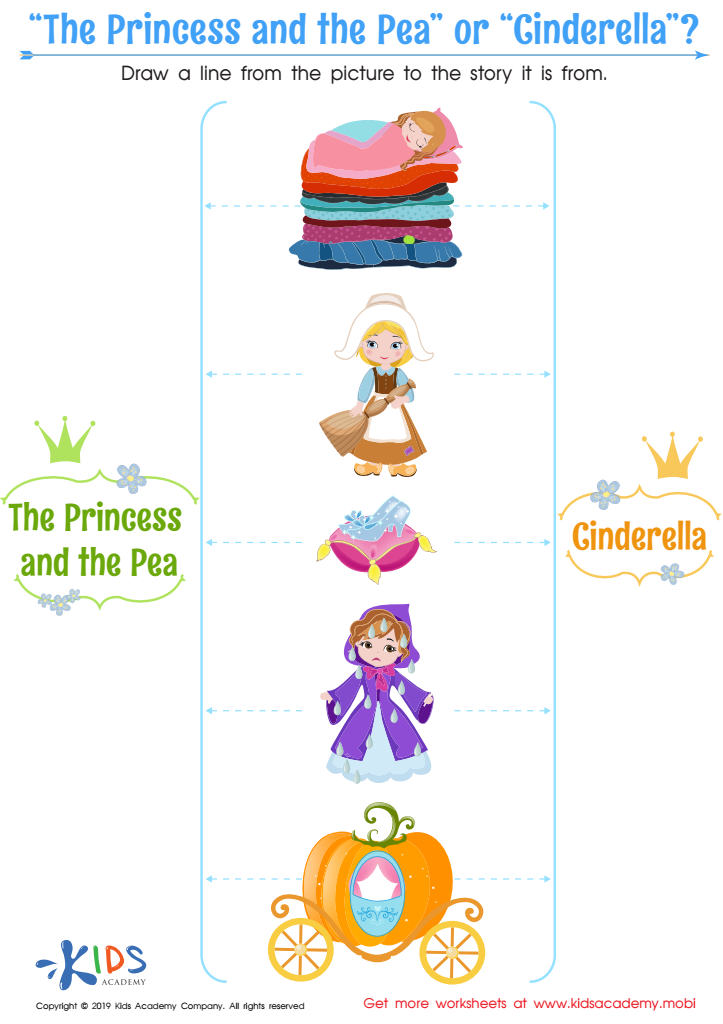
“The Princess and the Pea” or “Cinderella” Worksheet
Help your child identify the characters and objects from both the Princess and the Pea and Cinderella. Ask them to draw a line from the pictures to the story it's from on the tracing sheet. Encourage them to tell you the similarities between the two stories. Enjoy the tale with your daughter and watch her be fascinated by these two classic children's stories.
“The Princess and the Pea” or “Cinderella” Worksheet
Worksheet
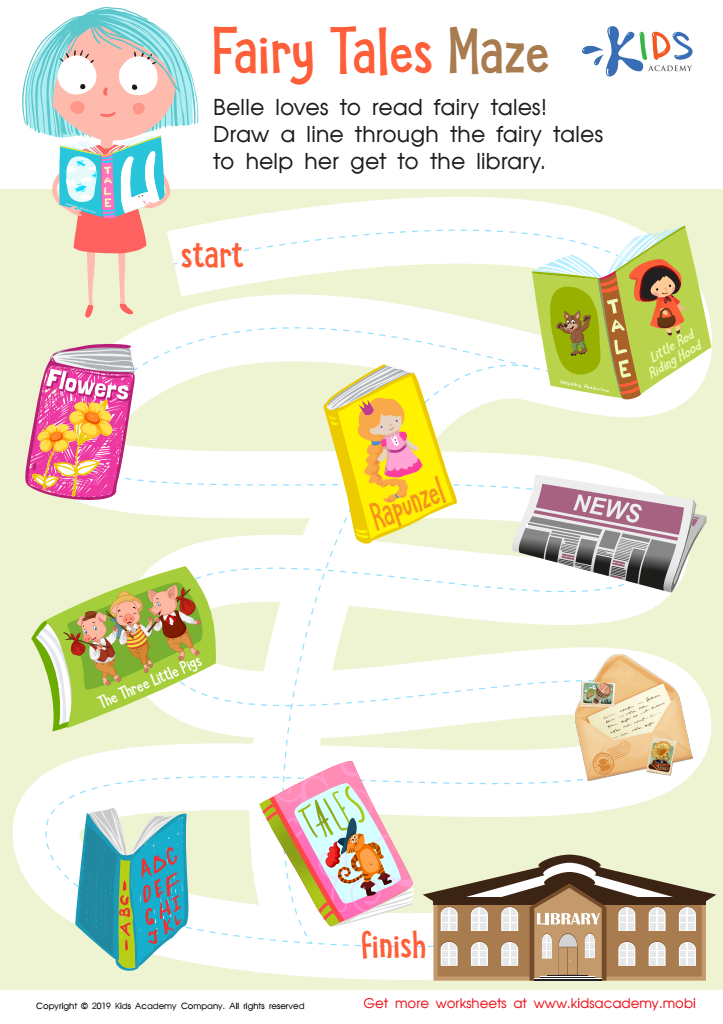
Fairy Tales Maze Worksheet
Kids love mazes and fairy tales, so this free worksheet is a great way to help teach young readers about familiar topics. They'll join Bella and use the traceable lines to travel through different reading genres, and find their way to the library for a nice reward!
Fairy Tales Maze Worksheet
Worksheet
Join Kids Academy for Free
Who is primarily going to use this learning content?


.jpg)





Problem-solving skills are crucial for young children, especially when they read fiction, as they help build critical thinking and reasoning abilities essential for lifelong learning. For children aged 3-5, engaging with stories encourages them to consider various perspectives, identify challenges faced by characters, and envision possible solutions. This process enriches their cognitive development and makes reading an interactive experience rather than a passive activity.
When parents or teachers emphasize problem-solving through fiction, they nurture children's creativity and adaptability. As children encounter conflicts in stories, they learn to relate those situations to their own lives, fostering emotional intelligence and empathy. Discussion around characters' decisions and possible outcomes enables children to articulate their thoughts, enhancing communication skills.
Moreover, working through problems in fiction prepares children for real-life challenges. Early exposure to such skills contributes to building resilience and confidence, enabling them to approach obstacles with a positive mindset. Ultimately, prioritizing problem-solving skills in early reading helps create a strong foundation for academic success and broader life skills, ensuring that children are better equipped to navigate the complexities of the world around them. This is why parents and teachers should actively engage and support this developmental aspect in young learners.








