Reading Skills Reading Fiction Worksheets for Ages 3-5
5 filtered results
-
From - To
Unlock your child's imagination and build essential reading skills with our Reading Fiction Worksheets for Ages 3-5. Expertly designed to captivate young minds, these engaging resources introduce the joys of reading through beloved stories and characters. Our worksheets aim to enhance comprehension, vocabulary, and critical thinking, providing a strong literacy foundation. Ideal for preschoolers and kindergarteners, these captivating activities promote a love for reading while developing key skills. Whether at home or in a classroom, our age-appropriate worksheets make learning enjoyable and effective. Start your child on a path to reading success today with Kids Academy!
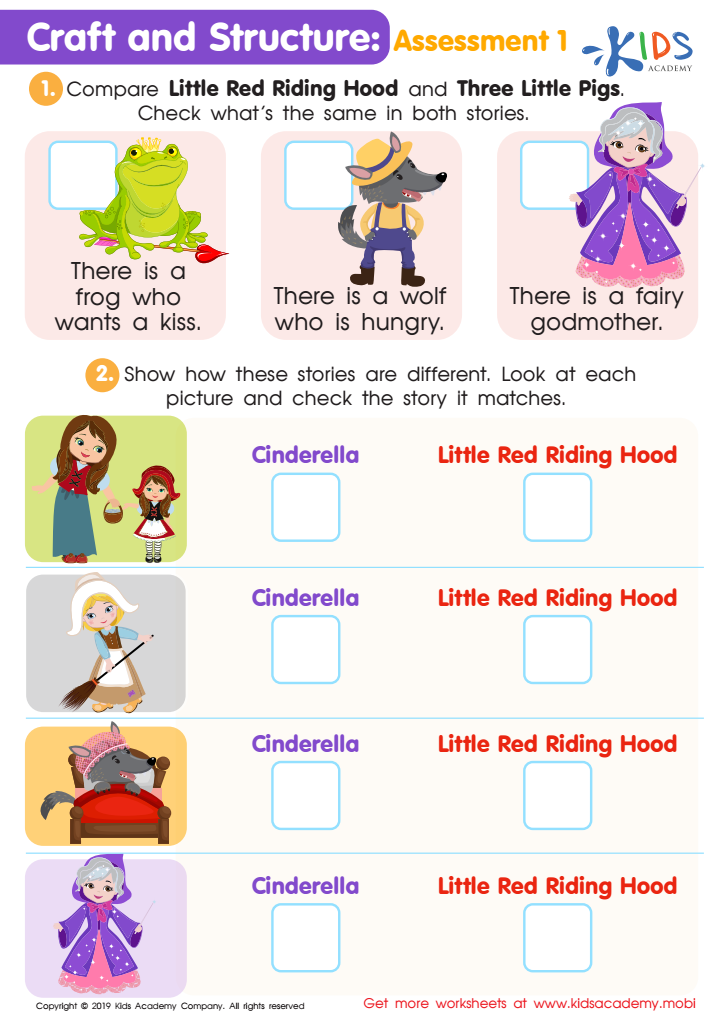
Craft and Structure: Assessment 1 Worksheet
 Assign to My Students
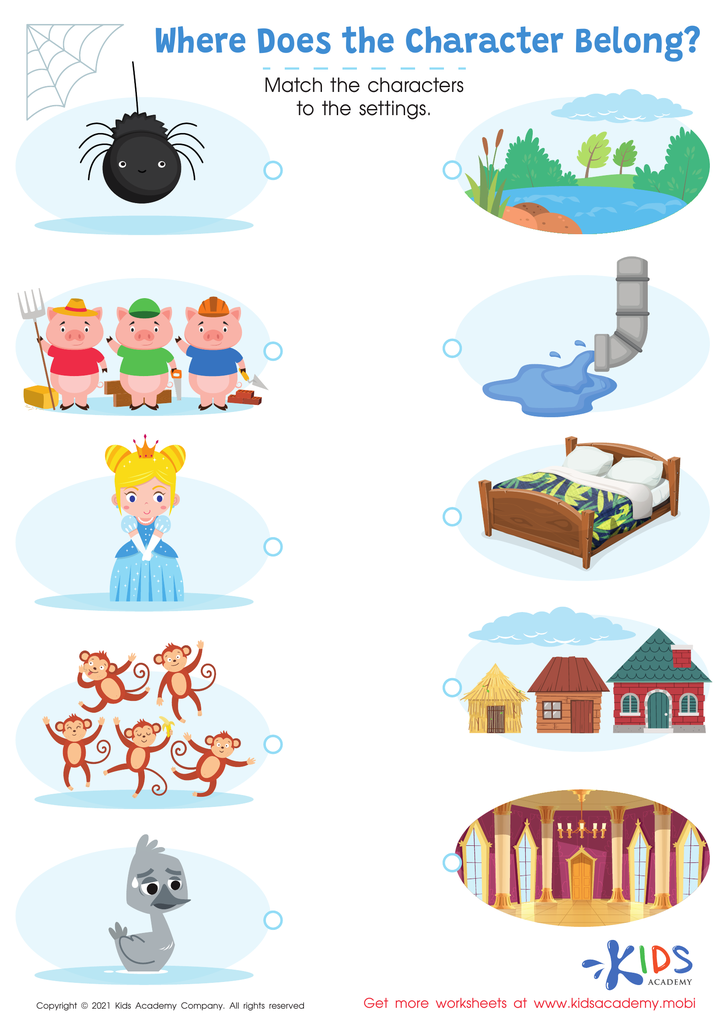
Where Does the Character Belong? Worksheet
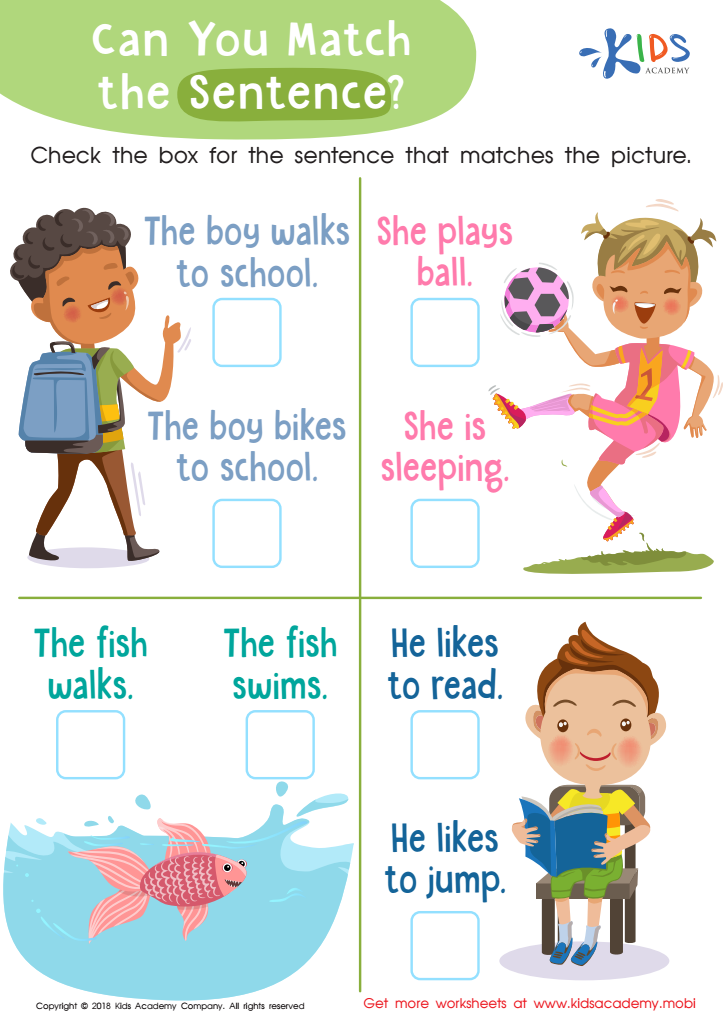
Can You Match the Sentence? Worksheet
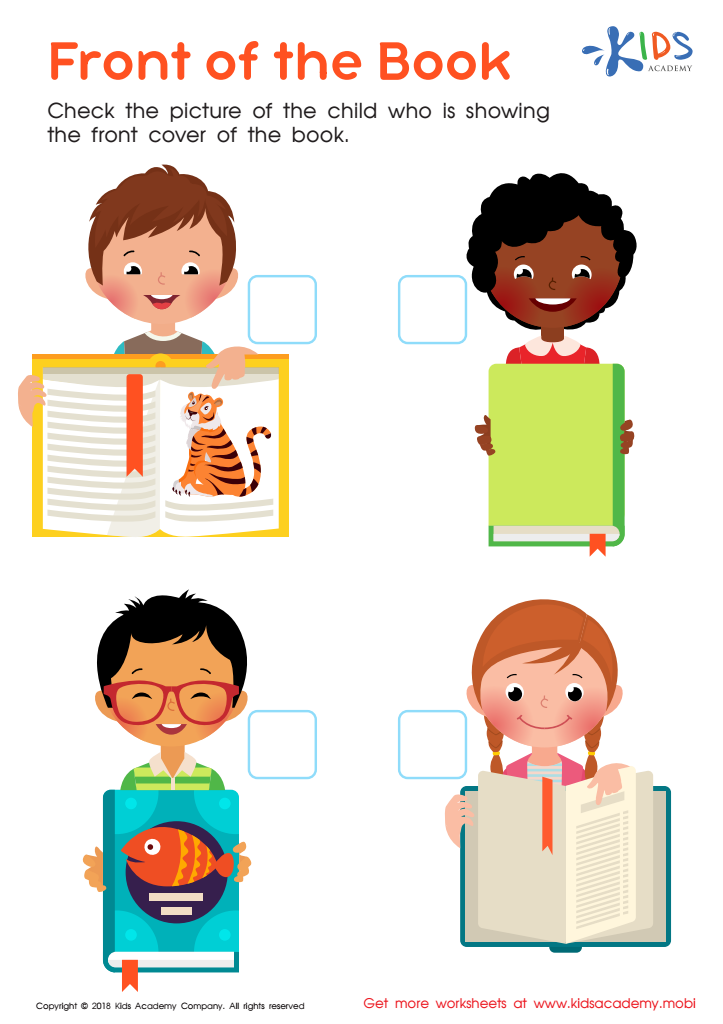
Front of the Book Worksheet
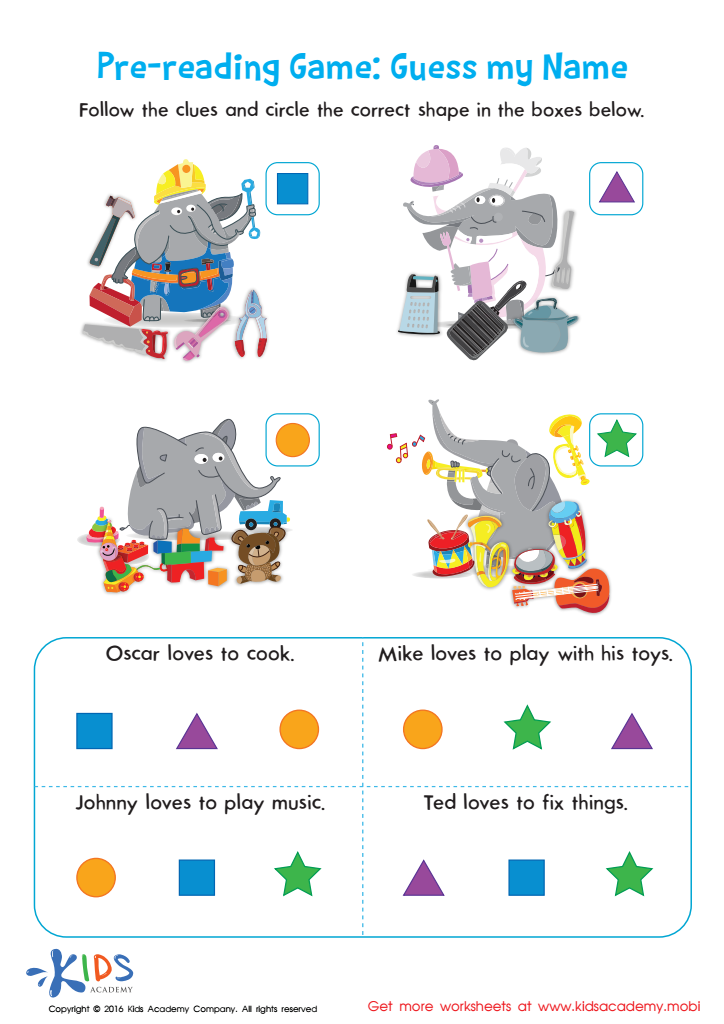
Pre Reading Worksheet Guess My Name


.jpg)





Reading skills are foundational for children's cognitive and emotional development, and reading fiction to children ages 3-5 can be particularly impactful. At this young age, children's brains are incredibly receptive and eager to absorb information. Engaging with fiction helps to cultivate imagination, boost vocabulary, and promote a deeper understanding of emotions.
Firstly, reading stories with rich language introduces children to new words, phrases, and sentence structures, enhancing their vocabulary and comprehension skills. As they listen to stories, they learn how language works organically, which lays the groundwork for reading and writing skills they will need later in school.
Secondly, fiction allows children to explore different worlds and cultures, broadening their perspectives. These stories often involve characters experiencing various emotions and situations that children might relate to or learn from. Through fictional narratives, kids learn about empathy, recognizing others' feelings, and understanding complex social interactions.
Additionally, the ritual of reading together strengthens the bond between the adult and the child, making reading a positive and nurturing experience. This associated pleasure can instill a lifelong love of reading, which is crucial for ongoing intellectual development and academic success.
In sum, prioritizing reading fiction for young children not only boosts their language skills but also supports their emotional and social development, setting a strong foundation for future learning.








