Story analysis Reading Fiction Worksheets for Ages 3-5
4 filtered results
-
From - To
Discover our engaging Story Analysis Reading Fiction Worksheets for children aged 3-5! Designed to spark young imaginations, these worksheets encourage kids to explore and understand key elements of stories through interactive activities. Our resources enhance critical thinking skills as children identify characters, settings, and plot sequences while fostering a love for reading. Ideal for early education settings or at-home learning, these worksheets are visually appealing and age-appropriate, making story analysis fun and accessible. Let your little ones step into the vibrant world of fiction, develop their comprehension abilities, and enjoy the adventure of storytelling with our thoughtfully crafted worksheets!
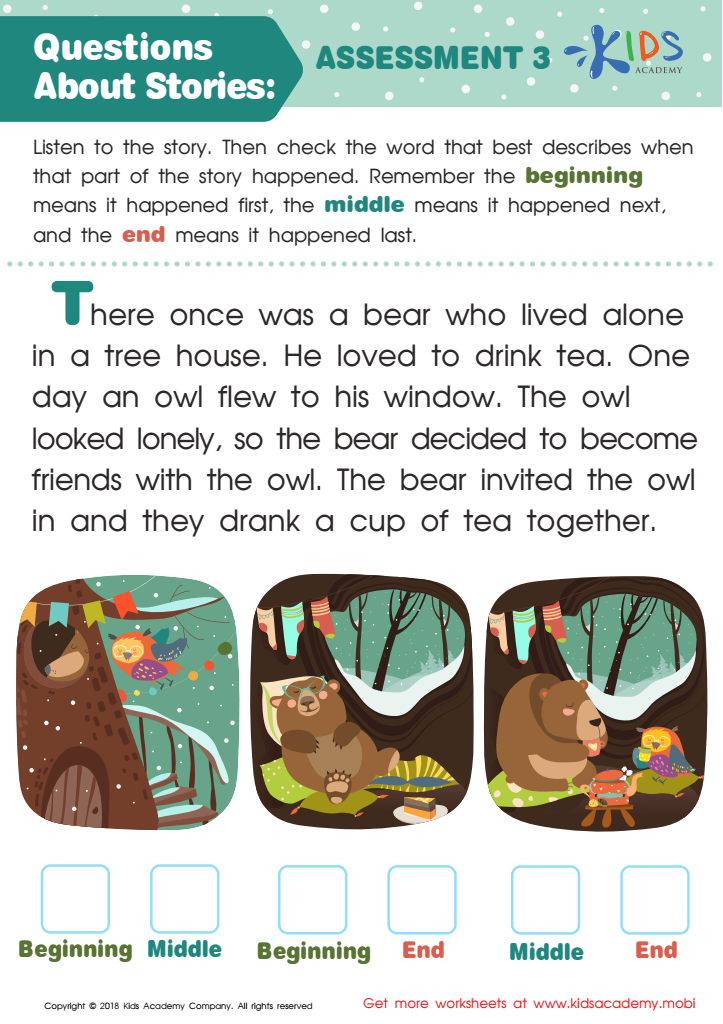
Questions About Stories: Assessment 3 Worksheet
 Assign to My Students
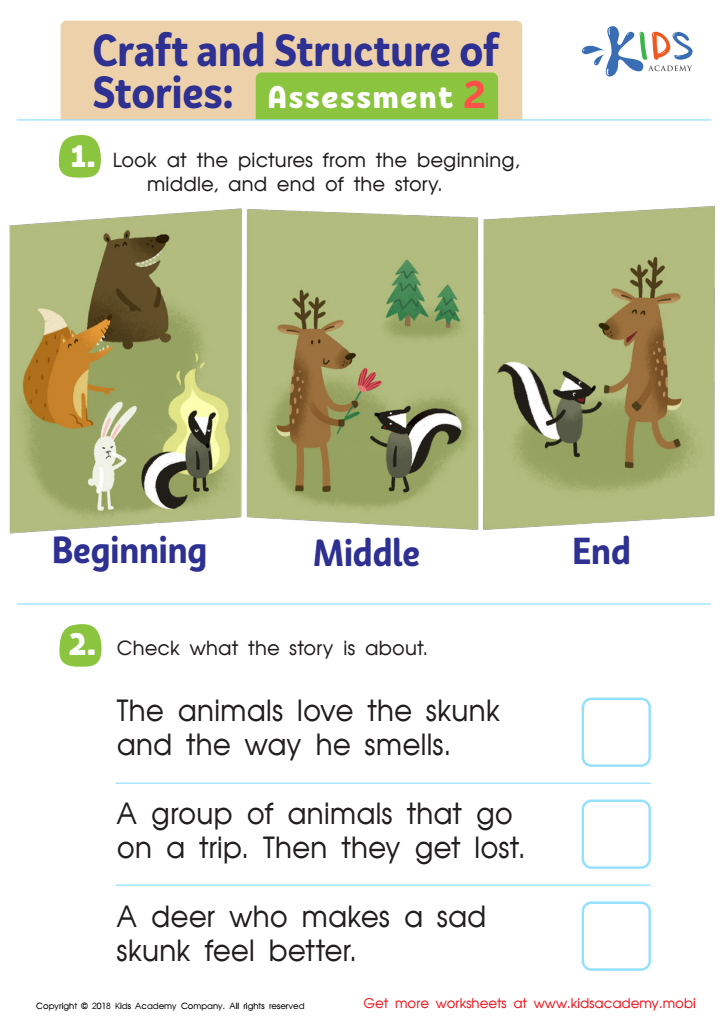
Craft and Structure of Stories: Assessment 2 Worksheet
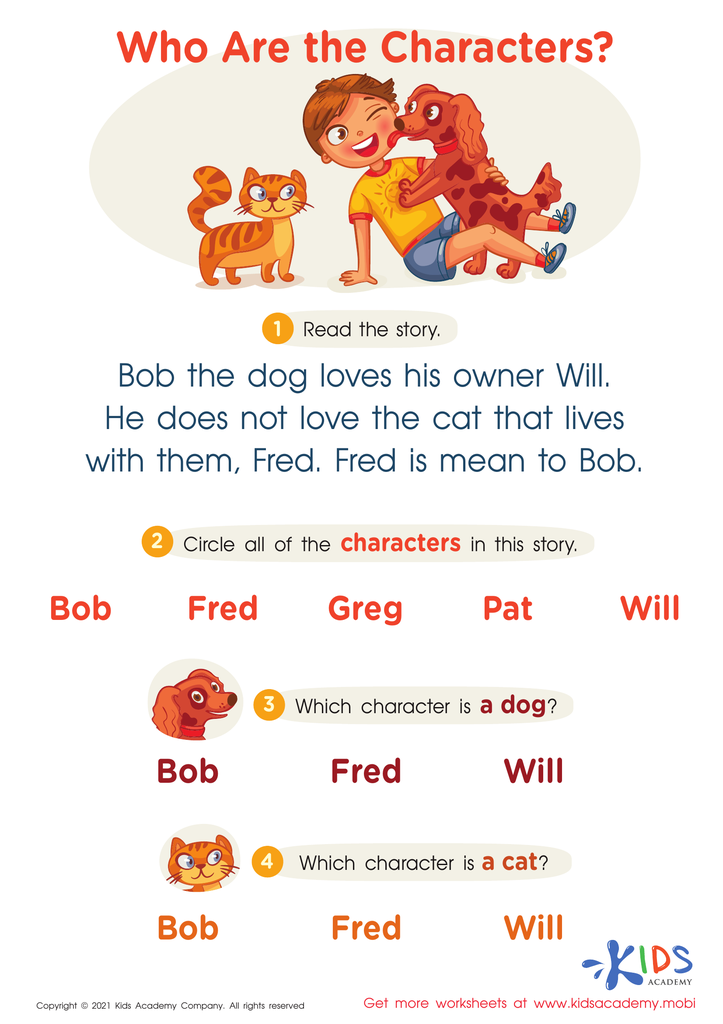
Who Are the Characters? Worksheet
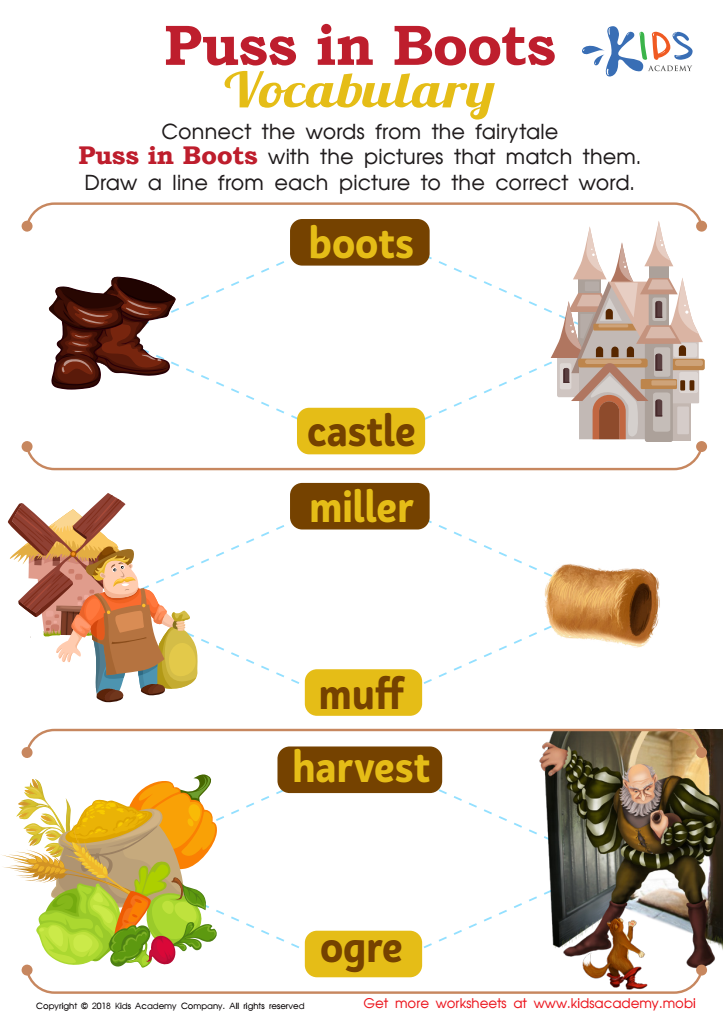
Puss in Boots Vocabulary Worksheet








Story analysis in reading fiction for ages 3-5 is essential for fostering early literacy skills and critical thinking. At this age, children begin to understand narrative structures, including characters, settings, and plots. Engaging in story analysis encourages them to ask questions, make predictions, and relate personal experiences to the text, enhancing their comprehension skills.
Furthermore, discussions around stories help develop language skills as children express their thoughts and emotions related to themes and characters. They learn to articulate their opinions, which builds confidence in communication. This process also nurtures empathy as children encounter diverse perspectives and experiences through different characters and stories.
Moreover, early exposure to story analysis cultivates a lifelong love for reading. When parents and teachers actively engage in discussions about what they read, children perceive books as valuable sources of knowledge and entertainment. This intrinsic motivation supports academic success as they progress in their education.
In essence, story analysis is not just about understanding a story; it lays the groundwork for cognitive and social development, fostering essential skills that serve children well beyond early childhood. It forms a foundational part of literacy that influences a child’s future learning trajectory.








