Rhyming skills development Rhyming Words Worksheets for Ages 3-5
3 filtered results
-
From - To
Unlock your child's imagination with our engaging Rhyming Words Worksheets for ages 3-5, designed to boost rhyming skills development! These fun activities introduce young learners to the concept of rhyming through colorful illustrations and simple exercises. Kids will delight in finding pairs of rhyming words, completing rhyming sentences, and mastering phonemic awareness. Our worksheets promote language development, listening skills, and creativity, making learning an enjoyable experience. Perfect for preschoolers and kindergarteners, these educational resources help lay a strong foundation for literacy while fostering a love for reading. Explore our collection and watch your child's confidence in language grow!

Rhyming Words Rhyming Worksheet
 Assign to My Students
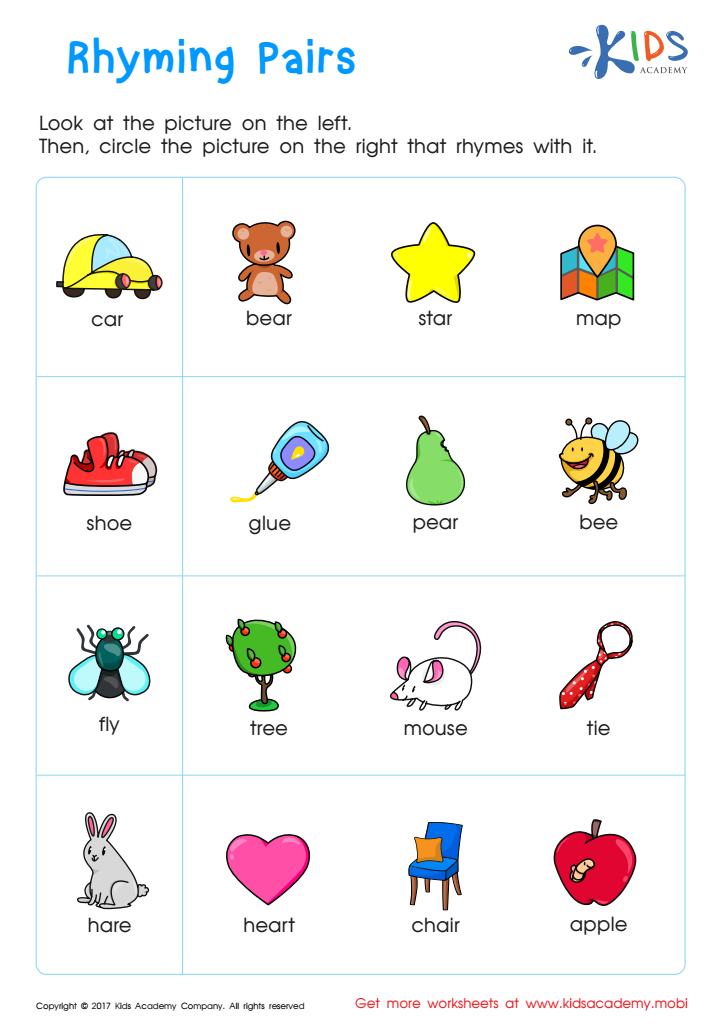

First Words: Picture Rhymes Worksheet





.jpg)


Rhyming skills development in children aged 3 to 5 is crucial for several reasons. Firstly, rhyming enhances phonemic awareness, a foundational skill in literacy. When children recognize and produce rhyming words, they become more attuned to the sounds within words, leading to improved decoding and reading abilities later on. This skill acts as a building block for more complex language and reading comprehension.
Moreover, rhyming promotes vocabulary expansion. As children explore and play with words that sound alike, they develop a richer language corpus, helping them communicate more effectively. This playful interaction with language also encourages creativity and expression as they invent new rhymes and phrases.
Furthermore, engaging in rhyming games and songs fosters social interaction among peers, nurturing important social skills. Rhymes and rhythmic patterns also contribute to memory retention, making it easier for children to recall information and concepts.
Finally, asking parents and teachers to focus on rhyming during early childhood helps create a love for language and storytelling, engaging young learners emotionally and cognitively. Cultivating rhyming skills is essential in setting the groundwork for lifelong literacy, communication, and academic success.








