Alphabet Recognition Grammar Worksheets for Ages 3-5
3 filtered results
-
From - To
Discover our engaging Alphabet Recognition Grammar Worksheets designed specifically for children ages 3 to 5! These expertly crafted worksheets help young learners identify and differentiate letters while building essential language skills. Our interactive activities encourage letter recognition through playful exercises, including tracing, matching, and colorful visuals. Perfect for preschool or homeschooling, these worksheets foster a love for learning while enhancing fine motor skills and vocabulary development. Whether used in the classroom or at home, these resources provide a fun and effective way for children to master the fundamentals of the alphabet, setting a strong foundation for future literacy success. Explore our rich selection today!
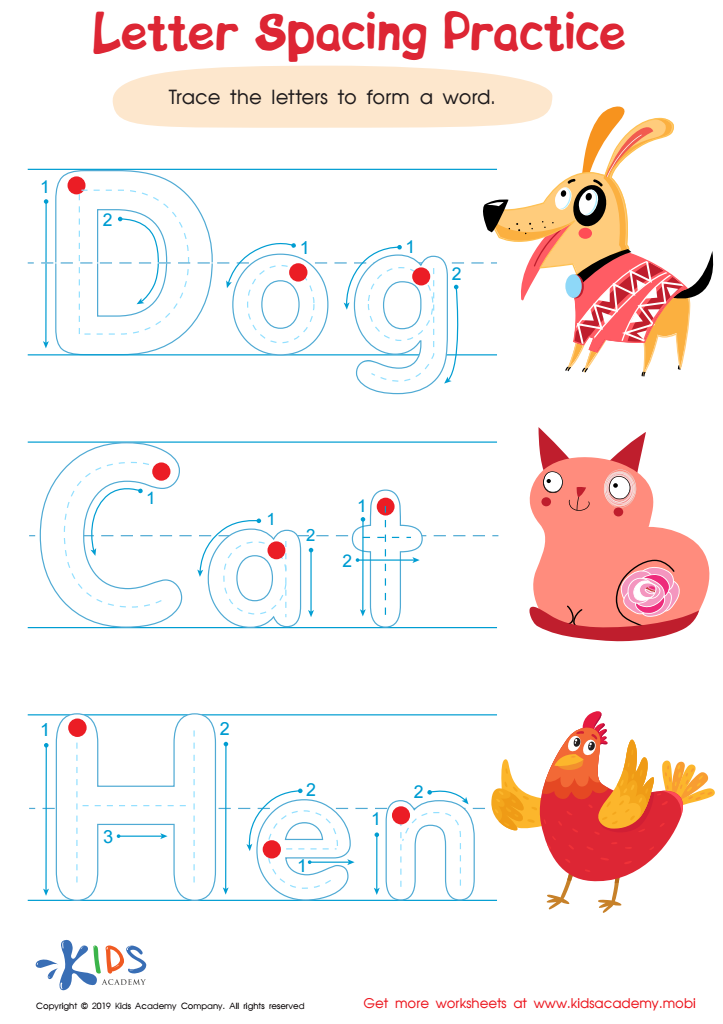
Letter Spacing Practice Worksheet
 Assign to My Students
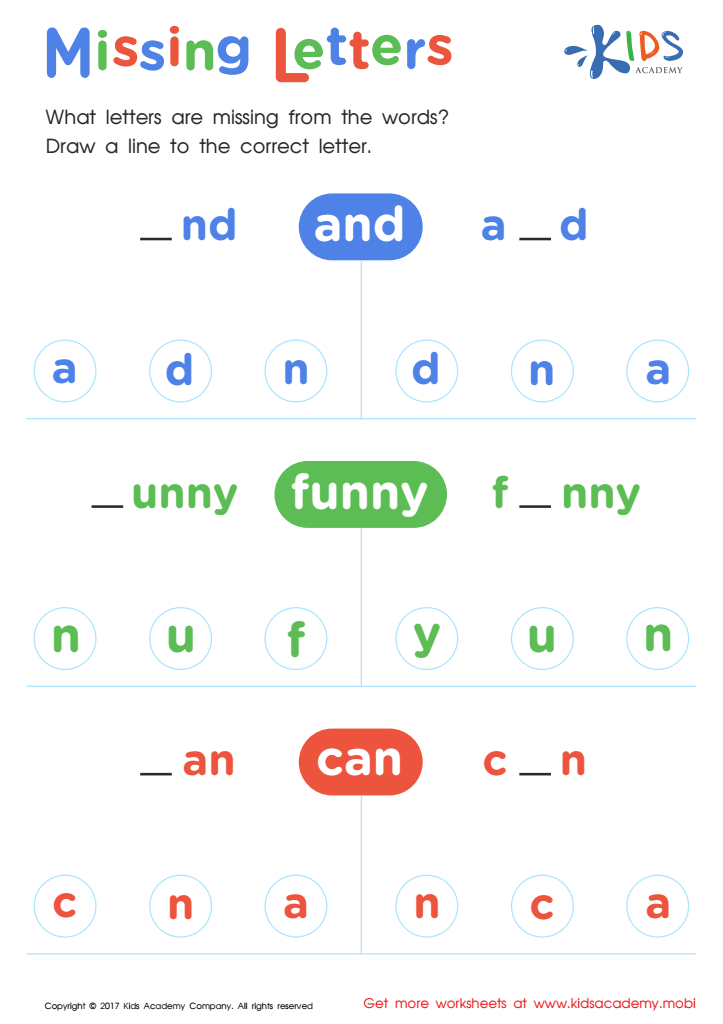
Missing Letters Worksheet
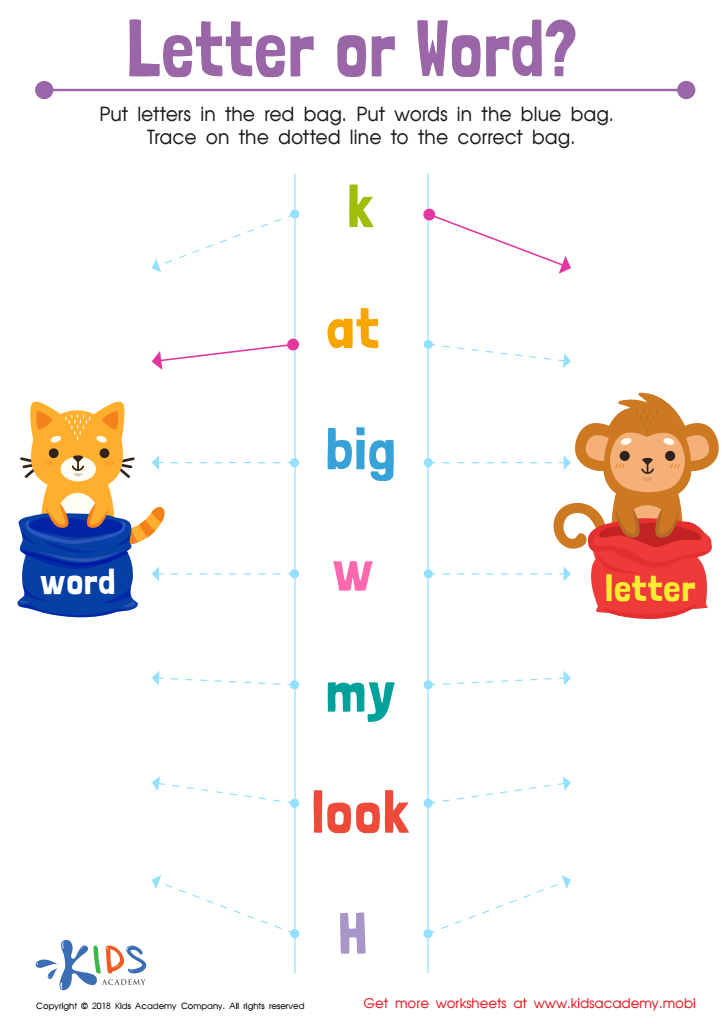
Letter or Word? Worksheet







Alphabet recognition is a crucial foundational skill in early childhood education, particularly for ages 3-5. During this developmental stage, children are introduced to letters, paving the way for literacy and language development. Caring about alphabet recognition means recognizing its impact on a child's overall learning trajectory.
When children can identify and understand letters, they gain familiarity with the words they encounter in books, signs, and everyday communication. This skill enhances phonemic awareness, allowing them to begin developing reading and writing abilities. Recognizing letters also fosters a sense of achievement and boosts confidence, which is essential for a child's emotional development.
Furthermore, early mastery of alphabet recognition encourages a love for reading and learning. Children who feel comfortable with letter identification are more inclined to explore books with curiosity, engage in storytelling, and express their thoughts through writing.
For parents and teachers, nurturing this skill not only aids in academic success but also establishes lifelong learning habits. By prioritizing alphabet recognition through play, interactive activities, and supportive guidance, caregivers contribute significantly to a child’s cognitive and social development, ultimately setting them on a positive path towards literacy and communication.








