Understanding suffixes Grammar Worksheets for Ages 3-5
3 filtered results
-
From - To
Delve into the world of suffixes with our engaging Grammar Worksheets designed for ages 3-5! These worksheets help young learners grasp the concept of suffixes, enhancing their budding literacy and writing skills. Each activity is thoughtfully crafted to introduce and reinforce common suffixes in a fun and interactive way. Through coloring, matching, and simple word-building exercises, your child will gain confidence in using suffixes to transform words. Perfect for early learners, these worksheets keep the learning process enjoyable and educational. Start exploring suffixes today and watch your child's vocabulary and grammar grow!
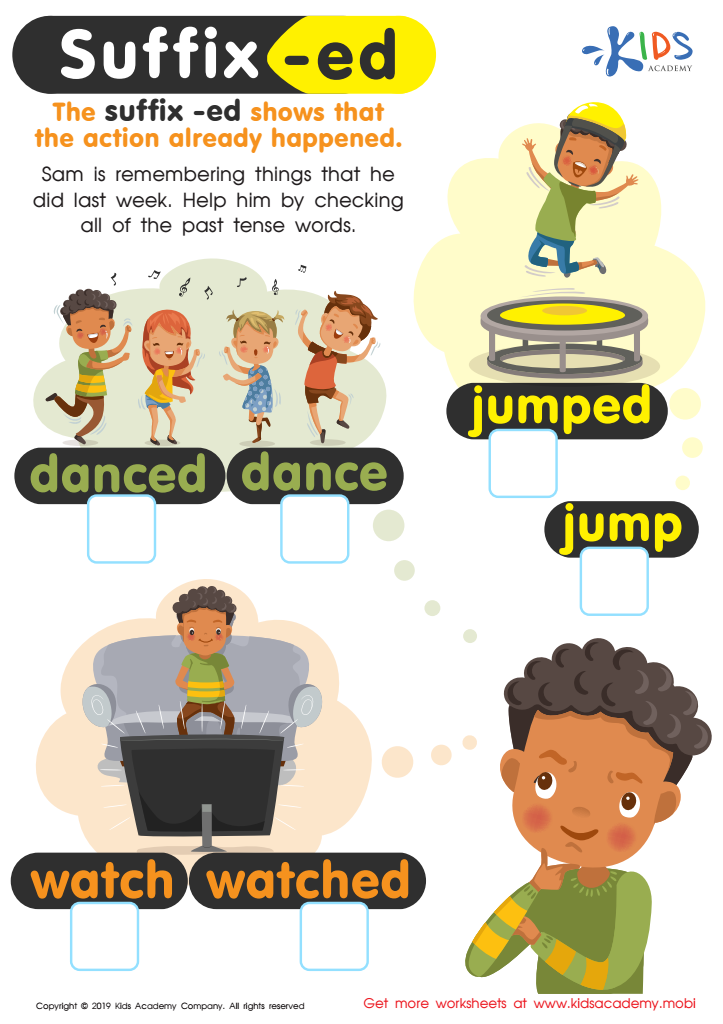
Suffix-ed Worksheet
 Assign to My Students
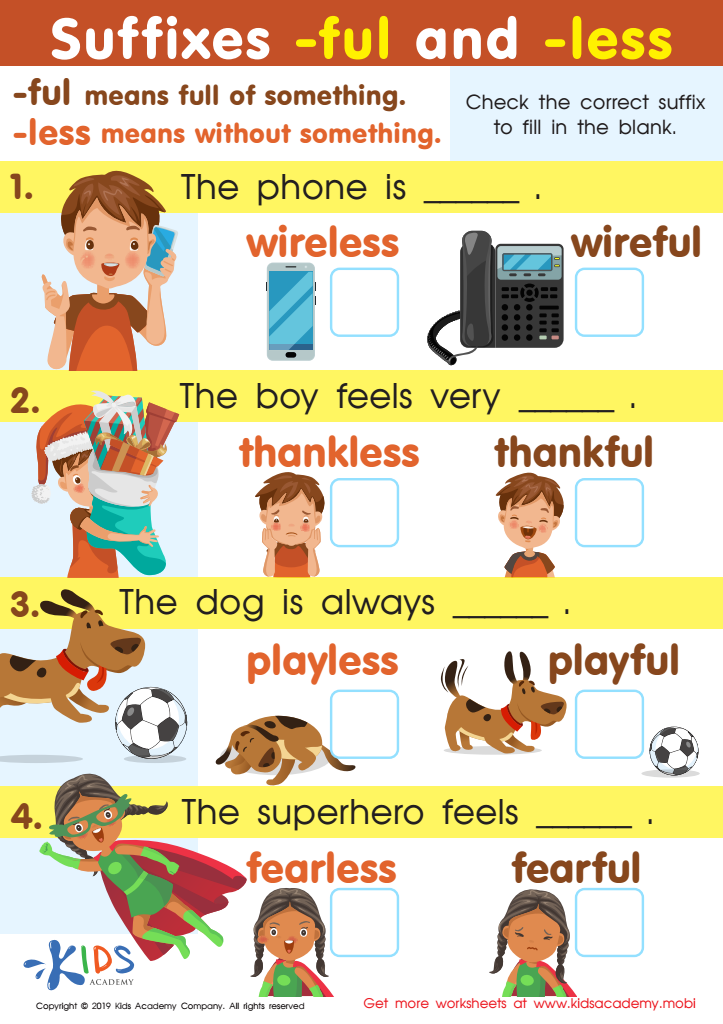
Suffixes –ful and –less Worksheet
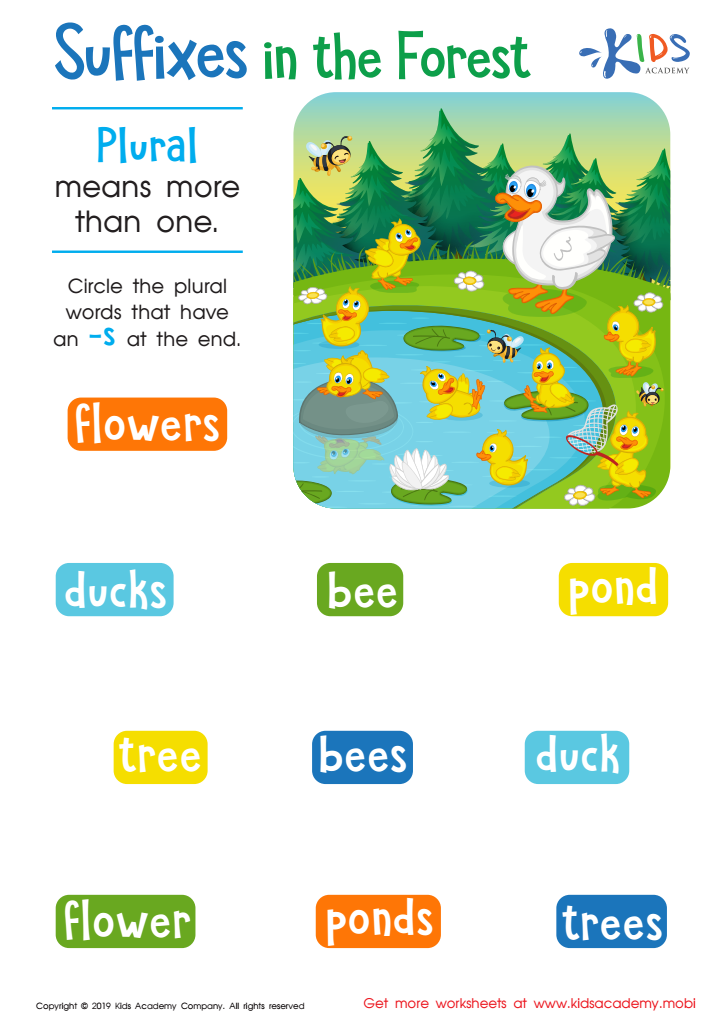
Suffixes in the Forest Worksheet








Understanding suffixes at an early age, between 3-5 years, is vital for young children's language development. At this stage, their brains are remarkably receptive to learning new words and concepts. When parents and teachers introduce suffixes, such as “-ing," “-ed,” "full," "-less" and “-s," they help children to expand their vocabulary and enhance their understanding of how words transform. This awareness supports children in grasping more complex grammatical structures as they grow.
Moreover, learning about suffixes can boost children’s literacy skills. For example, adding “-s” to make plurals or “-ing” to indicate ongoing actions teaches kids how to both decode and encode words, fostering reading comprehension and writing abilities. When young children learn that "run" becomes "running," they gain insight into verb tenses, thereby improving their communication skills.
Fostering an early understanding of suffixes also encourages pattern recognition, a critical cognitive skill. As children discern these patterns, they become more adept at learning new words and applying these suffixes in various contexts.
Engagement with grammar fundamentals like suffixes can ignite curiosity and foster a lifelong love for reading and learning. Understanding suffixes offers young children a strong linguistic foundation, setting the stage for academic success and effective communication skills.








