Noun identification Writing Worksheets for Ages 3-5
4 filtered results
-
From - To
Explore our engaging Noun Identification Writing Worksheets designed for children ages 3-5! These interactive worksheets foster early literacy skills by helping young learners recognize and write different types of nouns. Each worksheet features vibrant illustrations and simple prompts that captivate children's attention and encourage creativity. Through fun activities, kids will differentiate between people, places, and things while enhancing their vocabulary and writing abilities. Perfect for classroom use or at-home learning, our resources make mastering nouns enjoyable and effective. Dive into the world of language with our carefully crafted worksheets and lay the foundation for your child’s reading and writing journey!
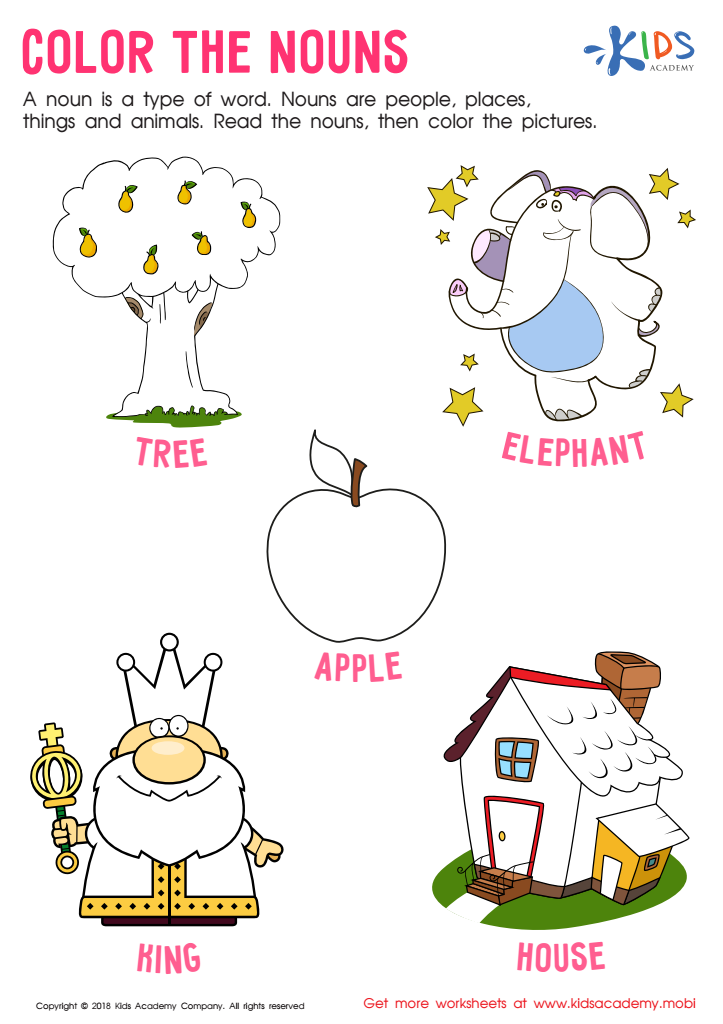
Color the Nouns Worksheet
 Assign to My Students
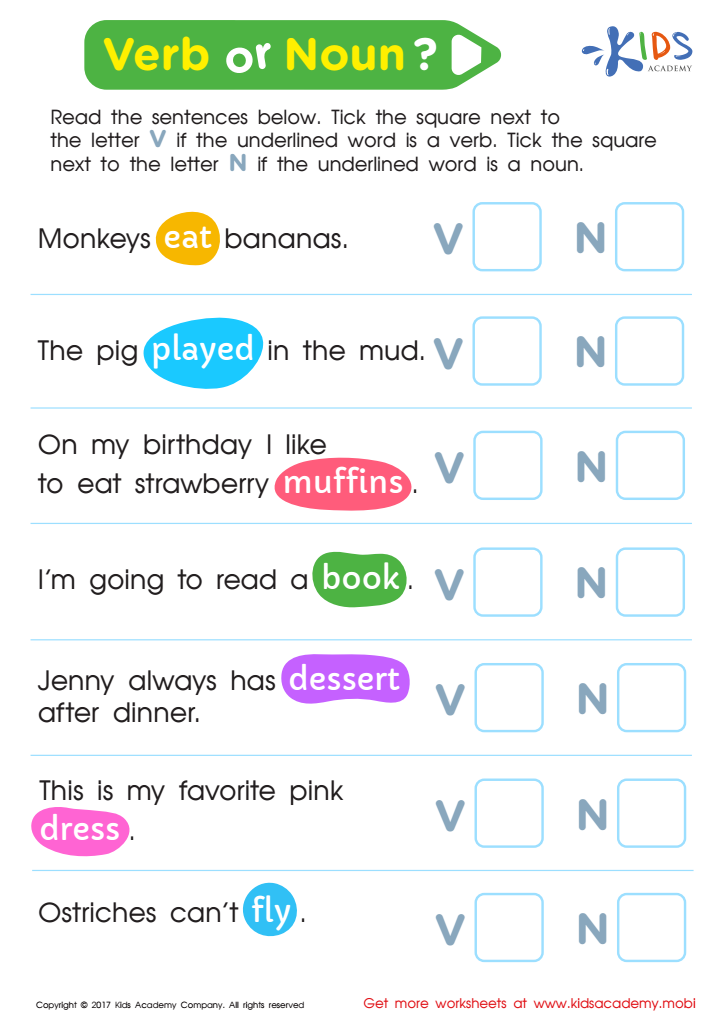
Verb or Noun Worksheet
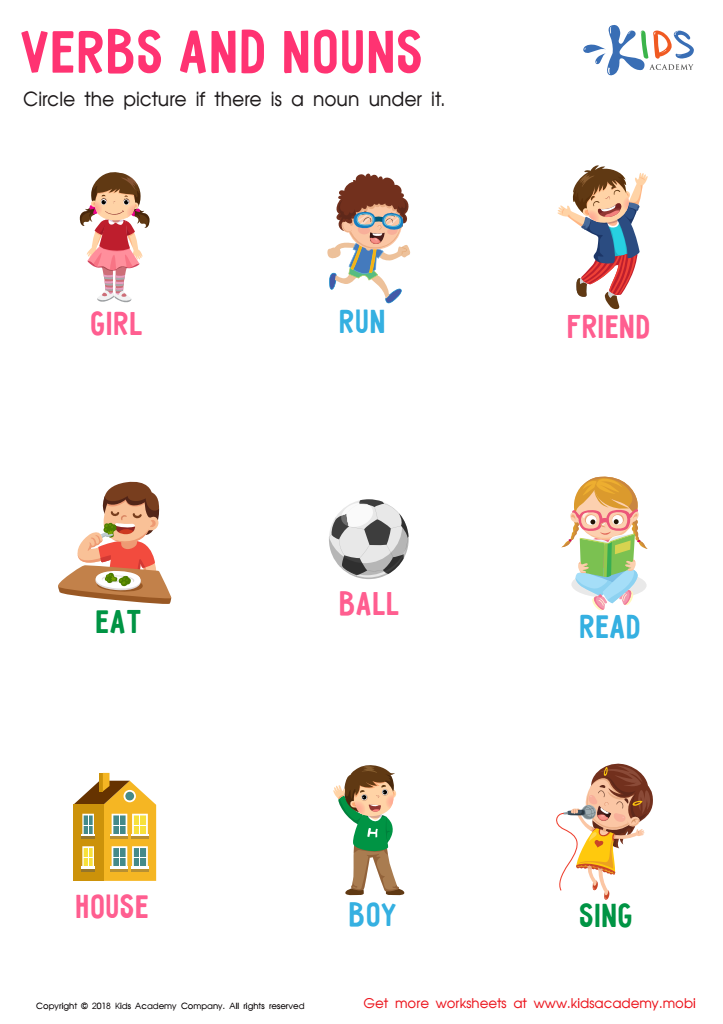
Verbs and Nouns Worksheet
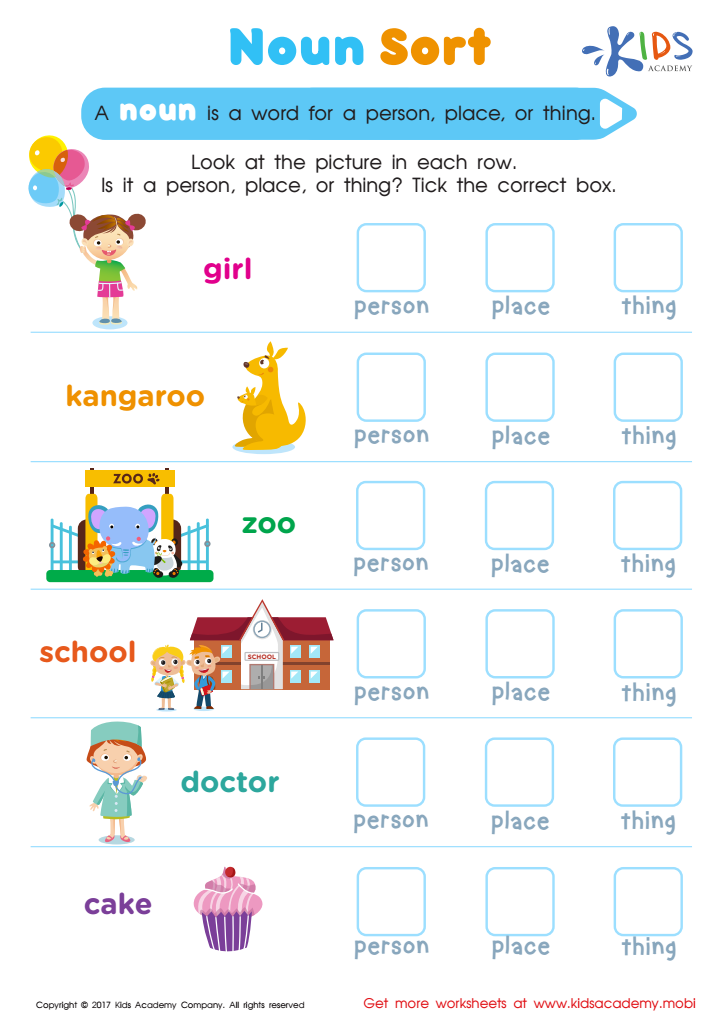
Noun Sort Printable








Noun identification is a foundational skill that forms the basis for language development in young children aged 3-5. Parents and teachers should prioritize this skill because it enhances children's vocabulary and comprehension, enabling them to effectively express their thoughts and needs. Nouns represent people, places, things, and concepts, and recognizing them helps young children understand how language works, laying the groundwork for more complex grammar and writing skills later on.
Moreover, good noun identification supports cognitive development. As children identify and classify entities in their environment, they engage in critical thinking and broaden their understanding of the world around them. This engagement fosters curiosity and encourages meaningful interactions, which are crucial during these formative years.
In addition, writing exercises that focus on nouns help develop fine motor skills essential for writing. When children practice forming letters and words, they build confidence in their abilities and motivation to communicate through writing.
With the interplay of language, cognitive skills, and motor development, supporting noun identification not only enriches a child's immediate learning experiences but also equips them with essential tools for lifelong communication and learning success. Therefore, both parents and teachers play a vital role in nurturing these abilities.








