Consonants Worksheets for Ages 3-6 - Page 2
31 filtered results
-
From - To
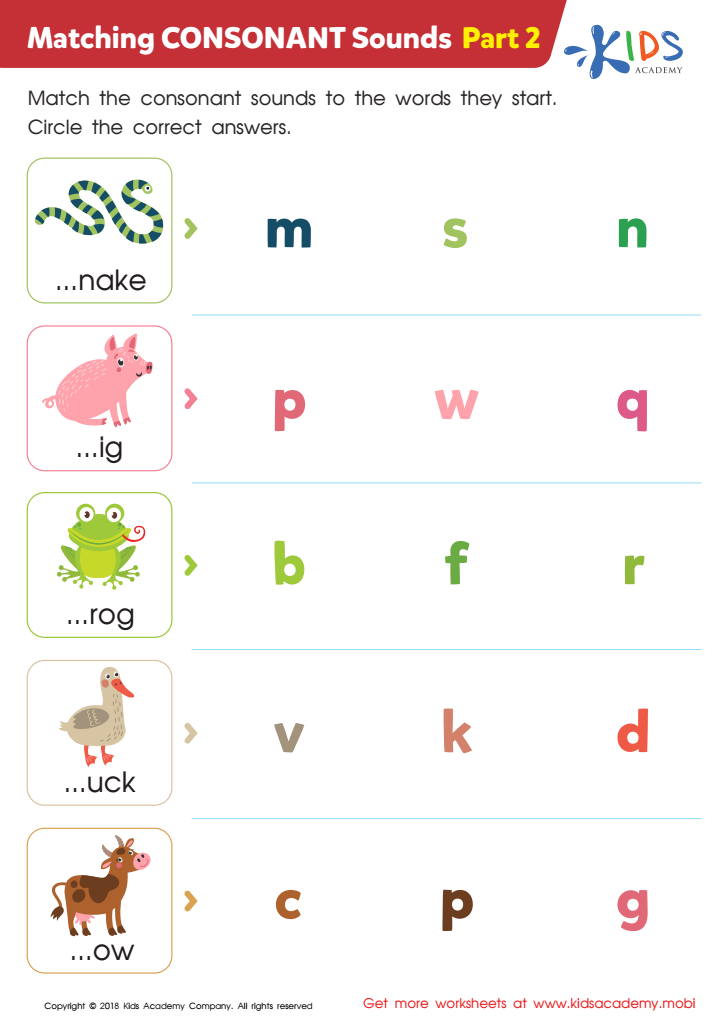
Matching Consonant Sounds: Part 2 Worksheet
 Assign to My Students
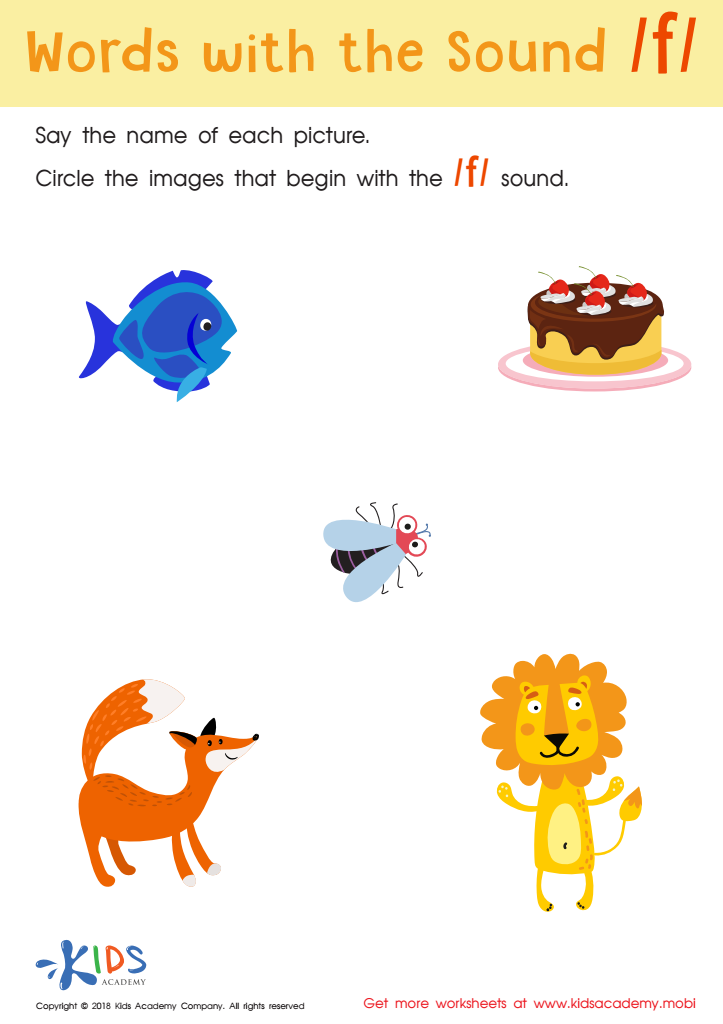
Words with sound f Reading Worksheet
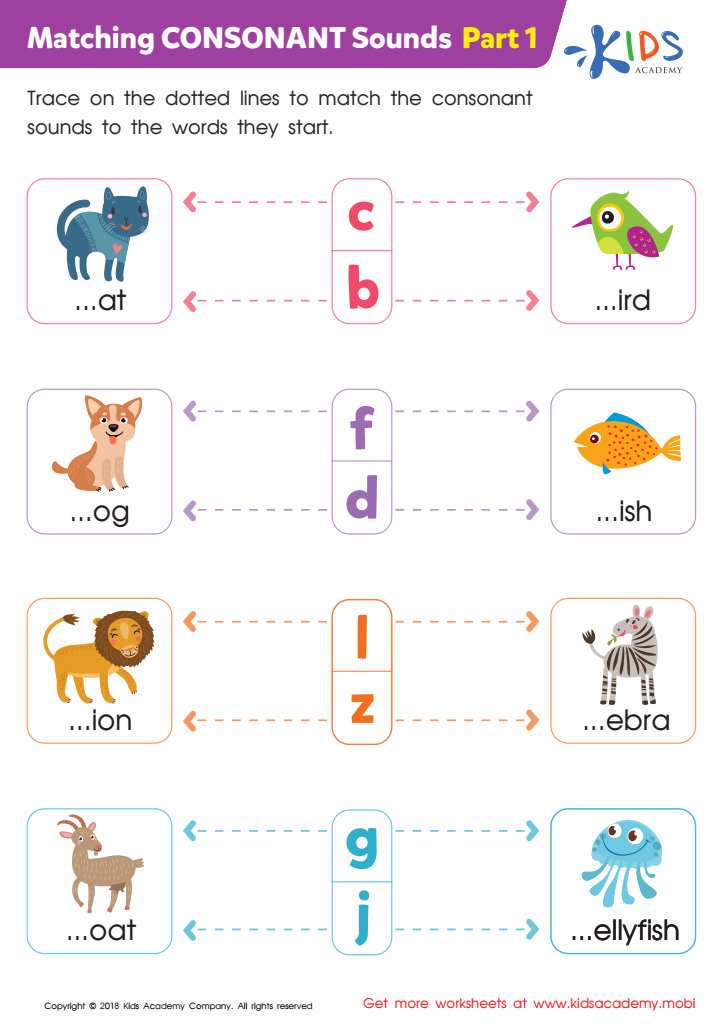
Matching Consonant Sounds: Part 1 Worksheet
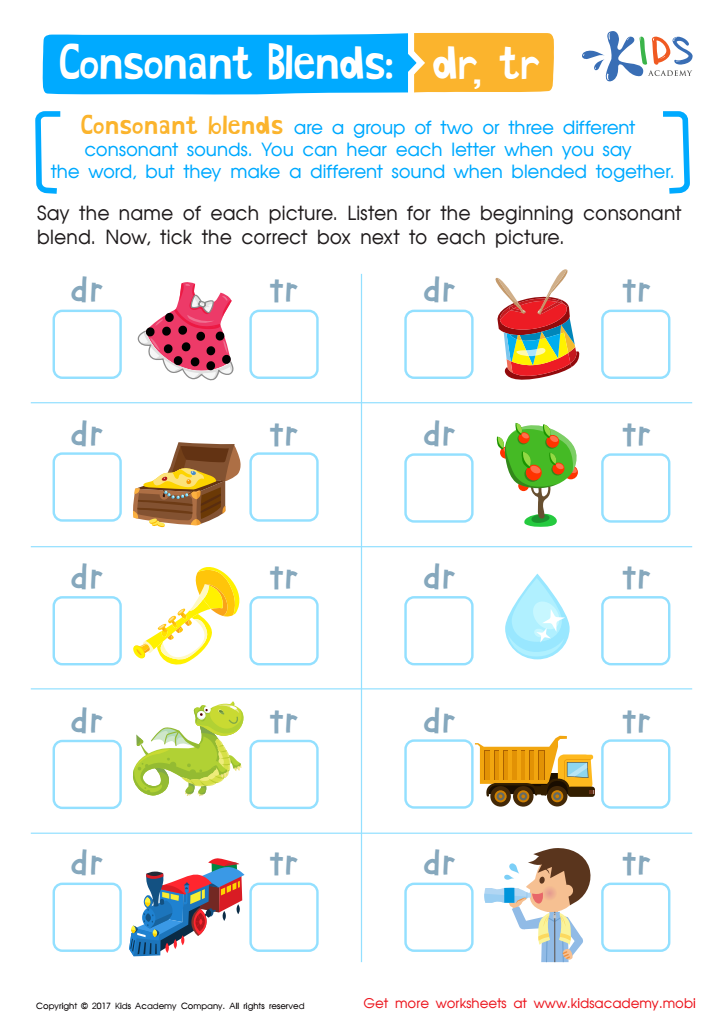
Consonant Blends: "Dr" and "Tr" Printable
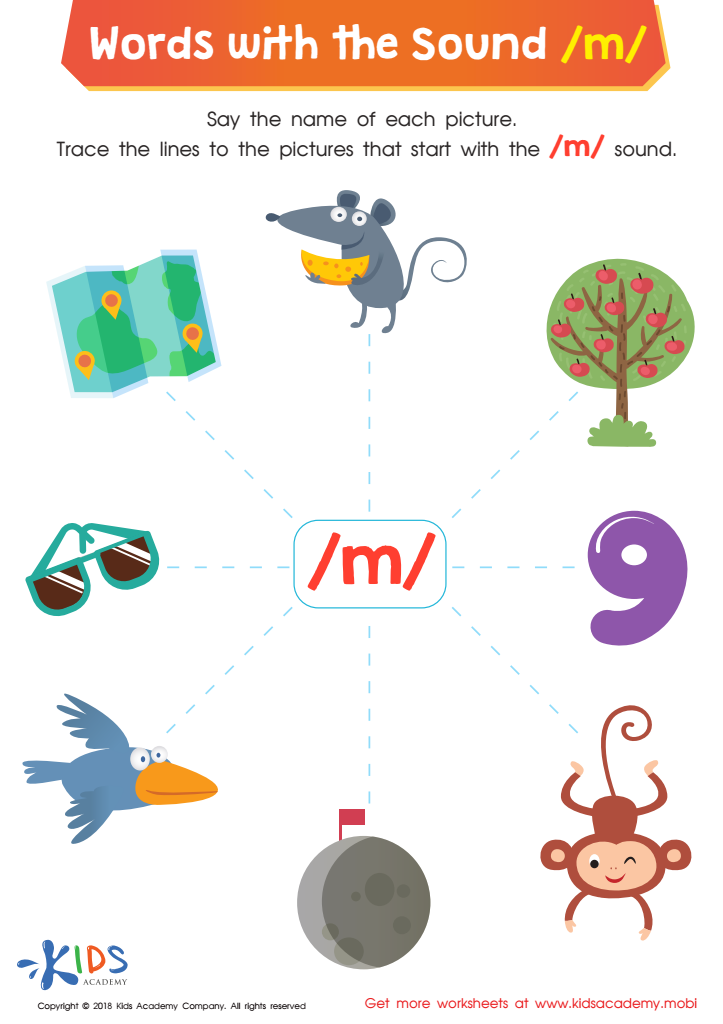
Words with Sound M Reading Worksheet
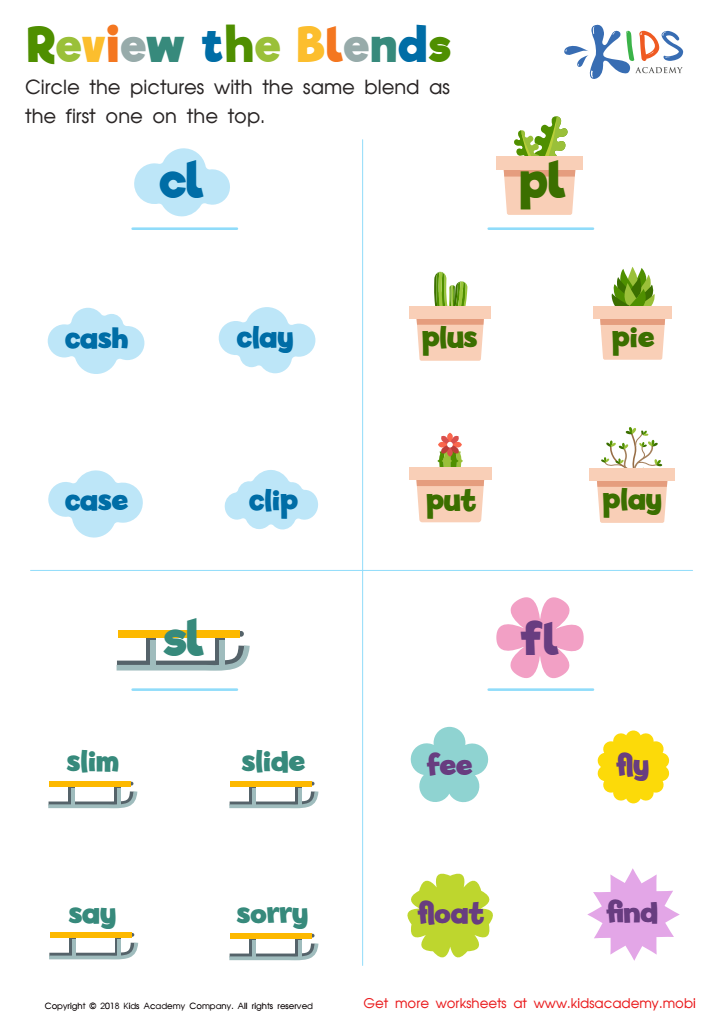
Review the Blends Worksheet
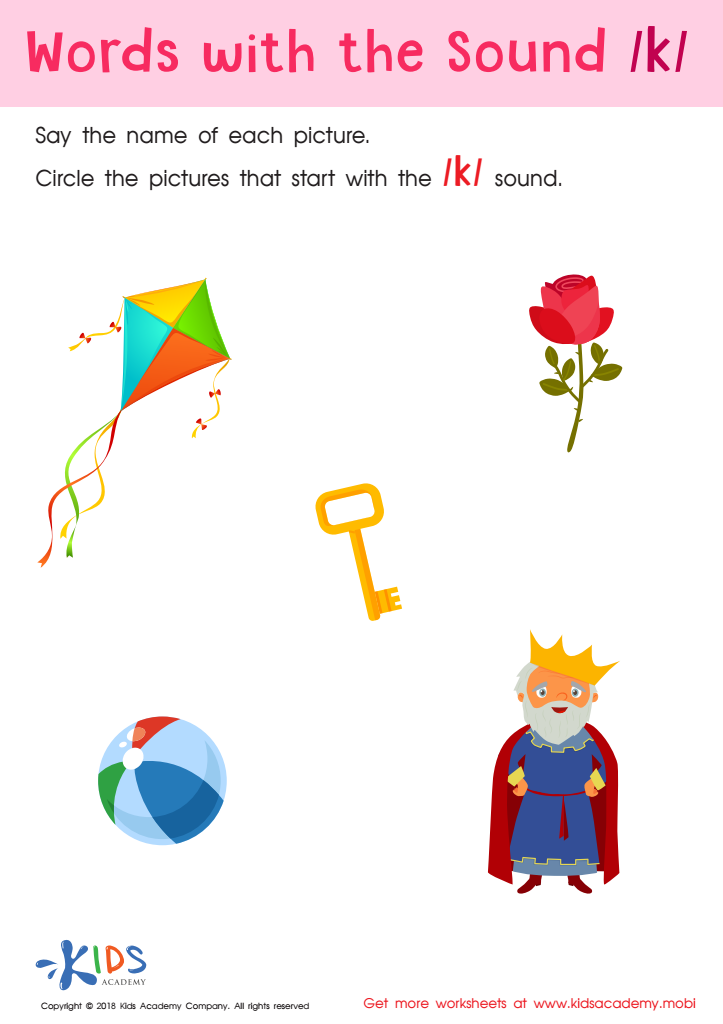
Words with sound k Reading Worksheet



Consonants are foundational elements in early literacy development for children ages 3-6. Understanding consonants enhances phonemic awareness, a critical skill that enables young learners to decode words, read effectively, and develop strong spelling abilities. At this age, children are in a crucial period of language acquisition, where they begin to explore and manipulate sounds in their environment.
When parents and teachers prioritize consonant recognition and practice, they create a rich linguistic environment, encouraging verbal communication and vocabulary expansion. Activities such as rhyming, sound games, and phonics-focused play foster engagement and help children grasp how consonants function within words, thus moving them towards reading readiness.
Additionally, learning consonants supports cognitive development and boosts confidence. As children recognize and use consonants, they experience a sense of achievement, motivating them to explore reading and writing further. This early grasp of consonants can lead to better outcomes in their educational journey, making it essential for parents and teachers to be proactive in guiding their children's mastery of these sounds. Ultimately, engaging with consonants at this stage equips children with crucial skills that lay the groundwork for literacy success and a lifelong love of learning.







