Chess Worksheets for Ages 3-6 - Page 5
97 filtered results
-
From - To
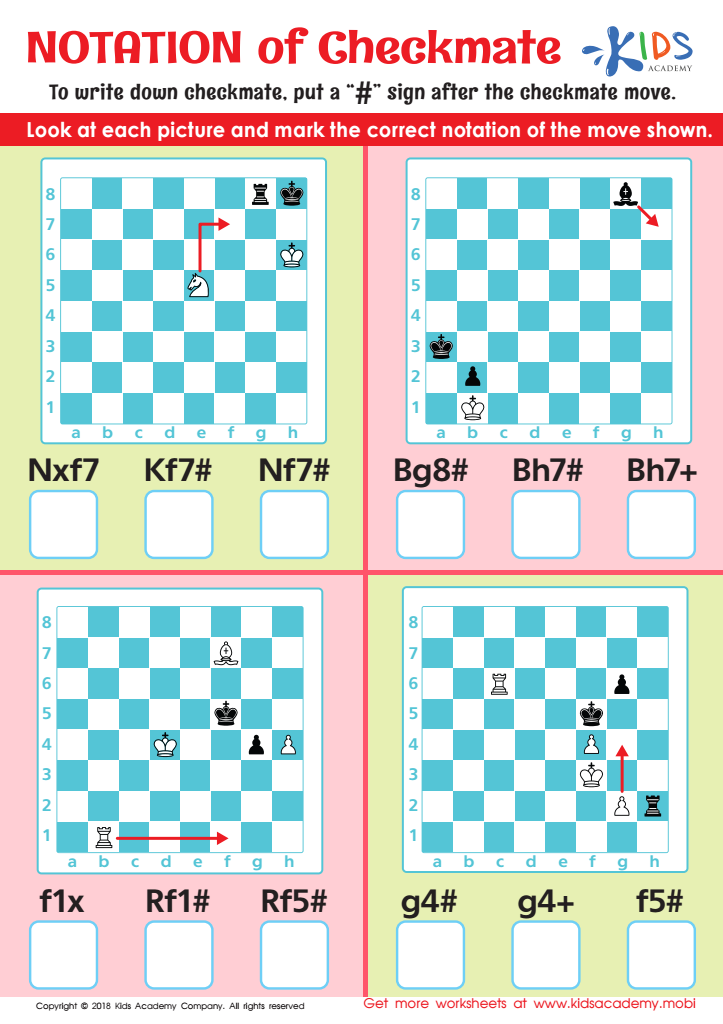
Notation of Checkmate Worksheet
 Assign to My Students






Introducing chess to children aged 3-6 can offer a range of educational and developmental benefits. For one, chess can greatly enhance cognitive skills. The game requires strategic thinking, planning, and problem-solving, which help develop critical thinking abilities from an early age. This mental exercise encourages children to focus, resulting in improved attention spans and the ability to concentrate on other learning activities.
Moreover, chess fosters patience and discipline. Young children learn to wait for their turn and think several moves ahead, skills that are transferable to both academic environments and social interactions. They also cultivate resilience by experiencing wins and losses gracefully, learning the important life lesson of handling both success and failure constructively.
Socially, engaging in chess can help children improve their interaction capabilities. Playing against peers or adults necessitates clear communication, and learning to follow rules promotes respect for others. This interaction can build social skills such as empathy, as children anticipate the actions and needs of their opponents.
In essence, chess is more than just a game; it is a tool for holistic development. Implementing chess as a regular activity can give young minds a powerful, enjoyable foundation for lifelong learning and personal growth.
Given these potential benefits, parents and teachers should seriously consider incorporating chess into the early education curriculum.