Strategic thinking development Chess Worksheets for Ages 3-6
10 filtered results
-
From - To
Introduce your little ones to the exciting world of chess with our "Strategic Thinking Development Chess Worksheets for Ages 3-6." These engaging, printable resources are designed to build fundamental chess skills while nurturing young minds' strategic abilities. Through playful exercises, children will learn essential concepts like piece movements, game tactics, and early decision-making, all tailored to their developmental stage. Our worksheets provide a fun and educational foundation that enhances problem-solving abilities, critical thinking, and concentration. Ideal for both beginners and those looking to sharpen their strategic minds, these worksheets turn learning into an enjoyable adventure!
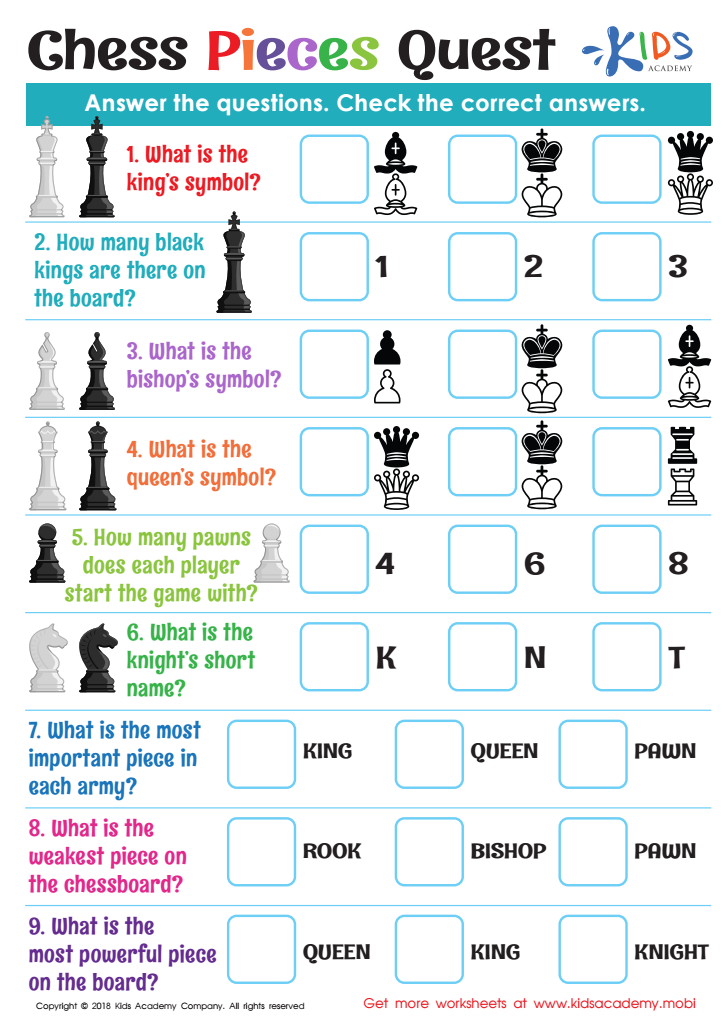
Chess Pieces Quest Worksheet
 Assign to My Students
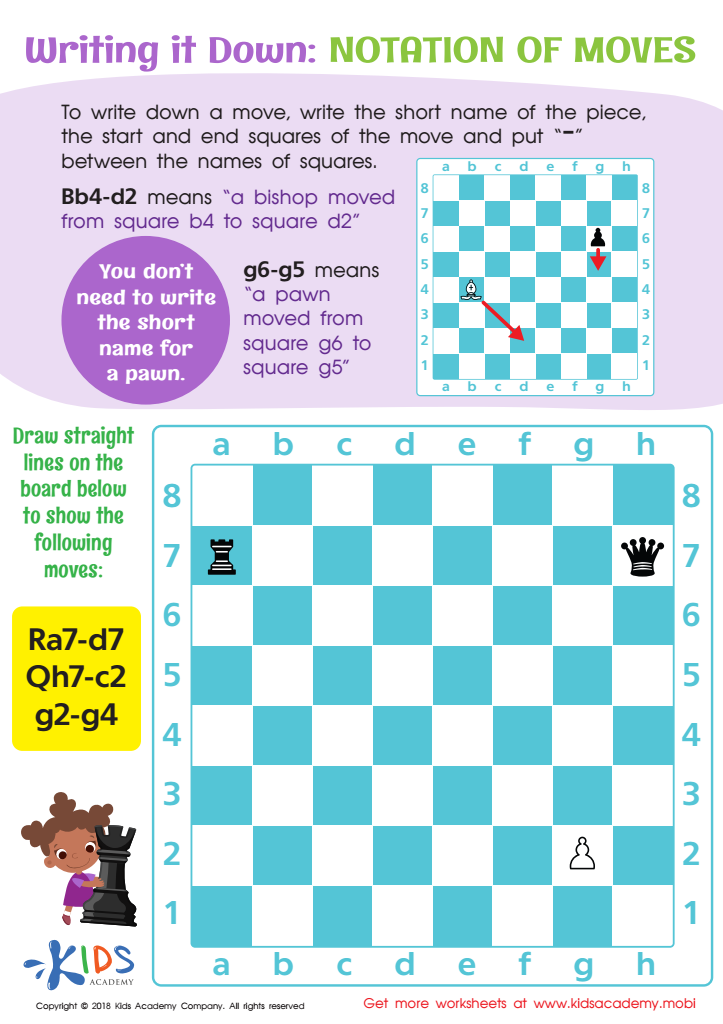
Notation of Moves Writing it Down Worksheet
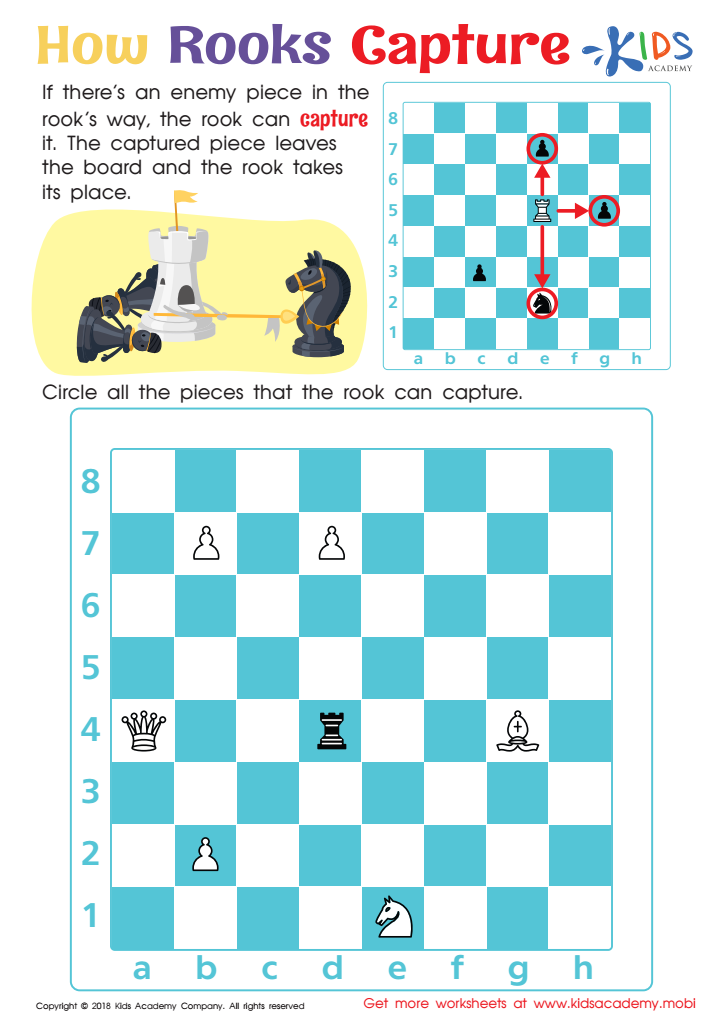
How Rooks Capture Worksheet
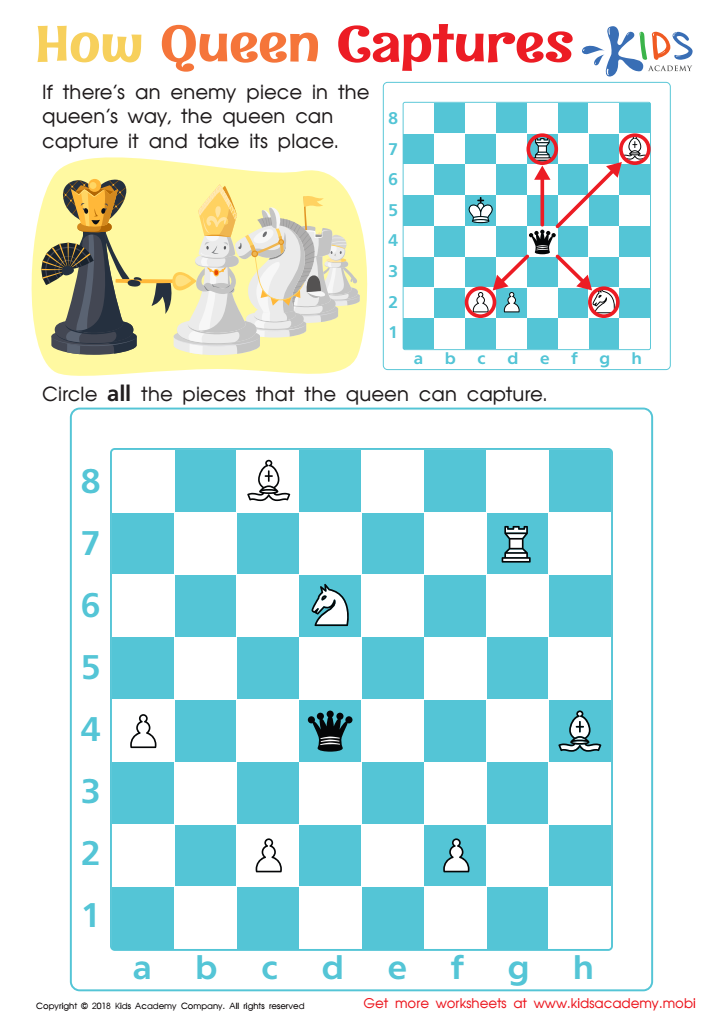
How Queen Captures Worksheet
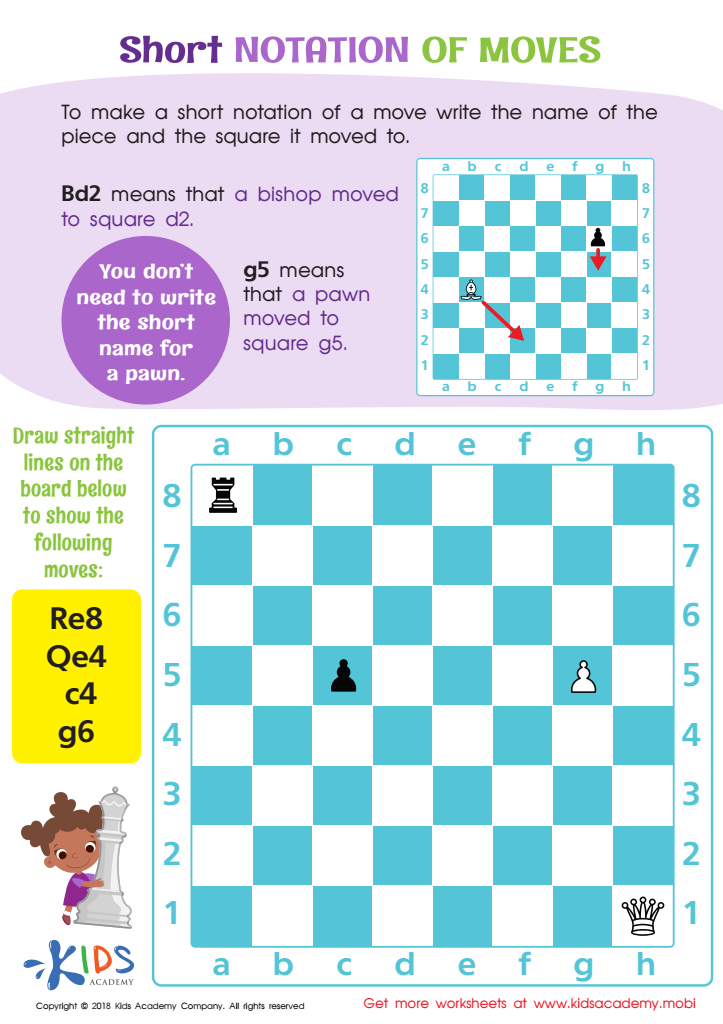
Short Notation of Moves Worksheet
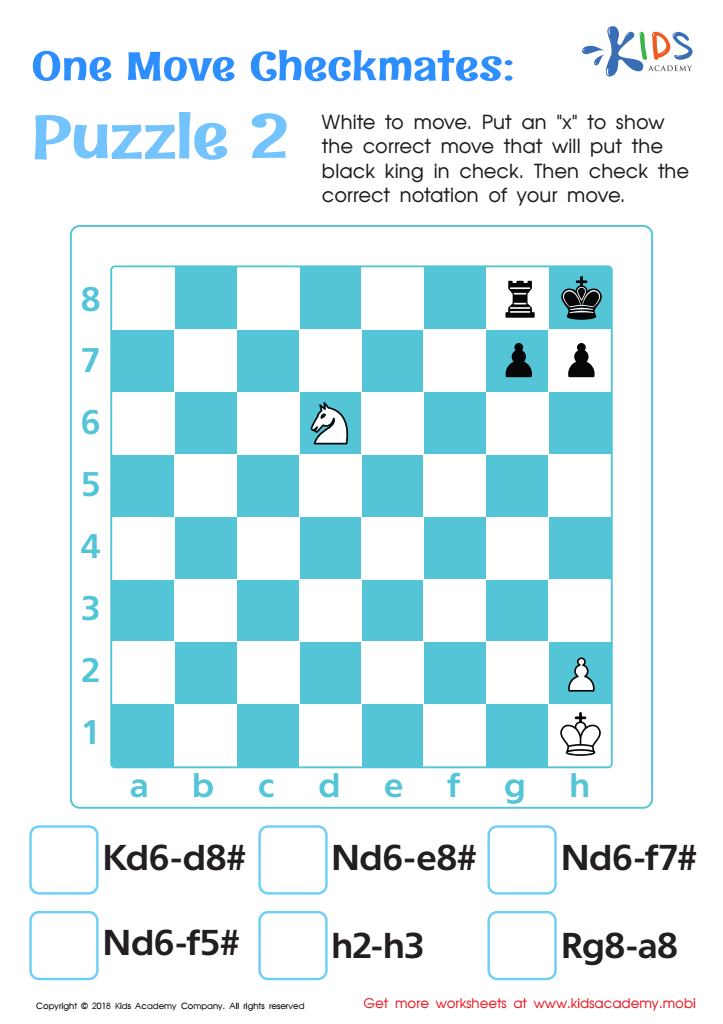
One Move Checkmates: Puzzle 2 Worksheet
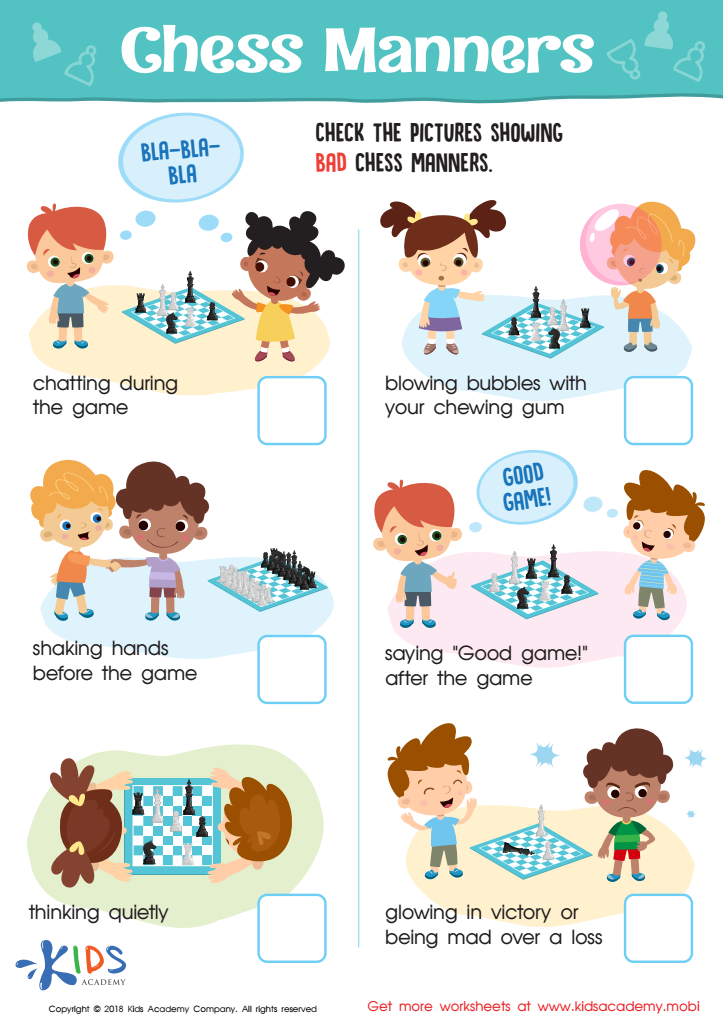
Chess Manners Worksheet
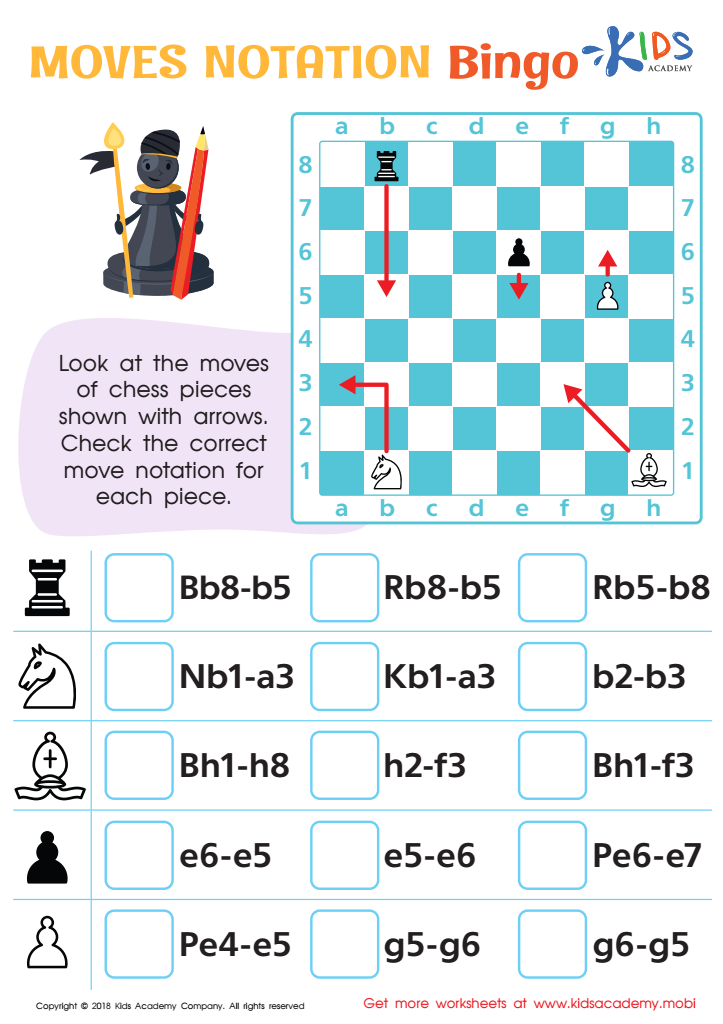
Moves Notation Bingo Worksheet
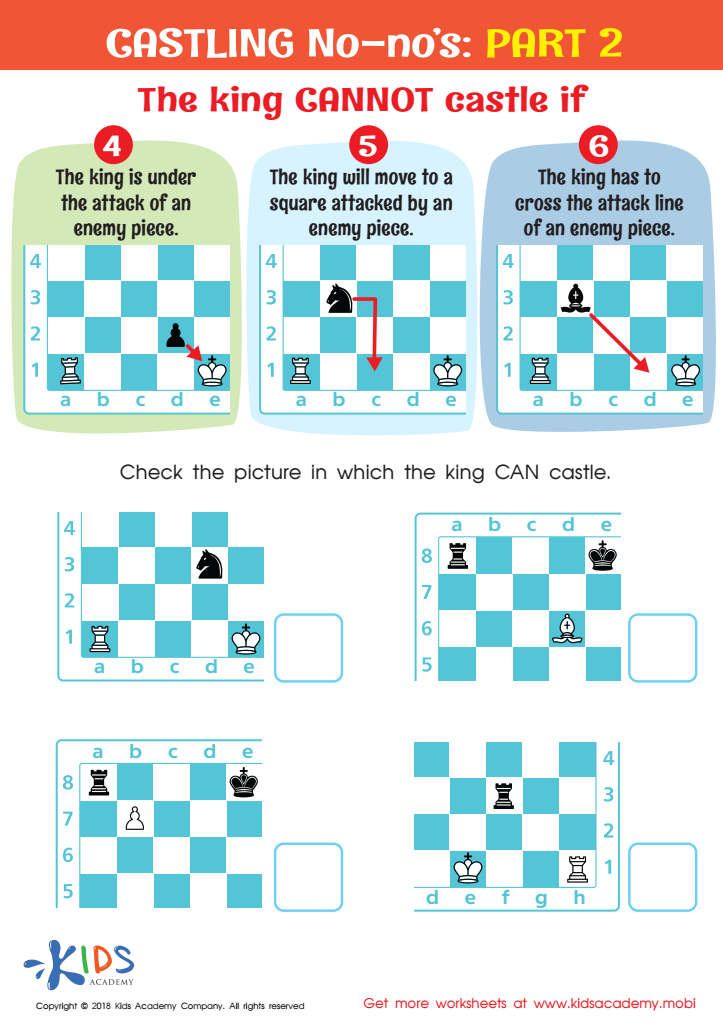
Castling No - no's: Part 2 Worksheet
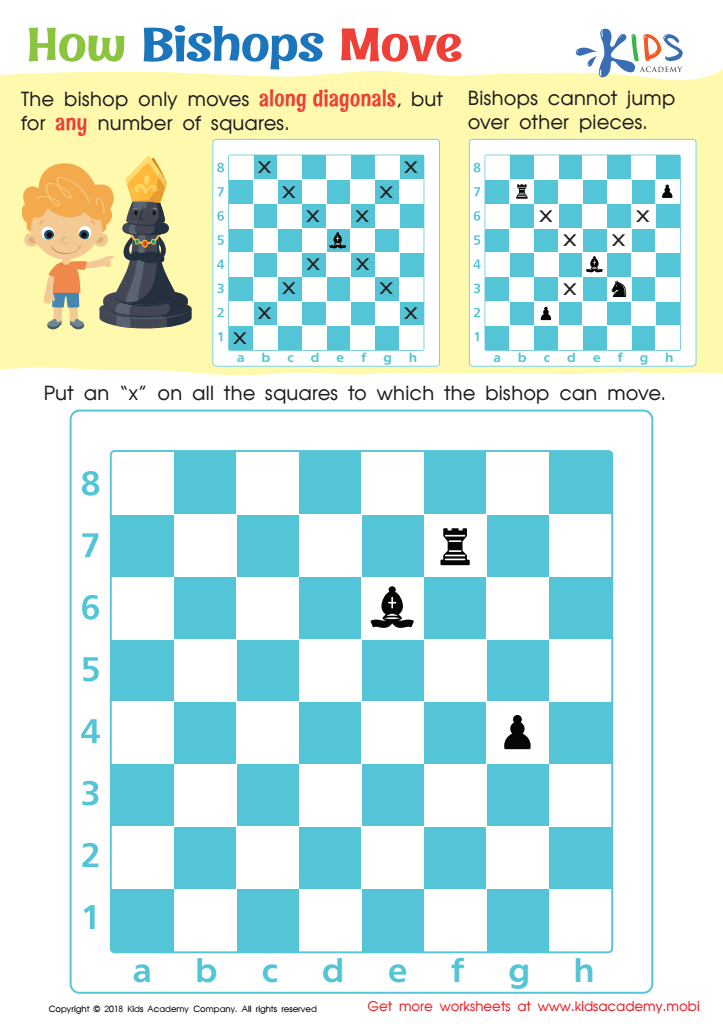
How Bishops Move Worksheet







Parents and teachers should care about strategic thinking development in children aged 3-6 through chess because it fosters essential cognitive and life skills at a critical developmental stage. Chess is an engaging game that promotes problem-solving, critical thinking, and forward planning. As young children learn the rules and begin to anticipate opponents' moves, they practice analyzing situations and making strategic decisions. This ability to think ahead and weigh multiple options is not only fundamental for academic success but also beneficial for everyday decision-making and interpersonal interactions.
Playing chess also enhances memory and concentration, as children must recall previous moves and focus intently on the game. These cognitive skills translate to better performance in school subjects, especially mathematics and reading, where comprehension and logical thinking are vital. Additionally, chess teaches important social-emotional skills such as patience, resilience, and sportsmanship. Young players learn to win gracefully and cope with losses, fostering a growth mindset that emphasizes effort and improvement over instant success.
Moreover, chess provides a structured yet enjoyable way to bond with peers and adults, reinforcing language and communication skills through explaining moves and strategy. Overall, integrating chess into early childhood education supports a well-rounded cognitive, emotional, and social development that lays the foundation for future learning and life challenges.