
Fraction visualization Worksheets for Ages 3-6
4 filtered results
Difficulty Level
Grade
Age
-
From - To
Subject
Activity
Standards
Introducing our engaging Fraction Visualization Worksheets designed specifically for children ages 3-6! These worksheets aim to help young learners grasp the foundational concepts of fractions through eye-catching visuals and interactive activities. With vibrant illustrations and simple tasks, children will explore fractions by comparing parts of whole objects, recognizing shapes, and identifying fractions in everyday situations. Our age-appropriate resources foster early mathematical understanding while keeping learning fun and enjoyable. Perfect for teachers and parents, these worksheets support cognitive development and build essential skills needed for future learning. Download today to spark your child’s interest in mathematics and fractions!
Favorites
With answer key
Interactive
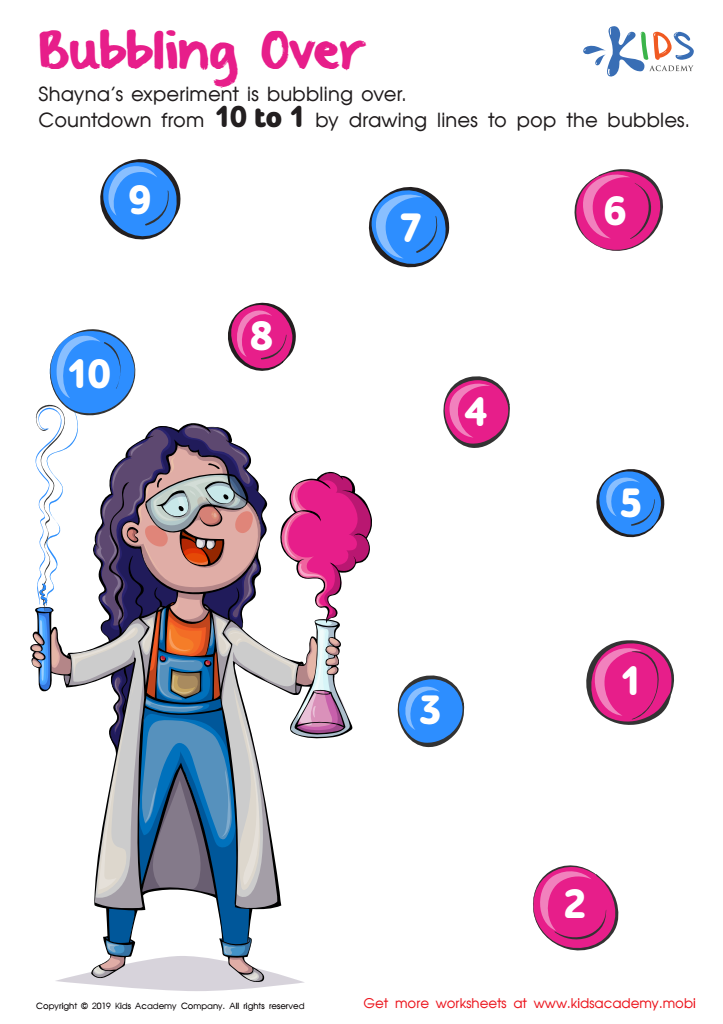
Bubbling Over Worksheet
Students love science experiments at the lab! They get to practice their counting skills while creating a masterpiece or an unexpected catastrophe! Ask them to count down from 10 to 1 by drawing lines to 'pop' the bubbles coming out of Shayna's experiment in the worksheet.
 Assign to My Students
Bubbling Over Worksheet
Worksheet
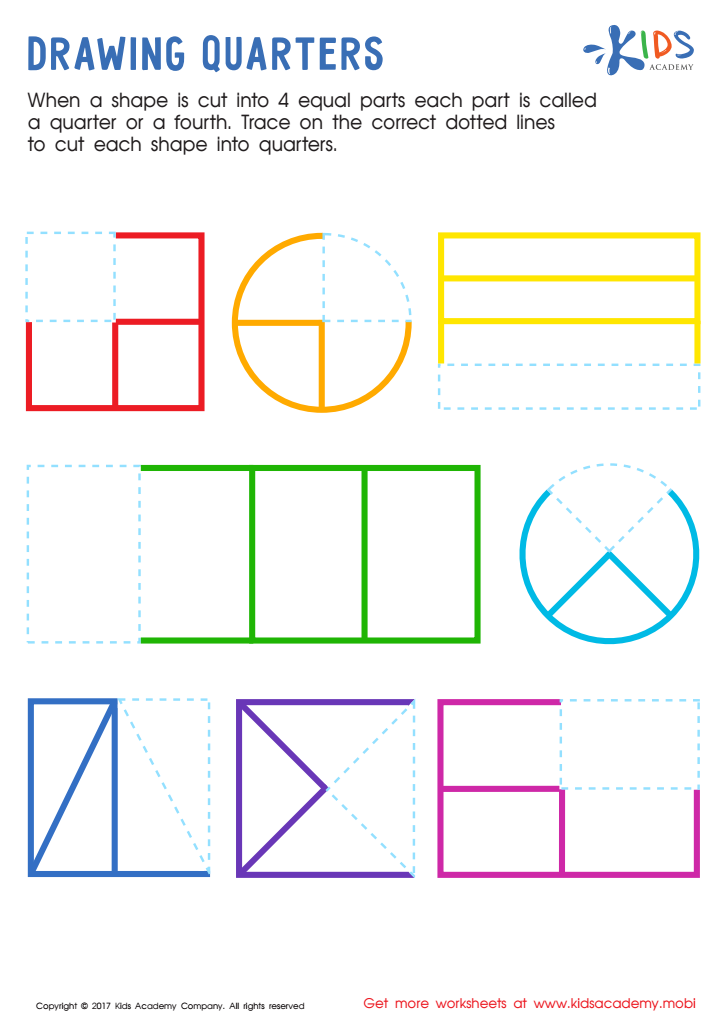
Drawing Quarters Worksheet
Help your kids divide shapes into quarters! Have them trace dotted lines to cut each shape into 4 equal parts. Each of the 4 parts is called a quarter or a fourth. This worksheet will help kids learn more about dividing shapes into four equal parts.
Drawing Quarters Worksheet
Worksheet
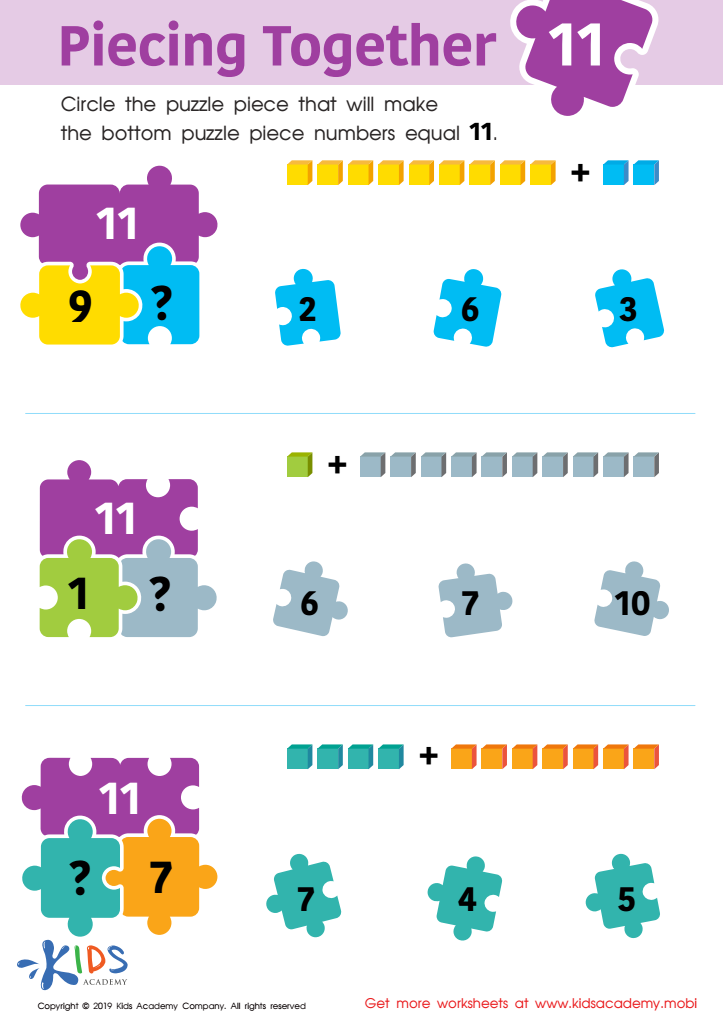
Piecing Together 11 Worksheet
Engage your preschoolers with learning-filled fun! Show them this colorful worksheet, and ask them to identify the figures. Each puzzle piece features an equation, except one which is missing. Help the kids solve the problems and circle the piece that'll make the numbers equal 11. It's a surefire way to make learning enjoyable!
Piecing Together 11 Worksheet
Worksheet
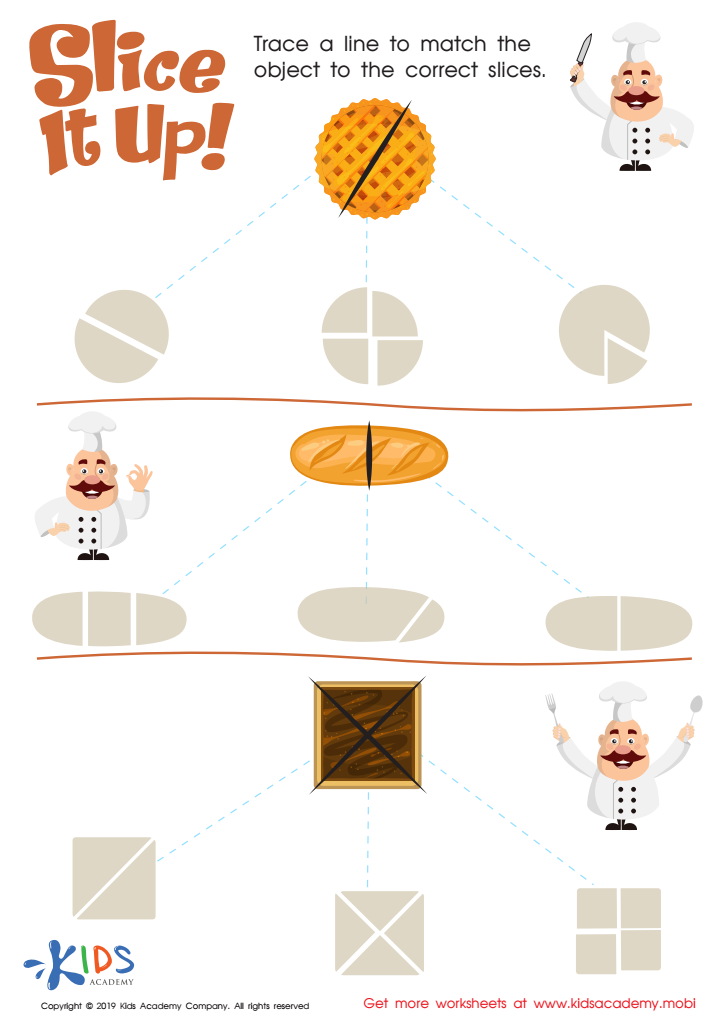
Slice It Up Worksheet
Try this fun math, reading and writing worksheet with your kids! They will love the colorful activities that perfect coordination and tracing. Engaging learning exercises help keep young minds sharp and boost skills. With these worksheets, your kids will be academically ahead of the curve!
Slice It Up Worksheet
Worksheet
Join Kids Academy for Free
Who is primarily going to use this learning content?







Fraction visualization is a crucial component of early childhood education, especially for children aged 3-6, as it lays the groundwork for mathematical understanding and problem-solving skills. At this developmental stage, children are naturally curious and possess a remarkable ability to absorb concepts. By introducing fractions visually, such as through blocks, pie charts, or number lines, they can better comprehend abstract ideas and see the relationships between parts and wholes.
Early exposure to fraction visualization helps children develop a solid number sense and promotes critical thinking. When children manipulate visual representations of fractions, they can grasp concepts of equality, size comparison, and partitioning, which are foundational for more complex mathematical ideas in the future. This also fosters a love for math as children engage in hands-on learning activities.
Moreover, fostering fraction understanding early supports other important skills, such as language development, as children learn to communicate mathematical ideas. It encourages reasoning, as they explain their thought processes and conclusions.
Ultimately, investing time in fraction visualization for young children enhances their overall cognitive development and prepares them for future academic success. Educators and parents play a pivotal role in nurturing these early skills, setting a strong educational trajectory for the child.








