Spatial understanding Worksheets for Ages 3-6
3 filtered results
-
From - To
Enhance your child's spatial thinking with our specially crafted Spatial Understanding Worksheets for ages 3-6. Designed by experts at Kids Academy, these interactive worksheets help young learners grasp essential concepts such as positions, shapes, and patterns. Perfect for preschool and kindergarten children, each activity is engaging, fun, and educational, effectively supporting early mathematical and cognitive development. Use these worksheets to strengthen your child's visual-spatial skills, laying a solid foundation for future learning success. Try our worksheets today to make learning geometry and spatial relationships enjoyable and meaningful for your little ones.
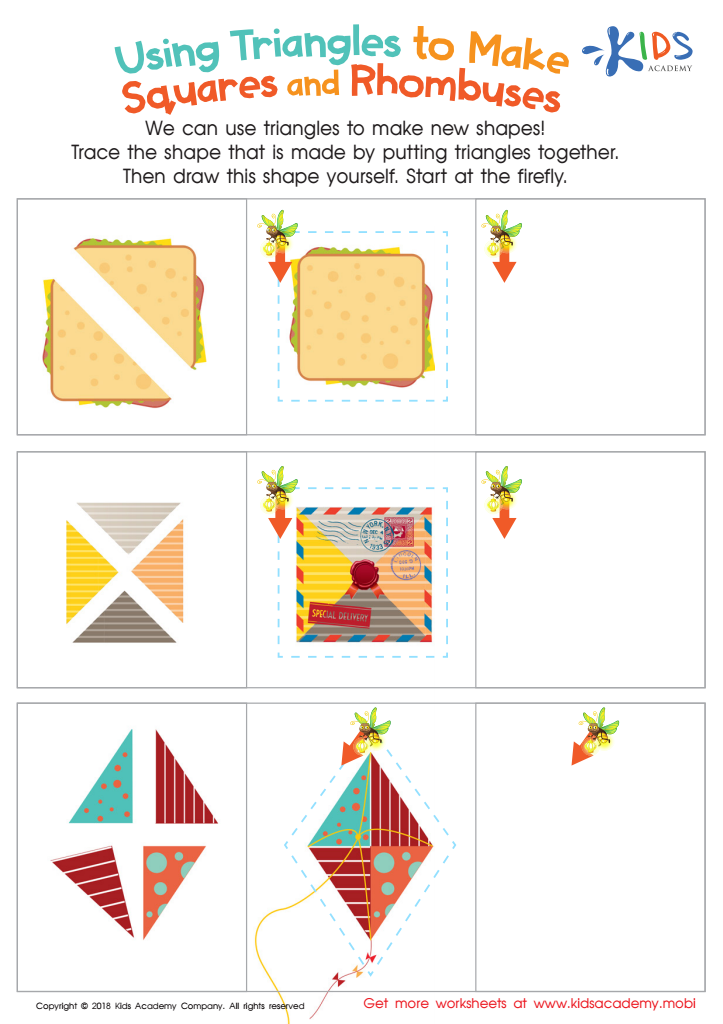
Using Triangles to Make Squares and Rhombuses Worksheet
 Assign to My Students
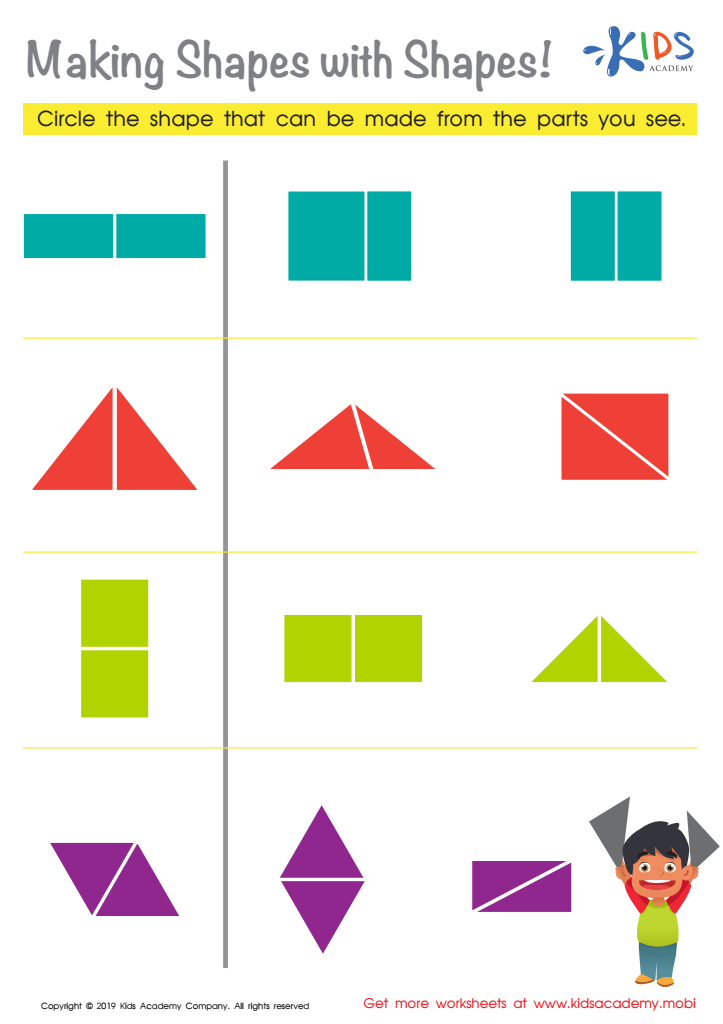
Making Shapes with Shapes Worksheet
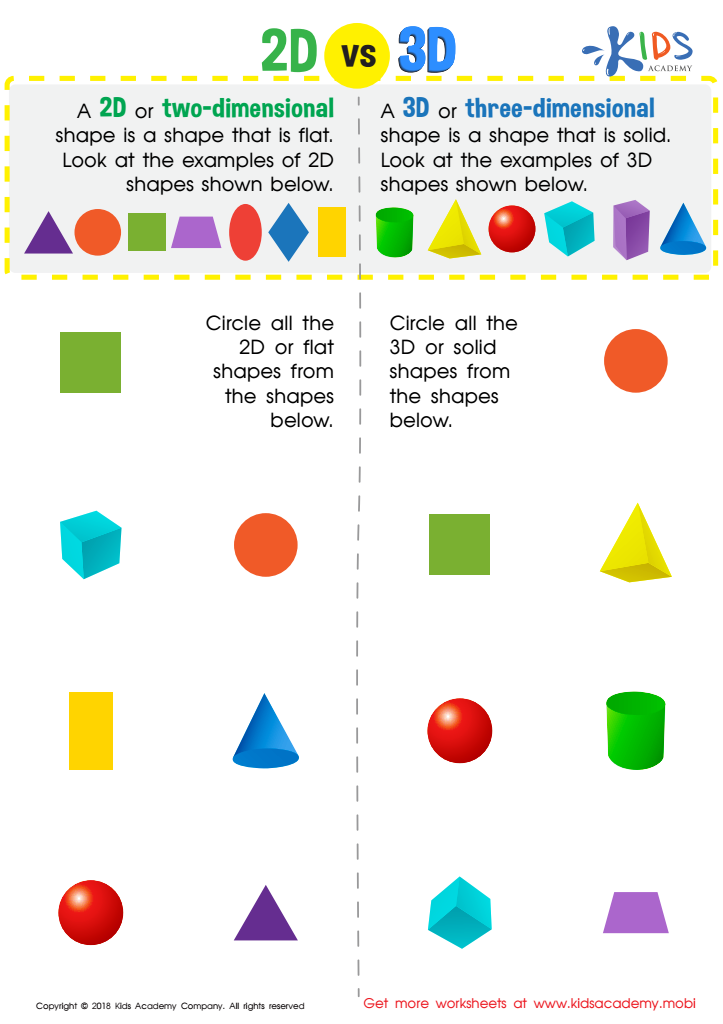
2D vs 3D Shapes Worksheet







Spatial understanding in children aged 3-6 is pivotal for several fundamental reasons. Firstly, it is crucial for the development of mathematical skills. When children explore shapes, sizes, and positions, they begin to grasp essential concepts that underpin geometry and arithmetic. For example, recognizing how blocks fit together can lead to a more intuitive understanding of addition and subtraction in later years.
Secondly, spatial skills are directly linked to cognitive development. Engaging in activities that promote spatial understanding stimulates brain development, enhancing critical thinking, problem-solving, and reasoning abilities. These are foundational skills that will benefit children academically across various subjects.
Additionally, spatial understanding impacts everyday life skills and social interactions. Children who can navigate their environments confidently are more likely to engage in physical activities, promoting overall physical health and coordination. On the social front, activities that involve spatial tasks often require teamwork and cooperative play, helping children develop better communication and social skills.
Therefore, parents and teachers should prioritize spatial understanding in early childhood through activities like puzzles, building blocks, drawing, and guided exploratory play. This not only prepares children for future academic endeavors but also contributes to their holistic development, making them more adept at interacting with the world around them.








