Comparing shapes 2D Shapes Worksheets for Ages 3-6
3 filtered results
-
From - To
Discover our engaging "Comparing 2D Shapes Worksheets" designed specifically for children ages 3-6. These interactive worksheets will help young learners develop essential foundational skills by exploring the similarities and differences between various 2D shapes. With vibrant visuals and fun activities, kids will identify shapes like circles, squares, triangles, and rectangles, enhancing their understanding of concepts such as size, color, and shape properties. Perfect for homeschooling, preschool, or early education settings, our resources make learning about shapes enjoyable and effective. Download today and empower your child’s mathematical skills through playful exploration of the world of 2D shapes!
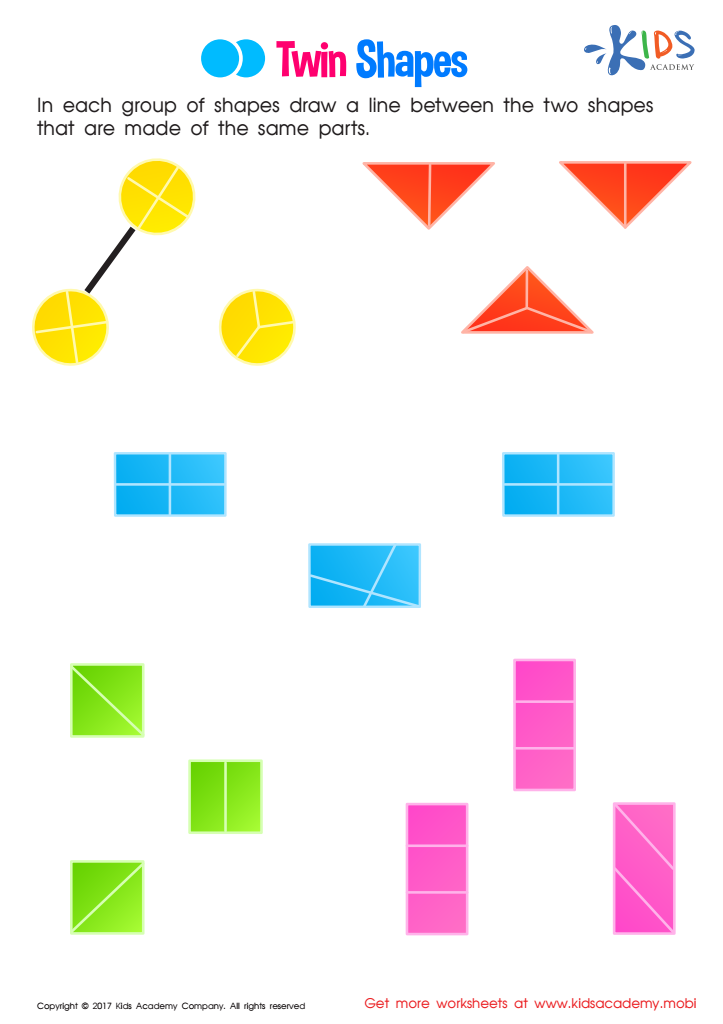
Twin Shapes Worksheet
 Assign to My Students











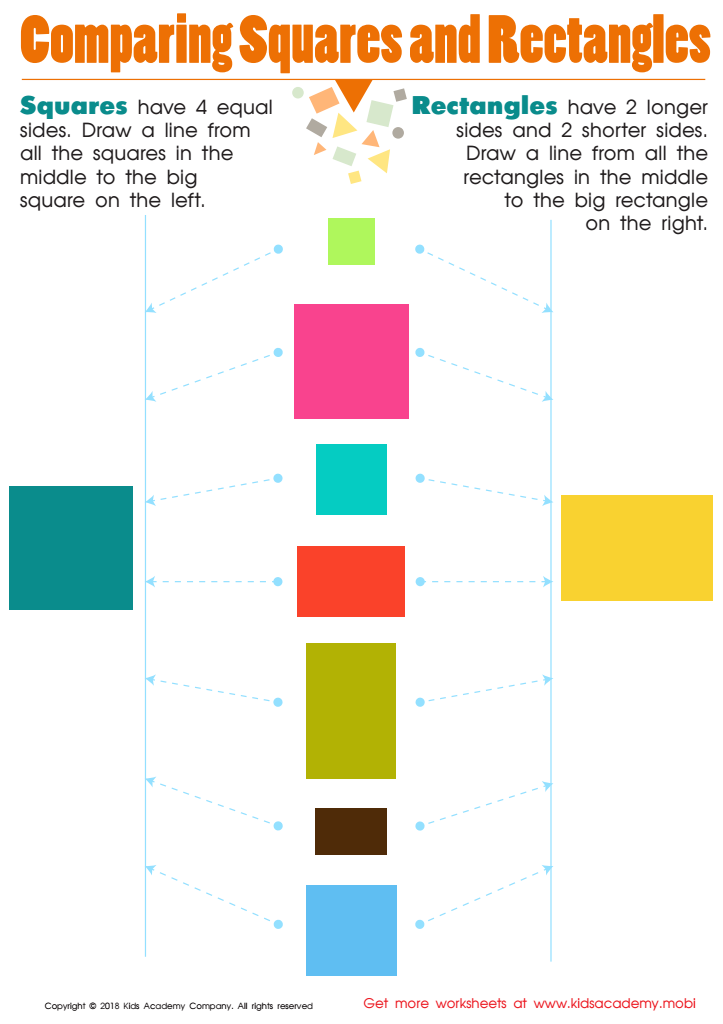
Comparing Squares Rectangles Worksheet
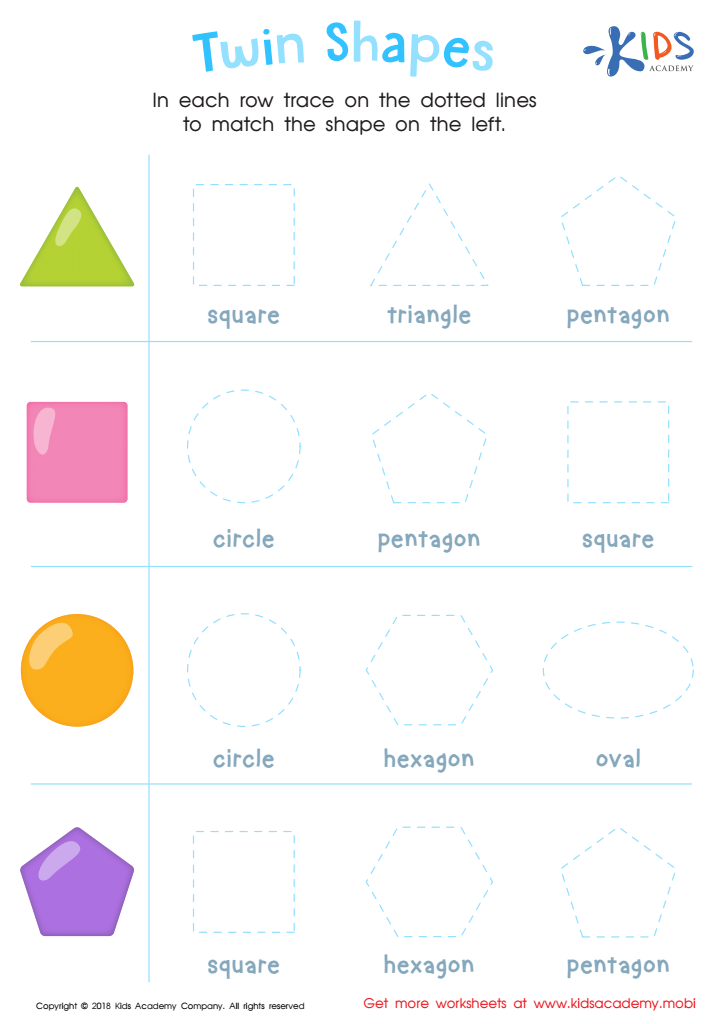
Twin Shapes Dot-to-Dot Worksheet








Understanding and comparing 2D shapes is crucial for young children's cognitive development and foundational math skills. For children aged 3-6, engaging with shapes fosters critical thinking, boosts spatial awareness, and enhances problem-solving abilities. When parents or teachers prioritize shape comparison activities, they provide children with opportunities to recognize similarities and differences, which sharpens their analytical skills. These activities often involve hands-on experiences, like sorting or building with shapes, promoting active learning and fine motor skills.
Additionally, learning about shapes can significantly impact children's language development as they learn to describe shapes using specific terms, enhancing their vocabulary. The ability to communicate ideas and make connections between shapes lays the groundwork for more complex mathematical concepts later on.
Moreover, exploring 2D shapes helps children develop visual discrimination, which is essential for reading and writing. Familiarity with shapes also contributes to a child’s understanding of the world around them, allowing them to identify patterns and relationships in their environment. By investing time in shape comparisons, parents and teachers pave the way for a strong mathematical foundation, promoting readiness for future learning while also encouraging play, creativity, and exploration.








