Critical Thinking 2D Shapes Worksheets for Ages 3-6
5 filtered results
-
From - To
Enhance your child's critical thinking skills with our engaging 2D shapes worksheets designed for ages 3-6! These educational resources aim to boost young learners' cognitive abilities while exploring the fascinating world of shapes. Each worksheet is crafted to challenge children to identify, compare, and manipulate various 2D shapes, fostering observational and analytical skills. Perfect for preschool and early kindergarten environments, these worksheets promote independent thinking, creative problem-solving, and fun learning experiences. Equip your little ones with the necessary tools to confidently recognize shapes and improve their reasoning skills. Discover a pathway to academic success with our interactive and captivating critical thinking worksheets today!
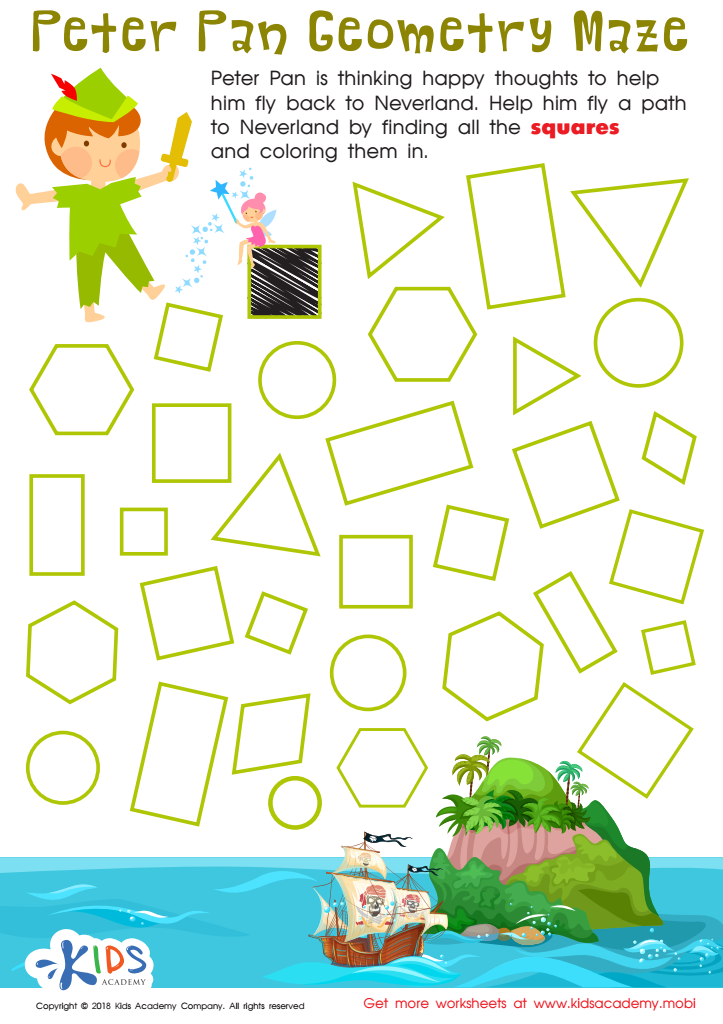
Peter Pan Worksheet
 Assign to My Students











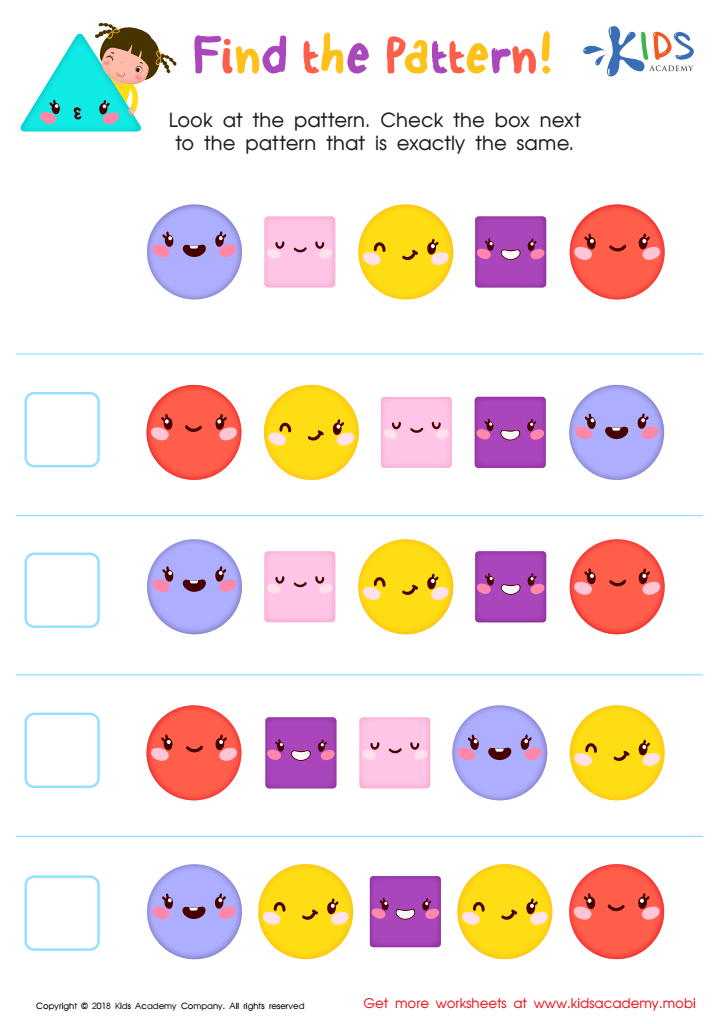
Find the Pattern Worksheet
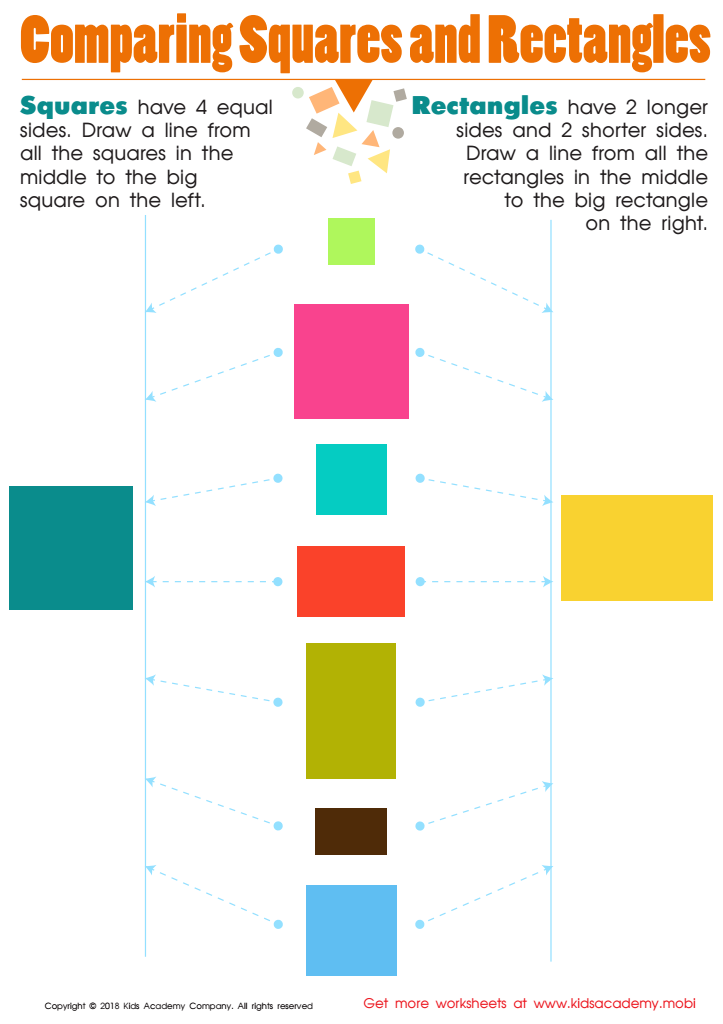
Comparing Squares Rectangles Worksheet
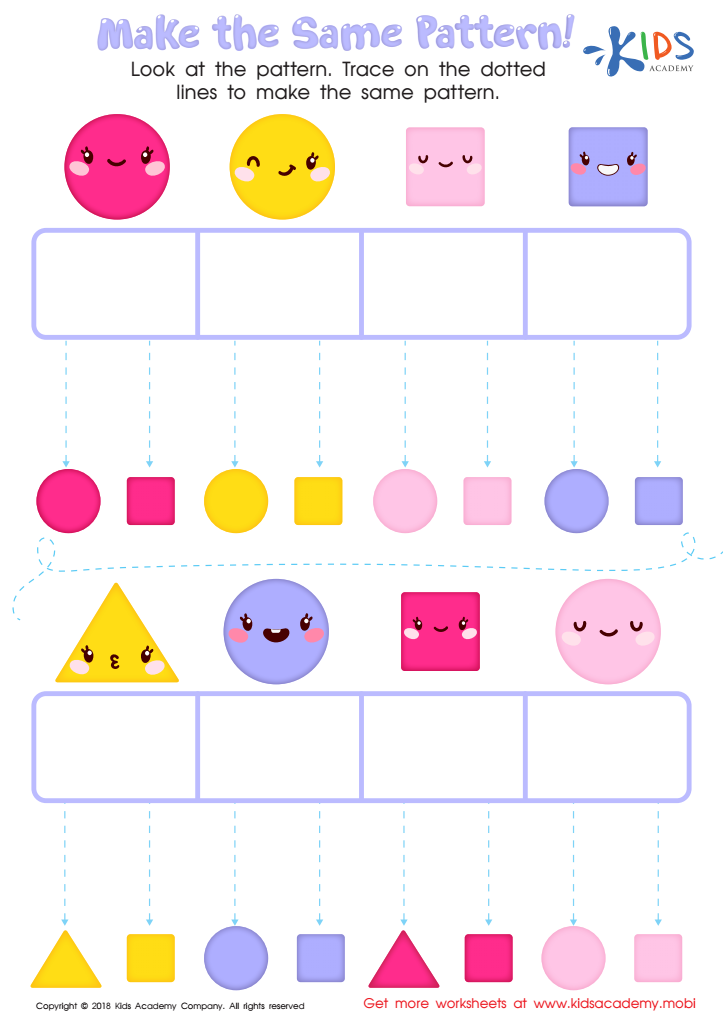
Make the Same Pattern Worksheet
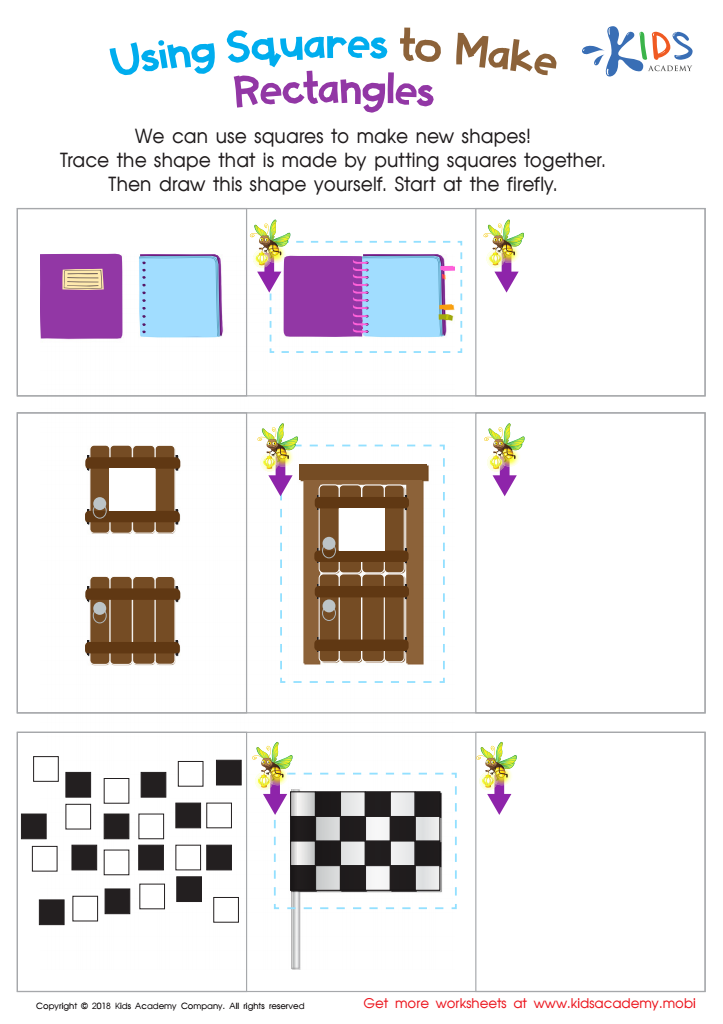
Using Squares to Make Rectangles Worksheet








Critical thinking skills are foundational to a child’s development, and understanding 2D shapes provides a valuable context for nurturing these abilities in children aged 3-6. When parents and teachers engage children in discussions about shapes—such as identifying circles, squares, triangles, and rectangles—they encourage observation, comparison, and analysis. This process helps children learn to make connections, reason out relationships, and solve problems which are key components of critical thinking.
Introducing 2D shapes also enhances spatial awareness, enabling children to visualize how objects relate to one another in space. By engaging in activities like sorting, classifying, and manipulating shapes, children learn to think systematically. They develop vocabulary and communication skills, allowing them to articulate their thoughts and reasoning.
Moreover, exploring shapes integrates a multidisciplinary approach by connecting art, math, and science, which broadens their learning experience. When parents and teachers prioritize critical thinking in shape exploration, they equip children with essential skills that extend beyond the classroom, fostering a generation capable of analyzing and addressing complex situations in real life. Ultimately, investing in these early learning experiences plays a crucial role in building confident, curious, and competent learners.








