Number Recognition Adding Up to 5 Worksheets for Ages 3-6
349 filtered results
-
From - To
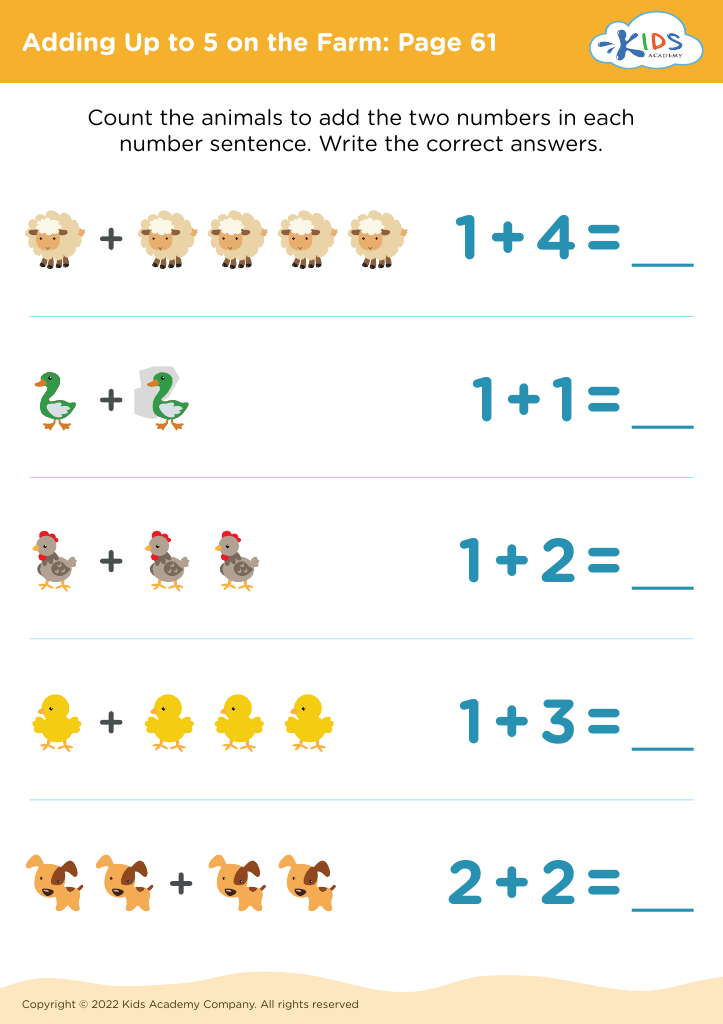
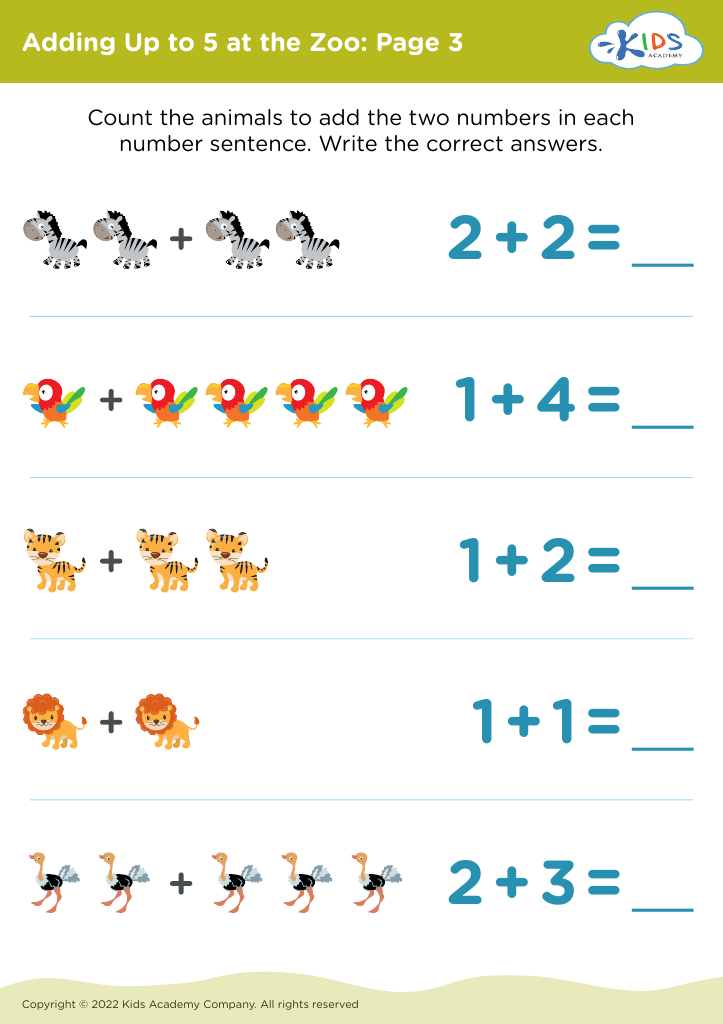
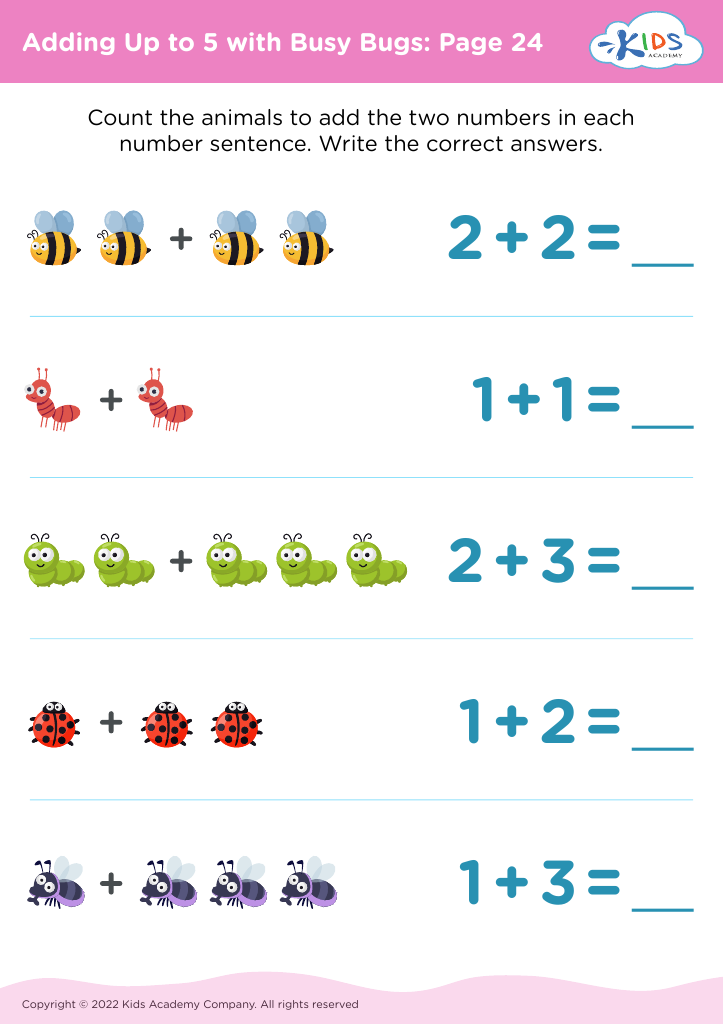
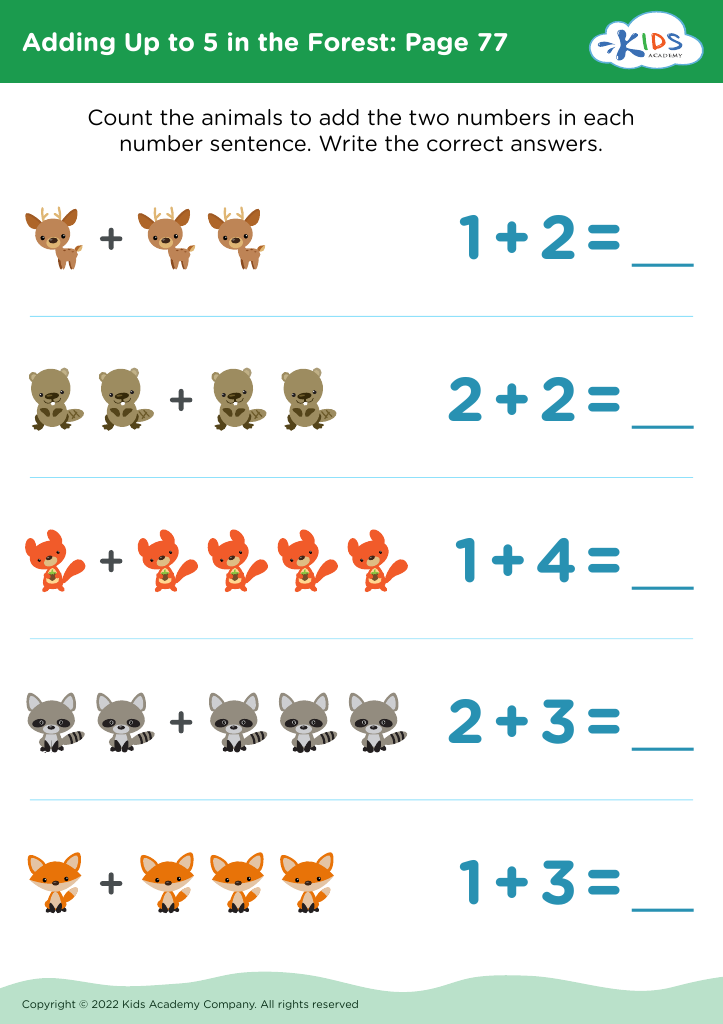
Introduce your little learners to the exciting world of numbers with our "Number Recognition Adding Up to 5 Worksheets," designed specifically for ages 3-6! These engaging worksheets help children master number recognition and basic addition with fun, interactive activities. Each worksheet is filled with colorful illustrations, relatable themes, and playful exercises that make learning numbers enjoyable. As kids practice counting and adding up to 5, they’ll build a solid foundation for future math skills while developing their fine motor abilities. Perfect for at-home learning or classroom use, our worksheets are an excellent way to foster early math confidence and excitement!
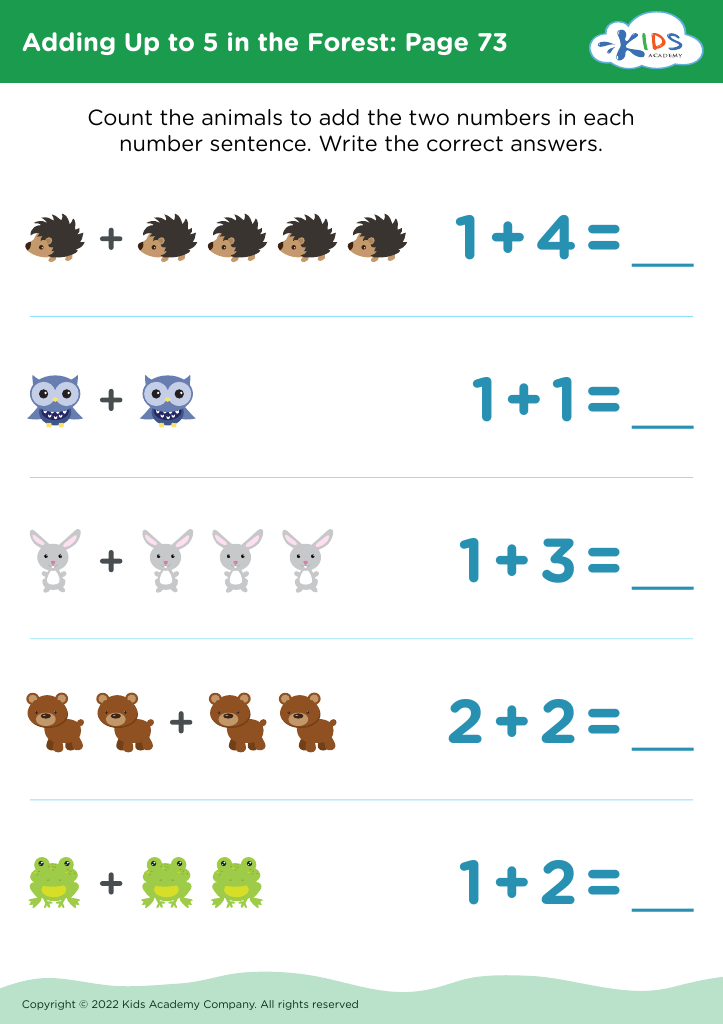
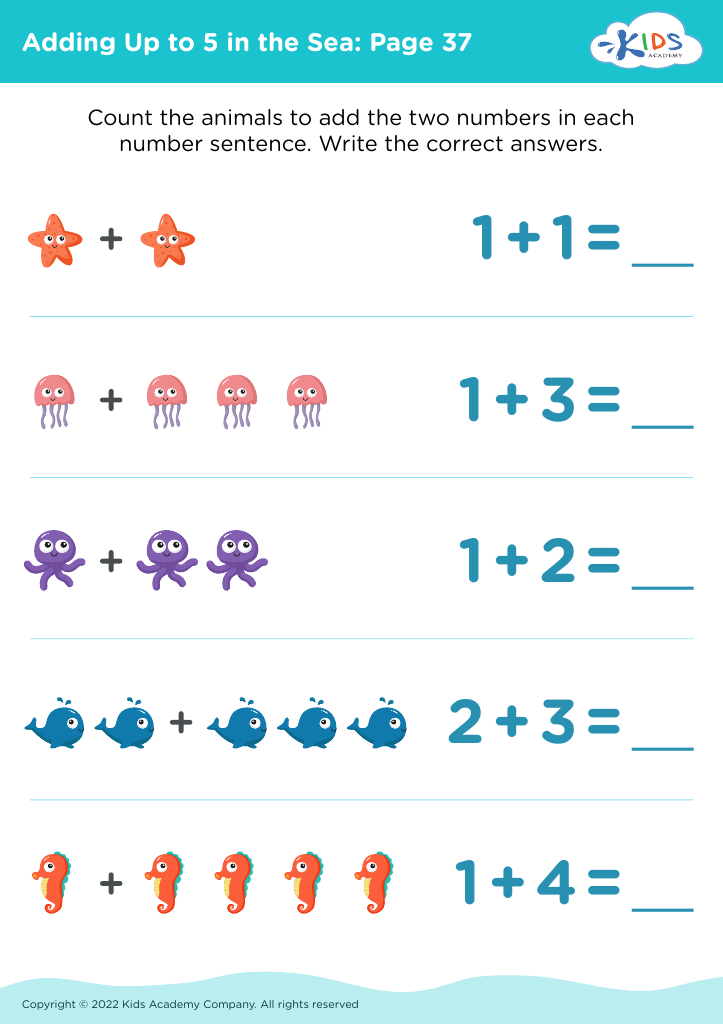
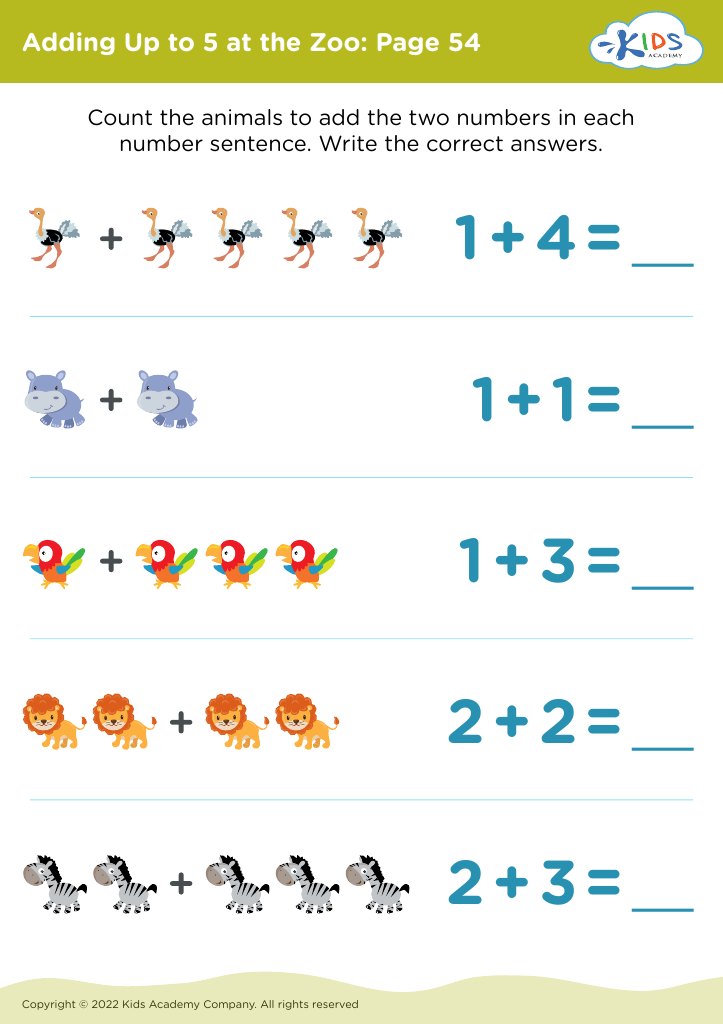
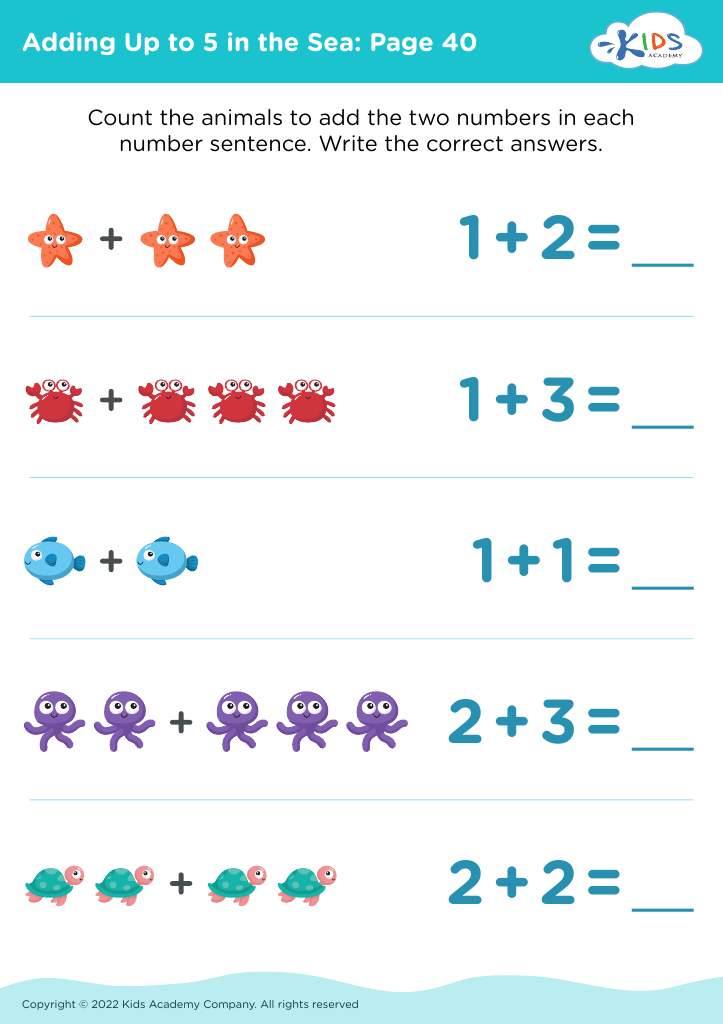
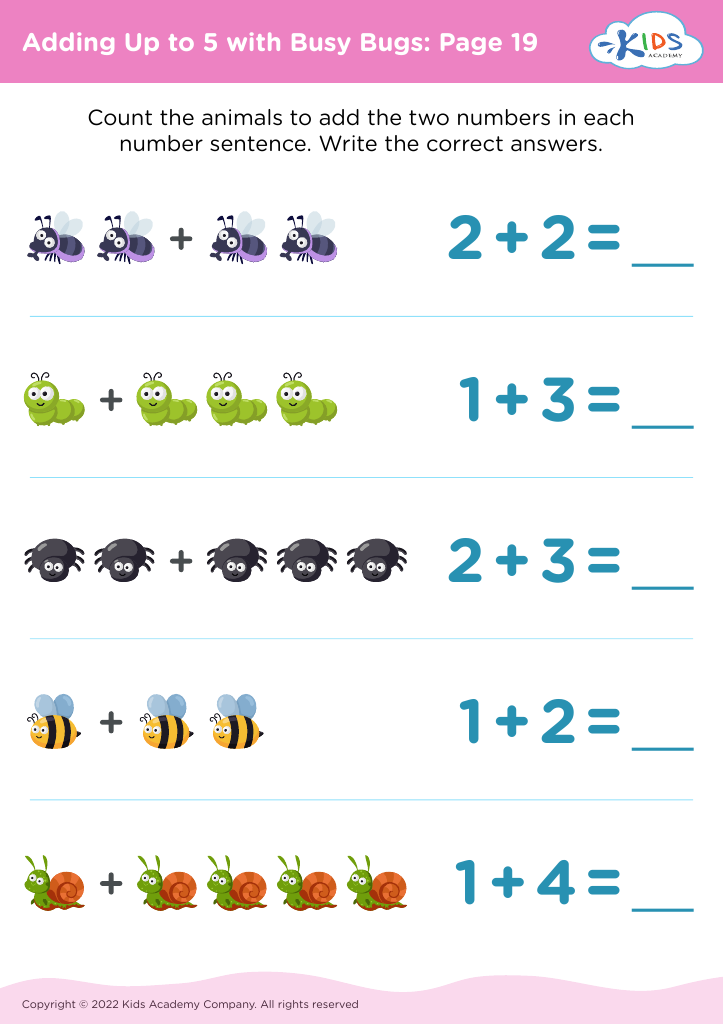
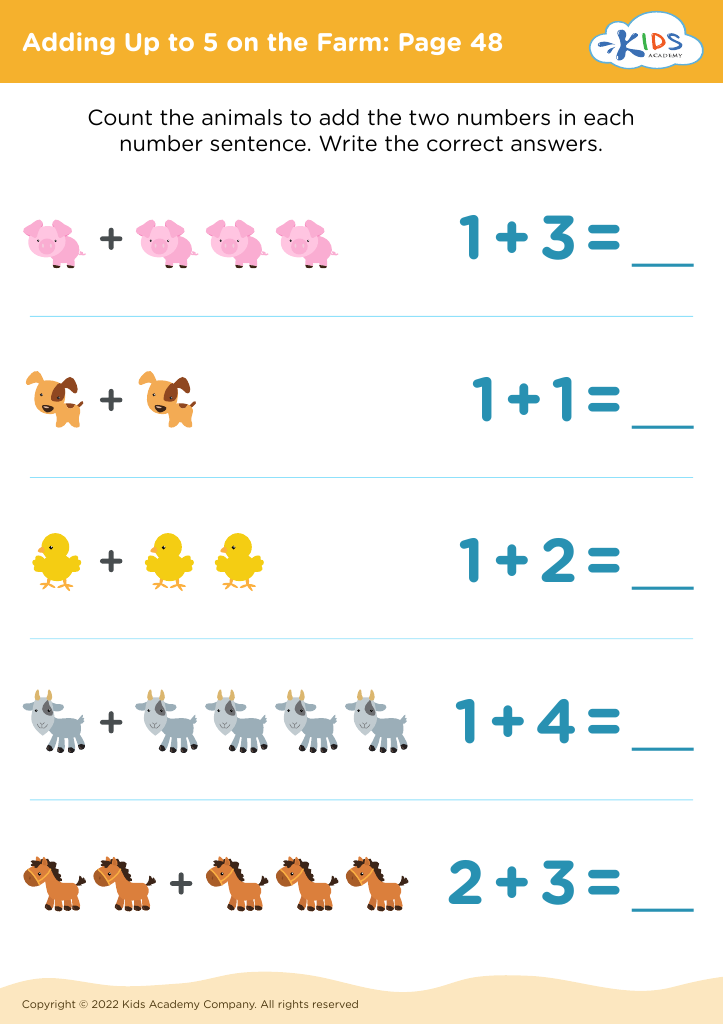
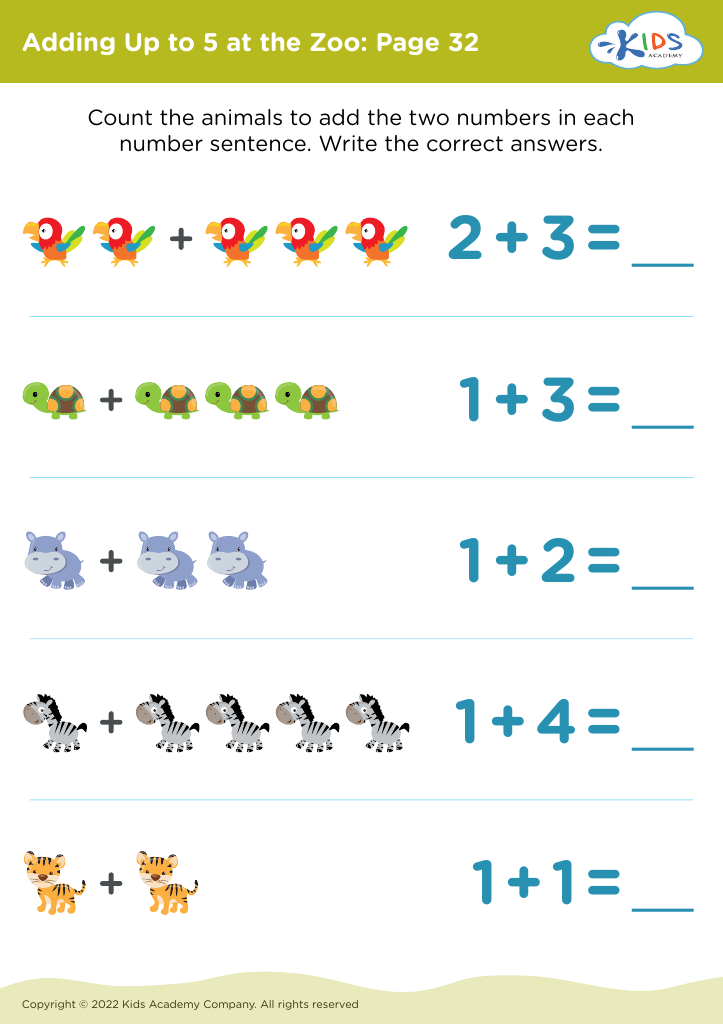
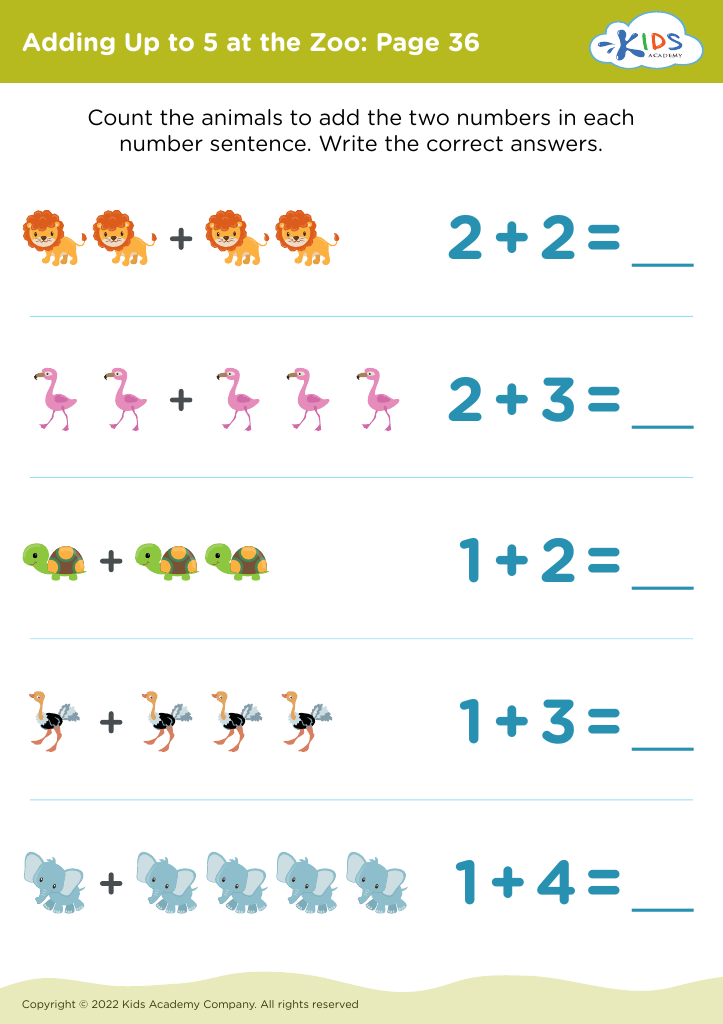
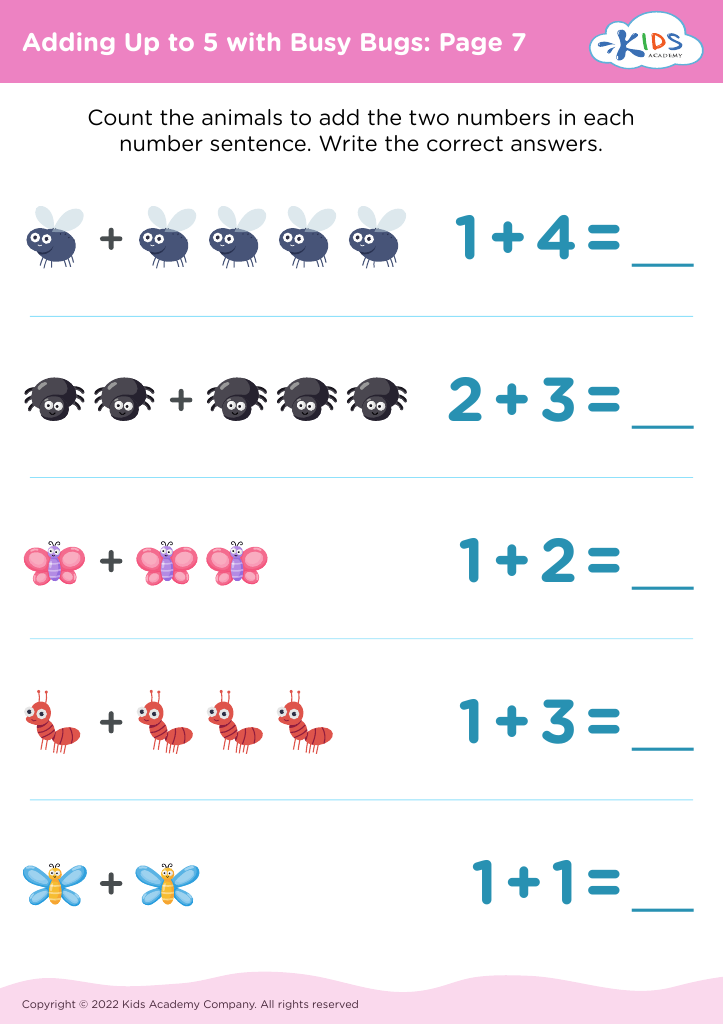
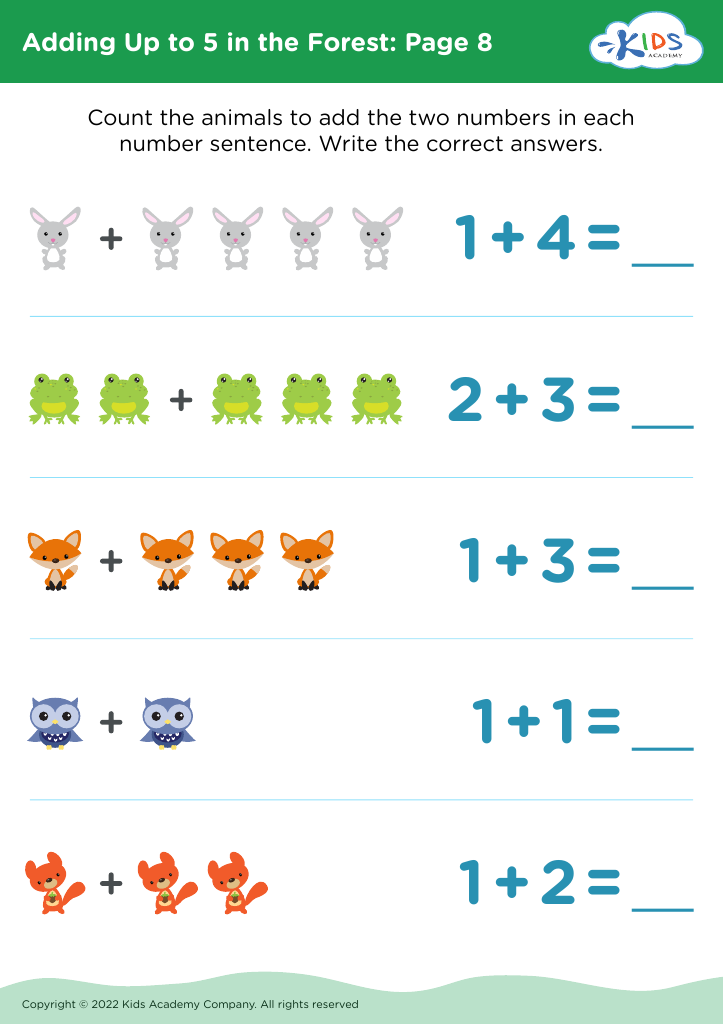
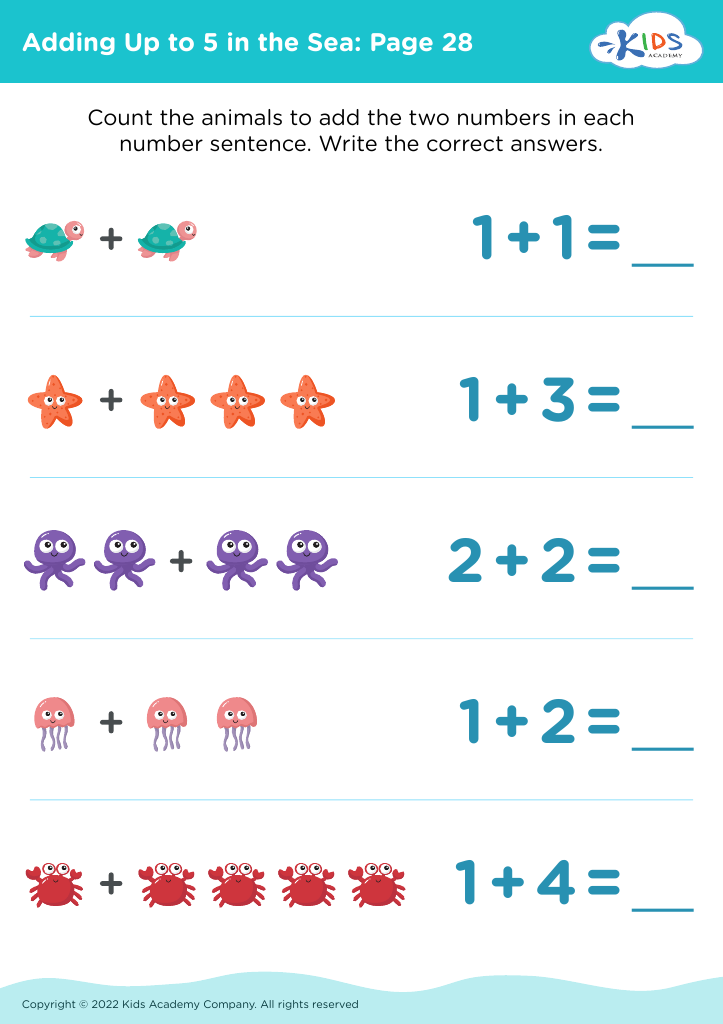
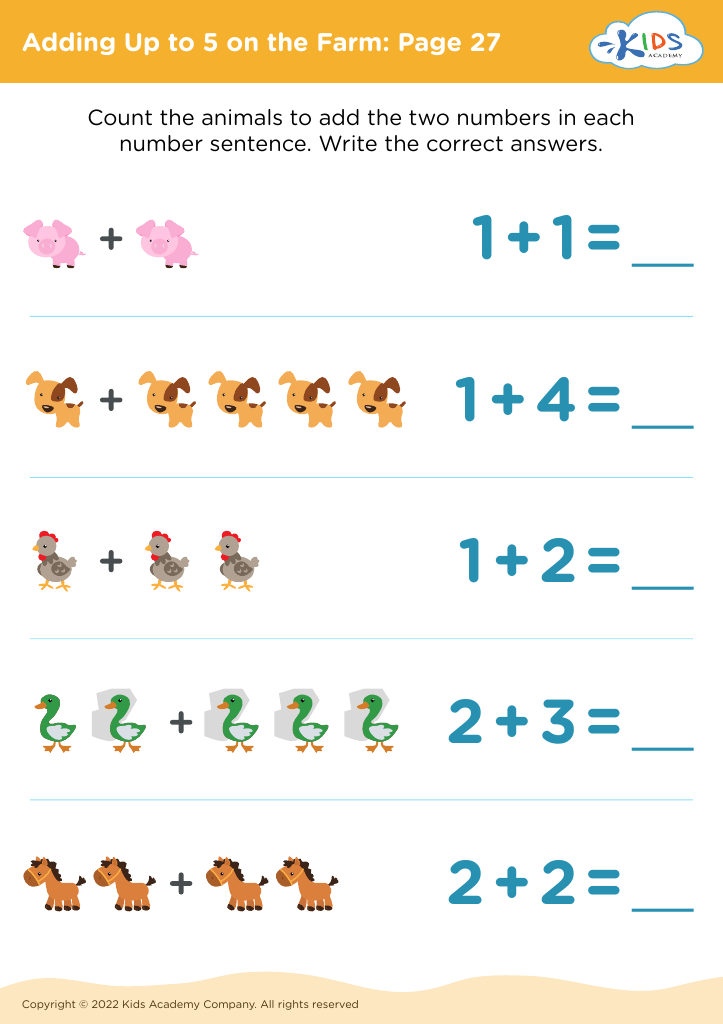
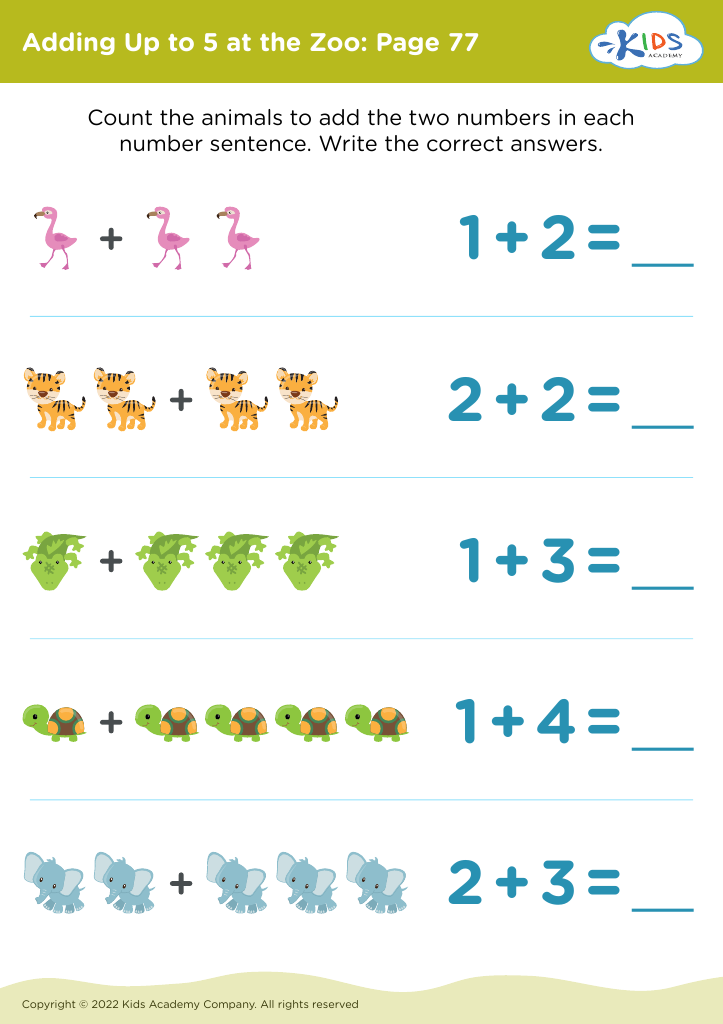
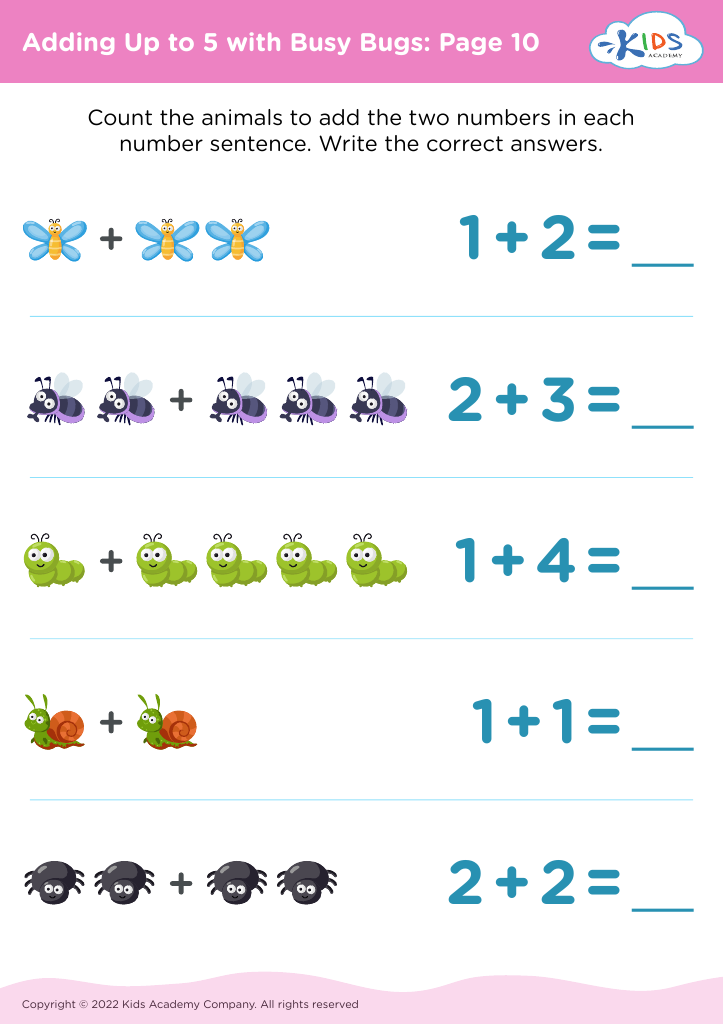
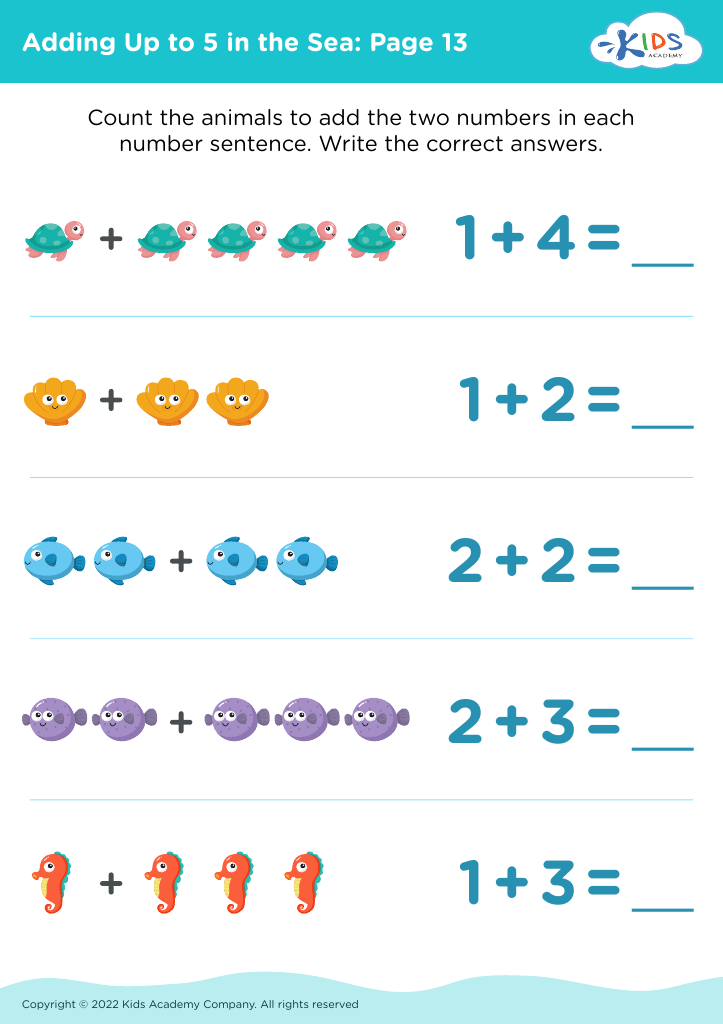
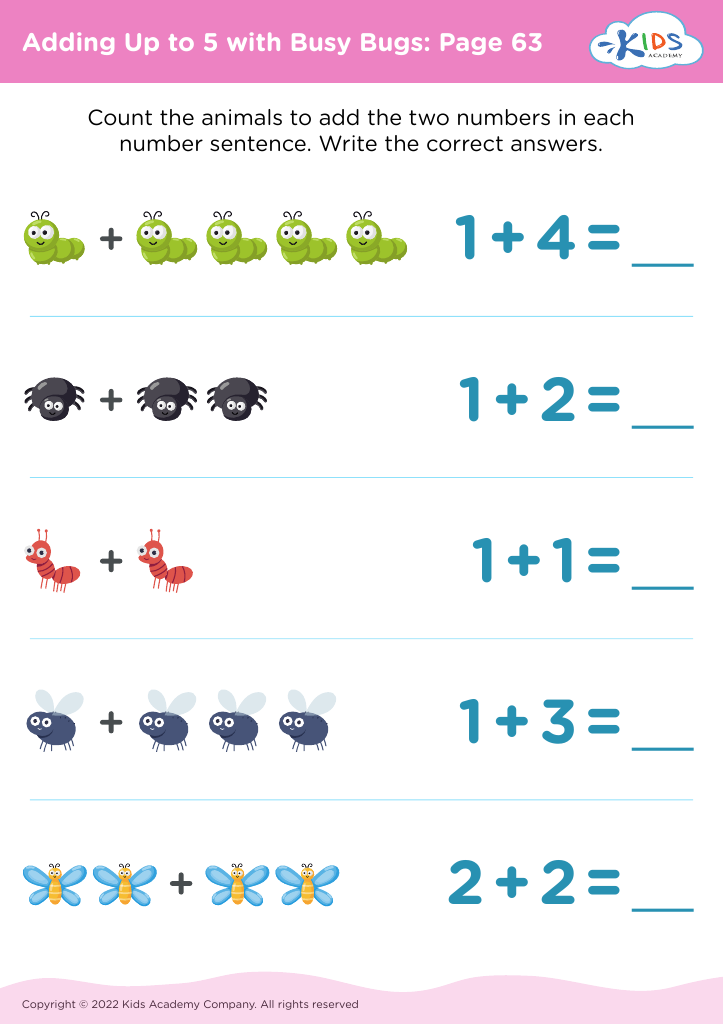
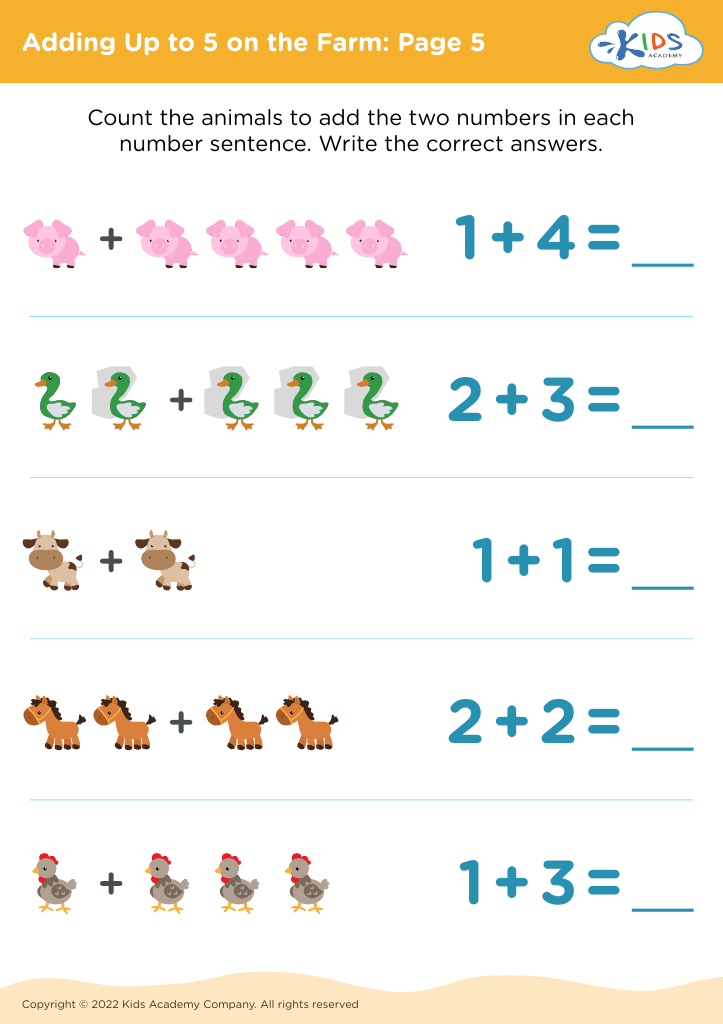
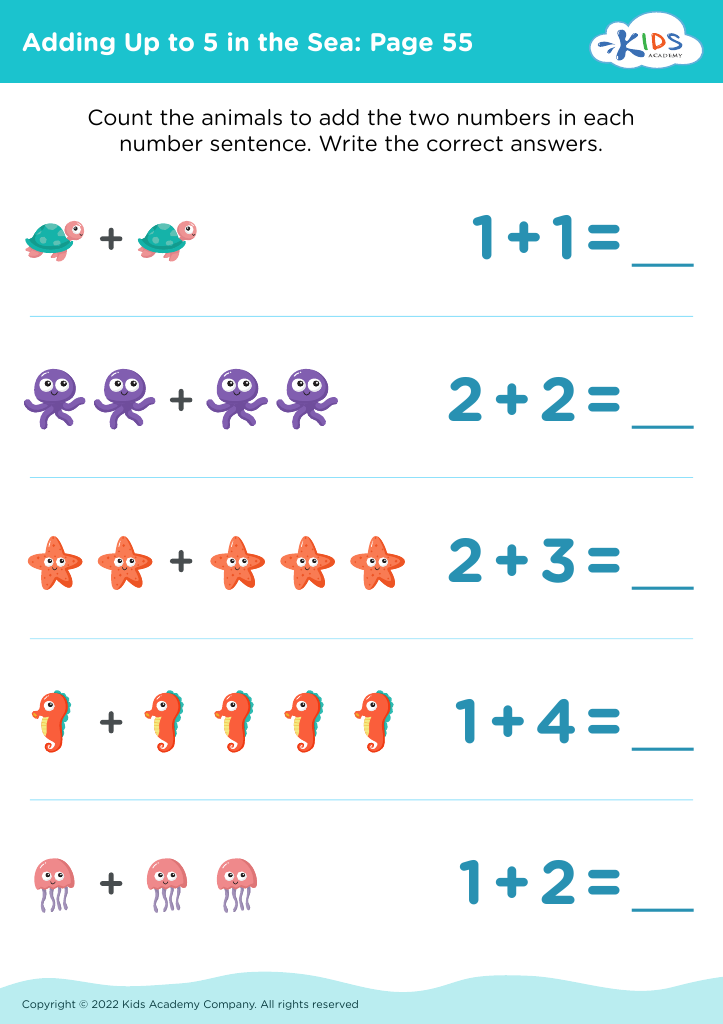
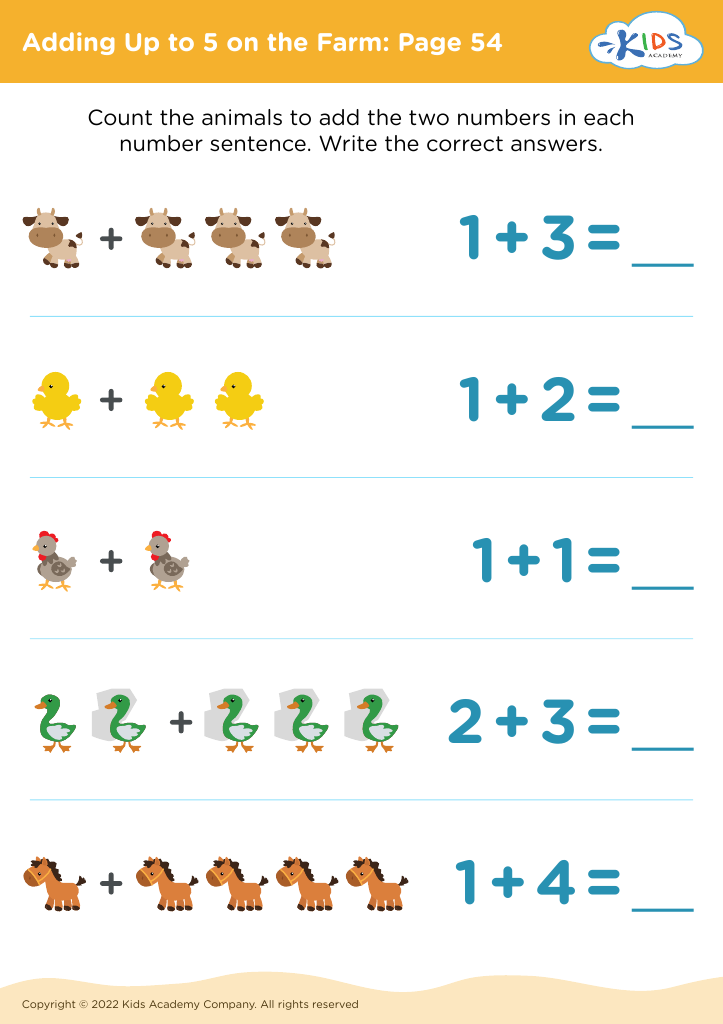
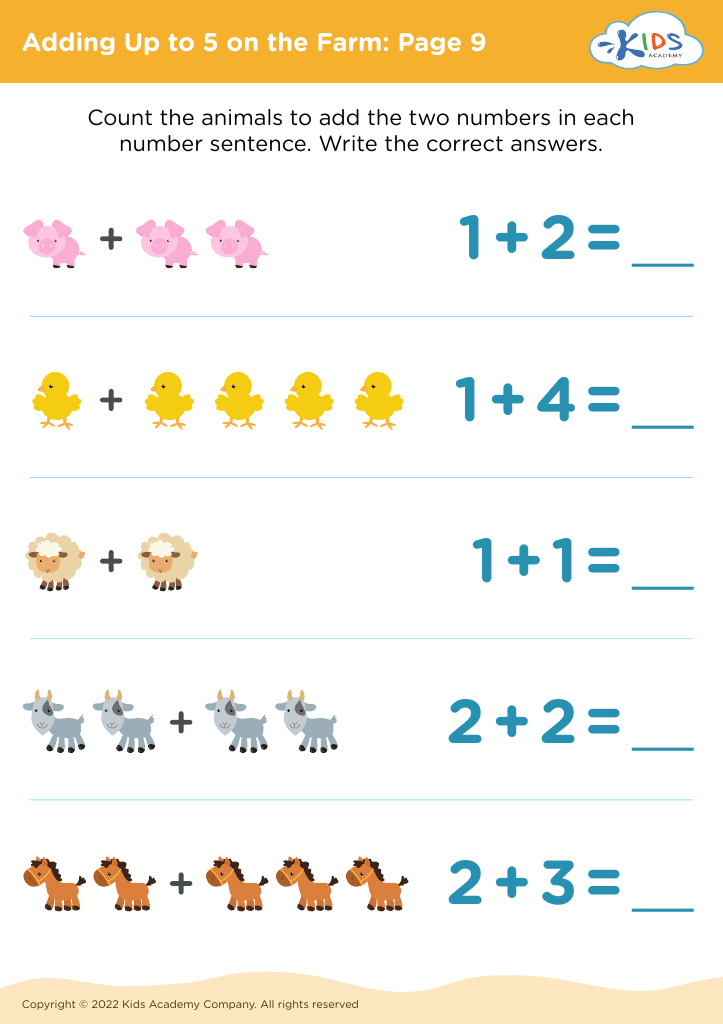








Number recognition and the ability to add up to 5 are foundational skills for children aged 3 to 6, forming the bedrock for their future mathematical understanding. Early exposure to these concepts enables children to develop a strong sense of numeracy, which is crucial for academic success and everyday problem-solving.
Parents and teachers should care about number recognition as it helps children gain confidence in their abilities. Recognizing numbers and understanding their values introduces children to the world of counting, patterns, and relationships between quantities. Being able to identify and work with small numbers facilitates cognitive development and lays the groundwork for more complex mathematical concepts they will encounter later, such as addition, subtraction, and even multiplication.
Moreover, engaging in activities that involve adding up to 5 promotes critical thinking and enhances fine motor skills through manipulating objects, such as blocks or counters. These activities encourage social interactions, as children often collaborate and communicate their thought processes when working together.
By nurturing number recognition and basic addition skills, parents and teachers help children develop a positive attitude towards math, fostering a lifelong appreciation for learning and boosting their confidence to tackle more challenging mathematical tasks in the future.








