Comparing Fractions Addition & Subtraction Worksheets for Ages 3-6
4 filtered results
-
From - To
Our "Comparing Fractions Addition & Subtraction Worksheets for Ages 3-6" are perfect for young learners to grasp essential math concepts early on. Designed by experts at Kids Academy, these printable worksheets introduce children to basic fractions, addition, and subtraction through engaging and interactive activities. Ideal for preschoolers and kindergarteners, our worksheets feature fun illustrations and simpler puzzles to foster a love for math. By using these resources, your child will improve their problem-solving skills and gain confidence in understanding fractions. Spark a lifetime of learning with our innovative and easy-to-follow worksheets!
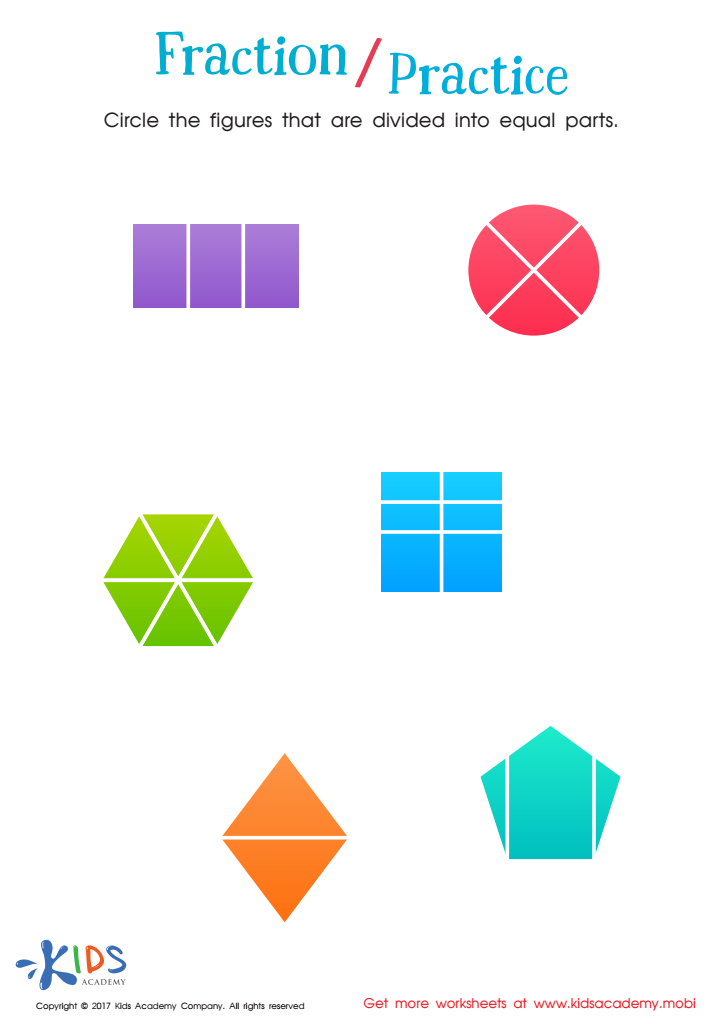
Fractions: Shapes Worksheet
 Assign to My Students
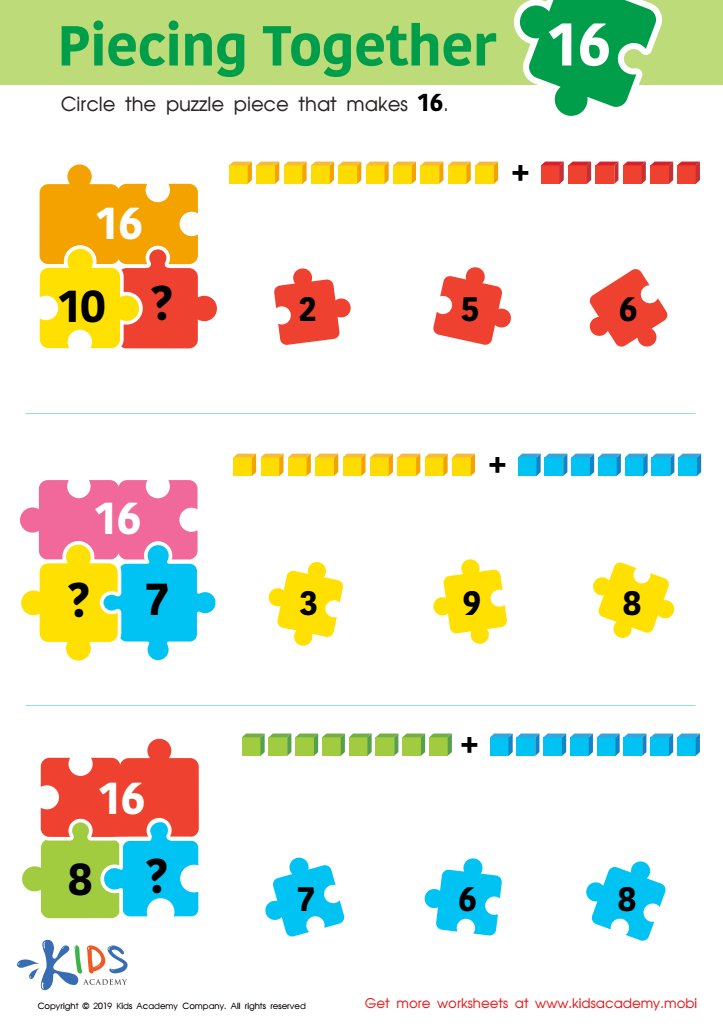
Piecing Together 16 Worksheet
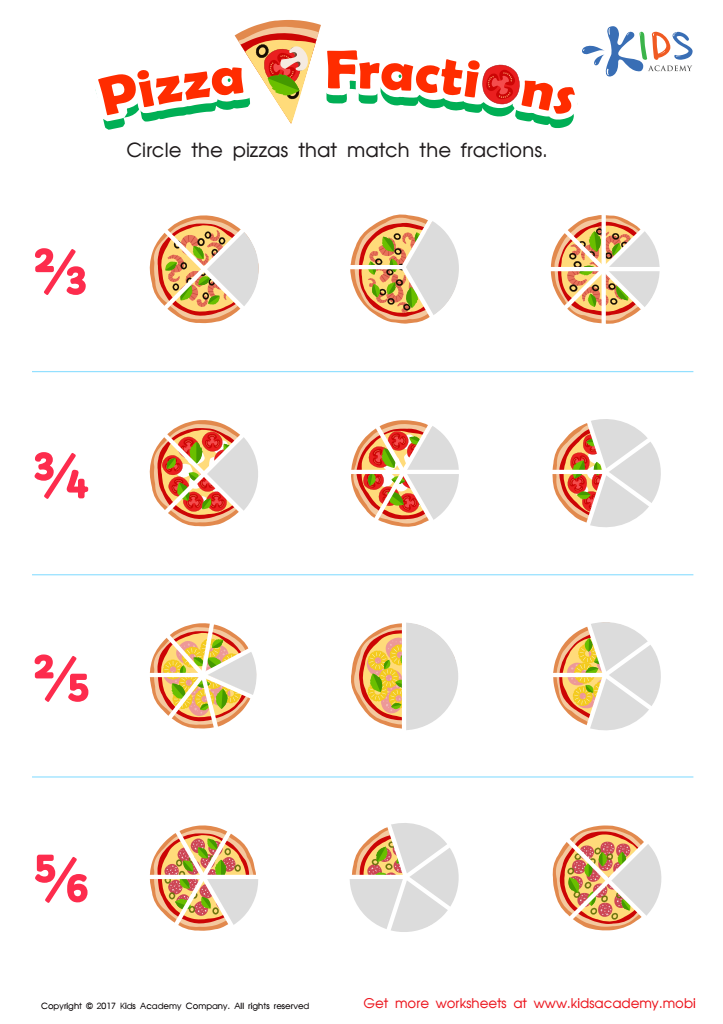
Fractions: Pizza Printable
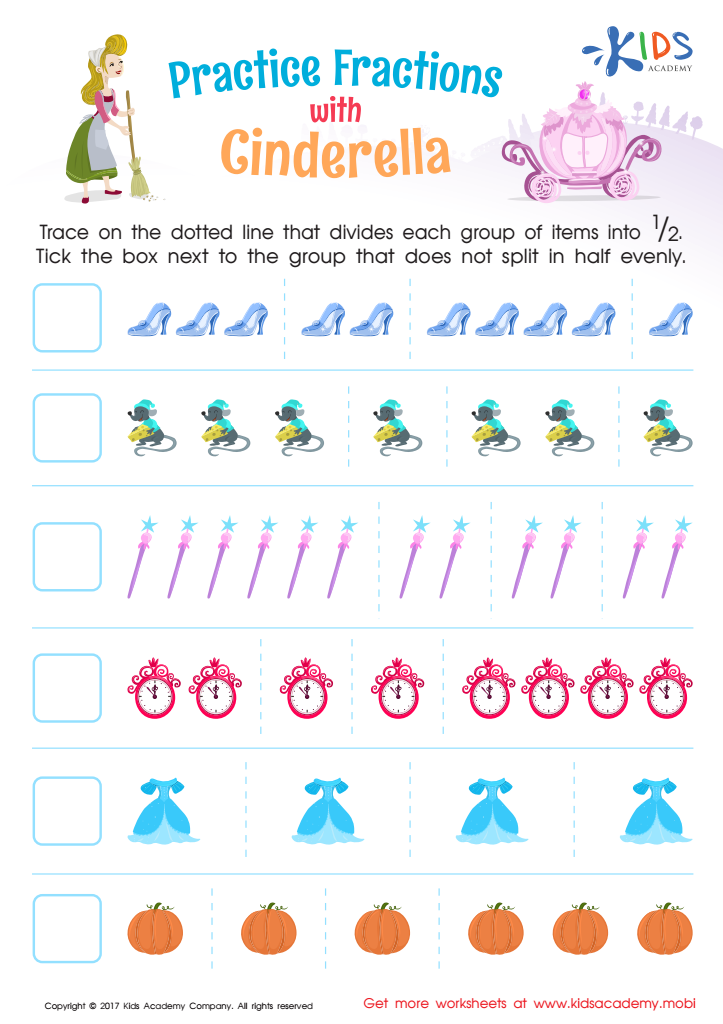
Fractions: Cinderella Printable








Parents and teachers play a crucial role in a child's early mathematical development, and understanding the importance of comparing fractions, addition, and subtraction for children aged 3-6 is essential. During these formative years, children are setting the foundation for numeracy skills that will support their academic journey. Introducing concepts such as comparing numbers in fractions and basic arithmetic helps children develop critical thinking and problem-solving skills.
When children learn to compare fractions, even in its simplest form, they begin to grasp the concept of relative magnitude and quantity. This understanding is pivotal as it establishes early number sense, which is necessary for more complex math tasks. Addition and subtraction activities, meanwhile, offer practical applications of math that lay the groundwork for numerical operations they'll encounter later in school. These activities also encourage positive attitudes towards math by making learning fun and accessible through games and interactive lessons.
Early exposure helps children become comfortable with mathematical language and symbols, facilitating smoother transitions into more advanced math topics. Moreover, it fosters confidence, resilience, and enthusiasm, qualities that ensure children are motivated and engaged learners as they advance through their education. Therefore, incorporating fraction comparisons and basic arithmetic in early learning experiences is vital in nurturing mathematically proficient and confident young learners.








